
Features
Can Sri Lanka’s premature deindustrialisation be reversed?


 As politicians and economists continue to proclaim that the Sri Lankan economy has achieved ‘stability’ since the 2022 economic crisis, the country’s manufacturing sector seems to have not got the memo.
A few salient points need to be made in this context.
First, Sri Lankan manufacturing output has been experiencing a secular stagnation that predates external shocks, such as the pandemic and the Easter Attacks. According to national accounts data from UNIDO, manufacturing output in dollar terms has basically flatlined since 2012. Without a manufacturing engine at its core, it is no surprise that Sri Lanka has seen some of the lowest rates of economic growth during this period. (See graph)
Second, factory capacity utilisation still remains below pre-pandemic levels. Total capacity utilisation stood at 62% in 2024, compared to 81% in 2019. For wearing apparel, the country’s main manufactured export, capacity utilisation was at a meagre 58% in 2024, compared to 83% in 2019. Given the uncertainty Trump’s tariffs have cast on global trade, combined with the diminished consumer sentiment across the Global North, it is hard to imagine capacity utilisation recovering to pre-pandemic levels in the near future.
Third, new investment in manufacturing has been muted. From 2019 to 2024, only 26% of realised foreign investments in Board of Investment enterprises were in manufacturing. This indicates that foreign capital does not view the country as a desirable location for manufacturing investment. It also reflects a global trend – according to UNCTAD, 81% of new foreign investment projects, between 2020 and 2023, were in services.
Taken together, these features paint an alarming picture of the state of Sri Lankan manufacturing and prospects for longer-term growth.
What makes manufacturing so special?
A critical reader may ask at this point, “So what? Why is manufacturing so special?”
Political economists have long analysed the transformative nature of manufacturing and its unique ability to drive economic growth, generate technical innovation, and provide positive spillovers to other sectors. In the 1960s, Keynesian economist Nicholas Kaldor posited his famous three ‘growth laws, which argued for the ‘special place’ of manufacturing in economic development. More recently, research by UNIDO has found that 64% of growth episodes in the last 50 years were fuelled by the rapid development of the manufacturing sector.
Manufacturing profits provide the basis on which modern services thrive. London and New York could not have emerged as financial centres without the profits generated by industrial firms in Manchester and Detroit, respectively. Complex and high-end services, ranging from banking and insurance to legal advisory to logistics and transport, rely on institutional clients in industrial sectors. Meanwhile, consumer-facing services, such as retail and hospitality, depend on the middle-class wage base that an industrial economy provides.
Similarly, technologies generated in the manufacturing process can have massive impacts on raising the productivity of other sectors, such as agriculture and services. Indeed, in most OECD countries, manufacturing-oriented private firms are the biggest contributors to R&D spending – in the United States, 57% of business enterprise R&D spending is done by manufacturing firms; in China it is 80%.
It has become increasingly clear to both scholars and policymakers that national possession of industrial capacity is needed to retain advantages in higher value-added capabilities, such as design. This is because some of the most critical aspects of innovation are the ‘process innovations’ that are endemic to the production process itself. R&D cannot always be done in the comfort of an isolated lab, and even when it can, there are positive spillovers to having geographic proximity between scientists, skilled workers, and industrialists.
Produce or perish?
Sri Lanka exhibits the telltale signs of ‘premature deindustrialisation’. The term refers to the trend of underdeveloped countries experiencing a decline in manufacturing at levels of income much lower than what was experienced by countries that managed to break into high-income status.
Premature deindustrialisation afflicts a range of middle-income countries, including India, Brazil, and South Africa. It is generally associated with the inability of domestic manufacturing firms to diversify their activities, climb up the value chain, and compete internationally. Major bottlenecks include the lack of patient capital and skilled personnel to technologically upgrade and the difficulties of overcoming the market power of incumbents.
Reversing the trend of premature deindustrialisation requires selective industrial policy. This means direct intervention in the national division of labour in order to divert resources towards strategic sectors with positive spillovers. Good industrial policy requires a carrot-and-stick approach. Strategic manufacturing sectors must be made profitable, but incentives need to be conditional and based on strict performance criteria. Industrial can choose winners, but it has to be willing to let go of losers.
During the era of neoliberal globalisation, the importance of manufacturing was underplayed (or perhaps deliberately hidden). To some extent, knowledge of its importance was lost to policymakers. Karl Marx may have predicted this when, in Volume 2 of Das Kapital, he wrote that “All nations with a capitalist mode of production are, therefore, seized periodically by a feverish attempt to make money without the intervention of the process of production.”
Since the long depression brought about by the 2008 financial crisis, emphasis on manufacturing is making a comeback. This is most evident in the US ruling class’s panic over China’s rapid industrialisation, which has shifted the centre of gravity of the world economy towards Asia and threatened unipolar dominance by the US. In the Sri Lankan context, however, emphasis on manufacturing remains muted, especially among establishment academics and policy advisors who remain fixated on services.
Interestingly, between the Gotabaya Rajapaksa-led SLPP and the Anura Kumara Dissanayake-led NPP, there is continuity in terms of the emphasis on the slogan of a ‘production economy’ (nishpadana arthiakaya in Sinhala). Perhaps more populist than strictly academic, the continued resonance of the slogan reflects a deep-seated societal anxiety about Sri Lanka’s ability to survive as a sovereign entity in a world characterised by rapid technological change and the centralisation of capital.
Nationalist writer Kumaratunga Munidasa once said that “a country that does not innovate will not rise”. Amid the economic crises of the 1970s, former Prime Minister Sirimavo Bandaranaike popularised a pithier exhortation: “produce or perish”. Aside from their economic benefits, manufacturing capabilities are the pride of a nation, as they demonstrate skill and scientific knowledge, a command over nature, and the ability to mobilise and coordinate people towards the construction of modern wonders. In short, it is hard to speak of real sovereignty without modern industry.
(Shiran Illanperuma is a researcher at Tricontinental: Institute for Social Research and a co-Editor of Wenhua Zongheng: A Journal of Contemporary Chinese Thought. He is also a co-Convenor of the Asia Progress Forum, which can be contacted at asiaprogressforum@gmail.com).
By Shiran Illanperuma


 Going forward, it is hoped that a reported ceasefire agreement between the US and Iran would provide a basis for a degree of stability in the Middle East and pave the way for substantive peace talks between the powers concerned. The world is compelled to fall back on hope because there is never knowing when President Donald Trump would change his mind and plans on matters of the first importance. So erratic has he been.
Yet, confusion abounds on who has agreed to what. The US President is on record that a number of conditions put forward by him to Iran to deescalate tensions have been accepted by the latter, whereas Iran is yet to state unambiguously that this is so. For instance, the US side claims that Iran has come clear on the point that it would not work towards acquiring a nuclear weapons capability, but there is no official confirmation by Iran that this is so. The same goes for the rest of the conditions.
Accordingly, the peace process between the US and Iran, if such a thing solidly exists, could be said to be mired in uncertainty. Nevertheless, the wider publics of the world are bound to welcome the prospects of some sort of ceasing of hostilities because it would have the effect of improving their economic and material well being which is today under a cloud.
However, questions of the first magnitude would continue to bedevil international politics and provide the breeding ground for continued tensions between East and West. Iran-US hostilities helped highlight some of these divisive issues and a deescalation of these tensions would not inevitably translate into even a temporary resolution of these questions. The world community would have no choice but to take them up and work towards comprehending them better and managing them more effectively.
For example, there are thorny questions arising from the Treaty on the Non-Proliferation of Nuclear Weapons (NPT). Essentially, this treaty bans the processing and use of nuclear weapons by states but some of the foremost powers are not signatories to it.
Moreover, the NPT does not provide for the destroying of nuclear arsenals by those signatory states which are already in possession of these WMDs. Consequently, there would be a glaring power imbalance between the latter nuclear-armed states and others which possess only conventional weapons.
Such a situation has grave implications for Iran’s security, for instance. The latter could argue, in view of the NPT restrictions, that the US poses a security threat to it but that it is debarred by the Treaty from developing a nuclear arms capability of its own to enable it to match the nuclear capability of the US. Moreover, its regional rival Israel is believed to possess a nuclear weapons capability.
Accordingly, a case could be made that the NPT is inherently unfair. The US would need to help resolve this vexatious matter going forward. But if it remains, US-Iran tensions would not prove easy to resolve. The same goes for Iran-Israeli tensions. Consequently, the Middle East would remain the proverbial ‘powder keg’.
Besides the above issues, the world has ample evidence that it could no longer speak in terms of a united NATO or West. Apparently, there could be no guarantee that US-NATO relations would remain untroubled in future, even if the current Iran-US standoff is peacefully resolved. US-NATO ties almost reached breaking point in the current crisis when the US President called on its NATO partners, particularly Britain, to help keep open the Hormuz Straits for easy navigation by commercial vessels, militarily, on seeing that such help was not forthcoming. Such questions are bound to remain sore points in intra-Western ties.
In other words, it would be imperative for the US’ NATO partners to help pull the US’ ‘chestnuts out of the fire’ going ahead. The question is, would NATO be willing to thus toe the US line even at the cost of its best interests.
For the West, these fractious issues are coming to the fore at a most unpropitious moment. The reality that could faze the West at present is the strong opposition shown to its efforts to bolster its power and influence by China and Russia. Right through the present crisis, the latter have stood by Iran, materially and morally. For instance, the most recent Security Council resolution spearheaded by the US which was strongly critical of Iran, was vetoed by China and Russia.
Accordingly, we have in the latter developments some marked polarities in international politics that could stand in the way of the West advancing its interests unchallenged. They point to progressively intensifying East-West tensions in international relations in the absence of consensuality.
It is only to be expected that given the substance of international politics that the West would be opposed by the East, read China and Russia, in any of the former’s efforts to advance its self interests unilaterally in ways that could be seen as illegitimate, but what is sorely needed at present is consensuality among the foremost powers if the world is to be ‘a less dangerous place to live in.’ Minus a focus on the latter, it would be a ‘no-win’ situation for all concerned.
It would be central to world stability for International Law to be upheld by all states and international actors. Military intervention by major powers in the internal affairs of other countries remains a principal cause of international mayhem. Both East and West are obliged to abide scrupulously with this principle.
From the latter viewpoint, not only did the West err in recent times, but the East did so as well. Iran, for instance, acted in gross violation of International Law when it attacked neighbouring Gulf states which are seen as US allies. Neither Iran nor the US-Israel combine have helped in advancing international law and order by thus taking the law into their own hands.
Unfortunately, the UN has been a passive spectator to these disruptive developments. It needs to play a more robust role in promoting world peace and in furthering consensual understanding among the principal powers in particular. The need is also urgent to advance UN reform and render the UN a vital instrument in furthering world peace. The East and West need to think alike and quickly on this urgent undertaking.
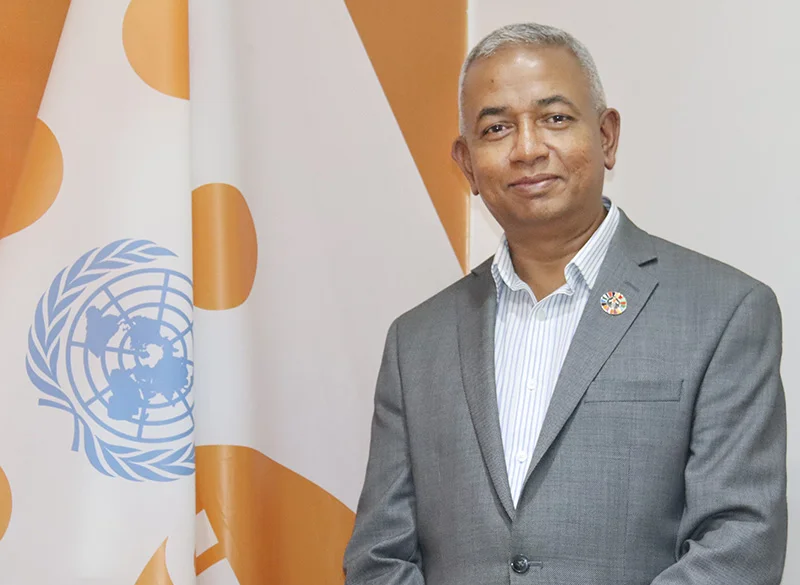
Marking World Health Day on April 7, health experts have called for a stronger commitment to science-based decision-making to address increasingly complex and evolving health challenges in Sri Lanka and beyond.
Dr. Dayanath Ranatunga, Assistant Representative of the United Nations Population Fund, stressed that health is no longer confined to hospitals or traditional medical systems, but is shaped by a broad spectrum of social, environmental, and technological factors.
“This year’s theme, ‘Together for Health. Stand with Science,’ reminds us that science is not only for laboratories or policymakers. It is a way of thinking and a tool that shapes everyday decisions,” he said.
Dr. Ranatunga noted that modern health challenges are increasingly interconnected, ranging from infectious diseases such as COVID-19 to climate-related risks, demographic shifts, and emerging forms of online violence.
He warned that maternal and newborn health continues to demand urgent attention despite progress. Globally, an estimated 260,000 women died from pregnancy and childbirth-related causes in 2023 alone—many of them preventable through timely, science-based interventions.
“In countries like Sri Lanka, where fertility rates are declining and survival rates improving, every pregnancy carries greater significance—not just for families, but for the future of communities and economies,” he said.
The UNFPA official also highlighted the growing threat of Technology Facilitated Gender-Based Violence (TFGBV), including cyber harassment and online abuse, noting that these forms of violence can have deep psychological consequences despite lacking visible physical harm.
He emphasised the need for multidisciplinary, science-informed approaches that integrate mental health, digital safety, and survivor-centered care.
Turning to demographic trends, Dr. Ranatunga pointed out that increasing life expectancy is bringing new challenges, particularly the rise of non-communicable diseases such as diabetes, cardiovascular illnesses, and cancers.
In Sri Lanka, nearly 13.9% of mothers develop diabetes during pregnancy, a trend attributed to obesity and unhealthy lifestyles, underscoring the urgent need for preventive healthcare strategies.
“Are we investing enough in prevention?” he asked, noting that early intervention and healthier lifestyles could significantly reduce long-term healthcare costs, especially in a country with a free public healthcare system.
He underscored the importance of data-driven policymaking, stating that scientific research and analytics enable governments to identify gaps, anticipate future needs, and allocate resources more effectively.
The UNFPA, he said, is already leveraging tools such as Geographic Information Systems (GIS) to improve access to maternal healthcare, including mapping travel times for pregnant women to reach health facilities.
Digital innovation is also transforming healthcare delivery, from telemedicine to real-time data systems, improving efficiency and ensuring continuity of care even during emergencies.
In Sri Lanka, partnerships between the government and development agencies are helping to modernise training institutions, including facilities in Batticaloa, equipping healthcare workers with both clinical and digital skills.
However, Dr. Ranatunga cautioned that technology alone is not a solution.
“It must be guided by evidence and grounded in equity,” he said, pointing out that women’s health remains significantly underfunded, with only about 7% of global healthcare research focusing on conditions specific to women.
He also drew attention to the growing health impacts of climate change, including extreme weather, food insecurity, and displacement, describing it as an emerging public health crisis.
“Health does not begin in hospitals. It is shaped by the environments we live in, the choices we make, and the systems we build,” he said.
Calling for renewed commitment, Dr. Ranatunga urged stakeholders to invest in prevention, embrace innovation, and ensure that science remains central to policy and practice.
“Science is not just about knowledge—it is about ensuring that everyone has the opportunity to live healthy, dignified lives, and that no one is left behind,” he added.
By Ifham Nizam

 Melantha Perera is well known as a very versatile musician.
He was involved with the band Mirage, as their keyboardist/vocalist, and was also seen in action with other outfits, as well, before embarking on a trip to Australia, as a solo artiste.
I now hear that he has plans to operate as a trio.
However, what has got many talking about Melantha, these days, is his awesome work with the visually impaired Bright Light Band.
They have worked out a special song for the Sinhala and Tamil New Year, aptly titled ‘Awurudu Kaale.’
Says Melantha: “This song has been created to celebrate the spirit of the Sinhala and Tamil New Year and to share the joy of the Awurudu season with all Sri Lankans”.
Yes, of course, Melantha composed the song, with the lyrics written collaboratively by Melantha, Badra, and the parents of the talented performers, whose creative input brought the song to life during moments of inspiration.
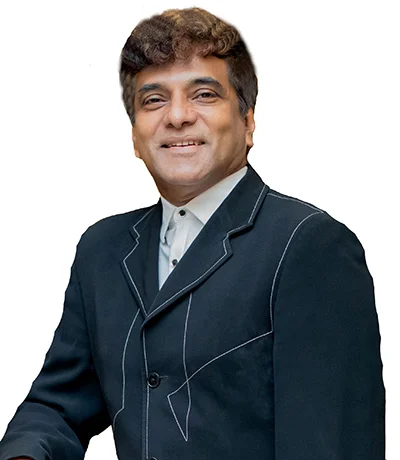
Melantha Perera: Awesome work with Bright Light Band
This meaningful collaboration reflects the strong community behind the Bright Light Band.
According to Melantha, accompaning the song is a vibrant video production that also features the involvement of the parents, highlighting unity, joy, and togetherness.
Beyond showcasing their musical talents, the visually impaired members of Bright Light Band deliver a powerful message, through this project, that their abilities extend beyond singing, as they also express themselves through movement and dance.
Melantha expressed his satisfaction with the outcome of the project and looks forward to sharing it with audiences across the country during this festive season.
He went on to say that Bright Light Band extends its sincere gratitude to Bcert Australia for their generous Mian sponsorship, the CEO of the company, Samath Fernando, for his continuous support in making such initiatives possible, and Rukshan Perera for his personal support and encouragement in bringing this project to completion.
The band also acknowledges Udara Fernando for his invaluable contribution, generously providing studio space and accommodating extended recording sessions to suit the children’s availability.
Appreciation is warmly extended to the parents, whose unwavering commitment from ensuring attendance at rehearsals to supporting the video production has been instrumental in the success of this project.
Through ‘Awurudu Kaale’, Bright Light Band hopes to spread festive cheer and inspire audiences, proving that passion and talent know no boundaries.

PSL 2026: Iftikhar’s all-round show seals last-ball win for Zalmi

BCCI curbs movement of benched IPL players in latest rules

Prasidh trumps Miller in last-ball finish as Gujarat Titans clinch thriller

Greece to ban social media for under-15s from next year

Showers will occur at a few places in the Western, Sabaragamuwa and North-western provinces and in Galle, Matara, Kandy, Nuwara-Eliya and Mannar districts after 2.00 p.m.

Sun directly overhead Chilaw, Bingiriya, Halmillawewa, Panduwasnuwara, Gokarella, Kawudupelella, Koppaveli and Kirankulam about 12:12 noon. today (09)

‘Dates have the highest sugar content to fight Coronavirus’

Sunday Island 27 December – Headlines

#SundayIsland 17th December – Headlines

Sunday Island – 28th March

Sunday Island Headlines – 21 March

Sunday Island – 21st February – Headlines
-

 Features5 days ago
Ranjith Siyambalapitiya turns custodian of a rare living collection
-

 News5 days ago
Global ‘Walk for Peace’ to be held in Lanka
-

 News3 days ago
Lankan-origin actress Subashini found dead in India
-

 Features5 days ago
Beyond the Blue Skies: A Tribute to Captain Elmo Jayawardena
-
 Opinion7 days ago
Hidden truth of Sri Lanka’s debt story: The untold narrative behind the report
-

 Features5 days ago
Aspects of Ceylon/Sri Lanka Foreign Relations – 1948 to 1976
-

 Business19 hours ago
Hayleys Mobility introduces Premium OMODA C9 PHEV
-
 Features7 days ago
The Ramadan War