
Editorial
C4, Grease Yaka and Trojan horse


Monday 25th September, 2023
Channel 4’s recent programme on the Easter Sunday attacks may have made the Rajapaksas squirm and landed President Ranil Wickremesinghe in an awkward position, but former President Maithripala Sirisena has become an unintended beneficiary thereof. It could not have come at a better time for him; he has had to pay Rs 100 million as compensation to the families of the Easter Sunday terror victims, as per a court order, and the government is coming under increasing pressure to ensure that he faces criminal action for his failure to prevent the 2019 terrorist bombings, which took place when he was the President and Minister of Defence.
The Presidential Commission of Inquiry (PCoI), which probed the Easter Sunday attacks, has recommended that criminal proceedings be instituted against Sirisena. He is now at the mercy of President Ranil Wickremesinghe, who can have him prosecuted anytime. He has therefore opted to hold out an olive branch to Wickremesinghe, whom he wronged very badly during the latter stages of the Yahapalana rule, and indicated his willingness to support the UNP; he has gone to the extent of ousting his sidekick, Dayasiri Jayasekera, as the SLFP General Secretary for opposing moves being made to bring the UNP and the SLFP together again.
Sirisena however has got one thing right. He has said an international probe into the Easter Sunday attacks will be fraught with the risk of adversely affecting Sri Lanka’s sovereignty, and therefore what is needed is a thorough domestic investigation with foreign assistance and not a full-fledged international probe as such.
It is not possible that Channel 4 (C4) and those who are said to be behind its programme at issue are driven by a genuine desire to have justice served for the Easter Sunday carnage victims, for they had no qualms about backing Tiger terror, which claimed many more lives than the Easter Sunday attacks. Their real intention seems to be creating a precedent for international probes in Sri Lanka in a bid to achieve their goal of having a UN investigation conducted into alleged war crimes against the Sri Lankan military; C4 has craftily woven war crimes allegations into its programme on the Easter carnage. They have succeeded in making even the ardent opponents of the ongoing campaign for an international war crimes probe against Sri Lanka support their plan, albeit unwittingly.
The government however must not be allowed to use the possibility of the country having to face a UN war crimes probe, in case of an international investigation being held into the Easter Sunday attacks, to justify its unwillingness to have the carnage investigated afresh. Pressure must be amped up on it to launch a credible domestic probe into the Easter Sunday tragedy that shook the world. The Catholic Church and other campaigners for justice have had to call for an international probe because the unpardonable delay on the part of the government to complete the ongoing police investigations into the carnage, and implement the PCoI recommendations fully, is widely viewed as proof of a grand cover-up.
Sri Lankan politicians are adept at political escapism. They are as slippery as the so-called Grease Yaka (a naked voyeur or burglar, covered in grease, moving about at night), and capable of escaping capture when they find themselves on the wrong side of the law. Otherwise, by now, most of them would have been behind bars for their crimes. It is thanks to their escape artistry skills that they have avoided prosecution for their serious lapses that enabled the National Thowheed Jamaat terrorists to carry out the Easter Sunday attacks with ease. They have artfully turned the C4 programme to their advantage!
Sirisena has attempted another escape stunt amidst pressure mounting on the government to have criminal proceedings instituted against him in keeping with the PCoI recommendations. He has used the C4 allegations to assail the validity of the PCoI probe and recommendations; his call for a fresh investigation with international assistance is aimed at further delaying the legal and judicial processes pertaining to the Easter Sunday carnage.
When the PCoI final report became public in 2021, we argued that ideally a fresh probe had to be held based thereon, or if the government chose to implement its recommendations it had to do so expeditiously. If a thorough investigation had been launched at that time, it would have been possible to get at the truth and have justice served many moons ago. At least, the PCoI recommendations should have been implemented fully. Instead, the Rajapaksas opted to let the grass grow under their feet and thereby unwittingly helped bolster the claim that they were attempting a cover-up because they had a hand in the terror attacks. An ill repute is said to influence judgments.

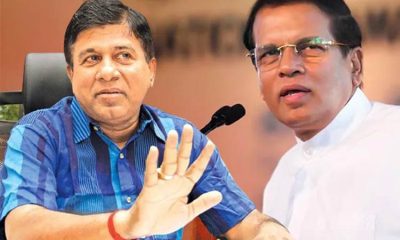

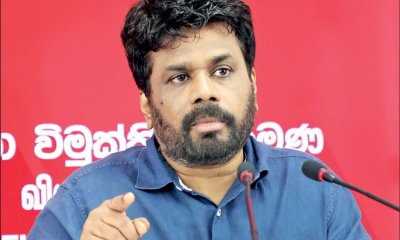

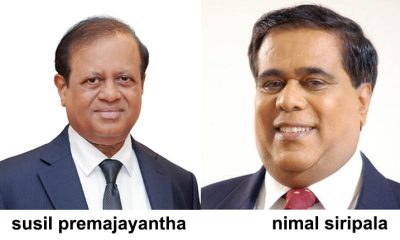

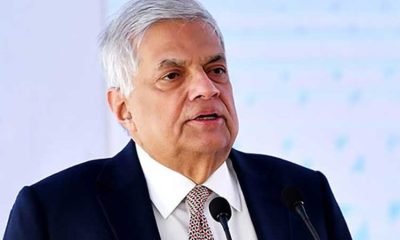




A private company has complained to the police, alleging that Kaduwela Mayor Ranjan Jayalal and NPP MP Asitha Niroshana forcibly took over a block of land belonging to it in Athurugiriya for a Metro bus stand. Lawyers representing the company have told the media that the police have not acted on their complaint due to political pressure. The NPP politicians remain defiant, insisting that the new bus stand will not be shifted under any circumstances.
Sri Lanka politicians take leave of their senses when power goes to their heads. During previous governments, there were widespread allegations that some politicians got their supporters to encroach on privately owned estates in the Colombo suburbs and then demanded money from hapless owners to remove the squatters, while others openly grabbed houses and land with impunity. These allegations have gone uninvestigated. The 2024 regime change was expected to bring such illegal practices to an end. But in 2025, a group of JVP activists, led by a deputy minister, stormed a party office belonging to their rival faction, the Frontline Socialist Party (FSP), in Yakkala, and forcibly occupied it after assaulting and driving away a group of FSP members. They even showed the police a document, claiming that it was a court order vesting the ownership of the building in the JVP, and the police promptly cordoned off the area and set up a checkpoint to ensure the safety of the JVPers. But in April 2026, the Gampaha District Court ordered the JVP to return the office to the FSP.
The alleged land grab in Athurugiriya is different from the previous ones in that it is not intended to benefit any political party or any private individual as such, but it cannot be countenanced on any grounds. There should certainly be a place for the Metro buses to be parked in Kaduwela, but the government must not bulldoze its way through to acquire private property. It should negotiate with the company concerned and explore the possibility of purchasing the land at the prevailing commercial rate or taking it on lease. If the owner is unwilling to sell or lease the property, the government will have to look for an alternative location. There is no other way out. That is the way such disputes should be settled in the civilised world. The police must be made to explain why they have not instituted legal action against the Kaduwela Mayor and the NPP MP.
The government’s efforts to develop the Metro service deserve praise, encouragement and public support. The state-owned bus service has to be revitalised. However, the development of the Metro bus service cannot be cited in extenuation of high-handed actions, such as the alleged land grab.
It is high time the JVP/NPP politicians and their supporters realised that a popular mandate is not tantamount to a carte blanche and they cannot act according to their whims and fancies. The alleged land grab is bound to have an unsettling effect on investors, particularly foreign investors, given the JVP’s original ideological programme, which bore the imprimatur of its founder-leader Rohana Wijeweera, and the continuing influence of the party’s old guard over the present government. The JVP’s early programme called for far-reaching socialist economic measures, including the abolition of private ownership in several sectors and revolutionary land reform. The forcible land takeover in Athurugiriya not only smacks of statism but also conjures up the failed communist spectres of the past.
The government should take cognisance of what the US says, in its 2026 Investment Climate Statements: Sri Lanka, about land tenure here. Noting that Sri Lanka has made important progress since the 2022 economic crisis, the report says the investment environment remains difficult and unpredictable. It is not simply a negative report: it acknowledges political stability under the NPP government, commitment to the IMF programme. However, it makes specific mention of “tenure insecurity” in the context of weaknesses in Sri Lanka’s land sector. The report lists it alongside land scarcity, fragmented land administration, land degradation, encroachment and land disputes. Tenure insecurity generally means that a person or business does not have sufficiently certain, legally enforceable and transferable rights over the land they occupy or use. But it also means vulnerability to illegal occupation, land grabbing, encroachment or other involuntary loss of land. The World Bank’s definition of ‘tenure insecurity’ is noteworthy. It says tenure security involves protection against the involuntary loss of land, and notes that insecurity can arise from disputes within families or communities, or from the actions of governments or private claimants.
The US investment report provides an important reference to the foreign investors assessing Sri Lanka’s investment climate. The JVP-NPP government therefore should not send the wrong message to investors. In this day and age, news travels almost at subatomic speed, reaching millions of people across the globe within seconds. The government would do well to be mindful of the repercussions of its actions.

Saturday 3rd October, 2026
Private fuel bowser owners were up in arms, yesterday, claiming that they were incurring huge losses because the Ceylon Petroleum Corporation (CPC) had not increased commissions for fuel distribution. Unless the CPC responded favourably to their demand for a substantial increase in commissions, they would be left with no alternative but to stop fuel distribution completely with immediate effect, they warned, noting that the CPC had promised to announce its final decision yesterday.
The Ceylon Petroleum Private Tanker Owners’ Association (CPPTOA), which is leading the fuel bowser owners’ struggle, said yesterday that it expected their commission to be raised at least to 20%, as the cost of fuel distribution had increased sharply. A meeting between the CPPTOA representatives and the CPC officials was going on at the time of writing.
It defies comprehension why the CPC lets the grass grow under its feet without addressing issues that have the potential to cripple fuel distribution. The CPPTOA had been protesting for weeks, but the CPC ignored fuel distributors’ demand. It may have expected the problem to go away with the passage of time. Everything possible must be done to prevent pumps from running dry at filling stations, causing hardships to the public and adversely impacting the economy.
The CPC should have taken immediate action at the first sign of trouble and invited the CPPTOA to talks instead of waiting until the eleventh hour. Prudence demands that a game of chicken be averted in a crucial sector like petroleum distribution.
Issues that could cripple the petroleum sector are best sorted out at the negotiating table, which is the ideal place for bargaining. We are not in a position to say whether it is fair for the CPPTOA to demand a 20% commission, but the fuel distributors’ grievances should be addressed and the CPC ought to hold talks with them and negotiate solutions as and when issues crop up. Flexibility is a prerequisite for resolving trade union problems. Intransigence and brinkmanship only aggravate such issues, much to the detriment of the country’s interests. If bowser operators stopped distributing fuel for a couple of days, perish the thought, it would take a considerable time to replenish supplies thereafter, and fuel queues would reappear. Disruptions to fuel distribution could have a domino effect on virtually every other sector of the economy.
The fragile economy, which is recovering from an unprecedented crisis, cannot take any more shocks, and the patience of the public is manifestly wearing thin. Petroleum sector trade unions have claimed that the CPC is selling fuel from older stocks at higher prices, while fuel distributors have called upon the government to scrap the loss-recovery levy immediately, arguing that the CPC’s legacy debt has now been fully repaid. These are the issues the Opposition should take up in Parliament instead of making loud noises that signify nothing.
One can only hope that the CPC and the CPPTOA will resolve the commission issue through negotiations, and the CPC will act more responsibly in the future without trying to wish away trade union issues that could cripple the petroleum sector.

Friday 2nd October, 2026
An inquiry conducted by the Police Special Investigation Unit (SIU) into some allegations concerning the circumstances that surrounded the 31 August drug detection at the Colombo Port has revealed that there may have been dereliction of duty on the part of Senior Deputy Inspector General of Police (SDIG) Ranmal Kodituwakku and several other officers, according to media reports. The plot thickens.
Acting on information reportedly received from the US Drug Enforcement Administration, the Central Crime Investigation Bureau (CCIB) searched a shipping container, bound for Cameroon, at the Colombo Port, and detected a large quantity of crystal methamphetamine weighing about 471 kg. The intelligence that led to the drug detection had been conveyed to SDIG Kodithuwakku, who was overseeing the CCIB. It was reported that the officers of the CCIB had obtained a search warrant from a Magistrate before opening the container, with the help of some personnel from the Police Narcotics Bureau and Sri Lanka Customs. Now, there is another version of how the drug detection was made.
SIU is reported to have found that both SDIG Kodithuwakku and the Police Narcotics Bureau received information about the drug consignment, on 14 August, but no action was taken immediately. On 22 August, a sub Inspector of the CCIB also received the same information. He subsequently took action and on 31 August, the container was opened in the presence of the Customs officers. The SIU investigators are reported to have found that some officers of the Police Narcotics Bureau were also present at the scene, but the initial detection of the drug consignment was carried out primarily by officers of the CCIB. SIU has recommended that in addition to the internal inquiry a criminal investigation should be conducted, according to media reports. But was the opening of the container strategically delayed, as has been claimed in some quarters? There have been numerous such instances around the world. The SIU investigators therefore ought not to rush to conclusions before establishing whether the delay, if any, formed part of a deliberate investigative strategy.
It has been reported that French Customs found 139 kg of cocaine in a shipping container at Marseille last year but instead of seizing the drug consignment immediately, it resorted to a controlled delivery of the big box to Barcelona, where a stevedore, two recipients and a transporter were arrested.
In 2023, after detecting 240 kg of methamphetamine in a 40-foot-container, Hong Kong Customs arranged for an international controlled delivery to Australia, where the box was bound for, and several arrests were made there. In May 1985, U.S. Customs allowed a drug-laden shipping container arriving at Port Newark to proceed under surveillance in a controlled-delivery operation in order to identify the people who would take delivery of it.
Police investigations have not always inspired public confidence in this country. There have been many instances where they conducted investigations hurriedly and arrived at the wrong conclusions. In 2015, the CID arrested two suspects, including a schoolboy, over the abduction, rape and murder of a little girl in Kotadeniyawa. It was later found that the perpetrator was someone else. Another striking example is the arrest of two former LTTE cadres after the execution-style killing of two policemen in Vavunathivu in 2018. But after the Easter Sunday terror attacks the following year, the CID found that the two policemen had been murdered by the National Thowheed Jamaath, which carried out the 2019 carnage.
So, one can argue that there is nothing inherently implausible about the claim that the opening of the container carrying narcotics at the Colombo Port was postponed in a bid to catch all those responsible for the illegal operation. Only a thorough probe will reveal whether this method was actually adopted in the case of the port drug bust.

Debris found from plane that went missing off US coast

Construction of Jet A-1 Aviation fuel pipeline and new oil tank complex at Muthurajawela begins under President’s patronage

Landslide Early Warnings issued to the Districts of Kandy, Kegalle, Matale and Ratnapura

No handshakes and a delayed ceremony as India beat Pakistan at Asian Games

Showers or thundershowers will occur in most parts of the island after 1.00 p.m

Lanka enters new phase of prosecutions as hurdles clear

‘Dates have the highest sugar content to fight Coronavirus’

Sunday Island 27 December – Headlines

#SundayIsland 17th December – Headlines

Sunday Island – 28th March

Sunday Island Headlines – 21 March

Sunday Island – 21st February – Headlines
-

 News7 days ago
Police remove Thileepan statue in Jaffna
-

 Features7 days ago
The 22nd Amendment, constitutional recovery and illiberal slippage
-

 Features7 days ago
Of foreigners as CEOs of Lankan ventures
-

 Latest News5 days ago
Gold winner Tharanga gets brand-new Honda Vezel from SLAAJ
-

 News7 days ago
Sajith rejects Jt. Opp. protest sabotage claim; SJB TU chief demands remedial action
-

 Features5 days ago
Why Sri Lanka needs an Inclusive Civic Nationalism – urgently
-

 News4 days ago
US-assisted ‘Ice’ detection: NPC to examine IGP’s move to transfer drug-busting team
-

 Features6 days ago
Thailand’s biggest new global star …