
Latest News
Buoyant Zimbabwe plot massive upset against depleted Australia

After a difficult preparation amid a deepening injury crisis, Australia desperately just wanted to get their tournament started and the off-field distractions did not show during a clinical thrashing of Ireland.
It had started to feel that perhaps Australia’s campaign was cursed before it even began, but they issued a reminder of their depth with spearhead Nathan Ellis stepping up in his return from injury while there were encouraging contributions through a measured batting line-up.
With skipper Mitchell Marsh’s status unclear due to a testicular injury, it’s not exactly smooth sailing just yet for Australia, but they can build momentum and take a significant step forward to the Super Eight stage with another victory in Colombo.
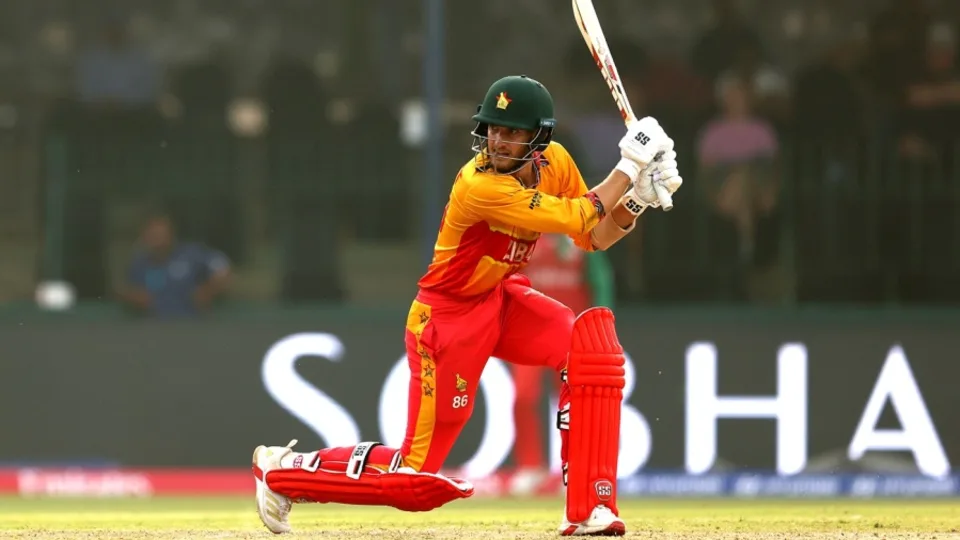
Australia will be heavily favoured but wary against a buoyant Zimbabwe, who enjoyed a successful return to World Cup action by crushing Oman in their opener. Brian Benett underlined his status as a prodigious talent with 48 off 36 balls then, and he will back his aggressive approach in the powerplay against an inexperienced Australia bowling attack.
Zimbabwe do not boast the type of menacing spin options to expose Australia on slower surfaces, but their bustling pace attack will enter confident after rolling Oman over cheaply. This will be a major step up for them, but Zimbabwe should feel excited about playing Australia with contests between these two Full-Member nations rare.
Australia and Zimbabwe have not played one another in any format since an ODI series in northern Queensland in mid-2022. Zimbabwe have been traditionally shunned by Australia although sentiment is starting to shift with the countries set to square off in a three-match ODI series in Zimbabwe later this year. There is also talk of their long Test drought – stretching back to 2003 – finally ending at some point in the next FTP.
To perhaps the surprise of some, Zimbabwe do have the bragging rights at the T20 World Cup, having beaten Australia by five wickets at the first edition in 2007 in their only tournament face-off. It was a historic performance for Zimbabwe against a star-studded Australia side captained by Ricky Ponting and featuring the likes of Adam Gilchrist, Matthew Hayden and Brett Lee.
It must be said that Australia back in those days had relatively scant regard for T20I cricket. Times have certainly changed, with both teams knowing the stakes of this match and the importance of building early tournament momentum.
In 12 innings since the start of the Ashes, Cameron Green has scored at least 17 runs on ten occasions but, bafflingly, his highest score is only 45. Once again, Green started well against Ireland with two sixes in his first ten balls to race to 21 before hitting straight to midwicket. It was a similar theme in Pakistan ahead of the T20 World Cup, where Green was Australia’s standout batter in a wretched series defeat but he just could not kick on. Green, however, is hitting the ball sweetly and looking the goods at No. 3, where his muscular batting is well suited to the powerplay. A belated big score might not be far off.
If Zimbabwe are going to cause a boil over, then their tall pace attack will have to do some damage. Australia’s batters will fancy their chances of counter-attacking, but Blessing Muzarabani looms as a handful given he took three wickets in the powerplay against Oman in his return from injury. He is a versatile bowler, able to menace with full and short deliveries, but he will need to hit the right lengths against Australia’s aggressive top-order.
There remains some unknowns over Australia’s line-up. Marsh is expected to be unavailable and while Steven Smith’s call up has generated plenty of attention, he hasn’t yet been officially added to the squad.
Big-hitter Tim David is getting closer to a return after a hamstring injury suffered in the BBL on Boxing Day. If David is fit, then the spotlight will turn to who he replaces. Matt Renshaw appears to have done enough after a well-compiled 37 off 33 balls against Ireland.
Spin-bowling allrounder Cooper Connolly could be in the selection gun after limited time at the crease batting at No. 7 and he finished with none for 26 from three overs with the ball. If they want to keep Connolly’s bowling versatility then quick Xavier Bartlett could be under pressure after none for 22 from two overs against Ireland. Left-arm quick Ben Dwarshuis is also in the mix.
Australia (probable): Travis Head (capt), Josh Inglis (wk), Cameron Green, Matt Renshaw, Glenn Maxwell, Marcus Stoinis, Cooper Connolly/Tim David, Xavier Bartlett/Ben Dwarshuis, Nathan Ellis, Matt Kuhnemann, Adam Zampa
Veteran wicketkeeper-batter Brendan Taylor, who made an unforgettable 60 not out in the 2007 World Cup match between the teams, is a doubtful starter after retiring hurt against Oman. The exact nature of his injury is unknown, but Taylor is most likely to miss this match and is set to be replaced by reserve keeper Clive Madande, who made ducks against Oman and Netherlands in the warm-up games. Zimbabwe could be tempted to include legspinner Graeme Cremer given the favourable conditions.
Zimbabwe (probable): Brian Bennett, Tadiwanashe Marumani, Dion Mayers, Brendan Taylor/Clive Madande (wk), Sikandar Raza (capt), Ryan Burl, Tashinga Musekiwa, Brad Evans, Wellington Masakadza, Richard Ngarava, Blessing Muzarabani
[Cricinfo]

Latest News
Payment of Compensation to the people who have lost their cultivable lands in implementing the Uma Oya Multipurpose Development Project

Approval has been granted at the Cabinet meeting held on 27-06-2012 to provide cultivable agricultural lands from the lower Uma Oya valley to 276 farming families in Hali-Ela, Walimada, and Uva Paranagama Divisional Secretariat Divisions who have lost their cultivable lands due to the acquisition of lands for the
Uma Oya Multipurpose Development Project.
However, the aforementioned proposal could not be implemented due to the encroachment of a large portion of the identified lands by unauthorized persons, heavy forest cover, the threats posed by wild elephants, remoteness from their original settlements, and difficulties in adapting to other environmental conditions and social anomalies.
Accordingly, the Cabinet of Ministers has approved the resolution furnished by the Minister of Agriculture, Livestock, Land, and Irrigation to pay an estimated compensation of Rs. 12 lakhs for each of these 276 farming families, based on the
recommendations submitted by the Cabinet Sub-Committee appointed to provide solutions for the issues arising in the implementation of the Uma Oya Multipurpose Development Project.
In view of the prevailing war situation in the Middle East region and its impact on the economy, the Government has already taken several immediate measures to mitigate such effects.
In parallel, the need has been identified to manage state expenditure within existing fiscal constraints and approved state expenditure limits, while ensuring the continuity of essential public services.
Accordingly, taking into consideration the restrictions imposed on fuel issuance and the declaration of Wednesdays as holidays for government offices providing non-essential public services, the Cabinet of Ministers has approved the resolution furnished by the President, in his capacity as Minister of Finance, Planning and Economic Development, to continue the
payment of fuel allowances to Ministers, Members of Parliament, and public officers based on the fuel prices
prevailing as at 01-03- 2026, until further notice; and similarly, continue the payment of other allowances linked to fuel prices based on the fuel prices prevailing as at 01-03-2026.
In accordance with the guidance of the Most Venerable Mahanayake Theros and the All Ceylon Shasanarakshaka Mandalaya, it has been identified as appropriate to conduct the State Vesak Festival for the year 2026 (Buddhist Era 2570) at the historic Medillawala Purana Viharaya in Thihagoda, Matara District, with the collaboration of the Ministry of Buddhasasana, Religious and Cultural Affairs, the Ministry of Public Administration, Provincial Councils and Local Government, and the Department of Buddhist Affairs.
It has been decided to conduct this year’s State Vesak Festival under the theme “Abhiththaretha Kalyane” (“Let us
hasten towards the common good”). Accordingly, the Cabinet of Ministers has approved the joint resolution furnished by the Hon. Minister of Public Administration, Provincial Councils and Local Government and the. Minister of Buddhasasana, Religious and Cultural Affairs to: conduct the National Vesak Festival
centering the Medillawala Purana Viharaya in Thihagoda, Matara District; to declare the period from 27 May to 02 June 2026 as Vesak Week; and organize and implement various Buddhist religious programmes across the island during that period.

Payment of Compensation to the people who have lost their cultivable lands in implementing the Uma Oya Multipurpose Development Project
Draft Bill of the Chartered Institute of Media Professionals of Sri Lanka to be Gazzated
Telecommunication Levy Act No. 21 of 2011 to be amended
Management of State Expenditure during the Energy Crisis
Vesak week from 27 May to 02 June
Free Tourist Visas for Passport Holders of 39 Countries

‘Dates have the highest sugar content to fight Coronavirus’

Sunday Island 27 December – Headlines

#SundayIsland 17th December – Headlines

Sunday Island – 28th March

Sunday Island Headlines – 21 March

Sunday Island – 21st February – Headlines
-

 News7 days ago
Senior citizens above 70 years to receive March allowances on Thursday (26)
-

 Features4 days ago
A World Order in Crisis: War, Power, and Resistance
-

 News5 days ago
Energy Minister indicted on corruption charges ahead of no-faith motion against him
-

 News6 days ago
US dodges question on AKD’s claim SL denied permission for military aircraft to land
-

 Business6 days ago
Dialog Unveils Dialog Play Mini with Netflix and Apple TV
-

 News7 days ago
CEB Engineers warn public to be prepared for power cuts after New Year
-

 Sports5 days ago
SLC to hold EGM in April
-

 Latest News5 days ago
A strong Technical and Vocational Education and Training (TVET) system equips individuals with practical, relevant, and future-oriented skills helping to innovate responsibly towards a greener and sustainable future – PM