
News
Buddhist monks, scientists and wildlife activists urge humane, scientific reforms to save Sri Lanka’s wildlife


A powerful alliance of Buddhist clergy, conservation scientists, animal welfare advocates, and corporate representatives has called on the government to abandon ad hoc animal control strategies and adopt science-backed, humane, and sustainable policies to protect Sri Lanka’s animals and ecosystems.
Speaking at a landmark press conference in Colombo, Venerable Pagoda Janithawansha Thera delivered a stirring appeal on behalf of Sri Lanka’s imperiled elephant population.
“Elephants are not just cultural icons — they are central to the biodiversity of our land,” he said. “Our failure to protect them is a moral failure, and one we must urgently correct with evidence-based strategies.”
He cited leading elephant expert Dr. Prithiviraj Fernando, who has shown that while only 30% of the elephants’ natural habitat falls within designated protected areas, 70% of them now roam shared landscapes with humans — a recipe for continued conflict if mismanaged.
The Thera pointed out that attempts to forcibly confine elephants to protected zones have not worked. “We must stop short-sighted decisions and look at successful, long-term strategies — such as community-built and maintained electric fencing, which has proven to reduce conflict.”
The toll on elephants is harrowing. Between 2015 and 2024, nearly 600 elephants were killed — mostly in conflict with humans. And the trend shows no signs of slowing down. Just seven months into 2025, 224 elephant deaths have already been reported.
“These aren’t just statistics,” said conservationist Rukshan Jayawardene. “Each number represents a failure of policy and compassion.”
Another urgent issue raised was Sri Lanka’s unregulated street dog population. For more than a century, the 1893 Rabies Ordinance enabled a brutal catch-and-kill approach, which experts say is not only outdated but ineffective.
Animal rights lawyer Thanuja Navaratne said the shift in 2006 to a sterilization and vaccination strategy, under former President Mahinda Rajapaksa, was a step forward — but it was never properly funded or implemented.
“It’s not just about logistics,” said Dr. Krishanthi Rondon Fuentes of the Animal Wellness Trust. “There’s no central agency with clear responsibility, no regulation of backyard breeders, and too many owned dogs are allowed to roam.”
According to past surveys, nearly half of street dogs in Colombo are actually owned, but are allowed to wander — fuelling the cycle of reproduction and abandonment.
Activist Sharmini Ratnayake of the Animal Welfare Trust highlighted that countries like Bhutan, Singapore, and India have all demonstrated the effectiveness of science-based sterilisation campaigns.
“Bhutan, in keeping with its Buddhist ethos, achieved 100% sterilisation and vaccination of its dog population in just one year,” she noted. “And in cities like Vadodara and Lucknow in India, sterilisation is nearing 90%, effectively ending the cycle of overpopulation.”
A Sri Lankan veterinary expert emphasised that sterilising 400,000 female dogs over two years, followed by sustained effort, could eliminate the problem within one parliamentary term — as most street dogs live only 4–6 years.
Addressing the recent controversy over monkey population control in rural areas, Dr. Ranil Senanayake, Chairman of Earthrestoration P/L, called for an end to violent methods and proposed a non-lethal, scientifically grounded approach.
“We must stop handing guns to villagers. There are better ways,” he said. “Feeding stations with food laced with progesterone can safely and effectively reduce monkey reproduction — a method tested decades ago.”
He urged policymakers to align wildlife management with Sri Lanka’s Buddhist values of ahimsa (non-violence).
Participants from over a dozen animal welfare groups — including Animal SOS, Justice for Animals, Tails of Freedom, and the Animal Welfare and Protection Association — issued a unified message:
“We’re not lacking in knowledge or examples,” said Iromi Salgado of the AWPA. “What we’re lacking is political will, coordination, and long-term commitment.”
Environmental educator Jayantha Wijesinghe stressed that without immediate reform, Sri Lanka risks not only the loss of its biodiversity but also its moral standing in the region.
“We have the wisdom of our faith, the evidence from science, and examples from across the world,” he said. “Let’s choose compassion and intelligence over cruelty and neglect.”
The joint press conference concluded with a clear call: implement proven, humane solutions now — before more animals and humans suffer needlessly.
By Ifham Nizam







Former first lady Shiranthi Rajapaksa, wife of former President Mahinda Rajapaksa was produced before the Hulftsdorp court, after being arrested by officers of the Commission to Investigate Allegations of Bribery or Corruption (CIABOC) and produce
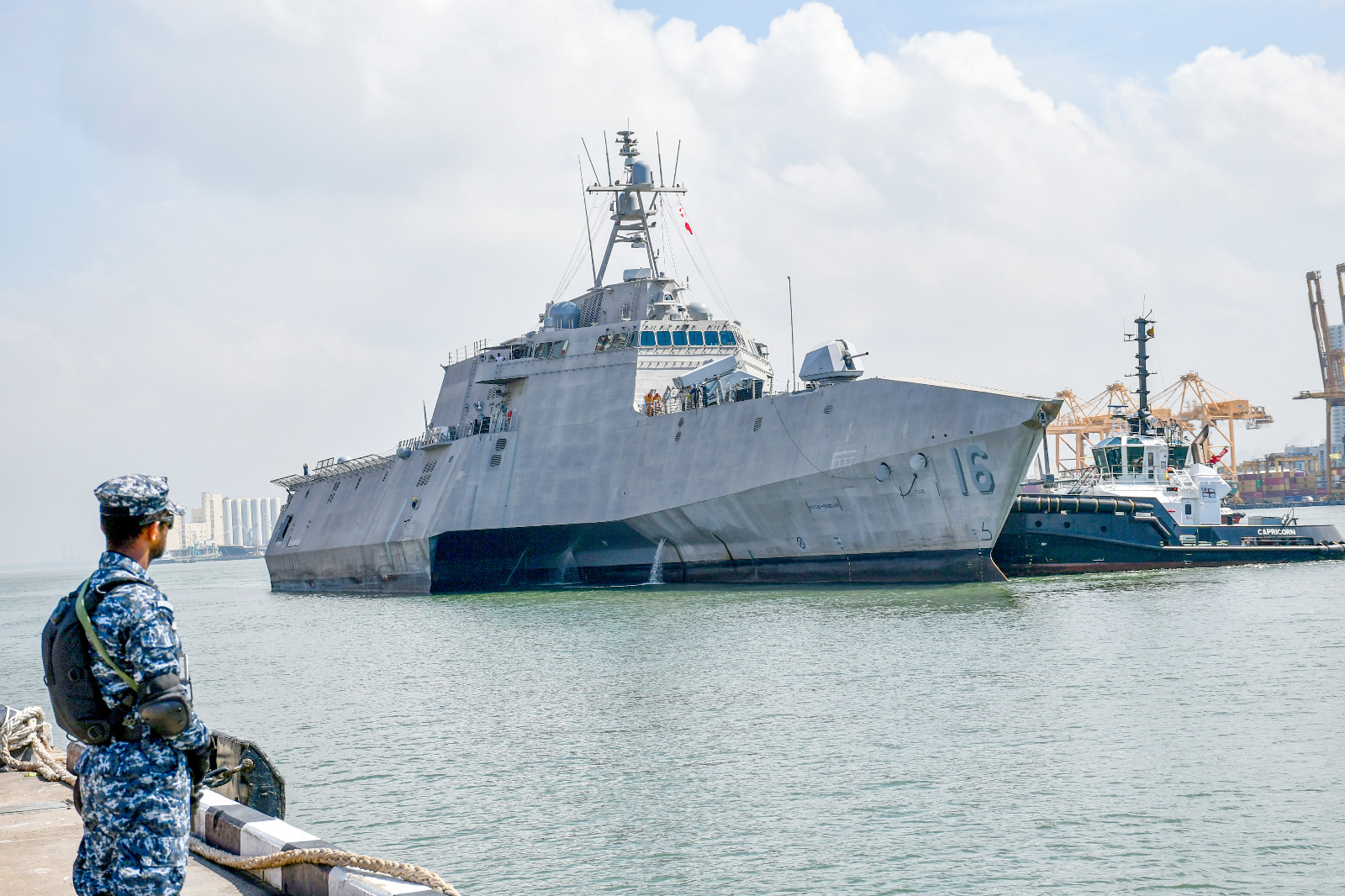
The U.S. Navy ship USS Tulsa (LCS 16) arrived at the Port of Colombo this morning, 7 October 2026 for replenishment purposes.
The visiting ship was welcomed by the Sri Lanka Navy in accordance with naval traditions.
The 127.7-metre-long platform is a Littoral Combat Ship commanded by Commander BM Wanier. Commissioned on 16 February 2019, USS Tulsa has since been in service with the US Navy.
The ship previously made a port call in Sri Lanka on 27 August 2025.
Govt. tells fuel distributors to maintain stocks to ensure uninterrupted supplies
by Saman Indrajith and Norman Palihawadane
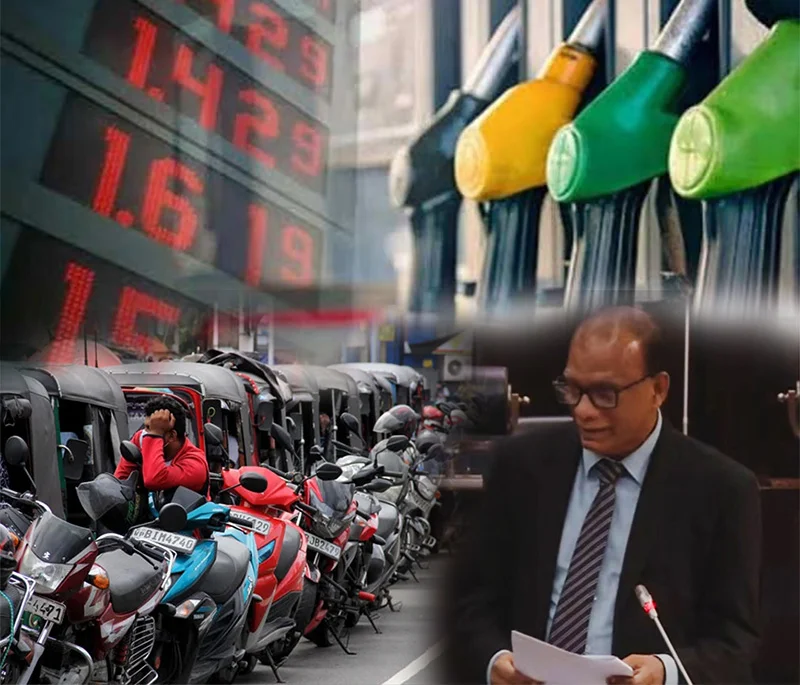
The government had instructed private fuel distributors to maintain minimum stocks and ensure uninterrupted supplies to the market, Energy Minister Anura Karunathilaka told Parliament yesterday (06).
Karunathilaka said the Ministry of Energy Secretary had notified the relevant companies of the requirement, following a reduction in supplies by some private distributors, amid higher international fuel prices.
The Minister said private companies had informed the government that they were facing losses because international prices had risen while fuel was being sold, locally, at prevailing prices. As a result, some companies had reduced the volumes released to the market.
The reduced supplies had increased the burden on the Ceylon Petroleum Corporation (CPC), whose share of the diesel market had risen from about 54% to 82%, the Minister said.
“The CPC currently holds an 82% share of the market,” he said, adding that it had increased its supplies, compared with February, to compensate for the reduction by private distributors.
Karunathilaka said the government could not, under the existing agreements with private companies, specify the quantities they should supply to individual filling stations. However, it could require them to maintain minimum stocks in the country.
The Minister said the Energy Ministry had already instructed companies that had failed to maintain the required stocks to take steps to prevent supply disruptions.
The Minister attributed the queues reported at some filling stations to reduced supplies from private distributors, as well as normal variations in fuel distribution. He also said demand for CPC fuel had increased because private companies generally did not provide fuel to dealers on credit, while the CPC offered a three-day credit facility.
“We expect that, as the Ceylon Petroleum Corporation takes on this additional burden, the problem will ease to some extent by Wednesday or Thursday,” Karunathilaka said.
He said instructions had also been issued to increase supplies to CPC filling stations. A special discussion on the issue is scheduled for today (07), with officials of the Energy Ministry and CPC expected to participate,
along with President Anura Kumara Dissanayake.
Meanwhile, Petroleum Dealers’ Association officials have called for an early solution to the supply issue. Association Chairman D.V. Shantha Silva said queues had been reported at many filling stations, mainly those operated by private distributors.
He said the situation was not due to an overall shortage of fuel, but was linked to reduced orders by Lanka IOC, Sinopec and R.M. Parks amid concerns over losses incurred on fuel sales.
The Ceylon Petroleum Private Tanker Owners Association has urged motorists to refrain from panic buying, saying there was no nationwide disruption to fuel supplies.
The government earlier increased fuel prices and introduced a per-litre diesel subsidy following concerns raised by distributors over rising international prices.

Former first lady Shiranthi Rajapaksa arrested by CIABOC

U.S. Navy ship USS Tulsa arrives in Colombo for replenishment visit

Smriti Mandhana appointed India captain across formats

Ronaldo apologizes for Portugal walkout; says Jesus broke promise

Showers in the Western, Sabaragamuwa, Central, Uva, North-western and Southern provinces and in Anuradhapura and Mannar districts

Fuel crunch looms

‘Dates have the highest sugar content to fight Coronavirus’

Sunday Island 27 December – Headlines

#SundayIsland 17th December – Headlines

Sunday Island – 28th March

Sunday Island Headlines – 21 March

Sunday Island – 21st February – Headlines
-

 News7 days ago
US-assisted ‘Ice’ detection: NPC to examine IGP’s move to transfer drug-busting team
-

 Editorial6 days ago
Colombo Port drug bust: The plot thickens
-

 Editorial7 days ago
Drug busting, transfers and trust deficit
-

 Features4 days ago
The first woman in the foreign service or Ceylon Overseas Service it was then called
-
 News7 days ago
Sri Lankan facing death penalty in Saudi Arabia: Mano G appeals to Crown Prince
-

 Editorial5 days ago
Fuelling discontent and protest
-

 News3 days ago
Geneva takes up Sallay’s case and govt. ignores opportunity to answer accusations
-

 Latest News5 days ago
Tharindu Rathnayake, bowlers secure Asian Games Bronze for Sri Lanka