
Features
BRIGHT STARS OF COLOMBO CHETTY COMMUNITY


by ECB Wijesinghe
I am beholden to my friend, Mervyn Casie Chetty, lawyer, poet, wit and reigning king of the Colombo Chetty community, for the fund of information he gave about Dr. Philip Sebastian Brito, one of the medical giants of a bygone era. His portrait showing a massive head, broad shoulders and sparkling eyes still adorns the walls of the Medical College.
The Brito family was famous even at the turn of this century and double-barrelled names like Brito-Muttunayagam and Brito-Babapulle testify to their pride in a distinguished ancestry. Old Dr. Brito-Babapulle’s name was a household word in Grandpas. Besides being a good doctor he was a humorist and even compiled a book of jokes. He paid the penalty for his reputation for making witty speeches by being invited to speak at every important public dinner and festive occasion.
Ultimately his digestion was affected and he went through life with a chronic gastric complaint. Which of course, was no joke. When I married, Dr. Babapulle gave us a wall-clock as a wedding present. One day when I was not feeling too well the clock stopped mysteriously and I thought my end had come. But to my dismay I soon learned that the dear old doctor had passed away instead. If he had known of my apprehensions I am certain he would have had a long, last laugh. Dr. Babapulle is no more, but the clock is still ticking.
Mervyn Casie Chetty is wrong when he says that it is mainly medical blood that runs through the Brito family. I was in school with the last of Dr. P.S. Brito’s sons, who rejoiced in the name of Andrew Theophilus Philip Gurunather Brito. His teachers called him Andrew. His mother called him Theo and his intimate friends liked to call him Gurunather.
Gurunather is an attorney-at-law now practising in Jaffna, but is better known as an astronomer of the first magnitude. Do not be surprised if, one of these days more lustre is added to a famous name by Gurunather, who spends half the night gazing at the stars. One may yet look forward to some celestial object swimming into his ken which, willy-nilly will have to be called Brito’s Comet. When that happens the Brito name will be immortal and the Casie Chettys, Savundranayagams, Aserappas, Ondaatjies, Muttukumarus, Chittys, Perumals,Anandappas, Fernandopulles, Candappas, Alleses, Pullenayagams, Christie-Davids, Rozairos, Rodrigopulles, Murugupulles and all the other collaterals will be able to bask in the reflected glory.
The Colombo Chetty community, incidentally, is an ancient tribe that migrated to this country from South India. They should not be confused with the Natukottai Chettiars, who are mainly money-lenders. One community is as different from the other as chalk is from Dutch Edam cheese. Legend has it that one of the three kings from the Orient who went to worship Christ in Bethlehem was a Colombo Chetty. His name, I believe was Casper. Though Herod wanted him to come up and see him some time after the Bethlehem visit, Casper, being a Wise Man, took a devious route and landed in Sri Lanka, where he lived happily ever afterwards.
It is not correct to say that the Caspersz family in Ceylon has anything to do with Wise Man Casper’s connections with our lovely land. In Kotahena where I spent my boyhood years, it is well known that you cannot throw a stone without hitting a couple of Colombo Chetties. As a clan they are easy-going and are fond of food and music, to say nothing of a little alcohol. Their choir at New Chetty Street compares favourably with any of the philharmonic varieties. Most of them bear Tamil names, but by nature they have greater affinities with the Sinhalese. They celebrate the feasts of St. Anne at Wattala and Welisara with greater eclat than Christmas. The mortality among the porcine population is heavy during these festivals, as they believe in the popular theory that fatty foods are easily digested when they are washed down with large quantities of what they affectionately call “Old Stuff.”
Many Colombo Chetty celebrities have surfaced during the past 200 years. Perhaps the greatest of them was Simon Casie Chetty, the great-grandfather of Mervyn. Simon, however, made two mistakes. One of them was to be born in Calpentyn, where there were no maha vidyalayas at the time. Undeterred by this handicap – or was it? – he educated himself, and, besides mastering four languages, achieved fame as a lawyer judge and historian. And all within a brief life span of some 50 years.
Simon’s other major mistake was to start a newspaper. It was in Tamil and probably the first in that language. But it folded up as most of the best newspapers do, not owing to lack of readers, but due to amnesia on the part of subscribers, who forgot to pay their subscriptions. The history of journalism is studded with such lapses of memory.
Before Simon Casie Chetty’s star began to shine in Colombo there was a Colombo Chetty named Jurgen Ondaatjie who emigrated to Holland and became an instant favourite with the Dutch ladies. Ondaatjie’s virile personality and glib tongue appealed to the phlegmatic dames from Amsterdam to the Utrecht. They immediately took him to their bosoms and tip-toed through the tulips with Jurgen. They liked not only the tan on his face but the tang of his name, which sounded so Dutch that they persuaded their reluctant husbands to give him a high Government post, in fact a four-poster, from where Jurgen Ondaatjie disseminated Oriental culture and added a touch of colour to the sallow complexions of the Netherlands natives.
I had the good fortune to work alongside one of his descendants, a journalist named B.R.J Ondaatjie, the fastest shorthand writer of the day, with probably one exception, Stanley Morrison. He was possessed of a sharp tongue and it was a treat to hear him after one of those confrontations with his boss, D.R.Wijewardene. It was then that he expended his ire on his colleagues, a thing he could not do to D.R.W.
Other Colombo Chetties who made good abroad were the de Mello Aserappas, who rose to the top wherever they went, but the man who really put Ceylon on the map was Emil Savundranayagam. He made a long name short by calling himself Dr. Emil Savundra. If the term “genius” can be applied to any living Ceylonese it is to Emil. Before he was 35 he had acquired an international reputation as a financial wizard. From China to Peru hard-boiled entrepreneurs were dazzled, if not by his virtue, at least by his virtuosity.
Emil made them look like the rabbits which he pulled out of his capacious bag of tricks. Emil was the only Ceylonese to own a luxurious sea-going yacht though owing to recent vicissitudes he has had to give it up and paddle his own canoe. But he is bound to set sail in his yacht once more. You cannot keep a clever man grounded for long.
FOOTNOTE TO HISTORY
My learned friend and kinsman, Stanley Suraweera, the Lion of the Kegalla Bar, has taken my light-hearted romp into the past somewhat seriously and kindly sent me some more details of the famous Colombo Chetty who emigrated over 200 years ago and made good. The point that Stanley wishes to make is that Quint Ondaatje was not only a greater man than Simon Casie Chetty or Dr. P.S. Brito but that he was the greatest Ceylonese of all time. And that of course, includes not only our dear old kings but coming closer to our own generation, men like Dr. Ananda Coomaraswamy, Charles Ambrose Lorenz, Sir Harry Dias, Arunachalam, Ramanathan, D.S. Senanayake, Dudley and S.W.R.D. Bandaranaike.
This statement should raise a hornets’ nest if I knew anything of the idiosyncrasies of these troublesome insects. I do not pretend to be a historian and the little bit of history I crammed for my Cambridge Senior was forgotten immediately after the examination. Nor do I wish to probe too deeply into the cupboards of ancient families because the rattle of skeletons can sometimes be most annoying. Anyhow, this is what Stanley Suraweera writes, and I am giving it headings and all, for the edification of my less-informed readers:
THOSE ONDAATJES
Your reference to the third generation Ondaatje, better known as Quint Ondaatje, in this column, recalls to me this paragraph in Cassell’s Biographical Dictionary – Ondaatje Peter Philip Jurgen Quint, Phd and JUD born Ceylon 1758, died Java 1818. Remarkable as the only Asiatic who figured in European history. He was an orator, writer, politician, lawyer and soldier, but par excellence, a patriot and champion of liberty.
In later years, he was Quartermaster-General under the great Napoleon Bonaparte. Early in life he collected, not only a Master’s degree in Arts at the University of Utrecht, Holland, but also Doctorates in Philosophy and the literal sciences. In February, 1783 he received the honour of the Freedom of the City of Utrecht. He also took to Dutch politics. In the year 1806, Quint was nominated as Councillor of the Court of Finance of the Batavian Republic and towards the end of that same year appointed resident of the Council of Imports and Prices in the Kingdom of Holland, under Louis Bonaparte. By February 1815 he was by royal mandate, included among the Civil Servants of the First Class, destined for the East Indies Service. On April 30, 1818, he was dead.
And in the words of his biographer Mrs. C.M. Davies, the wife whom he had loved so long and so well, sank from a state of perfect health into the grave, a few months after him.
(Excerpted from THE GOOD AT THEIR BEST first published in 1976)

Features
Illegal solar push ravages Hambantota elephant habitat: Environmentalist warns of deepening crisis
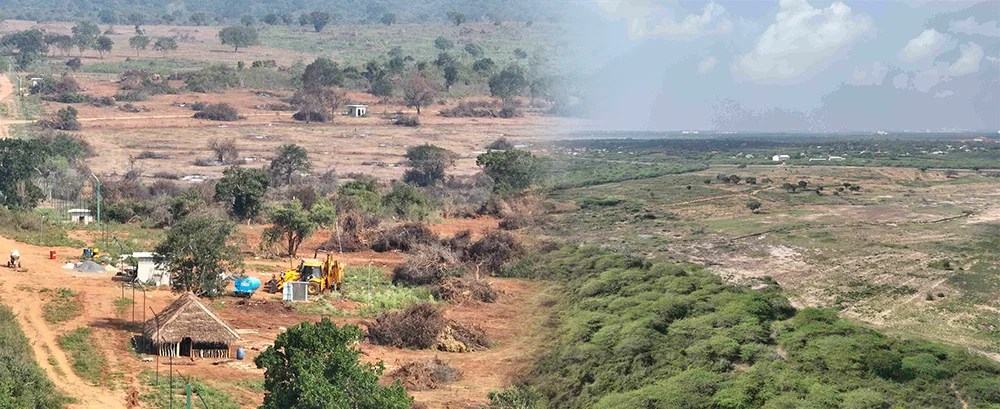
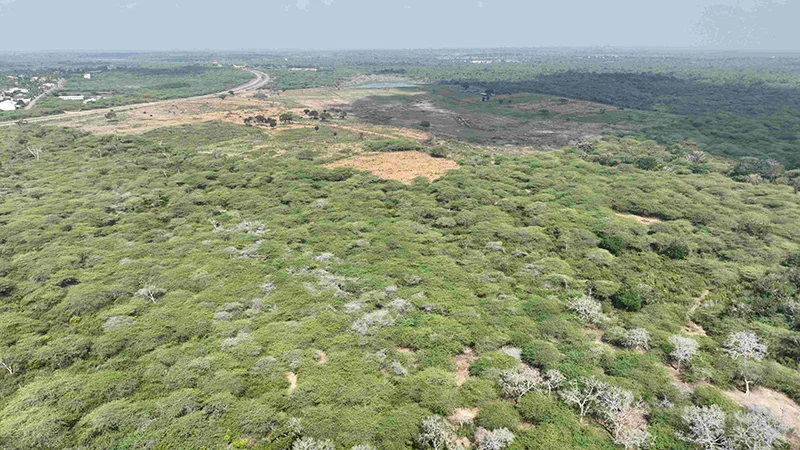
A large-scale move to establish solar power plants in Hambantota has triggered a major environmental and social crisis, with more than 1,000 acres of forest—identified as critical elephant habitat—cleared in violation of the law, environmental activist Sajeewa Chamikara said.
Chamikara, speaking on behalf of the Movement for Land and Agricultural Reform, said that 17 companies have already begun clearing forest land along the boundaries of the Hambantota Elephant Management Reserve. The affected areas include Sanakku Gala, Orukemgala and Kapapu Wewa, which are known to be key elephant habitats and long-used movement corridors.
He said that what is taking place cannot be described as development, but rather as a large-scale destruction of natural ecosystems carried out under the cover of renewable energy expansion.
According to Chamikara, the clearing of forests has been carried out using heavy machinery, while large sections have also been deliberately set on fire to prepare the land for solar installations. He said that electric fences have been erected across wide stretches of land, effectively blocking elephant movement and fragmenting their natural habitat.
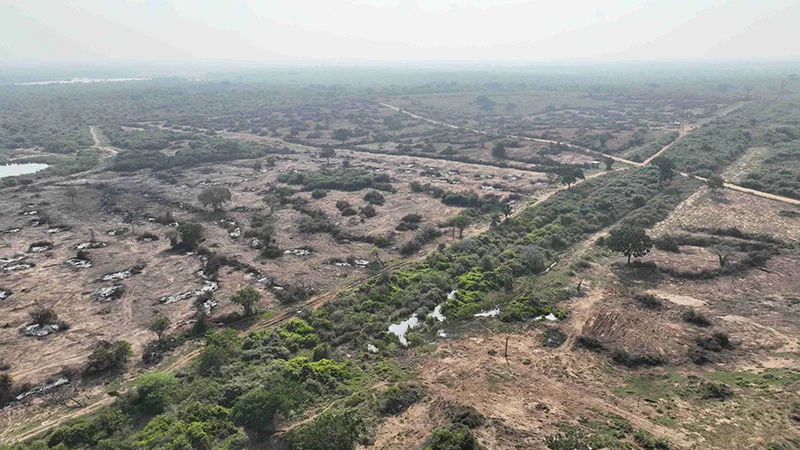
“These forests are not empty lands. They are part of a living system that supports wildlife and nearby communities. Once destroyed, they cannot be easily restored,” he said.
The projects in question include a 50 megawatt solar development undertaken by five companies and a larger 150 megawatt project implemented by 12 companies. The larger project is reported to be valued at around 150 million US dollars.
Chamikara stressed that these projects are being carried out in a coordinated manner and involve extensive land clearing on a scale that raises serious environmental concerns.
He further alleged that certain companies had paid about Rs. 14 million to secure support and move ahead with the projects. He said this points to a troubling failure of oversight by state institutions that are expected to protect forests and wildlife habitats.
“This is not only an environmental issue. It is also a serious governance issue. The institutions responsible for protecting these lands have failed in their duty,” he said.
Chamikara pointed out that under the National Environmental Act, any project of this scale must receive prior approval through a proper Environmental Impact Assessment process.
He said that clearing forest land before obtaining such approval is a direct violation of the law.
He added that legal requirements relating to archaeological assessments had also been ignored. Under existing regulations, large-scale land clearing requires prior evaluation to ensure that sites of historical or cultural value are not damaged.
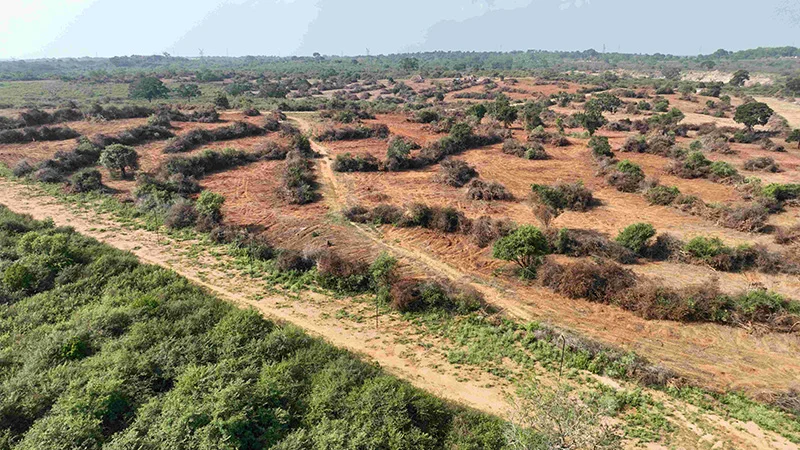
“The law is very clear. You cannot go ahead with projects of this nature without proper approval. What we are seeing is a complete disregard for legal procedure,” Chamikara said.
The environmental impact of these activities is already becoming visible. With their natural habitats destroyed, elephants are increasingly moving into nearby villages in search of food and shelter. This has led to a sharp rise in human-elephant conflict in several areas.
Areas such as Mayurapura, Gonnooruwa, Meegahajandura and Thanamalvila have reported increasing encounters between humans and elephants. According to Chamikara, more than 5,000 farming families in these areas are now facing growing threats to their safety and livelihoods.
He warned that farmers are being forced to abandon their lands due to repeated elephant intrusions, while incidents involving damage to crops and property are rising. There have also been increasing reports of injuries and deaths among both humans and elephants.
“This is turning into a serious social and economic problem. When farmers cannot cultivate their lands, it affects food production, income and rural stability,” he said.
Chamikara also raised concerns about the broader environmental consequences of clearing forests for solar power projects. While renewable energy is promoted as a solution to reduce carbon emissions, he said that destroying forests undermines that goal.
“Forests play a key role in absorbing carbon dioxide. When you clear and burn them, you are increasing emissions, not reducing them. That defeats the purpose of promoting solar energy,” he explained.
He added that large-scale deforestation in dry zone areas such as Hambantota could also affect local weather patterns and reduce rainfall, which would have further negative impacts on agriculture and water resources.
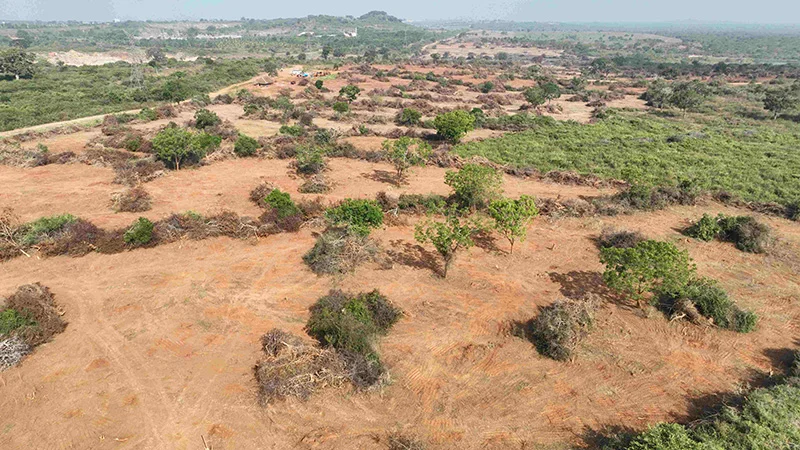
Chamikara called for a shift in policy, urging authorities to focus on more sustainable approaches to solar power development. He said that rooftop solar systems on homes, public buildings and commercial establishments should be given priority, as they do not require clearing large areas of land.
He also recommended that solar projects be located on degraded or abandoned lands, such as areas affected by past mining or other low-value lands, rather than forests or productive agricultural areas.
“Renewable energy development must be done in a way that does not destroy the environment. There are better options available if there is proper planning,” he said.
Chamikara urged the Central Environmental Authority and the Department of Wildlife Conservation to take immediate action to stop ongoing land clearing and investigate the projects. He stressed that all activities carried out without proper approval should be halted until legal requirements are met.
He warned that failure to act now would lead to long-term environmental damage that could not be reversed.
“If this continues, we will lose not only forests and wildlife, but also the balance between people and nature that supports rural life. The consequences will be felt for generations,” he said.
The situation in Hambantota is fast emerging as a critical test of whether development goals can be balanced with environmental protection. As pressure grows, the response of authorities in the coming weeks is likely to determine whether the damage can still be contained or whether it will continue to spread unchecked.
By Ifham Nizam
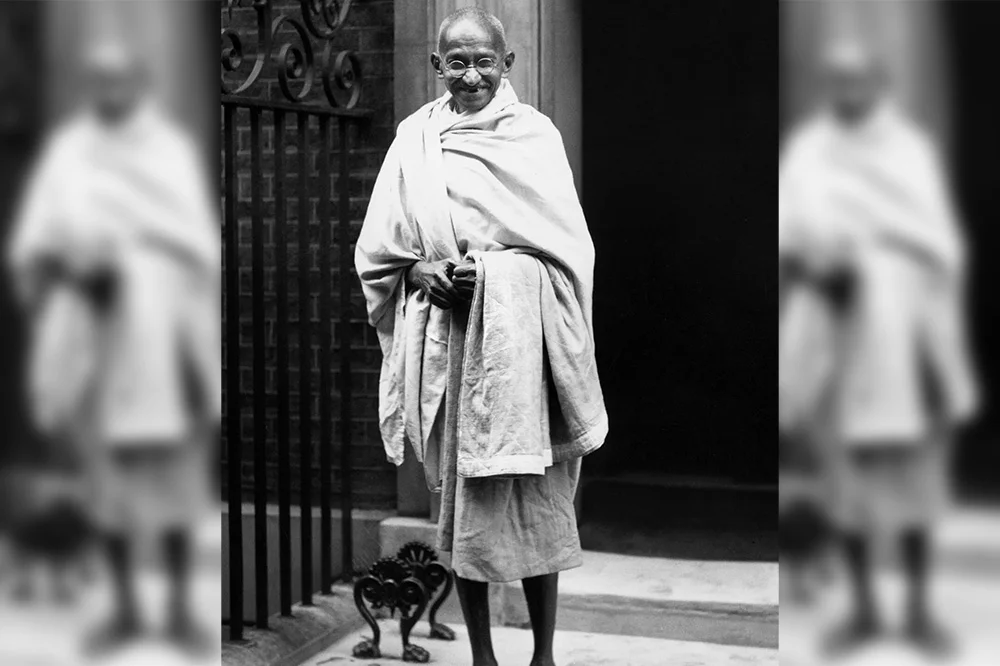
 All credit to the Tamil Nadu government for taking concrete measures to perpetuate the memory of the renowned Mahatma Gandhi of India, who on account of his moral teachings stands on par with the likes of Socrates, Plato, Aristotle, Confucius and Jalaluddin Rumi, to name a few such all-time greats. The time is indeed ripe to draw the world’s attention to the Mahatma’s humanistic legacy which has resonated in the hearts of peace-oriented sections the world over down the decades.
Under its mega developmental blueprint titled ‘ Tamil Nadu 2030’, the Tamil Nadu government, among other things, intends transforming villages into centres of economic growth in conformity with the Mahatma’s vision of making the village the fundamental unit of material and spiritual advancement. Thus will come into being the ‘Uttamar Gandhi Model Villages Project’, which will be initially covering 10 village Panchayats. (Please see page 3 of The Island of March 11, 2026).
The timeliness of remembering and appreciating anew the teachings of Mahatma Gandhi resides in the utter lawlessness that has been allowed to overtake the world over the last few decades by none other than those global powers which took it upon themselves to usher in a world political and economic order based on the UN Charter and the Universal Declaration of Human Rights. Mainly in ‘the dock’ in this regard are the permanent members of the UN Security Council.
As is plain to see, the international law and order situation has veered out of control. Principal priorities for the international community or what’s left of it is to prevent the current mainly regional war in the Middle East from degenerating dangerously into another world war, coupled with the task of eliminating the possibility of another nuclear holocaust.
The most scorching of ironies is that the world’s ‘number one power’, the US, has virtually lost its way in the ‘Global Disorder’ it has been party to letting lose. For instance, instead of making good its boast of militarily neutralizing Iran and paving the way for the constant flow of fuel and gas from the Strait of Hormus by itself and Israel, it is now appealing to the rest of the West to come to its assistance. Not surprisingly, US allies are indicating their unwillingness to help pull the US’ ‘chestnuts out of the fire’.
Oil and gas are the veritable life blood of countries and going ahead it should not come as a surprise if impatience gets the better of the major powers and the nuclear option is resorted to by some of them under the dangerous illusion that it would be a quick-fix to their growing economic ills and frustrations.
All the above and more are within the realms of the possible and the need is pressing for humanistic voices to take centre stage in the present runaway crisis. As pointed out in this column last week, Realpolitik has overtaken the world and unless the latter is convinced of the self-destructive nature of the major powers’ policy of ‘meeting fire with fire’ to resolve their disputes, annihilation could be the lot of a good part of the world.
For far too long the voice of humanity has been muted and silenced in the affairs of the world by the incendiary threats and counter-threats of the big powers and their allies. No quarter has been bold enough in these blood pressure-hiking slanging matches to speak of the need for brotherly love and compassion among nations and countries. But it’s the language of love and understanding that is the most pressing need currently and the Mahatma in his time did just that against mighty odds.
At present the US and Iran are trading threats and accusations over military-related developments in the Gulf and it’s anybody’s guess as to what turn these events will take. However, calming voices of humanity and moderation would help in deescalating tensions and such voices need to go to the assistance of the UN chief and his team.
The Mahatma used the technique of ‘Satyagraha’ or the policy of non-violent resistance to oppose and dis-empower to a degree the British empire in his time and the current major powers would do well to take a leaf from Gandhi. The latter also integrated into the strategy of non-violent resistance the policy of ‘Ahimsa’ or love and understanding which helped greatly in uniting rather than alienating adversaries. The language of love, it has been proved, speaks to the hearts and minds of people and has a profoundly healing impact.
Mahatma Gandhi defined the ideal of ‘Ahimsa’ thus: ‘In its positive form, “Ahimsa” means the largest love, the greatest charity. If I am a follower of “Ahimsa”, I must love my enemy or a stranger to me as I would my wrong-doing father or son. This active “Ahimsa” necessarily includes truth and fearlessness.’ (See; ‘Modern Indian Political Thought; Text and Context’ by Bidyut Chakrabarty and Rajendra Kumar Pandey, Sage Publications India, Pvt. Ltd., www.sagepub.in).
In the latter publication, the authors also defined the essence of ‘satyagraha’ as ‘protest without rancour’ and this is seen as ‘holding the key to his entire campaign’ of non-violent resistance. From these perspectives, the teaching, ‘hatred begets hatred’ acquires more salience and meaning.
Accordingly, the voice of reason and love needs to come centre stage and take charge of current international political discourse. The UN and allied organizations which advocate conflict resolution by peaceful means need to get together and ensure that their voices are clearly heard and understood. The global South could help in this process by seeing to the vibrant rejuvenation of organizations such as the Non-aligned Movement.
An immediate task for the peace-oriented and well meaning is to make the above projects happen fast. In the process they should underscore afresh the profound importance of the teachings of Mahatma Gandhi, who is acclaimed the world over as a uniting and healing political personality and prophet of peace.
If the Mahatma is universally acclaimed, the reason is plain to see. Put simply, he spoke to the hearts and minds of people everywhere, regardless of man-made barriers. The language of peace and brotherhood, that is, is understood by everyone. The world needs more prophets of peace and reconciliation of the likes of the Mahatma to drown out the voices of discord and war-mongering and ensure that the language of humanity prevails.

 The Future Model Hunt extravaganza, organised by Rukmal Senanayake, and advocacy trainer Tharaka Gurukanda, held in late January 2026, has brought into the limelight four outstanding contestants who will participate, at the international level, this year – Sandeepa Sewmini, Demitha Jayawardhana, Diwyanjana Senevirathna, and Nimesha Premachandra.
Nimesha took the honours as Mrs. Tourism Sri Lanka 2026 and was featured in The Island of 05th March,
Sandeepa Sewmini was crowned Miss Supranational 2026 and will represent Sri Lanka at the big event to be held in Poland later in the year.
A Business Management and Human Resources student, she will be competing under the guidance of Rukmal Senanayake from the Model With Ruki – Model Academy & Agency.
The Mister Supranational Sri Lanka crown went to Demitha Jayawardhana, a 20-year-old professional model and motocross rider.
Apart from modelling he is engaged in his family business.

Demitha Jayawardhana: Mister Supranational Sri Lanka 2026
Demitha is also a badminton player with a strong passion for sports, fitness and personal growth.
In fact, he is recognised for his strength, discipline, and passion for fitness.
A past student of Wycherley International School and St Peter’s College, Colombo, Demitha is currently in his second year of Economics Management at the Royal Institute of Colombo.
He will represent Sri Lanka at the 10th edition of the Mister Supranational pageant, in Poland, in August, 2026.
Mister and Miss Supranational are annual international beauty pageants, held in Poland, and are designed to discover new talent for the modelling and television industries and produce instant celebrities.
The competition focuses on elegance, intelligence, and social advocacy, with contestants, representing their countries.
The newly appointed Miss Teen International Sri Lanka 2026 is Diwyanjana Senevirathna.
She was crowned at the Future Model Hunt and will represent Sri Lanka at the Miss Teen International 2026 pageant in India.
Diwyanjana is noted for her grace and dedication to representing the country at this prestigious event that aims to celebrate talent, intelligence, charm, and individuality, and provide a platform for young girls to showcase their skills.

King Charles praises ‘living bridge’ with Nigeria at glitzy banquet

Our objective is to ensure that the Commission to Investigate Allegations of Bribery or Corruption operates as an independent institution, free from any external influence – PM

Showers above 50 mm can be expected at some places in the Central, Sabaragamuwa and Uva provinces and in Ampara district.

Oil nears $110 a barrel after gas field strike

Iran’s intelligence minister Esmail Khatib killed in air strike

Heat Index at ‘Caution Level’ in the Western, Sabaragamuwa, North-central, Southern and North-western provinces and in Monaragala, Mannar, Vavuniya and Mullaitivu districts

‘Dates have the highest sugar content to fight Coronavirus’

Sunday Island 27 December – Headlines

#SundayIsland 17th December – Headlines

Sunday Island – 28th March

Sunday Island Headlines – 21 March

Sunday Island – 21st February – Headlines
-

 Business4 days ago
Browns EV launches fast-charging BAW E7 Pro at Rs. 5.8 million
-

 Life style5 days ago
From culture to empowerment: Indonesia’s vision for Sri Lanka
-

 News2 days ago
CIABOC questions Ex-President GR on house for CJ’s maid
-
 Opinion7 days ago
M. D. Banda: Memories of Appachchi – II
-
 Business6 days ago
Sri Lanka Institute of Information Technology raises the bar for academic excellence
-

 Latest News5 days ago
QR code system will be implemented for fuel with effect from 06.00 a.m. today (15th)
-

 Life style5 days ago
Ranjith Fernando celebrates cricketing journey with Hob Nails to Spikes
-

 News3 days ago
Australian HC debunks misleading travel risk claims for Sri Lanka