
Sports
Bouchier, Capsey and Dean see England through in the wet

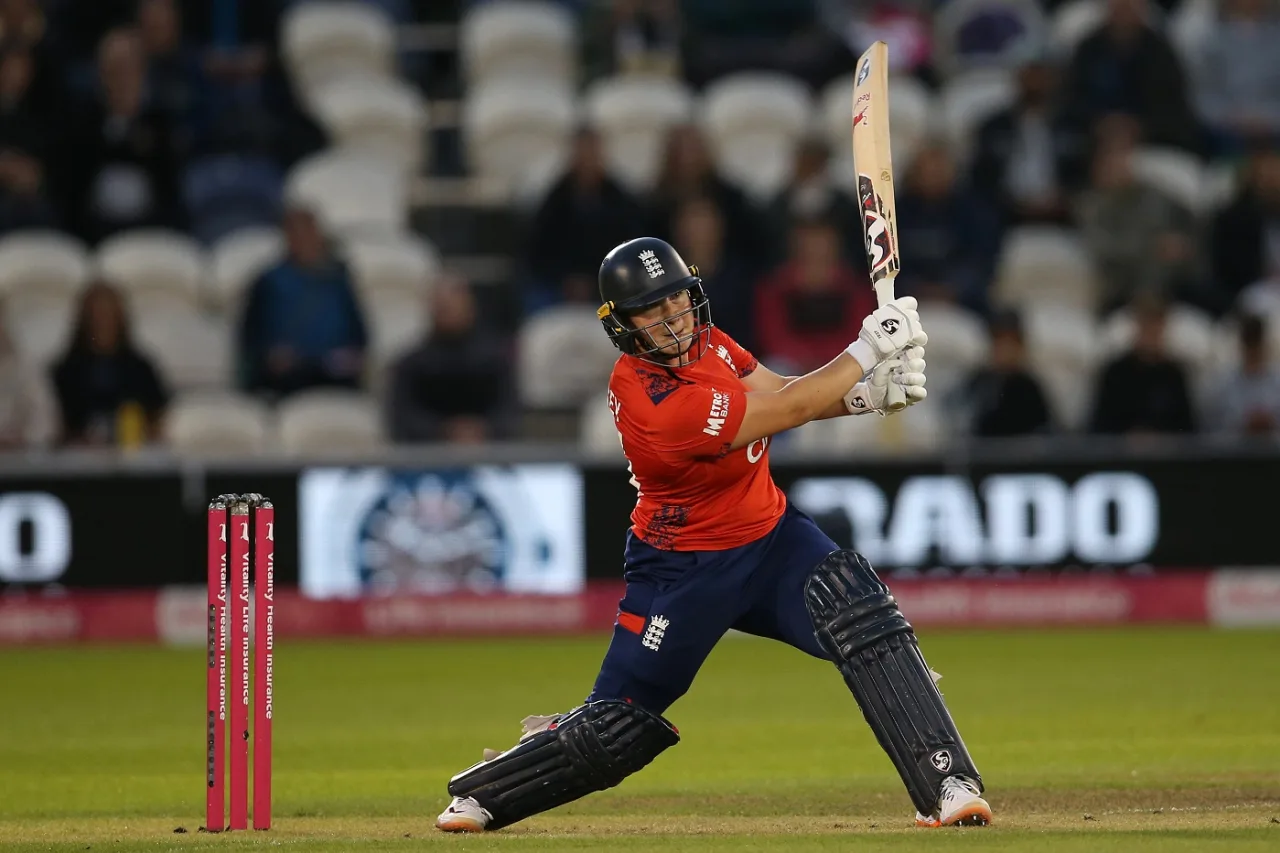
Alice Capsey and Maia Bouchier lifted England to an impressive total which proved more than enough when Charlie Dean ripped into a struggling New Zealand line-up to seal victory in a rain-affected second T20I in Hove.
Persistent rain delayed the start by two hours and cut the match to nine overs per side. Capsey’s 28 off 15 balls and Bouchier’s 23 off 15 set England up for a total of 89 for 6, then Dean took 2 for 3 in a single over as New Zealand crumbled to 42 for 5 in 6.4 overs before the rain returned to end the match even more prematurely than expected, the hosts taking a 2-0 lead in the five-match series which moves to Canterbury on Thursday.
New Zealand won the toss and opted to bowl first. They made two changes to the side which lost the opening match at Southampton on Saturday by 59 runs, bringing in seamer Hannah Rowe and offspinner Leigh Kasperek for Fran Jonas and Eden Carson. England, meanwhile, brought back Lauren Bell – rested after her five-wicket haul in the third and final ODI – and called up Dani Gibson to replace Freya Kemp and Linsey Smith.
Hove’s enviable drainage – and hardworking ground staff – ultimately delivered a playing surface that was sufficiently dry. But, at nine overs per side, the match promised not to be. Although there were no big individual scores, Capsey and Bouchier found, and cleared, the boundary with finesse while Heather Knight struck three fours in her 14-ball cameo of 15 and Sophie Ecclestone hammered a six off the only ball she faced to end the England innings in the best possible way.
It took four legitimate deliveries for Bouchier to get off the mark but to do so she despatched a shorter ball from Jess Kerr over backward square leg and into the stands and she followed up with four through midwicket off Rowe’s first delivery. When Danni Wyatt fell for a third-ball duck, Capsey arrived and helped herself to back-to-back fours off Sophie Devine, a lap through fine leg and a glance through third. Bouchier overcame a knock to the grille via an edge onto her own glove attempting a reverse off Lea Tahuhu to find the boundary twice more but her attempt at a third in a row went awry when she holed out to Maddy Green at long-on.
Georgia Plimmer put down a straightforward chance off Jess Kerr running in from deep square leg when Nat Sciver-Brunt was on 3 and Sciver-Brunt looked to capitalise when she swung Tahuhu into the grounds of the flats which sit beyond the fence at deep midwicket. She survived a review for caught behind next ball but fell moments later as Tahuhu pegged back middle stump. Capsey, who had smashed a six off Jess Kerr over wide mid-off, welcomed Kasperek back to T20Is for the first time in a year by launching her third ball over midwicket and into a hospitality tent, but fell next ball, caught by Jess Kerr at short third.
Amelia Kerr grabbed two wickets in three balls with a return catch to remove Knight and tempting Gibson down the pitch and beating the bat as Izzy Gaze whipped off the bails. That left Ecclestone one ball to face and she muscled it into the stands over long-on.
Devine promised the most in terms of fireworks and walked out to open with Suzie Bates, but she fell for just 9 spooning Lauren Bell tamely to Capsey at mid-on. Then Amelia Kerr picked out Capsey at midwicket off Sciver-Brunt and England had two prize wickets inside the three-over powerplay. Sciver-Brunt fell to the ground, rolled over and stayed there, waiting for it to swallow her up after she parried a Brooke Halliday slog over the rope for six. But Dean managed to remove Halliday in the next over, pinned lbw for 14 and New Zealand were 28 for 3 needing 62 off 29 balls.
Sarah Glenn held an excellent catch diving forward from short third to remove New Zealand’s remaining big hope, Bates for just 4, giving Dean her second wicket in the space of five balls and, after Jess Kerr picked out Knight at extra cover to give Ecclestone her first, the rain returned. The players left the field with 2.2 overs remaining and the rain set in, with handshakes exchanged a short time later, the weather deciding the result in the end on the DLS method and Dean walking away with impressive figures of 1-0-3-2.
Brief scores:
England Women 89 for 6 in 9 overs (Alice Capsey 28, Maia Bouchier 23; Hannah Rowe 1-07, Lea Tahuhu 2-20, Amelia Kerr 2-21, Leigh Kasperek 1-11) beat New Zealand Women 42 for 5 in 6.4 overs (Halliday 14; Nat Sciver-Brunt 1-10, Lauren Bell 1-06, Sophie Ecclestone 1-17, Charlie Dean 2-03) by 23 runs (DLS method)
[Cricinfo]



Sri Lanka’s selectors have a long history of springing surprises that leave the public blinking in disbelief. Some in the present generation may find it hard to imagine that in 1968, three members of the national selection panel picked themselves for a tour of England, dumping popular Ceylon captain Michael Tissera in the process. All hell broke loose. Chandra Schaffter resigned in protest, calling out an unprecedented farce. The government stepped in, introduced the Sports Act and mandated that every national team required Sports Ministry approval — a necessary set of checks and balances to stop cricket from becoming a self-selecting club.
Fast forward to 2025 and the preliminary squad for the upcoming T20 World Cup has once again raised eyebrows. Dasun Shanaka, who not too long ago was struggling to hold onto his place, is now Sri Lanka’s captain. You can just about live with that call. After Charith Asalanka’s excesses in Pakistan, his position as skipper had become untenable, and Shanaka emerged as a Hobson’s choice. But the bigger takeaway is damning: Sri Lanka have done a poor job grooming leaders over the past five years. When Plan A collapses, there is no Plan B and the selectors are left scrambling.
What truly stopped people in their tracks, however, was news that Niroshan Dickwella is closing in on a comeback. That alone suggested the selectors care two hoots about public sentiment.
We have seen enough of Dickwella over more than a decade. The wicketkeeper-batter showed us his ceiling and his limitations. Having been discarded, there is little logic in reopening that chapter.
With Kusal Mendis doing a commendable job behind the stumps in white-ball cricket, there is no need to get carried away with Dickwella’s inclusion, especially when backups like Kusal Janith Perera and Kamil Mishara are waiting in the wings. What the selectors owe the public is an explanation: why exactly was Dickwella needed in the preliminary squad?
Instead, they could have tipped the cap to an up-and-coming player and signalled a shift towards the future. Sri Lanka have moved on from Dickwella; there is no point dragging the past back to the crease.
After 54 Test matches, the absence of a single hundred tells its own story. Dickwella had ample chances to break three figures but repeatedly threw his wicket away, reinforcing the impression of a player who often seemed to play without a care. Talent alone doesn’t win matches; temperament does.
Some may argue that Test numbers are irrelevant in the T20 format. Fair point, except that T20s are where Dickwella has struggled the most. Clearing the ropes has never been his strength. Yes, his sweeps and reverse sweeps allow him to milk spinners, but the negatives far outweigh the positives. With Kusal Mendis as wicketkeeper, Sri Lanka’s DRS record has been impressive; with Dickwella behind the stumps, it has been downright horrendous.
More worrying is the distraction Dickwella brings to the dressing room. The selectors should have learnt their lesson after the bio-bubble breach in England, which saw him sent home along with two others. A retired judge who conducted the inquiry recommended a one-year ban, only for authorities to play soft hands and reduce it to barely three months.
If that wasn’t enough, alarm bells should have rung louder when he was appointed captain of a Lanka Premier League side, only for it to emerge that he had tested positive for drugs in August last year, earning another suspension. That should have been the last straw.
Yet, remarkably, Dickwella keeps finding his way back into the frame.
At some point, authorities must draw a firm line. The game is not short of talent, but it is short of accountability. And until selectors learn to value both, the same old mistakes will keep being replayed, like a bad highlight reel no one wants to watch again.
by Rex Clementine ✍️
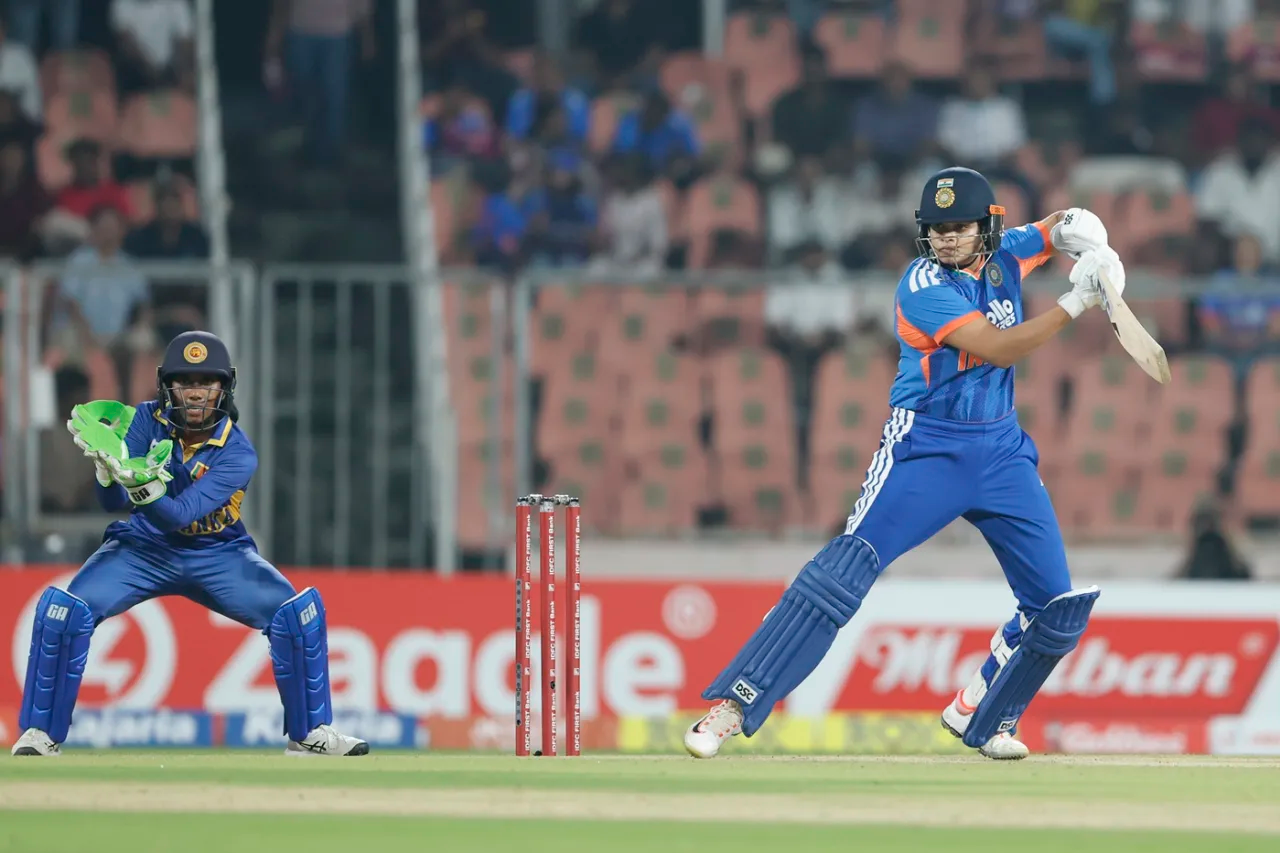
All the three games in this series have followed a similar pattern so far. India have won three tosses – yup, you read that right – elected to bowl, and then used dew to their advantage to chase down modest totals unchallenged.
With a T20 World Cup around the corner, and an unassailable 3-0 lead in their pocket, it would be prudent for India to start challenging themselves and look to set totals if their luck with the toss continues.
They’d also want to perhaps find a way to expand their squad depth a bit more – the lower-order firepower seemed lacking in the 2024 tournament. G Kamalini brings with her the same big-hitting promise Richa Ghosh did as a teenager in 2020. Maybe it’s time to unleash her?
For Sri Lanka, simply being able to challenge India for long enough has been quite a task. They continue to be heavily reliant on Chamari Athapaththu – it’s a bit like how Mithali Raj carried India’s batting for nearly a decade before Smriti Mandhana and Harmanpreet Kaur took centre stage.
Sri Lanka continue to mix and match to find their own versions of Mandhana and Harmanpreet and, while there has been promise here and there, consistent performers have been hard to find.
After Radha Yadav, Tanuja Kanwar, Saika Ishaque and N Shree Charani, 20-year-old Yaishnavi Sharma is the latest to break into India’s left-arm spin club. But, she’s the only one among the five to do so without the WPL giving her a leg up. Vaishnavi finished as the leading wicket-taker in the Senior Women’s T20 Trophy with 21 wickets in 11 matches at an economy rate of 6.47. She backed it up in the inter-zonal tournament and again in these three games against Sri Lanka. Her composure has been striking. So too the courage to keep tossing the ball up.
When Sri Lanka stunned India to win last year’s Asia Cup final, top-scorer Harshitha Samarawickrema seemed a player of immense promise. But in the 17 months since, such moments have been rare. Coach Rumesh Ratnayake continues to back her and believes a turnaround is imminent, and she’ll be keen to repay the faith. Since the start of the T20 World Cup in the UAE last year, she is yet to score a half century in nine innings.
With a T20 World Cup just six months away, this is India’s chance to expand their talent pool and to that end, they may want to bring 17-year-old wicketkeeper Kamalini into the mix and see what she can do.
India (probable): Smriti Mandhana, Shafali Verma, Jemimah Rodrigues, Harmanpreet Kaur (capt), Richa Ghosh/ G Kamalini (wk), Deepti Sharma, Amanjot Kaur, Renuka Singh/Arundhati Reddy, Kranti Gaud, Vaishnavi Sharma, Shree Charani
As a response to their batting needing more support, Sri Lanka made three changes in the last game and ended up posting just 112. There may be more changes on Sunday.
Sri Lanka (probable): Chamari Athapaththu (capt), Hasini Perera, Harshitha Samarawickrama, Imesha Dulani, Nilakshika Silva, Kaushini Nuthyangana (wk), Kavisha Dilhari, Malki Madara, Inoka Ranaweera, Malsha Snehani, Nimasha Meepage
[Cricinfo]
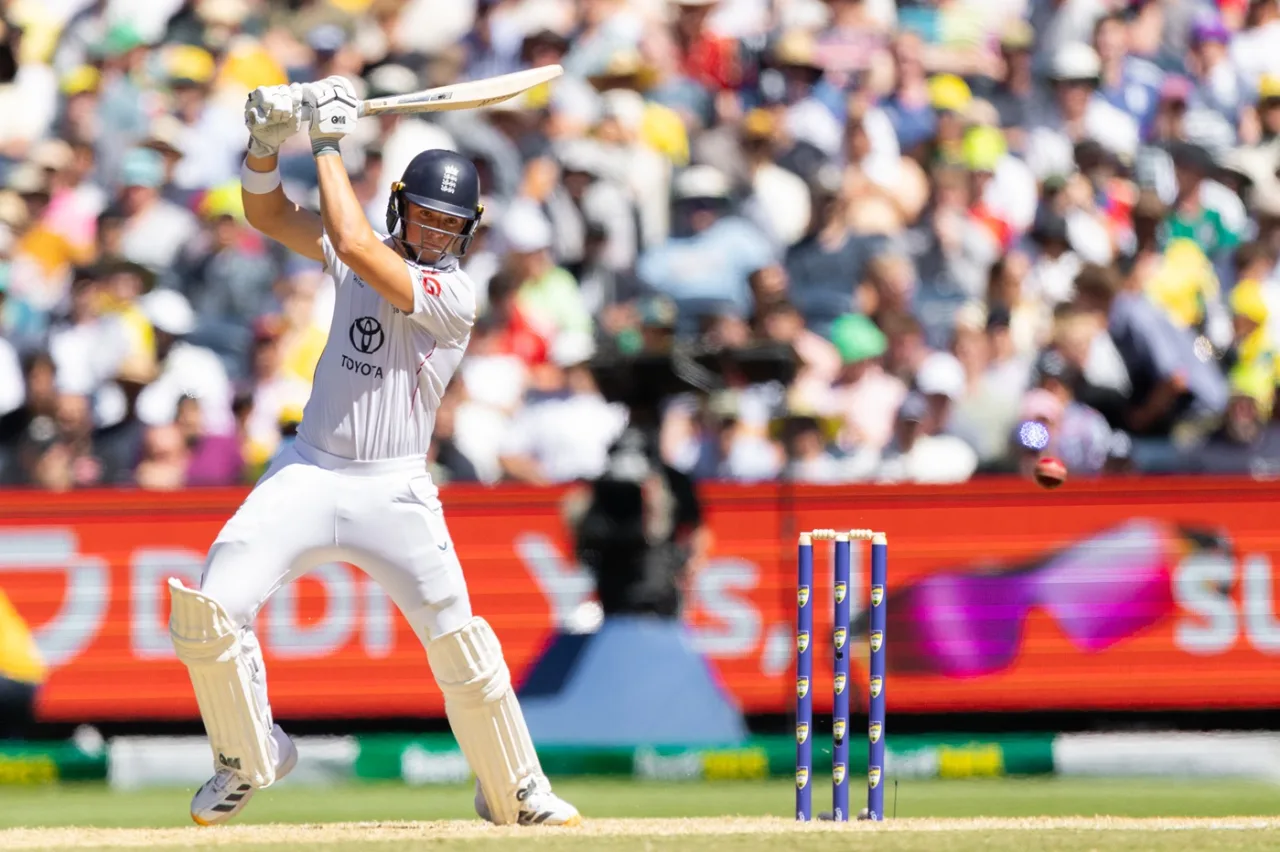
For the first time in 19 matches, and nearly 15 years, England’s men experienced a Test victory in Australia as the MCG raced to the second two-day finish of the Ashes series. On a tough surface which will continue to come under the spotlight in the aftermath, England’s top order met their target of 175 with aggression and they eventually got home with four wickets in hand.
It was only the fifth time in Test history that a series had included multiple two-day finishes, and before this summer, there had only been two in history in Australia. Although more than 186,000 had attended the match across two record-breaking days, it left Cricket Australia facing another significant financial loss – the Ashes has proved a costly affair, and Ben Stokes acknowledged it was far from ideal, but England have avoided the risk of another whitewash down under.
Jacob Bethell who was recalled for this match, compiled 40 to give a glimpse at his potential, but his dismissal meant this would be the first Test in Australia without an individual half-century since 1932 and just the fifth overall. Bethell’s wicket was followed by a little wobble with the winning line in sight. Joe Root was lbw to Jhye Richardson and Stokes carved an edge off Mitchell Starc with ten need, but four leg byes finished the job to roars from the travelling support, although more muted celebrations from England.
Australia, who had earned a first-innings lead of 42 on the manic opening day which brought 20 wickets, could only manage 132 the second time around as Stokes and Brydon Carse shared seven wickets, while Josh Tongue added two more to his impressive match tally. It meant they were able to overcome the loss of Gus Atkinson to a hamstring injury early in the day.
Still, the target was comfortably the highest total of the match. But the intent from Zak Crawley and Ben Duckett was clear and they wiped off 51 inside seven overs. Duckett pinged Starc through the leg side first ball and Crawley launched Michael Neser down the ground in his first over to set the tone. Starc produced some gems, especially to Duckett, and came within fingertips of getting to a return catch from a leading edge.
Tellingly, though, the first ball that Alex Carey came up to the stumps against Neser, Crawley launched him straight down the ground for six and followed that with a blazing drive through the covers. Duckett also took on Neser, a top-edged hoick flying to deep third and then, most stunningly, a scoop going for six. Perhaps there was life in Bazball, after all.
The ball after Duckett cracked his fourth boundary behind point, Starc speared a full delivery through him, but the openers had shifted the mood. England pulled a trick, promoting Carse to No. 3, but he sliced down to deep third, which opened the door for Bethell to play what could prove a significant innings.
Bethell got away with a leading edge first ball, then drove Scott Boland confidently down the ground. He started the final session by reverse-scoping Boland over Carey, then nailed a cover drive.
Boland, who curiously had not been introduced until the 11th over by when England already had 70 on the board, conjured thoughts of another MCG burst from him when he trapped Crawley lbw and had Bethell caught at cover, but Australia didn’t have quite enough runs to play with.
Australia had resumed one over into their second innings with Boland having survived amid heady scenes the night before. He hung around for five more overs before Atkinson found the outside edge to remove a potential frustration for England. However, Atkinson’s day – and potentially series – was soon done when he walked off holding his hamstring at the end of his fifth over, leaving three frontline quicks.
The captain took on the task, Stokes striking in his first over when Jake Weatherald misjudged a delivery from around the wicket which he left alone at the last moment and was bowled. After his excellent first innings in Brisbane, returns have been lean for Weatherald, who faces a big outing in Sydney next week before Australia’s lengthy gap in Test cricket.
By now, the pitch was offering some uneven bounce as well as sideways movement. Marnus Labuschagne took two blows on the gloves before being drawn into poking outside off stump, edging to first slip in a manner that suggests his game is still not in top working order, although conditions provided some caveat.
Travis Head was playing as well as anyone had all game, latching onto anything loose but not breaking into the full-blown attack seen in the second innings in Perth. However, even someone who had survived more than an hour and a half could do nothing about the delivery from Carse, which jagged off the seam to take the top of off stump.
Three balls later, Usman Khawaja top-edged a well-directed short ball from Tongue to long leg. There was no rescue act from Carey this time as he steered a delivery to second slip, where England’s catching continued to be secure.
Either side of lunch, Steven Smith and Cameron Green held firm for nine overs, adding 31 runs, to tip the balance once again. Without ever looking entirely secure, Green again got himself set, as he had in the first innings before running himself out, but flashed an edge to second slip when he drove at a short delivery.
In the absence of Atkinson, Carse lifted impressively and clutched a sharp return catch, full stretch to his left, to remove Neser. Then, with the seventh delivery of the over after a no-ball, he had Starc edging to slip.
Smith showed no inclination to shield No. 11 Richardson (who has a first-class average of 20.70) and a crunched straight drive suggested it was a fair call, but Richardson carved Stokes into the off side to leave England with their target. The pubs, golf courses and Boxing Day sales around Melbourne could get an unexpected boost.
Brief scores:
England 110 in 29.5 overs (Harry Brook 41; Michael Neser 4-45, Scott Boland 3-30, Mitchell Starc 2-23) and 178 for 6 in 32.2 overs (Zak Crawley 37, Ben Duckett 34, Jacob Bethell 40; Mitchell Starc 2-55, Jhye Richardson 2-22, Scott Boland 2-29) beat Australia 152 in 45.2 overs (Michael Neser 35; Josh Tongue 5-45, Gus Atkinson 2-28) and 132 in 34.3 overs (Travis Head 46; Brydon Carse 4-34, Ben Stokes 3-24) by four wickets
[Cricinfo]

Myanmar votes as military holds first election since 2021 coup

Interment of singer Latha Walpola at Borella on Wednesday [31st]

Western Naval Command conducts beach cleanup to mark Navy’s 75th anniversary

Ex-Malaysia PM Najib Razak given 15-year jail term over state funds scandal

Two dead in 50-vehicle pile up on Japan highway

New York blanketed in snow, sparking travel chaos

‘Dates have the highest sugar content to fight Coronavirus’

Sunday Island 27 December – Headlines

#SundayIsland 17th December – Headlines

Sunday Island – 28th March

Sunday Island Headlines – 21 March

Sunday Island – 21st February – Headlines
-

 News5 days ago
Members of Lankan Community in Washington D.C. donates to ‘Rebuilding Sri Lanka’ Flood Relief Fund
-

 News3 days ago
British MP calls on Foreign Secretary to expand sanction package against ‘Sri Lankan war criminals’
-

 News6 days ago
Air quality deteriorating in Sri Lanka
-

 News6 days ago
Cardinal urges govt. not to weaken key socio-cultural institutions
-

 Features5 days ago
General education reforms: What about language and ethnicity?
-

 News5 days ago
Suspension of Indian drug part of cover-up by NMRA: Academy of Health Professionals
-

 Opinion6 days ago
Ranwala crash: Govt. lays bare its true face
-

 News6 days ago
CID probes unauthorised access to PNB’s vessel monitoring system