
Features
Bold Buddhists and progressive Tamils must interface


A second Trump term poses intrinsic dangers everywhere
by Kumar David
If ethnic confrontation (the national-question, Sinhala-Tamil animosity, call it what you will) is ever going to be checked and reversed there is no force that can do it except the Buddhist clergy. Progressive Buddhism alone has the persuasive power and moral clout to impact the masses and transform the nation’s history. Imagine my delight when I heard that discussions have taken place between bold monks and Tamils in Europe, and if my information is reliable in the US, on the theme, “This rot must stop; we must repair Lanka”. It’s the Buddhist side that for obvious reasons is crucial; the Tamil component does not call the shots. The Tamil participants included elements of the Global Tamil Forum (GTF) and Tamil groups that opine that Eelam-talk is infeasible rubbish and that a solution must be found within an undivided Sri Lanka.
The monks appreciate that a few bold young activists alone are not enough; discussions must penetrate all three ‘nikayas’. Secrecy is counter-productive; information must and will spill out – the sooner the better. Good news unlike good wine does not improve with keeping; I do hope I am not getting excited by a mere storm in a tea cup.
In popular perception the Kandy based Malwatte and Asgiriya ‘nikayas’ (sects) are Govigama, while Amarapura, people say, is open to others. If I am wrong it shows how ignorant of everyman’s knowledge everyday Buddhism. My main point however is not this; it is that the discourse I have referred to must penetrate the Buddhist masses if it is to have political impact.
The Tamil participants included Tamils who though cautious (once bitten twice shy) would be happy to see Sri Lanka return to a multi-ethnic democratic state. The indispensable condition above all else is that the state guarantees the physical security of its citizens from rape, murder, arson and violence. A national minority for which the state cannot provide physical security must seek secession or separation.
What on earth is the use of language, education, juridical recognition, and promotion rights if physical safety of life and limb is absent? In the case of Lanka the state can provide this guarantee only if it ceases to be the agent of Sinhala-Buddhism and the only force that can achieve such a transformation is a bold section of the Buddhist clergy. The DS, SWRD, Sirima, JR and Premedasa led governments were dismal failures on this score. This is the challenge a discourse within Buddhism must have the courage to take on. I am in turn enthusiastic and cautious about the outcome of the current process. If a significant section of the Buddhist clergy is unable to measure up to this challenge, no one else can.
The other force that has accomplished similar feats elsewhere are the Enlightenment that accompanied the French Revolution, and the left in Twentieth Century revolutions. The latter’s zeitgeist in Lanka, the JVP, is as yet unready to come forward on this matter. It seems confused about how to break the stranglehold of Sinhala-Buddhism on state power.
A left perspective
If the discussions I have spoken of are to be meaningful the discourse must enter the public domain. It is not possible and it is undesirable to keep these initiatives hush hush. To have an effect among the Sinhalese people and in order to influence the Tamils, statements have to be issued, at the appropriate time by both sides. After that others like this commentator can enter the debate.
I am now going to make two comments that coming from a hard-core Samasamajist like me may sound sacrilegious. First, the Colvin-Sirima constitution was defective in that Chapter 2 made Buddhism the state religion but this turned out to be a retrogressive (NM disliked it but held his peace because he couldn’t oppose a Republic). Thankfully the monks in the discourse that this essay adverts to are willing to be rid of it.
The second comment is one that I must word carefully if I am not to be misunderstood. Colvin in his enthusiasm to reverse centuries of feudal and colonial rule was enthusiastic in locating sovereignty in the people not in officials of the state. Therefore the Republican Constitution endowed the elected representative of the people (the MPs) with power over the unelected public service.
The Minister at last took precedence over the Permanent Secretary. It was three decades later, after the fall of Coalition Government and the coming into office of the Rajapaksa hoodlum-regime that the power of racketeering MPs over the public service struck disaster into the heart of country’s administrative system. Colvin is not responsible for the economic crisis that caused the fall of the Coalition – that’s a topic in its own right – nor is he responsible for flagrant corruption of Rajapaksa-era MPs who took their cue from their boss and his family. It is only that the high democratic principle that Colvin had championed in 1972 turned out to be a disaster in a different epoch and context, that is, in the epoch after 2005. That’s not his liability.
The International Context
This brings up the need to place these developments within a rapidly changing international context. There are many international developments that will influence this country. I will discuss just one of them here, Trump’s possible re-election because it will have far ranging global influences as I will explain.
Plans are afoot to make the unelected administrative officials and military subservient to the “elected” US President. The July 15-21, 2023 Economist magazine devotes a three page briefing (“Chaos meets preparation”) about the planning for a second Trump term which I summarise in two paras – even the Economist is becoming verbose. The American Heritage Foundation, one of think-tanks that stood behind Regan and an outfit called the America First Policy Institute are in the forefront planning to ‘deconstruct’ the administration and take it over from the inside so that a re-elected Trump will have a pliant instrument in his hands.
Known as Schedule-F, 3,000 – 4,000 administrative officers are being readied as shock troops to “take-over” the state and the 300 administrative offices that issue and interpret federal regulations. It will be an invasion with the clout of the Marine landing on the Normandy Beaches on D-Day. An authoritarian administration that brooks no opposition will only accelerate from the inside the already visible unravelling of American democracy.
Other contingent losers will be global warming, green energy (the US is already the world’s largest producer of oil), countries that “do not contribute enough” to defence spending and Ukraine’s opponents in the war that Putin foolishly unleashed. India which is buying cheap Russian oil with gusto will also come into America’s cross-hairs. Inevitably relations with China will head steeply downward. The setback for limiting global warming and for the environment as a whole as Trump’s Schedule-F team push a pro-business agenda will be hefty.
Take for example the world’s most cherished national parks, Virunga in Eastern Congo (the only remaining habitat of the mountain gorilla) and the numerous Tiger reserves such a Ranthambore that dot India, Both will be erased by commercial-market inroads, alias Capitalism. I cannot resist using a quotation from Jim Corbert: “The tiger is a large-hearted gentleman with boundless courage and if he is exterminated—as exterminated he will be unless public opinion rallies to his support—India will be the poorer, for having lost the finest of her fauna.
” The irony is that public opinion all over the world has rallied to the support of wildlife and wilderness, it is capitalism’s thirst for minerals, lumber, gold and rare-earth materials that is raping the environment. (Of course it is society’s responsibility to protect the livelihood and homes of adjacent communities but this can be done with minimal resource commitments).
A Trump second-term presages a dangerous and different world. The Economist fondly imagines that a second term will be the last as the constitutional limitation on two presidential terms will kick in. I opine differently. With shady characters like Clarence Thomas on the Supreme Court unless impeachment or death delivers salvation anything is possible. In a worst case scenario the court could hold that a Trump victory in 2020 was “stolen” and to compensate for this loss he is eligible to stand again in 2028. The land of the free and the home of the brave may, paradoxically, be destined to live in “interesting times” fulfilling an ancient Chinese curse.
I also fear that second Trump poses dangers for the Buddhist-Tamil reconciliation efforts that I have thus far been so starry-eyed about. A Thucydidean Trap between China and the US is emerging and we will be sucked into these gigantic currents. Neither the Gautama nor Elephant Headed Ganesh can defend us from these gigantic conflicts.
For about five decades America championed globalisation, world trade, unrestricted foreign investment especially in China (thank you Deng Xiao Ping) and unregulated currencies. Now the Thucydides Trap has snapped shut for two reasons. First China’s growing dominance in world trade, its real-estate crisis notwithstanding, and Chinese advancement in cutting edge technology such as AI; robotics and green energy technologies. America is losing the global free trade and investment battle.
The second reason is that China is a far greater military threat than it was 50 years ago especially in the Far Eastern, Taiwan, Pacific and Indian Ocean theatres. These are very general comments but surely Sri Lanka is alive to the deadly implications of aggressive Trump incited foreign policy to our survival. I am sure I can leave it at that. That a Trump second term will be extremely uncomfortable for Sri Lanka, the countries of the Himalayan north-east, Southeast-Asia including Taiwan and the Indian Ocean is obvious.

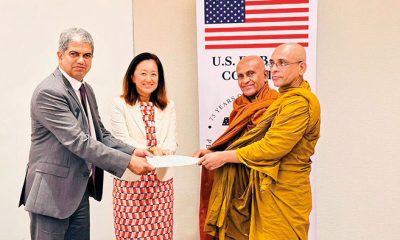






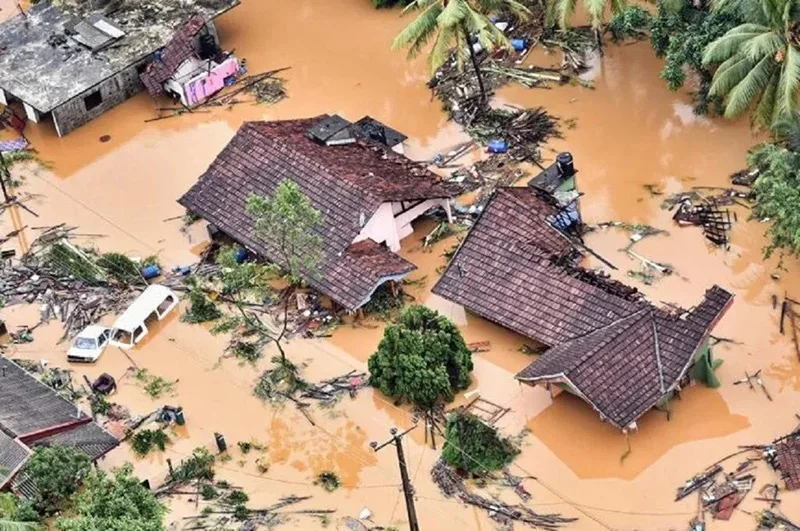
The manner in which the government succeeded in mobilising support from the international community, immediately after the devastating impact of Cyclone Ditwah, may have surprised many people of this country, particularly because our Opposition politicians were ridiculing our “inexperienced” government, in the recent past, for its inability to deal with the international community effectively. However, by now it is evident that the government, with the assistance of the international community and local nongovernmental actors, like major media organisations, has successfully managed the recovery efforts. So, let me begin by thanking them for what they have done so far.
Yet, some may argue that it is not difficult to mobilise the support for recovery efforts from the international community, immediately after any major disaster, and the real challenge is to sustain that support through the next few weeks, months and years. Because the recovery process, more specifically the post-recovery reconstruction process, requires long-term support. So, the government agencies should start immediately to focus on, in addition to initial disaster relief, a longer-term strategy for reconstruction. This is important because in a few weeks’ time, the focus of the global community may shift elsewhere … to another crisis in another corner of the world. Before that happens, the government should take initiatives to get the support from development partners on appropriate policy measures, including exceptional trade preferences, to help Sri Lanka in the recovery efforts through the medium and the long term.
Use of Trade Preferences to support recovery and reconstruction
In the past, the United States and the European Union used exceptional enhanced trade preferences as part of the assistance packages when countries were devastated by natural disasters, similar to Cyclone Ditwah. For example:
- After the devastating floods in Pakistan, in July 2010, the EU granted temporary, exceptional trade preferences to Pakistan (autonomous trade preferences) to aid economic recovery. This measure was a de facto waiver on the standard EU GSP (Generalised Scheme of Preferences) rules. The preferences, which were proposed in October 2010 and were applied until the end of 2013, effectively suspended import duties on 75 types of goods, including textiles and apparel items. The available studies on this waiver indicate that though a significant export hike occurred within a few months after the waiver became effective it did not significantly depress exports by competing countries. Subsequently, Pakistan was granted GSP+ status in 2014.
- Similarly, after the 2015 earthquakes in Nepal, the United States supported Nepal through an extension of unilateral additional preferences, the Nepal Trade Preferences Programme (NTPP). This was a 10-year initiative to grant duty-free access for up to 77 specific Nepali products to aid economic recovery after the 2015 earthquakes. This was also a de facto waiver on the standard US GSP rules.
- Earlier, after Hurricanes Mitch and Georges caused massive devastation across the Caribbean Basin nations, in 1998, severely impacting their economies, the United States proposed a long-term strategy for rebuilding the region that focused on trade enhancement. This resulted in the establishment of the US Caribbean Basin Trade Partnership Act (CBTPA), which was signed into law on 05 October, 2000, as Title II of the Trade and Development Act of 2000. This was a more comprehensive facility than those which were granted to Pakistan and Nepal.

What type of concession should Sri Lanka request from our development partners?
Given these precedents, it is appropriate for Sri Lanka to seek specific trade concessions from the European Union and the United States.
In the European Union, Sri Lanka already benefits from the GSP+ scheme. Under this arrangement Sri Lanka’s exports (theoretically) receive duty-free access into the EU markets. However, in 2023, Sri Lanka’s preference utilisation rate, that is, the ratio of preferential imports to GSP+ eligible imports, stood at 59%. This was significantly below the average utilisation of other GSP beneficiary countries. For example, in 2023, preference utilisation rates for Bangladesh and Pakistan were 90% and 88%, respectively. The main reason for the low utilisation rate of GSP by Sri Lanka is the very strict Rules of Origin requirements for the apparel exports from Sri Lanka. For example, to get GSP benefits, a woven garment from Sri Lanka must be made from fabric that itself had undergone a transformation from yarn to fabric in Sri Lanka or in another qualifying country. However, a similar garment from Bangladesh only requires a single-stage processing (that is, fabric to garment) qualifies for GSP. As a result, less than half of Sri Lanka’s apparel exports to the EU were ineligible for the preferences in 2023.
Sri Lanka should request a relaxation of this strict rule of origin to help economic recovery. As such a concession only covers GSP Rules of Origin only it would impact multilateral trade rules and would not require WTO approval. Hence could be granted immediately by the EU.
United States
Sri Lanka should submit a request to the United States for (a) temporary suspension of the recently introduced 20% additional ad valorem duty and (b) for a programme similar to the Nepal Trade Preferences Programme (NTPP), but designed specifically for Sri Lanka’s needs. As NTPP didn’t require WTO approval, similar concessions also can be granted without difficulty.
Similarly, country-specific requests should be carefully designed and submitted to Japan and other major trading partners.
(The writer is a retired public servant and can be reached at senadhiragomi@gmail.com)
by Gomi Senadhira
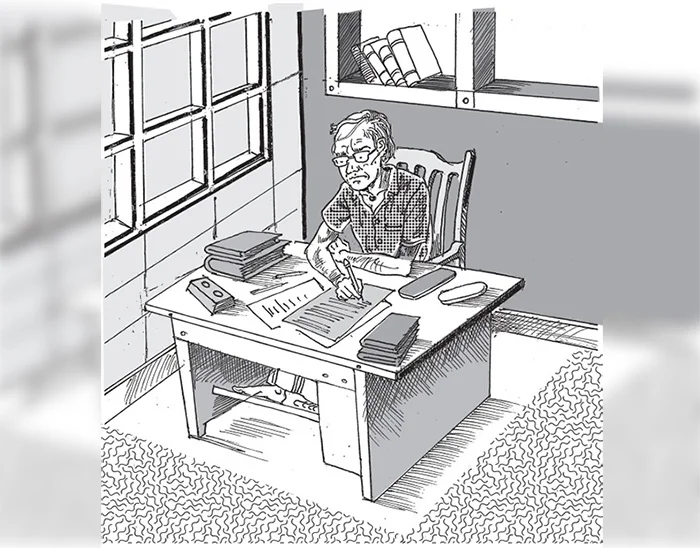
Novelists, poets, short story writers, lyricists, politicians and columnists use words for different purposes. While some of them use words to inform and elevate us, others use them to bolster their ego. If there was no such thing called words, we cannot even imagine what will happen to us. Whether you like it or not everything rests on words. If the Penal Code does not define a crime and prescribe a punishment, judges will not be able to convict criminals. Even the Constitution of our country is a printed document.
A mother’s lullaby contains snatches of sweet and healing words. The effect is immediate. The baby falls asleep within seconds. A lover’s soft and alluring words go right into his or her beloved. An army commander’s words encourage soldiers to go forward without fear. The British wartime Prime Minister Winston Churchill’s words still ring in our ears: “… we shall defend our Island, whatever the cost may be, we shall fight on the beaches, we shall fight on the landing grounds, we shall fight in the fields and in the streets, we shall fight in the hills; we shall never surrender …”
Writers wax eloquent on love. English novelist John Galsworthy wrote: “Love is no hot-house flower, but a wild plant, born of a wet night, born of an hour of sunshine; sprung from wild seed, blown along the road by a wild wind. A wild plant that, when it blooms by chance within the hedge of our gardens, we call a flower; and when it blooms outside we call a weed; but flower or weed, whose scent and colour are always wild.” While living in a world dominated by technology, we often hear a bunch of words that is colourless and often cut to verbal ribbons – “How R U” or “Luv U.” Such words seem to squeeze the life out of language.
Changing medium
Language is a constantly changing medium. New words and forms arrive and old ones die out. Whoever thought that the following Sinhala words would find a place in the Oxford English Dictionary? “Asweddumize, Avurudu, Baila, Kiribath, Kottu Roti, Mallung, Osari, Papare, Walawwa and Watalappan.” With all such borrowed words the English language is expanding and remains beautiful. The language helps us to express subtle ideas clearly and convincingly.
You are judged by the words you use. If you constantly use meaningless little phrases, you will be considered a worthless person. When you read a well-written piece of writing you will note how words jump and laugh on the paper or screen. Some of them wag their tails while others stand back like shy village belles. However, they serve a useful purpose. Words help us to write essays, poems, short stories and novels. If not for the beauty of the language, nobody will read what you write.
If you look at the words meaningfully, you will see some of them tap dancing while others stand to rigid attention. Big or small, all the words you pen form part of the action or part of the narrative. The words you write make your writing readable and exciting. That is why we read our favourite authors again and again.
Editorials
If a marriage is to succeed, partners should respect and love each other. Similarly, if you love words, they will help you to use them intelligently and forcefully. A recent survey in the United States has revealed that only eight per cent of people read the editorial. This is because most editorials are not readable. However, there are some editorials which compel us to read them. Some readers collect such editorials to be read later.
Only a lover of words would notice how some words run smoothly without making a noise. Other words appear to be dancing on the floor. Some words of certain writers are soothing while others set your blood pounding. There is a young monk who is preaching using simple words very effectively. He has a large following of young people addicted to drugs. After listening to his preaching, most of them have given up using illegal drugs. The message is loud and clear. If there is no demand for drugs, nobody will smuggle them into the country.
Some politicians use words so rounded at the edges and softened by wear that they are no longer interesting. The sounds they make are meaningless and listeners get more and more confused. Their expressions are full of expletives the meaning of which is often soiled with careless use of words.
Weather-making
Some words, whether written or spoken, stick like superglue. You will never forget them. William Vergara in his short essay on weather-making says, “Cloud-seeding has touched off one of the most baffling controversies in meteorological history. It has been blamed for or credited with practically all kinds of weather. Some scientists claim seeding can produce floods and hail. Others insist it creates droughts and dissipates clouds. Still others staunchly maintain it has no effect at all. The battle is far from over, but at last one clear conclusion is beginning to emerge: man can change the weather, and he is getting better at it.”
There are words that nurse the ego and heal the heart. The following short paragraph is a good example. S. Radhakrishnan says, “In every religion today we have small minorities who see beyond the horizon of their particular faith, not through religious fellowship is possible, not through the imposition of any one way on the whole but through an all-inclusive recognition that we are all searchers for the truth, pilgrims on the road, that we all aim at the same ethical and spiritual standard.”
There are some words joined together in common phrases. They are so beautiful that they elevate the human race. In the phrase ‘beyond a shadow of doubt’, ‘a shadow’ connotes a dark area covering light. ‘A doubt’ refers to hesitancy in belief. We use such phrases blithely because they are exquisitely beautiful in their structure. The English language is a repository of such miracles of expression that lead to deeper understanding or emphasis.
Social media
Social media use words powerfully. Sometimes they invent new words. Through the social media you can reach millions of viewers without the intervention of the government. Their opinion can stop wars and destroy tyrants. If you use the right words, you can even eliminate poverty to a great extent.
The choice of using powerful words is yours. However, before opening your mouth, tap the computer, unclip a pen, write a lyric or poem, think twice of the effect of your writing. When you talk with a purpose or write with pleasure, you enrich listeners and readers with your marvellous language skills. If you have a command of the language, you will put across your point of view that counts. Always try to find the right words and change the world for a better place for us to live.
By R. S. Karunaratne
karunaratners@gmail.com
Eighteen Years of Delay:
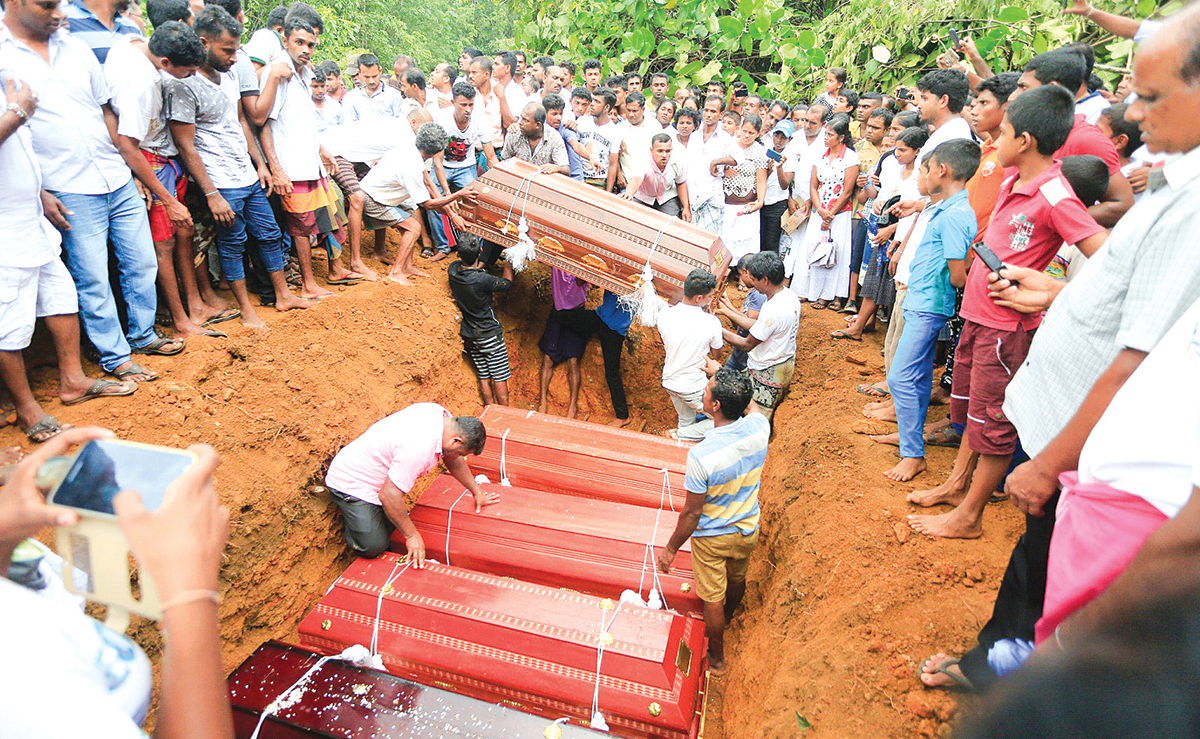
Cyclone Ditwah has come and gone, leaving a trail of extensive damage to the country’s infrastructure, including buildings, roads, bridges, and 70% of the railway network. Thousands of hectares of farming land have been destroyed. Last but not least, nearly 1,000 people have lost their lives, and more than two million people have been displaced. The visuals uploaded to social media platforms graphically convey the widespread destruction Cyclone Ditwah has caused in our country.
The purpose of my article is to highlight, for the benefit of readers and the general public, how a project to establish a Doppler Weather Radar system, conceived in 2007, remains incomplete after 18 years. Despite multiple governments, shifting national priorities, and repeated natural disasters, the project remains incomplete.
Over the years, the National Audit Office, the Committee on Public Accounts (COPA), and several print and electronic media outlets have highlighted this failure. The last was an excellent five-minute broadcast by Maharaja Television Network on their News First broadcast in October 2024 under a series “What Happened to Sri Lanka”
The Agreement Between the Government of Sri Lanka and the World Meteorological Organisation in 2007.
The first formal attempt to establish a Doppler Radar system dates back to a Trust Fund agreement signed on 24 May 2007 between the Government of Sri Lanka (GoSL) and the World Meteorological Organisation (WMO). This agreement intended to modernize Sri Lanka’s meteorological infrastructure and bring the country on par with global early-warning standards.
The World Meteorological Organisation (WMO) is a specialized agency of the United Nations established on March 23, 1950. There are 193 member countries of the WMO, including Sri Lanka. Its primary role is to promote the establishment of a worldwide meteorological observation system and to serve as the authoritative voice on the state and behaviour of the Earth’s atmosphere, its interaction with the oceans, and the resulting climate and water resources.
According to the 2018 Performance Audit Report compiled by the National Audit Office, the GoSL entered into a trust fund agreement with the WMO to install a Doppler Radar System. The report states that USD 2,884,274 was deposited into the WMO bank account in Geneva, from which the Department of Metrology received USD 95,108 and an additional USD 113,046 in deposit interest. There is no mention as to who actually provided the funds. Based on available information, WMO does not fund projects of this magnitude.
The WMO was responsible for procuring the radar equipment, which it awarded on 18th June 2009 to an American company for USD 1,681,017. According to the audit report, a copy of the purchase contract was not available.
Monitoring the agreement’s implementation was assigned to the Ministry of Disaster Management, a signatory to the trust fund agreement. The audit report details the members of the steering committee appointed by designation to oversee the project. It consisted of personnel from the Ministry of Disaster Management, the Departments of Metrology, National Budget, External Resources and the Disaster Management Centre.
The Audit Report highlights failures in the core responsibilities that can be summarized as follows:
· Procurement irregularities—including flawed tender processes and inadequate technical evaluations.
· Poor site selection
—proposed radar sites did not meet elevation or clearance requirements.
· Civil works delays
—towers were incomplete or structurally unsuitable.
· Equipment left unused
—in some cases for years, exposing sensitive components to deterioration.
· Lack of inter-agency coordination
—between the Meteorology Department, Disaster Management Centre, and line ministries.
Some of the mistakes highlighted are incomprehensible. There is a mention that no soil test was carried out before the commencement of the construction of the tower. This led to construction halting after poor soil conditions were identified, requiring a shift of 10 to 15 meters from the original site. This resulted in further delays and cost overruns.
The equipment supplier had identified that construction work undertaken by a local contractor was not of acceptable quality for housing sensitive electronic equipment. No action had been taken to rectify these deficiencies. The audit report states, “It was observed that the delay in constructing the tower and the lack of proper quality were one of the main reasons for the failure of the project”.
In October 2012, when the supplier commenced installation, the work was soon abandoned after the vehicle carrying the heavy crane required to lift the radar equipment crashed down the mountain. The next attempt was made in October 2013, one year later. Although the equipment was installed, the system could not be operationalised because electronic connectivity was not provided (as stated in the audit report).
In 2015, following a UNOPS (United Nations Office for Project Services) inspection, it was determined that the equipment needed to be returned to the supplier because some sensitive electronic devices had been damaged due to long-term disuse, and a further 1.5 years had elapsed by 2017, when the equipment was finally returned to the supplier. In March 2018, the estimated repair cost was USD 1,095,935, which was deemed excessive, and the project was abandoned.
COPA proceedings
The Committee on Public Accounts (COPA) discussed the radar project on August 10, 2023, and several press reports state that the GOSL incurred a loss of Rs. 78 million due to the project’s failure. This, I believe, is the cost of constructing the Tower. It is mentioned that Rs. 402 million had been spent on the radar system, of which Rs. 323 million was drawn from the trust fund established with WMO. It was also highlighted that approximately Rs. 8 million worth of equipment had been stolen and that the Police and the Bribery and Corruption Commission were investigating the matter.
JICA support and project stagnation
Despite the project’s failure with WMO, the Japan International Cooperation Agency (JICA) entered into an agreement with GOSL on June 30, 2017 to install two Doppler Radar Systems in Puttalam and Pottuvil. JICA has pledged 2.5 billion Japanese yen (LKR 3.4 billion at the time) as a grant. It was envisaged that the project would be completed in 2021.
Once again, the perennial delays that afflict the GOSL and bureaucracy have resulted in the groundbreaking ceremony being held only in December 2024. The delay is attributed to the COVID-19 pandemic and Sri Lanka’s economic crisis.
The seven-year delay between the signing of the agreement and project commencement has led to significant cost increases, forcing JICA to limit the project to installing only one Doppler Radar system in Puttalam.
Impact of the missing radar during Ditwah
As I am not a meteorologist and do not wish to make a judgment on this, I have decided to include the statement issued by JICA after the groundbreaking ceremony on December 24, 2024.
“In partnership with the Department of Meteorology (DoM), JICA is spearheading the establishment of the Doppler Weather Radar Network in the Puttalam district, which can realize accurate weather observation and weather prediction based on the collected data by the radar. This initiative is a significant step in strengthening Sri Lanka’s improving its climate resilience including not only reducing risks of floods, landslides, and drought but also agriculture and fishery“.
Based on online research, a Doppler Weather Radar system is designed to observe weather systems in real time. While the technical details are complex, the system essentially provides localized, uptotheminute information on rainfall patterns, storm movements, and approaching severe weather. Countries worldwide rely on such systems to issue timely alerts for monsoons, tropical depressions, and cyclones. It is reported that India has invested in 30 Doppler radar systems, which have helped minimize the loss of life.
Without radar, Sri Lanka must rely primarily on satellite imagery and foreign meteorological centres, which cannot capture the finescale, rapidly changing weather patterns that often cause localized disasters here.
The general consensus is that, while no single system can prevent natural disasters, an operational Doppler Radar almost certainly would have strengthened Sri Lanka’s preparedness and reduced the extent of damage and loss.
Conclusion
Sri Lanka’s inability to commission a Doppler Radar system, despite nearly two decades of attempts, represents one of the most significant governance failures in the country’s disastermanagement history.
Audit findings, parliamentary oversight proceedings, and donor records all confirm the same troubling truth: Sri Lanka has spent public money, signed international agreements, received foreign assistance, and still has no operational radar. This raises a critical question: should those responsible for this prolonged failure be held legally accountable?
Now may not be the time to determine the extent to which the current government and bureaucrats failed the people. I believe an independent commission comprising foreign experts in disaster management from India and Japan should be appointed, maybe in six months, to identify failures in managing Cyclone Ditwah.
However, those who governed the country from 2007 to 2024 should be held accountable for their failures, and legal action should be pursued against the politicians and bureaucrats responsible for disaster management for their failure to implement the 2007 project with the WMO successfully.
Sri Lanka cannot afford another 18 years of delay. The time for action, transparency, and responsibility has arrived.
(The views and opinions expressed in this article are solely those of the author and do not necessarily reflect the policy or position of any organization or institution with which the author is affiliated).
By Sanjeewa Jayaweera

Akbar Brothers crowned MBSA A-Division champions

Several spells of showers will occur in the Northern, North-Central, Eastern, Uva and Central provinces

Bondi Beach gunmen who killed 15 after targeting Jewish celebration were father and son, police say

Govt. urged to take action against deputy minister

India sends stock of life-saving medicines

George Keyt Foundation contributes to national disaster relief efforts

‘Dates have the highest sugar content to fight Coronavirus’

Sunday Island 27 December – Headlines

#SundayIsland 17th December – Headlines

Sunday Island – 28th March

Sunday Island Headlines – 21 March

Sunday Island – 21st February – Headlines
-
 Features6 days ago
Finally, Mahinda Yapa sets the record straight
-
 News7 days ago
Cyclone Ditwah leaves Sri Lanka’s biodiversity in ruins: Top scientist warns of unseen ecological disaster
-
 Features6 days ago
Handunnetti and Colonial Shackles of English in Sri Lanka
-
 Business4 days ago
Cabinet approves establishment of two 50 MW wind power stations in Mullikulum, Mannar region
-
 News5 days ago
Gota ordered to give court evidence of life threats
-
 Features7 days ago
An awakening: Revisiting education policy after Cyclone Ditwah
-

 Features5 days ago
Cliff and Hank recreate golden era of ‘The Young Ones’
-
 Opinion6 days ago
A national post-cyclone reflection period?