
News
“BOC’s role towards expanding export business in Sri Lanka is commendable”


Sri Lanka’s export economy is entering a period of adjustment. For decades, tea and apparel have done the heavy lifting. But with changing markets, new trade regulations, and a wider push for economic recovery, the country is now being asked to think differently about how it earns foreign income.
The Export Development Board plays a central role in this. Led by Mangala Wijesinghe, the EDB is working across agencies and sectors to expand the reach of Sri Lankan products and services. That includes tackling long-standing issues around market access, improving support for small exporters, and finding ways to bring younger business owners into global trade.
In this interview, EDB Chairman Mangala Wijesinghe explains the Board’s current focus, the importance of financial and institutional partnerships, such as those with Bank of Ceylon, and what it will take to create lasting opportunities for Sri Lankan exporters in a changing world.
How would you describe the EDB’s current role in driving Sri Lanka’s export competitiveness and economic diversification? Could you share some key focus areas the Board is prioritising this year?
The EDB plays a pivotal role in driving the country’s export growth via its mandate as the policy adviser, monitor, promoter, facilitator, and knowledge provider in developing and promoting Sri Lanka’s exports. The goal of the EDB is to provide assistance and create opportunities for Sri Lankan exporters and industries to expand their business internationally, thereby increasing export sales and employment prospects in the region.
Being the premier export promotion agency in the country, we assist export-ready entrepreneurs to enter the international marketplace by providing guidance and advice to fulfil key market entry requirements, such as obtaining the vital internationally recognised quality standard certifications as well as ensuring compliance with the necessary legal requirements.
SME Development is another one of our key focus areas. In collaboration with the International Finance Corporation (IFC) and the European Union (EU), the Board initiated the Sri Lanka Export Excellence Initiative (SLEEI) in 2025, which supports Sri Lankan SMEs from across the country to establish a sustainable export presence in international markets. The programme focuses on key export sectors, such as processed food and beverages, coconut-based products, spices and concentrates, herbal cosmetics, ICT/BPO services, handicrafts and lifestyle products.
The Bank of Ceylon (BOC) and The EDB recently entered into a partnership aimed at supporting exporters. How does this collaboration enhance the support available to Sri Lankan exporters, particularly SMEs and first-time exporters?
In 2023, the Bank of Ceylon signed a MoU with the EDB, marking a strategic partnership to foster export-related indigenous SMEs. The strategic partnership is focused on empowering SMEs through a series of programmes to upscale their financial literacy and business intelligence, enabling them to meet the demands of international trade markets and, eventually, to elevate the country’s export sector. The BOC’s extensive geographical and digital reach to approach the SMEs nationwide is highly beneficial to achieve the intended objectives of the programme.
The BOC Youth Entrepreneurship Loan Programme has received attention for encouraging young individuals to step into business. From the EDB’s perspective, how do you view the programme’s potential in nurturing the next generation of exporters?
The BOC in a highly praiseworthy move had initiated the Youth Loan Scheme to fuel the dreams of young innovators and business leaders. Lack of access to finance is one of the biggest obstacles faced by the budding entrepreneurs in the country and the loan scheme of the BOC addresses this fundamental problem.
As loans are provided to individuals who are under the age of 30, it serves as a catalyst in propelling the spirit of entrepreneurship among the youth. It also helps to nurture the next generation of exporters in the country by providing the required seed capital to establish export-oriented businesses. The current generation of exporters in the country is aging and we need to develop a new generation of exporters to drive the growth of exports in Sri Lanka.
A younger brigade of exporters would be better positioned to lead the much required transformation in the island’s export landscape with a considerable focus on sectors driven by innovation and technology. Today’s youth are quite smart and they are highly adept at embracing new technologies unlike the older generations. I hope the BOC could increase the size of financial assistance through the loan scheme which would greatly contribute towards giving birth to a new generation of youthful exporters, which is a pressing national economic priority.
The BOC Export Circle aims to support and empower existing and aspiring exporters through targeted banking and advisory services. In what ways do you think initiatives like these complement the EDB’s broader national export development strategy?
I have been informed that BOC Export Circle serves as a fully-fledged unit which offers export facilities with end-to-end financial and non-financial services for start-ups and SME export businesses throughout the supply chain. Pre-shipment and post-shipment finance solutions satisfy the critical working capital needs of exporters. Further non-advisory services like providing due diligence on overseas buyers via credit reports obtained from international credit rating agencies offer valuable assistance towards exporters in terms of managing credit risks.
The EDB is mainly focused on developing markets for Sri Lankan exporters as well as capacity development. Catering to the financial needs of exporters is the responsibility of the commercial banks in the country. The availability of both long-term and short-term financial facilities allow exporters to take their businesses to greater heights, which is what the EDB’s broader national export development strategy envisages. Actually, the development of exports should not be confined to the EDB alone, rather it is a nationwide obligation. We need a strong ecosystem to develop and promote Sri Lanka’s exports and, as the EDB Chairman, I am quite happy to observe that the BOC has emerged as a premier provider of financial solutions to the nation’s exporter community.
Looking at 2025, what are the EDB’s export growth targets or milestones, and how aligned are they with Sri Lanka’s overall economic recovery and national development goals?
Our target in terms of the total export income for 2025 is $ 18.2 billion (Goods – $ 14.1 billion and Services $ 4.1 billion). We see strong potential for growth in gem and jewellery, fisheries, and construction. The Board is working with other agencies to clear regulatory barriers that hinder the progress of those sectors. As our economy is currently experiencing a strong recovery, the growth in both merchandise and service exports would tremendously help to maintain economic stability, particularly in the external sector. Our 2025 export target is aligned with the government’s ambition of earning a total export income of $ 36.5 billion in 2030.
As a national body, the EDB has long played a role in building capacity and market access for exporters. Could you elaborate on the recent initiatives introduced by the Board to support exporters in adapting to the changing dynamics in global trade?
The current international trade regime evolves at a rapid pace, hence, it is imperative that exporters remain abreast of the ever changing international business environment characterised by frequent disruptions in terms of technological innovations and changes in laws and regulations.
In this day and age, digital technology plays a highly critical role in the way we live. The EDB is currently undertaking a series of awareness sessions to educate export-oriented businesses social media marketing, content creation, e-commerce and AI-driven digital marketing tools. We also continuously brief exporters in respect of changes in market-entry requirements of key export destinations of Sri Lanka such as the EU, the UK, and the US through seminars, webinars and training programmes.
These initiatives are often carried out in collaboration with institutions, such as Bank of Ceylon, which play a key role in providing exporters with financial literacy, trade financing options, and access to export credit facilities.
Finally, what message would you like to share with Sri Lankan youth, particularly those who are looking to pursue careers in entrepreneurship or consider entering export markets?
The modern day youth are smart thinkers and they are quite capable of identifying market opportunities. Unlike, in the past, universities and higher educational institutes offer numerous courses and study programmes that sharpen the skills of entrepreneurship. I view those developments positively.
My message to the youth, who wish to become entrepreneurs, is whether they do business locally or internationally, the key to successful entrepreneurship is the ability to understand the requirements of the market correctly. Becoming market-oriented and adapting to the requirements of the market are essential in terms of succeeding in entrepreneurship.We also encourage young entrepreneurs to leverage the services of institutions, like Bank of Ceylon, which offers financial tools, advisory services, and export financing that are critical for scaling up businesses and entering global markets.
In conversation with Mangala Wijesinghe, EDB Chairman


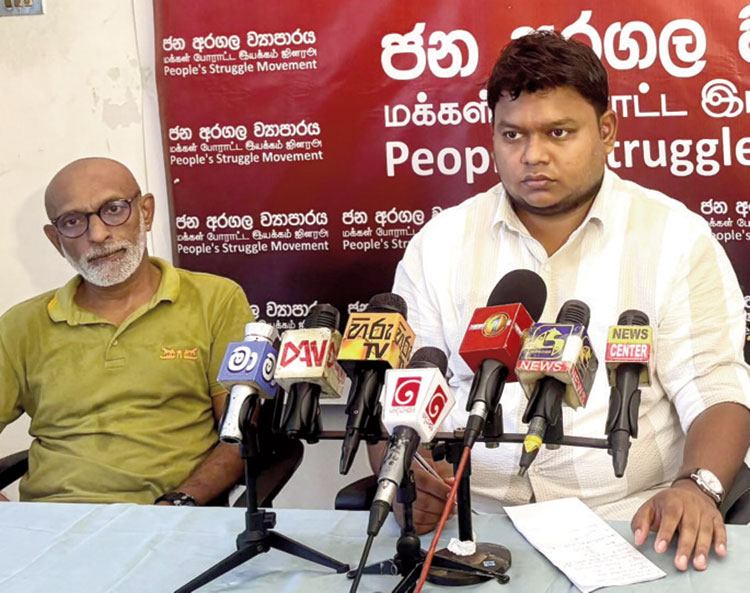
The Frontline Socialist Party-backed People’s Struggle Movement is set to stage a protest march in Colombo today (03) against what it describes as the growing tax burden on the public and the rising cost of living.
The organisers are due to commence the “Colombo March Against Unjust Taxes” at noon from Campbell Park, Borella. The FSP has also been mobilising support for the protest in Colombo and its suburbs in the run-up to the event.
People’s Struggle Movement National Executive Council member Wasantha Mudalige, speaking at a media briefing in Nugegoda yesterday (02), called on the public to join the protest, saying the movement intended to bring the tax burden faced by ordinary people to the forefront.
Mudalige alleged that successive tax measures had placed an excessive burden on households, particularly through taxes on food and educational items. He also criticised the Government over what he described as the high cost of basic food items and the difficulties faced by parents in meeting their children’s educational expenses.
He accused the Opposition of failing to adequately address the issue, claiming that opposition parties raised such concerns, mainly during election periods.
Mudalige also criticised the Government for what he described as a departure from promises made before the 2024 presidential election regarding taxes on educational equipment.
He questioned the tax burden on food items, citing figures of Rs. 100 per kilogramme on dried sprats, Rs. 310 per kilogramme on chicken and Rs. 11 per egg.
He further alleged that while ordinary people were bearing a heavy tax burden, wealthy groups were receiving tax concessions. He also criticised the Government’s economic programme and its implementation of measures associated with the International Monetary Fund (IMF).
The movement has framed today’s protest as part of a broader campaign over the cost of living and taxation. The People’s Struggle Alliance has separately announced that the Campbell Park demonstration will be the first in a series of public actions, with further protests planned in November.
Mudalige said the movement would continue to take the issue to the streets and urged the public to participate in today’s demonstration.
People’s Struggle Movement National Executive Council member Jayantha Amarasinghe also addressed the press.

The Colombo High Court yesterday postponed the trial in the case filed under the Prevention of Money Laundering Act against Yoshitha Rajapaksa, son of former President Mahinda Rajapaksa.
The case was taken up before Colombo High Court Judge Udesh Ranatunga, with Yoshitha Rajapaksa, who is currently out on bail, appearing in court.
The trial was postponed as the President’s Counsel appearing for the defence was indisposed.
The Attorney General has filed the case against Rajapaksa, alleging that he committed an offence under the Prevention of Money Laundering Act by purchasing five plots of land in Dehiwala and Ratmalana, worth more than Rs. 73 million.
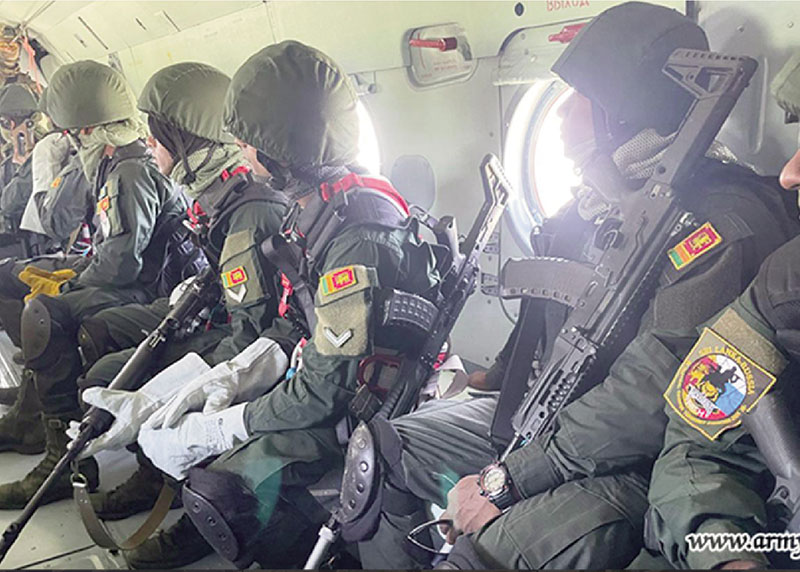
A contingent of the Sri Lanka Army, comprising 20 officers and 55 other ranks, participated in the combined military exercise ‘Wolverine Path II–2026’, conducted with the Armed Forces of the Russian Federation in Vladivostok, Russia, from September 18 to 25.
According to the Ministry of Defence, the exercise primarily focused on counter-terrorism operations and provided participating troops with training in a challenging combined operational environment.
The exercise included a range of tactical activities, including heli-rappelling, close-quarters battle (CQB), ambush operations, sniper firing, drone operations, buggy training and combat medical support.
The Ministry said the training enabled Sri Lankan troops to further develop their combat skills, tactical coordination and operational readiness.
It also provided an opportunity for the two militaries to exchange professional knowledge, operational experience and tactical expertise. Sri Lankan personnel gained exposure to training methodologies, tactical approaches and operational practices adopted by the Russian Armed Forces, the Ministry said.
The participation also enabled the Sri Lankan contingent to identify lessons from the joint training and share its own experiences with the Russian military.
The Sri Lankan contingent returned to the country following the exercise and arrived at Mattala Rajapaksa International Airport on September 28.
The Ministry said participation in the exercise contributed to enhancing the professional knowledge, tactical awareness and operational preparedness of Army personnel while promoting military-to-military cooperation, mutual understanding and professional relations between Sri Lanka and Russia.

Tharindu Rathnayake, bowlers secure Asian Games Bronze for Sri Lanka

G7 to release 100 million barrels of oil and diesel after Trump export ban threat

Showers above 75 mm are likely at some places in the Central, Sabaragamuwa, Western, Uva, North-western, Southern and North-central provinces and in Mannar district.

All set for Colombo rally against govt.’s tax policies

Yoshitha R money laundering trial postponed

Lankan troops test mettle in Russian war games

‘Dates have the highest sugar content to fight Coronavirus’

Sunday Island 27 December – Headlines

#SundayIsland 17th December – Headlines

Sunday Island – 28th March

Sunday Island Headlines – 21 March

Sunday Island – 21st February – Headlines
-

 News5 days ago
Police remove Thileepan statue in Jaffna
-

 Features5 days ago
The 22nd Amendment, constitutional recovery and illiberal slippage
-

 Features5 days ago
Of foreigners as CEOs of Lankan ventures
-

 Latest News3 days ago
Gold winner Tharanga gets brand-new Honda Vezel from SLAAJ
-

 News5 days ago
Sajith rejects Jt. Opp. protest sabotage claim; SJB TU chief demands remedial action
-

 Features4 days ago
Thailand’s biggest new global star …
-

 Features3 days ago
Why Sri Lanka needs an Inclusive Civic Nationalism – urgently
-

 News4 days ago
First cases taken up by SC after enactment of 22A dismissed