
Business
Beyond the crisis: Sectoral paths to durable growth

Institute of Policy Studies of Sri Lanka (IPS)
The Sri Lankan economy has faced a series of external and internal shocks in recent years that weakened its long-term growth outlook. Despite defying post-crisis growth trajectories, fresh uncertainties from oil price shocks and climate-related risks suggest that the policy context to accelerate growth will be even more challenging. In this context, select policy recommendations to strengthen Sri Lanka’s economic foundations toward higher, durable growth are set out in this article. It draws on recent research by the Institute of Policy Studies of Sri Lanka (IPS), some of which is detailed in its forthcoming annual flagship report Sri Lanka: State of the Economy 2026.
Rebuilding Economic Foundations Amid Shocks
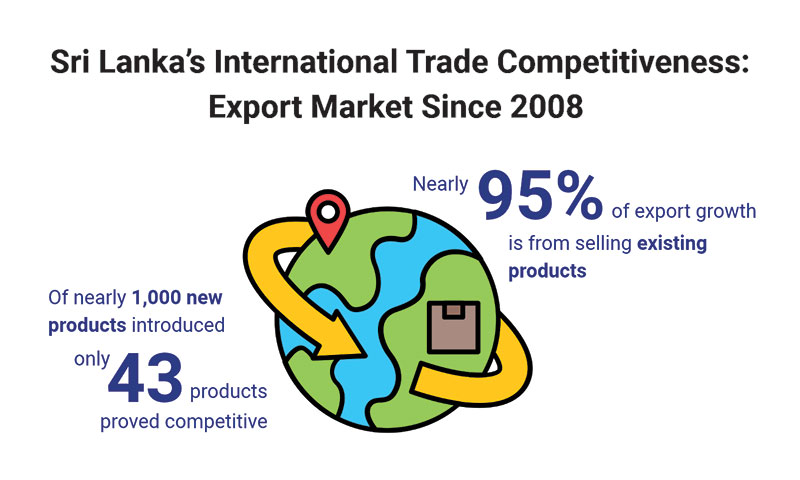
Strengthening Sri Lanka’s international trade competitiveness is crucial to boost exports and achieve its 7% medium-term growth goal. IPS research shows that nearly 95% of the export growth since 2008 has come from selling more of existing products, and of nearly a thousand new products introduced over that period, only 43 proved competitive. Exports need to be diversified, but competition remains stiff across all key export markets. Non-reciprocal preferential arrangements such as GSP+ which Sri Lanka relies on are vulnerable to withdrawal because of income status or compliance issues. However, competitors producing the same export basket, such as India and Indonesia, have reciprocal trade deals with the EU and the UK, key export destinations for Sri Lanka. Losing these preferences and non-reciprocal preferential access could reduce the competitiveness of Sri Lanka’s exports in the EU and UK. Given the uncertain US trade policy landscape, Sri Lanka has strong motivation to pursue trade agreements with the US if they secure favourable tariffs and fixed tariff rates. To lay the groundwork for reciprocal trade deals, domestic trade policy reforms, including tariff reforms, must come first. For example, the effective VAT rate on imports exceeds the 18% statutory rate because para-tariffs increase the tariff base. The priority is to simplify the tariff structure, eliminate para-tariffs, and simplify the tariff base to eliminate cascading tariff effects. The resulting revenue loss needs to be incorporated into budget estimates.
Fiscal support to establish a trade adjustment assistance package is also recommended. Tariff reforms create adjustment costs. For example, the Export-Import CESS phase-out plans to remove CESS on products which have direct import-competing industries in the domestic market. Exposing these sectors, which are dominated by micro, small, and medium firms, to import competition will generate job and income losses. A trade adjustment assistance package should be rolled out to soften the economic blow.
Fiscal strategy must protect macroeconomic stability while addressing high public debt, limited fiscal space and weak investment in productivity-enhancing sectors. Government revenue increased from 8.2% of GDP in 2022 to 16.6% in 2025, but the tax system remains consumption-tax dominant, with a direct-to-indirect tax ratio of 40:60. Public investment fell from 5% to 3% of GDP during fiscal adjustment, while debt sustainability remains a key vulnerability.
Further tax rate increases are not recommended, but tax cuts are premature because of challenges such as uneven compliance, informality, and exemptions. After the current IMF programme ends in 2027, revenue strategies should prioritise increasing the share of direct taxes over indirect taxes by broadening the tax base, reducing exemptions, improving compliance among the self-employed and high-income earners, and digitalising tax administration. Wealth taxation helps promote social welfare by ensuring those with greater ability to pay contribute more fairly. Expenditure rationalisation should focus on building technical skills across the project cycle—appraisal, readiness, implementation, monitoring, and evaluation. Public procurement policies should favour transparency and competence over established networks. A comprehensive approach reduces debt risks, enhances fiscal sustainability, and promotes sustainable, inclusive growth.
Developing Human Resources for Productivity Gains
Access to high-quality higher education that provides relevant skills aligned with labour market needs can support sustainable growth. In the context of climate change and globalisation, countries depend heavily on advanced human capital to stay competitive and strengthen systemic resilience. Skilled workers, including managers, professionals, and technical staff, are vital for fostering growth by boosting productivity and reducing economic disruptions from natural disasters. In 2023, IPS estimates based on the Labour Force Survey 2024 indicate that Sri Lanka has a larger share of knowledge workers than its regional peers. However, only 34.1% have the tertiary qualifications needed to drive innovation and improve efficiency. Although tertiary student numbers are rising, growth lags regional peers and is not aligned with labour market needs.
Public funding for higher education should prioritise identifying skills gaps and allocating resources to sectors with skills shortages. Main areas of focus include supporting short-cycle tertiary programmes for technical workers and STEM education. Investments are crucial to improving quality in these sectors and supporting students financially, allowing more people to access higher education in these areas. Additionally, incentives should be implemented to encourage skilled workers to stay in the country.
A stronger shock-responsive social protection system is needed to deal with multiple overlapping shocks, especially those driven by climate change. While the current system includes various programmes and has recently attempted to enhance effectiveness and coordination, there are gaps in policy design and implementation. Recent IPS studies note gaps in reaching impoverished households exposed to high climate risks. For instance, among the poorest fifth of households, Aswesuma coverage is actually lower for the most shock-exposed (55%) than the least (63%). As natural disasters like Cyclone Ditwah become more frequent and intense, and as climate risks associated with El Niño increase, incorporating climate-risk data into social protection policies is urgent.
Budgetary support should focus on investing in shock-responsive social protection, including strengthening the existing Integrated Welfare Management System (IWMS) and developing a comprehensive, dynamic social registry by integrating programmes outside the system. The registry must link with disaster risk management and climate data to identify at-risk households and enable timely responses. Policies should also establish pre-arranged financing linked to shock triggers and expansion protocols for swift benefit delivery during shocks.
The scale of labour informality needs to be addressed for better social protection and labour productivity. Around 66.5% of total employment is informal as of 2024 with informal wage employment highly concentrated in small-scale enterprises. Around 60% of informal wage employees work in establishments with fewer than 5 regular employees, where regulatory oversight, administrative capacity, and compliance with labour laws and social security obligations remain weak.
Reducing formalisation costs and increasing penalties for non-compliance, especially for micro and small enterprises, can cut informal work and boost social protection. Improving access to credit offers financial incentives for formal employment, encouraging workers to register with authorities for better protection and coverage. Ease of administrative and fiscal burdens through simplified taxes, digital registration, and fair contribution rules for small firms with limited capacity, will further reduce informal labour.
The silver economy demographic shift must be leveraged to keep older Sri Lankans economically active for longer, sustaining labour supply and consumption and reducing fiscal dependency. With a rapid rate of population ageing – with those aged 60 and above set to nearly double from 12.4% in 2012 to 23.1% by 2042 – Sri Lanka’s demographic shift impacts its health, economy, and social fabric. With only two dedicated geriatric care units nationwide, the health system is not yet built for this scale of change. The current focus on acute care and lack of integrated chronic and geriatric management must change. Otherwise, there will be more hospitalisations, higher out-of-pocket costs, and lower productivity among older adults.
Targeted funding should expand primary healthcare, focusing on chronic disease management, geriatrics, and rehabilitation. This includes training health workers, formalising referrals, and community-based care. Making care affordable and accessible for seniors is crucial, supported by digital health platforms, literacy programmes, and subsidies for medicines and diagnostics. This approach enhances access, continuity, and financial protection, boosting older adults’ economic participation and reducing health-related poverty.
Reducing Regional Disparities and Broadening Development Gains
Accelerating agro-processing and value-chain development is critical to tackle climate resilience and improve small farmers’ incomes. Sri Lanka’s agricultural total factor productivity has grown just 0.3% a year over the past decade, against 1.6% across South Asia. Limited land, declining productivity, rising input costs, labour shortages, post-harvest losses, climate uncertainties such as El Niño affecting yields, and infrastructure issues such as poor storage, weak market coordination, and limited access to higher-value markets are persistent challenges.
Enhancing post-harvest management and agro-processing boosts climate resilience and profits. A programme to cut losses and modernise the value chain is a priority. Supportive fiscal measures include those that promote technology, organise producers, and strengthen certification, traceability, and marketing. These may be addressed through grants, loans, guarantees, and tax incentives for investments in packing, grading, storage, refrigeration, ripening, processing, and certification facilities.
Public investments channelled towards shared resources for farmer organisations and cooperatives to consolidate produce, achieve group certification, and strengthen bargaining power will be useful. Additionally, specific actions to facilitate connections between Sri Lanka Good Agricultural Practices (SL-GAP) certified producers or groups and processors, supermarkets, exporters, and institutional buyers, will ensure that certification leads to market access. These links would directly connect certification to market opportunities and higher profits for farmers.
(To be continued)

Business
Cost-effective clearance of goods across borders to determine worth of Customs Paperless Declaration
By Ifham Nizam
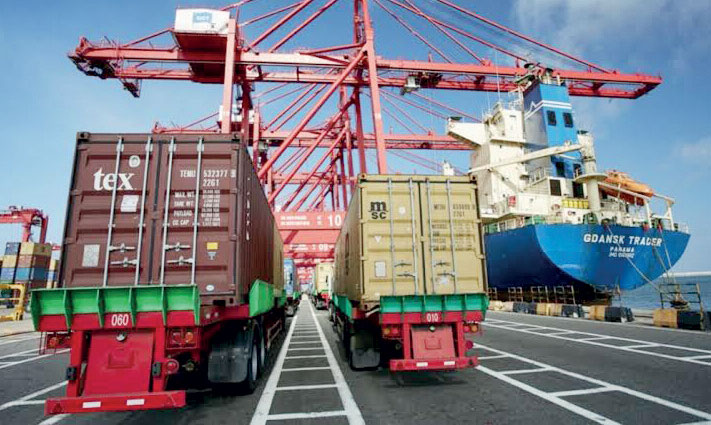
The introduction of the Customs Paperless Declaration from October 1 could mark an important step in Sri Lanka’s efforts to modernise trade, but its real value will depend on whether it reduces the time and cost of moving goods through the country’s borders, Customs House Agents & Traders Association President Mohamed Niyas said.
Niyas warned that digitising Customs declarations alone would not necessarily translate into faster cargo clearance or lower costs for businesses.
‘Expecting a dramatic improvement in clearance speed under the present conditions is like expecting Ferrari performance from a Morris Minor configuration, he said.
For importers and exporters, the issue extends well beyond paperwork. Every additional hour or day that cargo remains in the clearance chain can have wider consequences for businesses, including increased port and storage-related costs, additional working-capital requirements, uncertainty over delivery schedules and disruptions to production and distribution.
Niyas said the competitiveness of Sri Lanka’s trading sector ultimately depended on how efficiently goods could move through the country’s border-clearance system.
‘The real bottleneck is not merely the absence of paper. It is the entire clearance ecosystem—the limitations of the existing ASYCUDA World system, excessive regulatory interventions by Other
Government Agencies, multiple approvals, physical examinations, manual interventions, fragmented processes and institutional constraints, he said.
He cautioned that unless these bottlenecks were addressed, there was a risk that the paperless initiative would merely digitise existing bureaucracy.
‘If these underlying constraints remain unchanged, there is a real risk that the new paperless system could become another “copy-and-paste road show”—where an old, complex clearance process is simply transferred onto a digital screen without fundamentally changing the process itself, Niyas said.
For businesses dependent on imported raw materials, machinery, components and other inputs, clearance efficiency can directly affect the wider supply chain.
Delays at the border can create uncertainty for manufacturers, distributors and retailers, while exporters can face difficulties meeting delivery schedules when imported inputs or export consignments are held up.
Niyas therefore argued that the success of the October 1 initiative should be judged by its impact on trade flows rather than by the number of declarations processed electronically.
‘Paperless does not automatically mean faster, he said. ‘Digitising a slow process does not make the process fast. It only makes the slow process digital.’
He said Sri Lanka needed to move towards what he described as “process-less Customs”—a system in which unnecessary procedures are eliminated rather than simply converted into electronic procedures.
Among the reforms he called for are simplification of Customs declarations and approval workflows, improvements to the functionality of ASYCUDA World, greater use of risk-based inspections and better integration of Other Government Agency approvals.
Niyas also called for the elimination of repetitive document submissions and physical endorsements, greater use of pre-arrival processing, sufficient capacity for digital document uploads and clearly defined service-level timelines for Customs and OGAs.
By Sanath Nanayakkare
As global attention has fixed on the high-level diplomatic choreography at the United Nations General Assembly in New York, a subtler, yet profound geopolitical signal was sent from Colombo, yesterday.
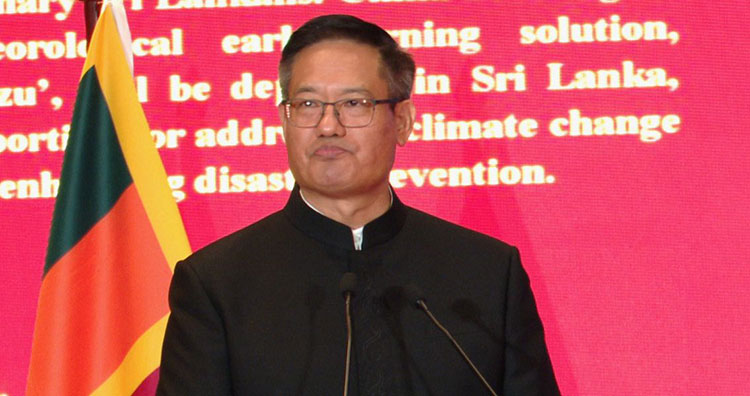
In a major address marking the founding anniversary of the People’s Republic of China, newly appointed Chinese Ambassador Wei Huaxiang chose to anchor bilateral relations not just in modern trade or infrastructure, but in a shared respect for Sri Lanka’s legacy of non-aligned independence.
By explicitly invoking Sri Lanka’s foundational role in the 1976 Non-Aligned Summit, Beijing was doing something unexpected in an era defined by fierce great-power rivalry: it was officially validating a small island nation’s right to maintain an independent foreign policy stance.
The Strategic Value of Independence
For decades, nations caught in the crosshairs of major-power competition have faced intense pressure to pick sides. Yet, Ambassador Wei’s embrace of Colombo’s non-aligned tradition signaled a different diplomatic playbook. Instead of demanding alignment, Beijing was framing its partnership as a reliable counterbalance to regional pressures. By honouring Sri Lanka’s diplomatic autonomy, China was effectively reassuring smaller economies that sovereign independence and robust economic cooperation can coexist.
Beyond Ports and Industrial Zones
This diplomatic framing reframed the narrative surrounding major collaborative ventures like the Colombo Port City and Hambantota Port. While foreign analysts often view these projects exclusively through the lens of strategic rivalry, Beijing’s diplomatic messaging tied them back to a historical ethos of solidarity—evoking memories of the 1952 Rubber-Rice Pact.
By marrying economic projects with a stated respect for non-alignment, China is positioning itself as a steadfast stakeholder that respects Sri Lanka’s internal agency during difficult economic and political seasons.
As both nations look toward major milestones in 2027—including the 70th anniversary of diplomatic ties—this nuanced diplomatic move revealed how historic traditions are being leveraged to navigate modern multipolar realities.
For global observers, the takeaway was clear: in the shifting architecture of Asian geopolitics, respecting a nation’s historical neutrality may just be the most effective way to secure a lasting partnership, a diplomatic masterclass that Ambassador Wei Huaxiang executed in style.

Sri Lanka Insurance Life (SLIC Life), the nation’s largest and strongest Life Insurer, is pleased to announce the appointment of Dr. Sameera Dharmasena as its new Chief Executive Officer, effective 22nd September 2026.
Dr. Dharmasena is a distinguished insurance professional with over 21 years of experience in the Sri Lankan insurance industry, having held senior leadership positions across several leading insurance companies affiliated with some of Sri Lanka’s largest business conglomerates. His extensive career spans both local and multinational insurance environments, bringing together broad industry expertise, strategic leadership and a strong commitment to the advancement of the insurance profession.

At least 41 die as boat capsizes in DRC’s Lake Tanganyika

Showers will occur at times in the Western, Sabaragamuwa, Southern, Central and North-western provinces

Sajith vows to scrap 22A under future govt.

Two retired female Navy officers remanded over disappearance of two women during war

FSP: Govt. moving to introduce far more sinister legislation to replace PTA

Habeebu Lebbe sworn in as MP

‘Dates have the highest sugar content to fight Coronavirus’

Sunday Island 27 December – Headlines

#SundayIsland 17th December – Headlines

Sunday Island – 28th March

Sunday Island Headlines – 21 March

Sunday Island – 21st February – Headlines
-

 News6 days ago
Shanakiyan urges urgent action over reported death sentence for Lankan in Saudi Arabia
-

 News5 days ago
Namal Rajapaksa Buddhist gambit fails, bail denied
-

 Features5 days ago
Why the spelling Sri Lankan names in English vary
-

 Features5 days ago
Three bands, a new identity: Sri Lankan wolf snake recognised as distinct species
-

 Business5 days ago
SLIIT holds largest-ever convocation
-

 News5 days ago
Govt monitors reported Saudi death sentence – Foreign Ministry
-
 News5 days ago
Vehicle prices drop by up to Rs. 1 mn, says importers’ body
-

 Business5 days ago
All-new Bolero MaXX Pik-Up unveiled in Lanka