
Life style
Believe the child says Dr Tush

By Zanita Careem
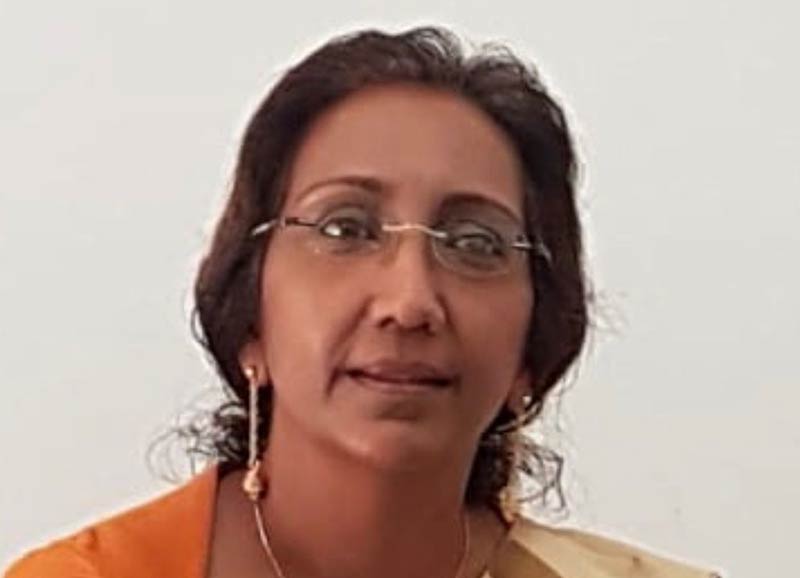
 Sri Lanka has become an unsafe environment for women and children said Dr. Tushara Wickramanayake, fondly known as Tush.A family physician and founder, Chairperson of Stop Child Cruelty Trus. An old girl of Visakha Vidyalaya, she has been an active voice against all
forms of injustice on children and women from an early age. A General Physician, practicing in UK and Sri Lanka. Tush has worked in child welfare since Tsunami 2004 and became a passionate child rights advocate turning adversity to advocacy after her own 11 year
old daughter was subjected to corporal punishment andmental abuse in an International school in 2018. Spearheading a national campaign to end violence against children in Sri Lanka,Tush’s self-learning experience of the crippled child protection mechanism, indefatigable efforts in advocacy work, compassion and empathy in raising awarenesshas resulted in global recognition and historical achievements in a short period of time. Can you tell us about your experience working with children who have been affected by abuse?
Child abuse can be broadly categorized into physical abuse, sexual abuse, mental abuse and neglect. Physical abuse, cruelty, corporal punishment are the most common form of abuse in Sri Lanka and globally affecting 1.3 billion children each year. The complaints received on cruelty by the National ChildProtection Authority (NCPA) have trebled in ten years with 2238 cases reported in 2023.Sexual abuse, especially on-line abuse isincreasing rapidly. Whilst there may beinjuries and scars visible immediately after physical and sexual abuse, all forms of abuse affects the child mentally. But mental scars may not be obvious and may require years before a formal clinical diagnosis is made.
Therefore, mental abuse is often overlooked, their true effects amplifying years later into adulthood and cascades to the society. Often, the impact of abuse depends on the child’s own internal resilience and external support systems.For example, a child who is forced to kneel down maybe immune to it because it is normalised in his/her environment whilst another child maybe traumatized because it is unfamiliar in his/her surroundings. Irrespective of our own upbringing and prejudices we must endorse zero tolerance of any form of abuse against children growing up in the 21st century.
How do you handle situations where you suspect abuse but don’t have concrete evidence?
The first and simple golden rule is BELIEVE the child. 90% of child abuse occurs within the home environment, perpetrated by people whom the child loves and trusts. Most of the time, the abuse occurs for years, maybe even known to some adults and ignored because they are afraid of the scandal this may reveal or crippled by the power hierarchy. If the child mentions anything untoward try not to dismiss the child or defend the alleged perpetrator in the intention of saving the family name, school name or reputation of the person. Children may show symptoms of abuse, which may be subtle – becoming quiet and withdrawn, spends more time in seclusion, avoids things they normally enjoy, refusal of school, spends more time on devices, eating/sleeping disturbances,
substance abuse, mood changes including anger and anti-social behaviour, risk taking behaviours like staying out too late or disappearing without informing parents, joining new clicks of friends, etc. The best way to ensure your child comes to you as the first port of call if they are in trouble is to have a healthy parent child communication without persecution or blame. If the child feels they can make mistakes without being penalized,they will be forthcoming and transparent. Encourage your child to follow the traffic light system from the age that they can walk and talk to Red – shout, Orange – run and Green – tell someone they trust. Introduce a security ring where the child identifies 2/3 adults whom they trust. It can be parents, teachers, grandparents, elderly siblings, etc.Always remember the first and last step is to BELIEVE the child.
What was most rewarding and what was most challenging about working with child victims of abuse?
The globally accepted term is “survivor” of child abuse because victimizing someone is disempowering them. The most rewarding is when the child is able to overcome the trauma and be able to function at the highest individual capacity they consider as being normal for them. This could even be as simple as waking up and getting to school consistently. The most challenging has been to deal with the bureaucratic lethargy in finding the care, support and justice in the State mechanisms. Once the child is removed from the immediate risk, we need to consider the safest and healthiest option.
This requires a multi-disciplinary approach with the family unit at the heart of the solution because research has shown that chances of a child thriving within a caring family are more than under institutionalised care. Aligned with this are relevant input form education, health, justice, rehabilitation, social and caregiver support. Caregiver support includes education, economic and mental support, which is often neglected whilst focusing on the child.
Can you describe a difficult case you have worked on and how you handled it?
The most recent was a case of two sisters, aged 17 and 14 years who were suspected of being sexually harassed by the father in a remote village. Although there was no conclusive evidence of actual sexual abuse the stories from the girls were convincing for me to take immediate action. The mother was a labourer on meagre allowance whilst the father was the main provider. The police were being influenced by the father and his connections, a not too unfamiliar scenario in maintaining law and order in Sri Lanka. We filed a case in court requesting restricted access to the father and full guardianship for the mother. I tried valiantly to get them to a government safe home but failed. The father followed them around and kept on physically harassing the family.
The next thing I did was to find a higher paying job that gave the mother some financial independence. She found a relative in the area who helped them to relocate. Even changing schools was an issue because the father objected for the old school to provide the leaving certificate as he had signed their admission forms. The school authorities were paralysed by his threats. I had to write to the Education authorities alerting them of acting in contrary to court orders and violating the basic education rights of the children; after months of exchanging correspondence, the girls were enrolled in the best school in the region where they are excelling now with counselling support. After one year, they still keep in touch with me, share their achievements and we hope to meet them personally when they come to Colombo soon.
What is your understanding of child protection?
Many are confused by these terms: Child Safeguarding – encompasses broader preventive measures within the organization. It refers to actions that address how business operations and work practices impact children’s welfare. The purpose is to prevent harm before it occurs. The key actions are implementing policies, training staff and promoting safe practices. It is applied continuously as a proactive approach and has collective responsibility. Example: Conducting risk assessment in the prospective service delivery points.
Child Protection – is an important part of safeguarding and refers to the actions an organization takes to address a specific concern that a particular child is at risk of significant harm due to her contact with staff, family, etc. The purpose is to intervene when children are at immediate risk and prevent further The key actions are investigating cases, providing support, reporting mechanisms and ensuring safety of vulnerable children. It is applied after harm occurred and shared by everyone much wider.
For example reporting cases and providing psychosocial support to a child who has been physically abused. Child Protection Programs – these are specific initiatives designed to address child protection issues to protect children through targeted interventions. Advocacy programs to lobby parliament to pass the Bill on abolishing corporal punishment. The safeguarding mechanisms are non-existent in Sri Lanka with no systematic Child Protection policies either. Hence, the child protection programs are inconsistent elevating child abuse as a top five grave crime according to the annual grave crimes report by Sri Lanka police of 2023.
What are the current child protection mechanisms in Sri Lanka and how does it compare to the rest of the world?
Sri Lanka ratified the UN Convention of the Rights of the Child (UNCRC) in 1991. There are 45 articles but even if we can’t remember them all, just remember Article 3, ‘in the best interest of the child’. Despite the cabinet approving the National Child Protection Policy in 2019, the NCPA has failed to implement it to date. Likewise, there are many laws and regulations that are not being implemented effectively, especially Ministry of Education Circular forbidding physical punishment of students in schools. It is ironic that although in 2017 Sri Lanka was honoured by being the only South Asian path-finding country focused ending violence against children,
the National Partnership to End Violence Against Children (NPEVAC) collapsed in 2018 and we have been lethargic to introduce legal reforms to end corporal punishment,
the most common form of child abuse. Due to absence of safeguarding policies and mechanisms there is a high incidence of abuse occurring within schools and care homes under Probation and Childcare Services. As none of the governments elected have even acknowledged child welfare as the core of the national political agenda, such abuse can be con For example in UK, a ten year old girl child was abused and murdered by her parents in August 2023.
The perpetrators were arrested, the criminal court case was concluded in December 2024 and the accused were given life imprisonment sentences. In contrast, in Sri Lanka, a 15/16 year old girl was allegedly sexually abused in a politician’s home and died after severe burn injuries in July 2022 but the investigations remain incomplete and no indictments have been filed to date. The Auditor General’s Report of 2022 concluded there are over 40,000 cases of child abuse backlogged at the NCPA and Attorney General’s Department. This is a national tragedy.
What are the three things that the government can implement immediately to improve the child protection crisis?
Appointment of a Presidential Task Force for children Provide additional budget allocation for education and child welfare Finalise the legislative process, particularly the Bill on Penal Code Reforms to Abolish Corporal Punishment, which was passed in Cabinet in September 2024. We hope the new government will present this Bill to parliament.

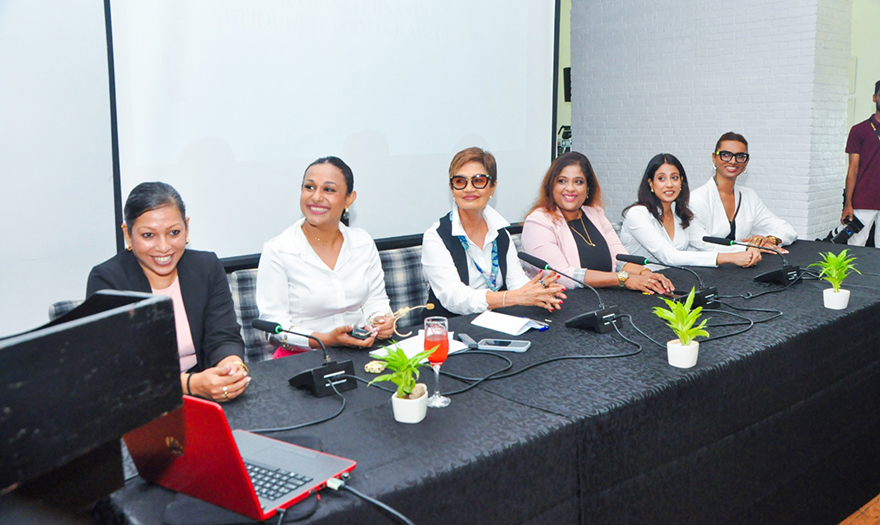
Ramani Fenando’s new Image and Etiquette Academy
In a world where first impressions speak before words, Sri Lanka’s beauty icon Ramani Fernando has taken a bold step beyond the salon chair to shape confidence from within. Her newly launched Etiquette and Image Academy is designed to refine not only appearance, but presence, poise and personal power.
Step into a space where confidence meets sophistication, Ramani Fernando Academy is redefining how Sri Lankans approach personal branding ,offering a unique blend of ettiquette, style and communication mastery.
Her newly launched personal branding and EtiquetteAcademy was unveiled in a simple ceremony at the Galle Face hotel. This marks a bold and timely step into the realm of confidence leadership, presence and modern social grace.
Colombo’s social elite, corporate leaders, fashion insiders and longtime clients gathered in celebration of a vision that seeks to shape not just appearance but cofidence building.
Ramani, in her opening speech, said “our courses are carefully designed to meet with international standards, ensuring participants recieve training that meets both local and global expectations.
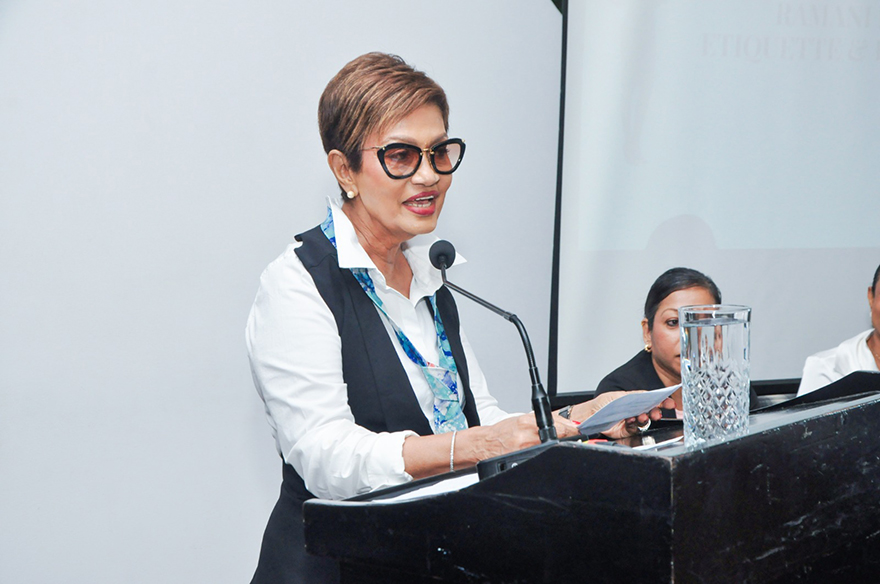
Ramani Fernando – shaping confidence
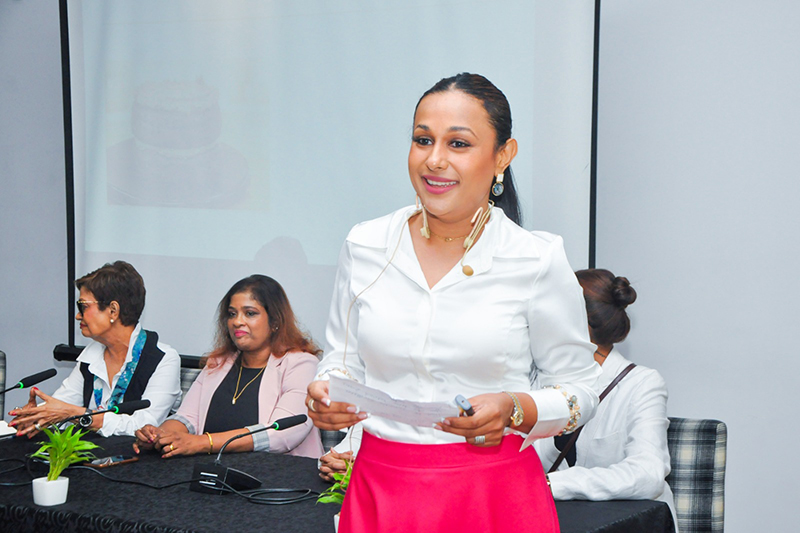
Professional face of etiquette training
Faith Launders who is the Director of Etiquette and Protocol in the Academy pointed out this personal branding and etiquette programmes will help participants cultivate grace, confidence and refined personal style through expert guidance. A former Miss Sri Lanka beauty queen, with experience in aviation, will contribute a creative and professional lens to the Academy’s curriculam.
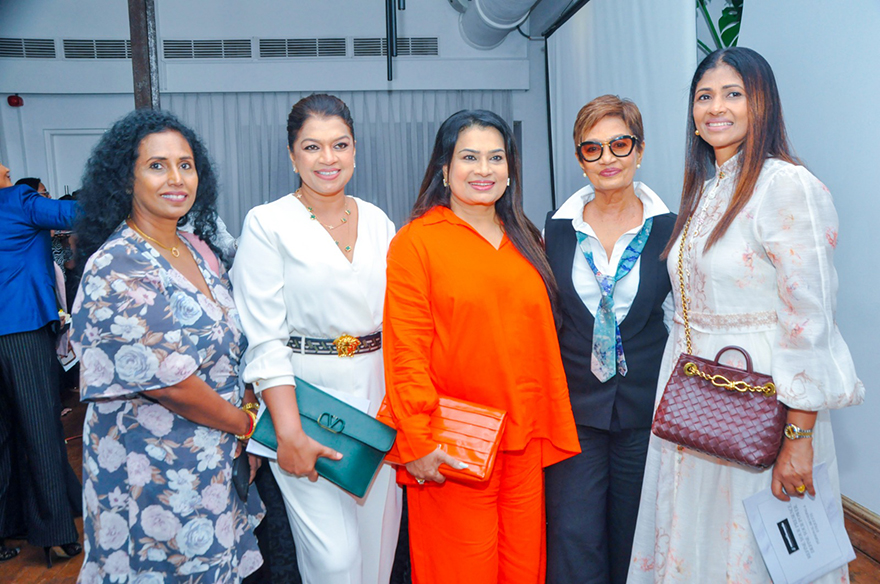
Invitees from the world of fashion gathered to celebrate the occasion

Carolyn Jurie

Chalana at the helm of beauty
She brings professionalism, poise and a strong commitment to cultivate confidence and promote refined social skills among students. Known for her approachable style and inspiring presence, she strives to create an inclusive learning space where students can transform into confident individuals to navigate life with dignity and elegance.
For decades, Ramani has been a transformative force in Sri Lanka’s beauty industry.
and now this venture signals a natural evolution from external refinement to the art of personal distinction.
The programme blends traditional etiquette with contemporary relevance, offering personal branding and professional image building both in social and corporate etiquette. These are some of the programmes:
= Communication skills and body language, grooming, style and wardrobe alignment.
= Digital image and social media conduct.
= Platforms or in social events the ability to command attention with confidence has to become an important tool.
In today’s hyper connected world, impressions are formed in seconds often long before a handshake, whether in boardrooms, diplomatic circles or in the media.
The teaching staff consists of industry experts trainers amd adminitrators led by othe senior professionals
The Managing Director, Lakmini Lenagala, Training and Administrative Manager, Ramono, Navaratnarajah, Personal Assistant, Merisha Aserappa and Chalana Munasinghe are all industry professionals who have experience, theoretical knowledge and practical skills.
They are experienced instructors with hands on expertise in grooming, etiquette, image building and communication.
While the vision of the Personal Branding and Etiquette Academy belongs to Ramani Fernando, its strength lies in the collective expertise of the professionals who bring the programmes to life.
By bringing together specialists from diverse fields, the Academy offers participants a rare opportunity to refine every dimension of their public and private persona under one roof.
Sessions cover skin care, hair, make up, wardrobe planning and colour coordination.
Communication and public speaking recognising that presence is also conveyed though voice and expression, the Academy offers training in articulation tones, posture and body language.
The training also includes table manners, event conduct, professional courtesy and cross cultural awareness. This Etiquette Academy us designed for both women and men offering guidance on grooming, communication, professional conduct and social confidence.
The Academy acts as a transformative space – one that equips individuals not merely to succeed but to stand out with authencity and grace. The institution reflects Ramani Fernando’s belief that true elegance is a way of being not simply a way of dressing!.
By Zanita Careem
Pix by Thushara Athapatu
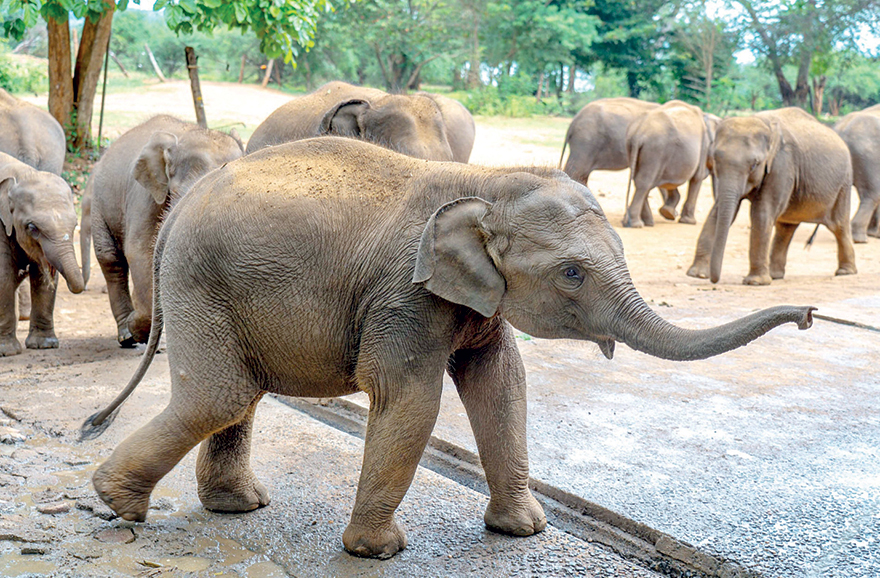
World Wildlife Day 2026:
He arrived at the Elephant Transit Home in Udawalawe on March 23, 2024, barely eight months old. Kalo had spent an unknown number of days trapped at the bottom of an abandoned well near Galenbidunuwewa in Sri Lanka’s Anuradhapura District, separated from the herd he had lost. When wildlife officers from the Department of Wildlife Conservation pulled him out, they found a frightened calf, but also something else: resilience.
Today, nearly two years after his rescue, Kalo is no longer the fragile elephant calf who arrived at the Transit Home alone. He is growing steadily, eating well, and has fully integrated into a group of calves preparing for eventual release. His progress is measured not only in size, but in behaviour like social bonding, herd interaction, and independent foraging skills that will determine his readiness for life beyond human protection. Since his arrival, Kalo has grown from 125 kilograms to over 300 kilograms. The wounds he sustained before rescue have fully healed, and he is no longer on any specific medical treatment instead routine management only. He is, by every measure, active, playful, and thriving.
The Elephant Transit Home, also known as Ath Athuru Sevana, has operated within Udawalawe National Park since 1995. It is not an orphanage in the traditional sense. There are no rides, no performances, no human dependency. Human contact is limited strictly to feeding and veterinary care. The rest of the time, the calves are left to bond with one another.
That philosophy is intentional. Elephants are deeply social animals, and calves that grow too attached to humans struggle to survive in the wild. The daily play, the hierarchy, and the formation of peer bonds are all part of a structured rehabilitation process designed to prepare them for rewilding.
Since its establishment, more than 200 orphaned elephants have passed through the Elephant Transit Home. Over 100 have been successfully released back into the wild. In July 2025 alone, six young elephants were returned to Udawalawe National Park during the facility’s 26th release. If all continues as planned, Kalo will follow that path in 2029.
On May 8, 2024, less than two months after Kalo’s rescue, Sun Siyam Pasikudah formalised its long-term commitment to his care through the CarePhant initiative under Sun Siyam Care. The resort pledged ongoing monthly contributions to support Kalo’s nutrition, veterinary care, and daily rehabilitation needs through to his planned release.
Sun Siyam Care is the group’s overarching sustainability programme that integrates environmental stewardship, biodiversity conservation, community engagement, and long-term socio-economic value creation across all Sun Siyam Resorts in the Maldives and Sri Lanka. Through Sun Siyam Care, we invest in initiatives that protect marine and terrestrial ecosystems, reduce waste and single-use plastics, improve resource efficiency, support renewable energy and local sourcing, and promote awareness and participation among guests and communities alike. Kalo’s journey from rescue to rewilding is one example of how Sun Siyam Care extends beyond hospitality, connecting responsible tourism with meaningful environmental and wildlife conservation impact.
“We are delighted to embark on the CarePhant project and become stewards of Kalo’s well-being. Sri Lanka’s elephants are not just a conservation issue; they are part of the living identity of this island, and we feel a genuine responsibility to play our part in protecting them,” said Arshed Refai, General Manager, Sun Siyam Pasikudah.
For Chaminda Upul Kumara, Sustainability Project Manager at Sun Siyam Resorts, the commitment reflects the deeper purpose of Sun Siyam Care. “Conservation is not a single moment. It is a process that requires patience and consistency. With Kalo, we committed to being part of that journey from rescue to release. Every month of support is an investment in his return to the wild,” said Upul.
In the month that marks World Wildlife Day, observed on 03rd March, Kalo’s story serves as a reminder that conservation is not abstract. It is individual. It is long term. And it depends on partnerships between public institutions and responsible private sector actors. In a landscape where habitat loss and human–elephant conflict continue to threaten Sri Lanka’s wild elephant population, sustained commitments like CarePhant demonstrate how responsible tourism can contribute to tangible, measurable conservation outcomes.
Sun Siyam Pasikudah, which holds Travelife Gold Certification and operates under the broader Sun Siyam Care sustainability framework, integrates conservation, local sourcing, and community engagement into its daily operations. The CarePhant project builds on that foundation by linking responsible hospitality directly to wildlife protection.
Three years from now, in 2029, Kalo is expected to walk beyond the protective boundaries of the Elephant Transit Home and into Udawalawe National Park as a young wild elephant. Every veterinary check, every month of nutritional support, and every bond formed within his herd brings him closer to that moment.
“When Kalo walks back into the forest in 2029, it will mark the completion of a journey that began in crisis but was sustained through commitment,” added Arshed Refai. “We are proud that Sun Siyam Care is part of that long-term promise.”
Until then, Kalo continues doing what young elephants at Ath Athuru Sevana are meant to do: growing, learning, and preparing quietly for a life in the wild.

The High Commission of the Islamic Republic of Pakistan and the Pakistani community based in Sri Lanka celebrated the 86th National Day of Pakistan with traditional flavour and resolve to make Pakistan a strong, vibrant and progressive democratic welfare state.
The day commemorates a defining moment that led the foundation for the creation of Pakistan.
The ceremony commenced with the raising of their national flag, fluttering proudly against the morning sky, symbolising faith, unity and discipline, the ideals upon which the nation was built. Dignitaries, members of the diplomatic corps, community leaders and guests gathered in silence as the national anthem resonated creating an atmosphere charged with emotion and national pride .
Cultural elegance added a distinctive charm to the occasion, with traditional attire and warm exchanges reflecting the rich heritage of Pakistan. Guests were later invited to partake in light refreshments, providing an opportunity for cordial interacton and celebration.
Acting High Commissioner of Pakistan, Zunaira Latif unfurled the Pakistani flag to the tune of Pakistan’s national anthem in a ceremony held at the Pakistan High Commission
The National Day of Pakistan is celebrated on 23rd March every year in remembrance of the historic 1940 resolution passed in Lahore, calling for a separate homeland for Muslims of the subcontinent that ultimately led to the creation of Pakistan on August 14, 1947.
Special messages by the President and the Prime Minister of Pakistan were readout, in which both the leaders highlighted the importance of the day and paid tributes to Quaid-e-Azam Muhammad Ali Jinnah.
The Acting High Commissioner of Pakistan in her message on the occasion said that Pakistan and Sri Lanka continue to maintain their traditionally close and mutually beneficial relations, based on mutual respect and trust. She said that the strength of the Pakistan – Sri Lanka relationship lies in diversified engagement in many fields such as trade, defence, science, culture, and education. She also extended sincere greetings and best wishes on behalf of the government and people of Pakistan to the government and people of Sri Lanka.

Inquiry into female employee’s complaint: Retired HC Judge’s recommendations ignored

Motor Traffic CG remanded

Petition launched seeking resignation of Energy Minister Jayakody

SC e-filing portal operational

New arithmetic of conflict: How the drone revolution is inverting economics of war

SLT-MOBITEL turnaround signals new era for SOEs, says deputy minister

‘Dates have the highest sugar content to fight Coronavirus’

Sunday Island 27 December – Headlines

#SundayIsland 17th December – Headlines

Sunday Island – 28th March

Sunday Island Headlines – 21 March

Sunday Island – 21st February – Headlines
-

 News5 days ago
Senior citizens above 70 years to receive March allowances on Thursday (26)
-

 Features2 days ago
A World Order in Crisis: War, Power, and Resistance
-

 News3 days ago
Energy Minister indicted on corruption charges ahead of no-faith motion against him
-

 News4 days ago
US dodges question on AKD’s claim SL denied permission for military aircraft to land
-

 Business4 days ago
Dialog Unveils Dialog Play Mini with Netflix and Apple TV
-

 Sports3 days ago
SLC to hold EGM in April
-

 News5 days ago
CEB Engineers warn public to be prepared for power cuts after New Year
-

 Business6 days ago
Postponement of Sri Lanka Investment Forum 2026