
News
Battle over proposed power tariff intensifies as PUCSL Chief rejects NC deadline

By Shamindra Ferdinando
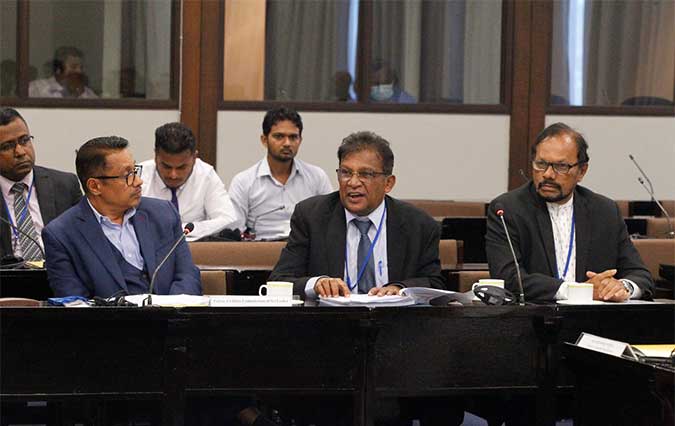
Chairman of the Public Utilities Commission of Sri Lanka (PUCSL), Janaka Ratnayake, yesterday (22) said that Parliament couldn’t, under any circumstances, settle the simmering dispute over the power tariffs, proposed by the Ceylon Electricity Board (CEB), outside the PUCSL Act No 35 of 2002 and the Sri Lanka Electricity Act No 20 of 2009.
The outspoken official, embroiled in a running battle with the Wickremesinghe-Rajapaksa government, said so when The Island sought his response to the all-party National Council (NC) directive to the PUCSL, and the CEB, to reach a consensus on electricity tariffs before they appeared before the NC tomorrow (24).
Emphasising the need to finalize the required calculations, before a final decision could be made, intrepid official Ratnayake said that he didn’t mince his words when the situation was explained to the National Council.The PUCSL and the CEB received specific directive, in this regard, from the National Council, on January 19, during proceedings chaired by Speaker Mahinda Yapa Abeywardena.
The leader of the ruling party parliamentary group, Premier Dinesh Gunawardena, sat at the head table, with the Speaker and Secretary General of Parliament Dhammika Dasanayake.
“Let me stress, the National Council or any other institution cannot impose a deadline on the PUCSL. We abide by the relevant parliamentary Act,” Ratnayake said.
However, the PUCSL and the CEB haven’t met so far.Asked whether he had the backing of the entire Board, the PUCSL Chairman said that having unanimously taken a stand against the Cabinet-of-Ministers backed CEB’s pricing formula, on January 12, some other members reneged on their word.
The PUCSL board consists of Janaka Ratnayake (Chairman), Udeni Wickramasingle (Deputy Chairman), Chathurika Wijesinghe and Mohan Samaranayake. Prof. Janaka B. Ekanayake (Department of Electrical and Electronic Engineering, University of Peradeniya) quit the PUCSL board in early part of last year. That vacancy hasn’t been filled yet.
Ratnayake alleged that the other members had switched their allegiance to the government and were pursuing a strategy harmful to the electricity consumers.
Asked whether the majority could override him to pave the way for the second electricity increase, within months, Ratnayake answered in the affirmative. Ratnayake said that he would resort to legal action if that happened. He questioned the circumstances the other members met President Ranil Wickremesinghe, a few hours before they appeared before the NC.
Ratnayake said that he couldn’t be removed unless approved by 113 members of the parliament.
The Island raised the issues at hand with Mohan Samaranayake, who strongly denied accusations made by the PUCSL Chairman, as regards their response to the Cabinet-of-Ministers reconfirming on January 09, 2023, a decision taken in November last year, to increase electricity tariffs.
“The Cabinet of Ministers, in a note addressed to the PUCSL, advised what was expected of us,” Samaranayake said, emphasising that the PUCSL was not asked to take decisions beyond its mandate. Referring to change of policy guidelines, Samaranayake said that the Cabinet had asked for an interim revision of electricity tariffs, pending a final decision by 15 February 2023, and backdated increase with effect from January 01, 2023.
Having received the Cabinet note, the PUCSL board met on 12 January to discuss its response and it had been agreed to respond in writing, Samaranayake said. “The letter was to be shown to us before dispatching it to the Cabinet. However, the letter dated January 13 was sent on the evening of 16 January,” Samaranayake alleged.
Declaring that the Chairman didn’t have special powers at all, Samaranayake questioned the legality of Janaka Ratnayake signing the letter, on behalf of the entire PUCSL even without showing it to them.
In spite of the PUCSL Chairman repeatedly declaring that he was opposed to the CEB’s pricing formula, the letter addressed to the Cabinet-of-Ministers had not said so, Samaranayake said. What the Chairman really said was that the PUCSL was in the process of reviewing the CEB proposal, Samaranayake said, acknowledging that the interim tariff hike and backdated increase, with effect from 01 January 2023, had been rejected.
Samaranayake, one-time head of President Gotabaya Rajapaksa’s Media Division, said that he had accepted an invitation from President Wickremesinghe. Two other members, too, had received separate invitations and, during discussions with President Wickremesinghe, in the presence of Power Minister Kanchana Wijesekera, the rapidly developing crisis had been explained.
“There was absolutely no basis for claims the President exerted pressure on us,” Samaranayake said.
Responding to another query, Samaranayake said that when Premier Gunawardena and other lawmakers raised the issues at hand, he had explained the situation to them and why they couldn’t agree with the PUCSL Chairman.
Samaranayake alleged that some persons had threatened him and Deputy Chairman Wickramasinghe on the 17th floor of the Merchant Tower Building, Kollupitiya, while they were returning from a special meeting of the PUCSL board, on 21 January.
Chathurika Wijesinghe hadn’t attended that particular meeting as she was out of Colombo, Samaranayake said, adding that several persons confronted them as they arrived at the Bank of Ceylon-owned building for the meeting. “They asked us not to betray the people for perks and privileges,” Samaranayake said. However, after the conclusion of the meeting, there was a group on the 17th floor who acted in a threatening manner and then joined Samaranayake and Wickremesinghe in the elevators, where they warned of consequences if they ‘collaborated’ with the government, Samaranayake said.




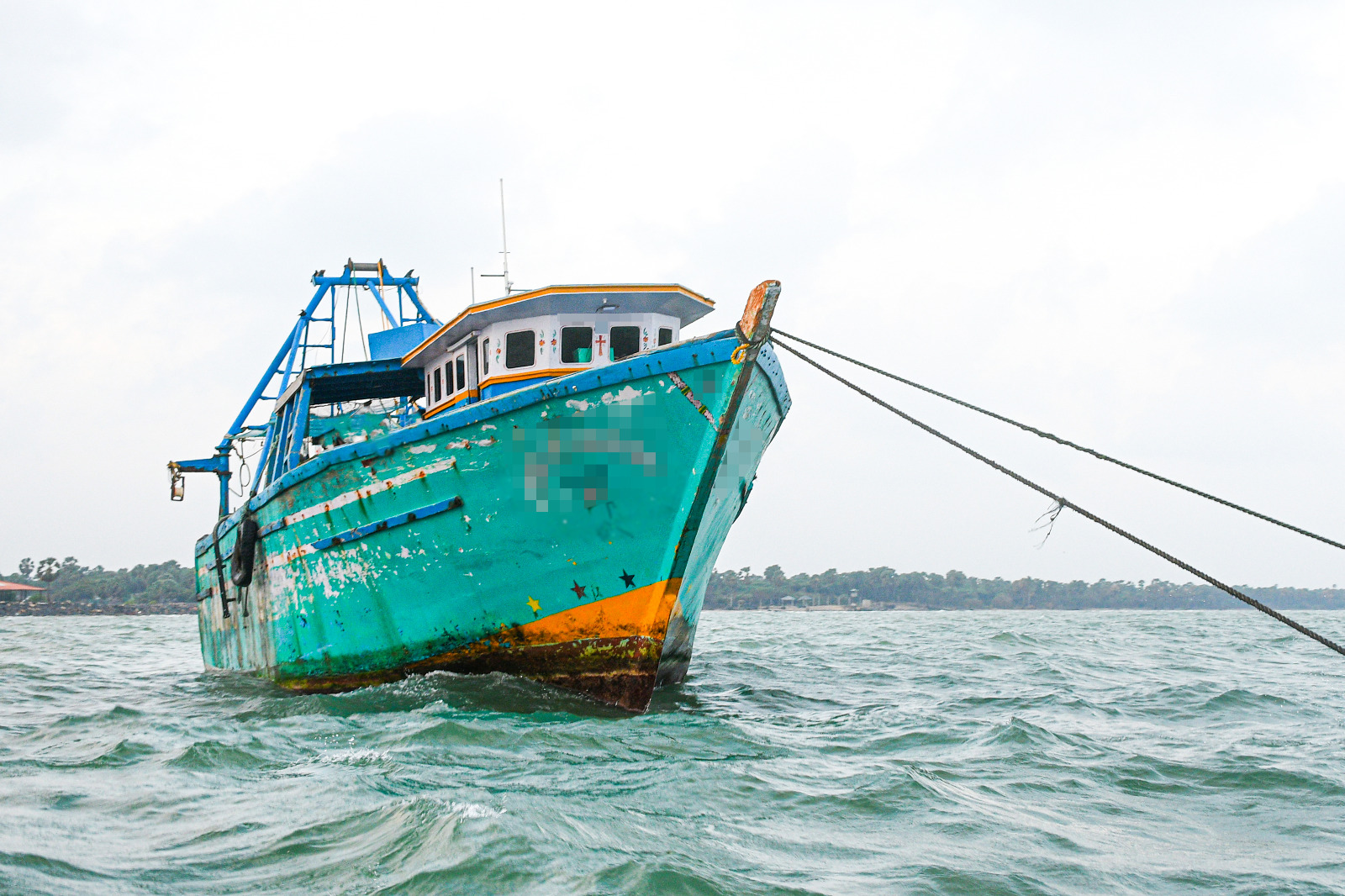
During an operation conducted in the wee hours of Tuesday (23 Dec 25), the Sri Lanka Navy seized an Indian fishing trawler and apprehended 12 Indian fishermen, while they were poaching in Sri Lankan waters north of Talaimannar.
Recognizing the detrimental effects of poaching on marine resources and the livelihoods of local fishing communities, the Sri Lanka Navy continues to conduct regular operations as
proactive measures to deter such activities. These efforts underscore the collective robust approach steadfast commitment to safeguarding the nation’s marine ecosystems while ensuring the economic security and wellbeing of its citizens.
The fishing trawler along with the fishermen held in this operation was handed over to the Fisheries Inspector of Mannar for onward legal proceedings.


India’s External Affairs Minister, Dr. Subramaniam Jaishankar, met with the Prime Minister of Sri Lanka, Dr. Harini Amarasuriya, on 23 December at Temple Trees, during his visit to Sri Lanka as the Special Envoy of Indian Prime Minister Shri Narendra Modi.
The meeting took place as part of the official visit aimed at holding discussions with Sri Lanka’s top leadership, at a time when the nation commenced reconstruction efforts following the devastation caused by Cyclone Ditwah.
During the discussions, the Minister of External Affairs of India reaffirmed readiness to extend support for Sri Lanka, including assistance in rebuilding railways, bridges, and strengthening of the agricultural sector in the country. He also highlighted the importance of having effective systems in place to respond to disaster situations, supported by strong legislative, administrative, and institutional frameworks. Both sides reviewed ongoing relief efforts and explored avenues to further strengthen bilateral cooperation in disaster response and recovery.
The Prime Minister commended the Government of India for the continued support, noting that the recovery process following the devastation caused by Cyclone Ditwah include beyond immediate relief efforts to long-term measures such as resettlement, and reconstruction of habilitation and infrastructure.
The Prime Minister further stated that steps have been taken to reopen schools as part of the process of restoring normalcy, with close monitoring in place. The Prime Minister emphasized the need to ensure stability, reduce vulnerability, and strengthen protection mechanisms highlighting the solidarity of the people, their strong spirit of volunteerism, and collective action demonstrated during the emergency situation.
The event was attended by the High Commissioner of India Santosh Jha, Additional Secretary (IOR), MEA Puneet Agrawal, Joint Secretary (EAMO), MEA Sandeep Kumar Bayyapu, Deputy High Commissioner Dr. Satyanjal Pandey, and representing Sri Lankan delegation, Secretary to the Prime Minister Pradeep Saputhanthri, Additional Secretary to the Prime minister Ms.Sagarika Bogahawatta, Director General (South Asia), Ministry of Foreign Affairs Samantha Pathirana, Deputy Director, South Asia Division, Ministry of Foreign Affairs Ms.Diana Perera.
[Prime minister’s media division]


Sri Lanka is standing on the edge of a coastal catastrophe, with the nation’s lifeline rapidly eroding under the combined assault of climate change, reckless development and weak compliance, Director General of the Department of Coast Conservation and Coastal Resource Management (DCC&CRM) Dr. Terney Pradeep Kumara has warned.
“This is no longer an environmental warning we can afford to ignore. The crisis is already unfolding before our eyes,” Dr. Kumara told The Island, cautioning that the degradation of Sri Lanka’s 1,620-kilometre coastline has reached a point where delayed action could trigger irreversible damage to ecosystems, livelihoods and national security.
He said accelerating coastal erosion, rising sea levels, saltwater intrusion and the collapse of natural barriers, such as coral reefs and mangroves, are placing entire coastal communities at risk. “When mangroves disappear and reefs are destroyed, villages lose their first line of defence. What follows are floods, loss of homes, declining fisheries and forced displacement,” he said.
Dr. Kumara stressed that the coastline is not merely a development frontier but the backbone of Sri Lanka’s economy and cultural identity. “More than half of our tourism assets, fisheries and key infrastructure are concentrated along the coast.
If the coast fails, the economy will feel the shock immediately,” he warned.
Condemning unregulated construction, illegal sand mining and environmentally blind infrastructure projects, he said short-term economic interests are pushing the coastline towards collapse. “We cannot keep fixing one eroding beach while creating three new erosion sites elsewhere. That is not management—it is destruction,” he said, calling for science-driven, ecosystem-based solutions instead of politically convenient quick fixes.
The Director General said the Department is intensifying enforcement and shifting towards integrated coastal zone management, but warned that laws alone will not save the coast. “This is a shared responsibility. Policymakers, developers, local authorities and the public must understand that every illegal structure, every destroyed mangrove, weakens the island’s natural shield,” he added.
With climate change intensifying storms and sea surges, Dr. Kumara warned that Sri Lanka’s vulnerability will only worsen without urgent, coordinated national action. “The sea has shaped this nation’s history and protected it for centuries. If we fail to protect the coast today, we will be remembered as the generation that allowed the island itself to be slowly eaten away,” he went on to say.
By Ifham Nizam

Navy seizes an Indian fishing trawler poaching in Sri Lankan waters north of Talaimannar

Several spells of showers may occur in Central, Uva and Eastern provinces and in Polonnaruwa and Mullaittivu districts

India’s External Affairs Minister meets Sri Lanka PM

Shafali 69 not out , spinners lead India’s rout of Sri Lanka

Sri Lanka’s coastline faces unfolding catastrophe: Expert

SOC examines proposed amendments to the Microfinance and Credit Regulatory Authority Bill

‘Dates have the highest sugar content to fight Coronavirus’

Sunday Island 27 December – Headlines

#SundayIsland 17th December – Headlines

Sunday Island – 28th March

Sunday Island Headlines – 21 March

Sunday Island – 21st February – Headlines
-

 News1 day ago
Members of Lankan Community in Washington D.C. donates to ‘Rebuilding Sri Lanka’ Flood Relief Fund
-
 News6 days ago
Pope fires broadside: ‘The Holy See won’t be a silent bystander to the grave disparities, injustices, and fundamental human rights violations’
-

 News6 days ago
Pakistan hands over 200 tonnes of humanitarian aid to Lanka
-

 Business5 days ago
Unlocking Sri Lanka’s hidden wealth: A $2 billion mineral opportunity awaits
-

 News5 days ago
Army engineers set up new Nayaru emergency bridge
-

 News6 days ago
Officials of NMRA, SPC, and Health Minister under pressure to resign as drug safety concerns mount
-

 News6 days ago
Expert: Lanka destroying its own food security by depending on imported seeds, chemical-intensive agriculture
-

 Editorial6 days ago
Flawed drug regulation endangers lives