
Latest News
Bangladesh sink after 7 for 5 collapse and Asalanka century

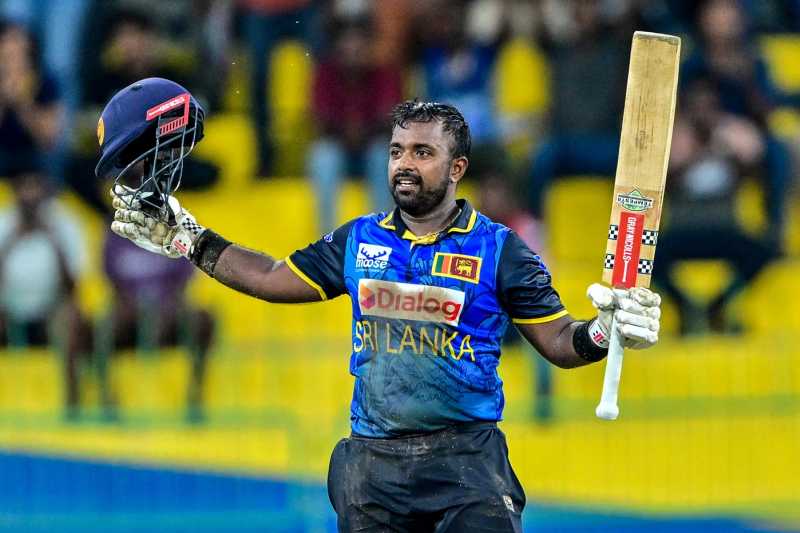
In a matter of 15 minutes, Bangladesh’s batting unfurled in an ugly collapse, one of the worst in ODI history, handing Sri Lanka a 77-run win in the first ODI. Bangladesh slipped from 100 for 1 to 105 for 8 in the space of 20 deliveries. Those were the fewest runs added from the fall of the second wicket to the eighth.
Wanidu Hasaranga and Kamindu Mendis engineered the collapse. They are essentially three bowlers in two as Kamindu bowls both left-arm orthodox and right-arm offbreak. There were no real demons in the Khettarama pitch, though there was one in the outfield. Hasaranga and Kamindu took three wickets each, but credit should also go to Sri Lanka’s fielding. Milan Rathnayake’s superb throw and Janith Liyanage’s diving catch sparked Bangladesh’s collapse.
Sri Lanka had earlier made 244 in 49.2 overs, courtesy of their captain Charith Asalanka anchoring the innings. The left-hander struck his fifth ODI century, second as the Sri Lanka captain. Bangladesh had their moments too, with Taksin Ahmed, returning after an ankle injury, taking four wickets.
Tanzid Hasan and Najmul Hossain Shanto got Bangladesh to a fine start, adding 71 runs for the second wicket. Both were batting fluently, until, disaster struck.
Shanto’s dive couldn’t beat debutant Rathnayake’s throw from deep square leg, in the 17th over. He made 23, but with Tanzid unbeaten on 61 at the other end, Bangladesh would have still thought they were on top.
Charith Asalanka played a lone hand to drag Sri Lanka to 244 before they were all out in 49.2 overs in the first ODI against Bangladesh. The Sri Lankan captain reached his fifth ODI century, his second against these opponents, but the rest of the batters couldn’t quite support him with a substantial score or a 100-plus partnership.
Kamindu Mendis then fell trying to drive Taskin, for a duck. Kusal Mendis and Asalanka added 60 runs for the fourth wicket, with Mendis dominating proceedings. He struck six fours and a six in his 45, before he fell lbw to the newcomer Tanvir Islam. The dismissal was confirmed on the umpire’s call upon review by Mendis.
Asalanka added 64 more runs for the fifth wicket with Janith Liyanage, who contributed 29 off 40 balls. He struck some attractive shots but fell to the part-timer Najmul Hossain Shanto in the 32nd over.
Asalanka though forged along, hitting some nice shots but mostly batting as the innings anchor. He added 39 runs for the sixth wicket with Milan Rathnayake, who was on ODI debut and made 22.
Wanindu Hasaranga tried to push the scoring rate but fell for a run-a-ball 22, becoming Taskin’s third wicket in the 46th over. Taskin removed Maheesh Theekshana later in the same over. Tanzim then finished off the innings with Asalanka’s wicket in the last over, before Eshan Malinga was run out in the following delivery.
Taskin’s four wickets apart, Tanzim took three wickets while Tanvir and Shanto took one each.
Asalanka introduced Hasaranga in the 18th over, partly because finally a right-hander had arrived at the crease. Litton Das fell lbw for a duck to the legspinner’s second ball. Litton has now failed to reach double-figures in his last eight ODIs, stretching back to December 2023. It was his fourth duck too, in these eight innings.
Two balls later, the set batter Tanzid played a poor shot against Hasaranga, hanging back to blast him to mid-off. Liyanage took a brilliant catch, diving high to his right. Tanzid made 62 off 61 balls, with nine fours and a six.
Kamindu then bowled the best delivery of this collapse, getting his left-arm spin to zip through Towhid Hridoy’s defensive push. New captain Mehidy Hasan Miraz was next to go, trapped lbw by Hasaranga’s googly, falling for a duck in the next over.
Kamindu then took a brace in the 21st over. First he removed Tanzim Hasan, when Maheesh Theekshana caught him at short midwicket nicely. Kamindu switched to right-arm offbreaks, and had Taskin Ahmed trapped lbw, to make it 105 for 8.
Theekshana then got Tanvir caught behind before Jaker Ali’s 51, with four sixes and as many fours, reduced Bangladesh’s margin of defeat to less than 100 runs.
Earlier, Asalanka held the Sri Lanka innings together after he decided to bat first. The left-hander struck six fours and four sixes in his 106 off 123 balls, but had little support at the other end. He crossed 1,000 runs at the R Premadasa Stadium where he stands level with Sanath Jayasuriya, Virat Kohli and Sachin Tendulkar after scoring his fourth century at the venue.
Asalanka’s knock was critical to Sri Lanka getting out of trouble after they slipped to 29 for 3 in the seventh over. Tanzim removed Pathum Nissanka for a duck, before Taskin got Nishan Madushka to drag his away-going delivery to his stumps.
Taskin then had Kamindu caught at mid-off, also for a duck, as Bangladesh felt they were on top. They controlled the scoring rate during the 60-run fourth wicket stand between Kusal Mendis and Asalanka. Debutant Tanvir had Mendis lbw for 45, leaving Asalanka with a lot of recovery still left to do.
He added 64 runs for the fifth wicket with Liyanage, who eventually struck one down long-off’s throat after making 29 off 40 balls and followed it with a 39-run stand for the sixth wicket with Rathnayake.
Asalanka forged on, hitting some nice shots but mostly batting as the innings anchor. He added 34 with Hasaranga, and while there wasn’t much pace to the partnerships, it held Sri Lanka in place.
Taskin removed Hasaranga and Theekshana in the same over before Asalanka reached his century in the 48th over. Looking at the final scorecard, Sri Lanka would be grateful that their captain never gave up despite the wickets falling regularly at the other end.
Brief scores:
Sri Lanka 244 in 49.2 overs (Charith Asalanka 106, Kusal Mendis 45, Janith Liyanage 29, Milan Rathnayake 22, Wanindu Hasaranga. Taskin Ahmed 4-47, Tanzim Hasan Sakib 3-46) beat Bangladesh 167 in 35.5 overs (Tanzid Hassan 62, Najmul Hossain Sahnto 23, Jaker Ali 51; Wanidu Hasaranga 4-10, Kamindu Mendis 3-19) by 77 runs
[Cricinfo]




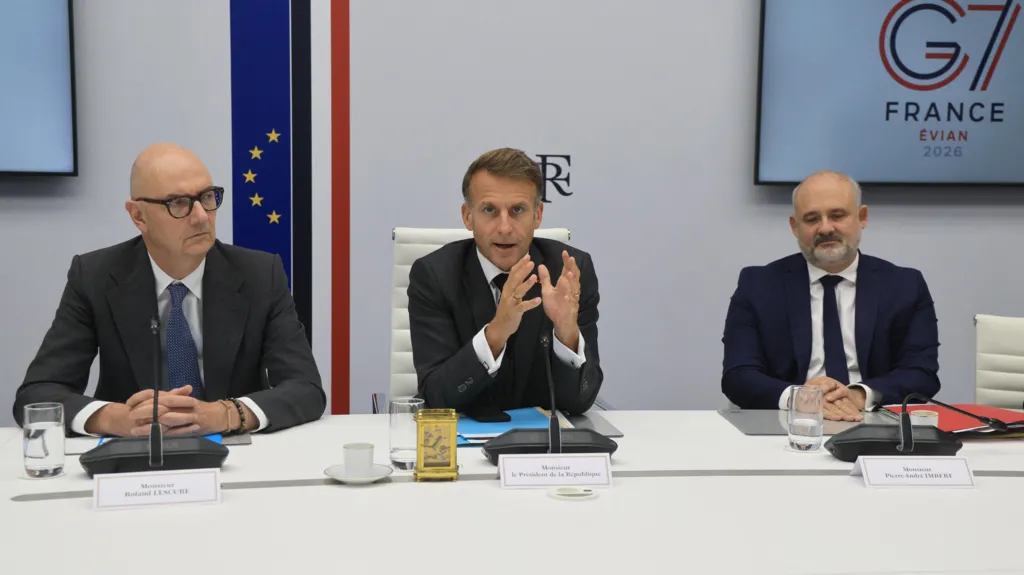
The G7 has agreed to release 100 million barrels of oil and diesel in a bid to ease supply pressures that have caused prices to skyrocket.
The group of advanced economies, including the US, said the move would include a “substantial release” of diesel in the coming days.
President Donald Trump had threatned to ban diesel exports in a move which would have eased pressure on prices for US consumers ahead of November’s midterm elections, but pushed up prices elsewhere.
In a joint statement, the G7 said member countries had now agreed to “refrain from export restrictions on energy and energy products” on one another.
The G7 includes the US, UK, Canada, Japan, Germany, Italy and France, with the EU also represented at its meetings.
Trump had warned he would ban diesel exports from the US if European countries did not agree to put more of their own stocks onto the market.
On Friday, he said on social media: “Europe has just agreed to release a massive amount of their heavily stocked Diesel Oil. The process will begin immediately.”
His Treasury Secretary Scott Bessent had argued US farmers, truckers, and businesses “should not be left carrying the burden” as prices soar.
Diesel is used heavily by the haulage industry and in agriculture, meaning rises in the cost of the fuel feed through into essentials such as food.
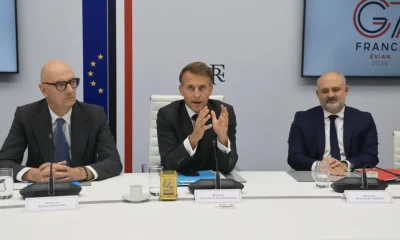
But, following a meeting of G7 leaders, French President Emmanuel Macron said the bloc had agreed to release reserves of “up to 100 million barrels” within four months under the coordination of the International Energy Agency (IEA).
The UK was represented at the meeting by Foreign Secretary Ed Miliband, who said the measures would “stabilise energy supplies, build resilience in supply chains and shield households and businesses from price shocks”.
Macron said the coordinated action would “bring down the prices of petroleum products, particularly diesel”. Highlighting the agreement not to pursue export bans, Macron said “President Trump, in particular, was very clear on this point”.
Speaking at the White House, Trump later said an export ban on diesel was “never really on the table”.
In the joint statement, G7 leaders said: “We will implement our commitments with a coordinated release through the IEA of 100 million barrels to begin immediately over four months, including a frontloaded substantial diesel release within the first 20 days by G7 members and partners.”
It is not yet clear which partner countries will release stocks, nor how quickly.
The 100 million barrels will comprise a mix of diesel and crude oil. The price of global benchmark Brent crude oil briefly dropped below $100 a barrel, but rose back to around $102 by Friday evening. Before the US and Israel invaded Iran, it was trading at around $73.
Matt Smith, director of commodities research at Kpler, said oil had risen again due to renewed strikes between Saudi Arabia and the Houthis in Yemen.
“Oil prices were selling off strongly due to the announcement of strategic stock releases in Europe, but they reversed course on rumours of Saudi Arabia planning an offensive into Yemen as it looks to re-establish a safe path via Bab-Al Mandeb,” he said.
European countries had pushed back against US threats to turn off American diesel, against a backdrop of the US-led war in the Middle East and reduced supplies from Russia and China.
The G7 leaders said they will also coordinate maintenance schedules to avoid multiple refineries being shut down at the same time, while encouraging countries with the capacity to do so to ramp up refining of diesel in particular.
Avoiding a ban on US diesel exports will offer significant relief to countries which are reliant on imports of the fuel, including the UK, where prices at the pump topped £2 a litre for the first time on Friday.
Over half of the UK’s diesel is imported, with 31% of those imports coming from the US.
(BBC)
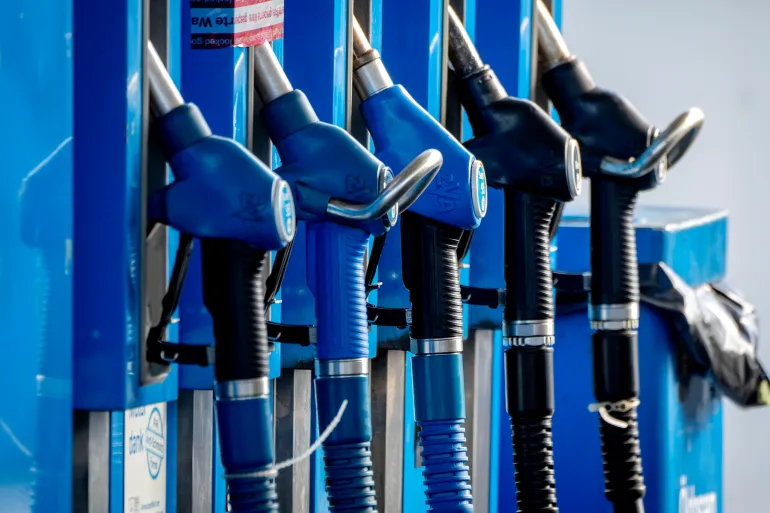
Th European Union “fully rejects” a US demand to release emergency diesel stocks as the fuel’s price soars in America and elsewhere amid the war with Iran.
The EU “fully rejects” the threat made by the US to ban diesel exports if Europe does not release more of its fuel stocks, according to European Commission spokesperson Anna-Kaisa Itkonen.
“A ban would not be beneficial to anyone. It would undermine our trust in the United States as a reliable partner,” she said, adding that the next EU’s Oil Coordination Group meeting is scheduled for October 15, but could be brought forward if needed.
On Thursday, President Trump said the US could ask European countries to release diesel reserves to rein in rising diesel prices due to the war on Iran.
His comments came after Treasury Secretary Scott Bessent urged Europe to “immediately” tap its reserves.
[Aljazeera]
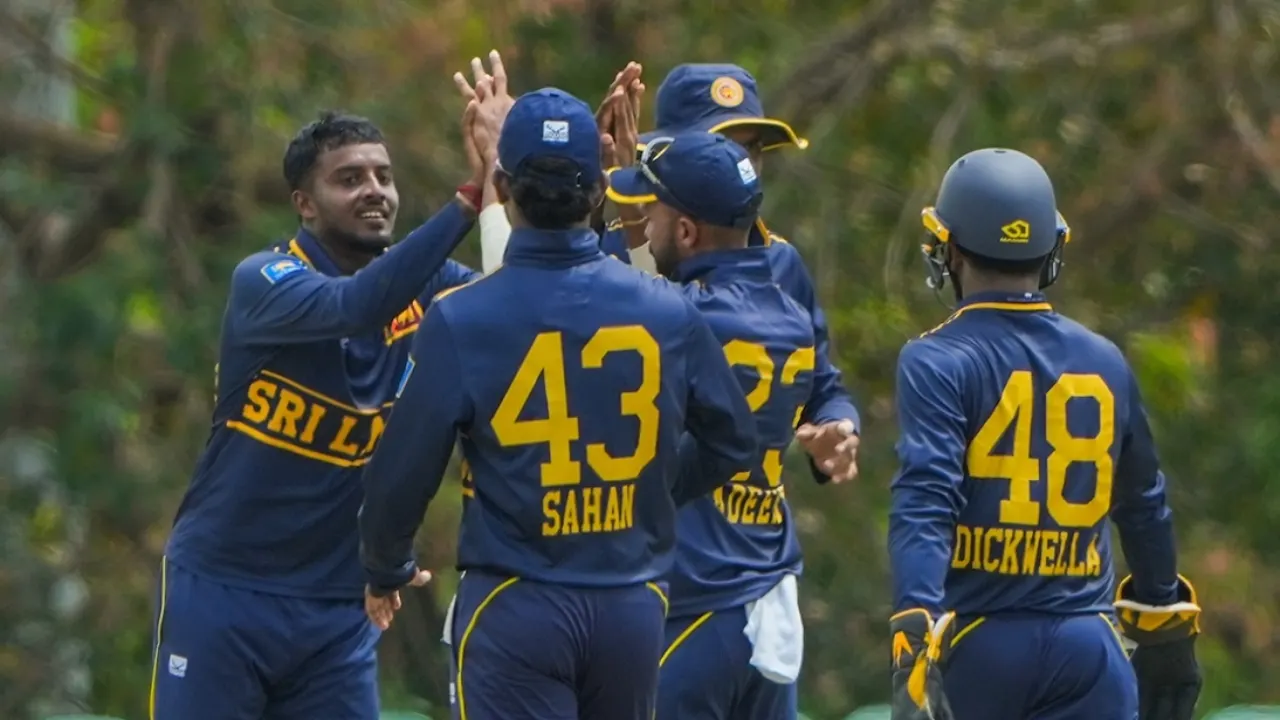
Opening batter Sineth Jayawardena has charged into the Sri Lanka T20I squad for the series against Pakistan, while Vijayakanth Viyaskanth has claimed the legspinner’s spot in the absence of the injured Wanindu Hasaranga. Seam-bowling allrounder Chamindu Wickremesinghe has also been named, as has batter Sahan Arachchige, while seamer Binura Fernando makes a return.
Omitted from the the squad were the likes of batter Charith Asalanka, fast bowler Dilshan Madushanka, ambidextrous spinner Tharindu Rathnayake, and batting allrounder Janith Liyanage.
Fast bowler Dushmantha Chameera was named in the squad, but his participation is subject to fitness.
Jayawardena, 21, has got his call-up because of an outstanding recent run in domestic T20s. In the past month, he has struck 101 off 52 and 82 off 32 for Tamil Union Cricket Club in the club T20 competition. He has played a single T20I, at the ongoing Asiad, but otherwise has never been part of a full-strength Sri Lanka side.
Others, such as Wickramasinghe, Arachchige, and Viyaskanth have earned their call-ups through years of performance at domestic level. Each of these players has appeared in T20 internationals for Sri Lanka before, but with the national team having had little success in this format in 2026, this inclusion represents their best chance yet to embed themselves within the side.
The three T20Is, which are all set to be played in Rawalpindi, will begin on October 9.
Sri Lanka squad :
Kamil Mishara, Sineth Jayawardena, Kusal Mendis (capt.), Lahiru Udara, Sahan Arachchige, Kamindu Mendis, Dasun Shanaka, Chamindu Wickramasinghe, Dunith Wellalage, Maheesh Theekshana, Vijayakanth Viyaskanth, Binura Fernando, Nuwan Thushara, Eshan Malinga, Dushmantha Chameera (subject to fitness)

G7 to release 100 million barrels of oil and diesel after Trump export ban threat

Showers above 75 mm are likely at some places in the Central, Sabaragamuwa, Western, Uva, North-western, Southern and North-central provinces and in Mannar district.

All set for Colombo rally against govt.’s tax policies

Yoshitha R money laundering trial postponed

Lankan troops test mettle in Russian war games

Tax burden drives thousands of doctors out of country: GMOA

‘Dates have the highest sugar content to fight Coronavirus’

Sunday Island 27 December – Headlines

#SundayIsland 17th December – Headlines

Sunday Island – 28th March

Sunday Island Headlines – 21 March

Sunday Island – 21st February – Headlines
-

 News5 days ago
Police remove Thileepan statue in Jaffna
-

 Features5 days ago
The 22nd Amendment, constitutional recovery and illiberal slippage
-

 Features5 days ago
Of foreigners as CEOs of Lankan ventures
-

 Latest News3 days ago
Gold winner Tharanga gets brand-new Honda Vezel from SLAAJ
-

 News5 days ago
Sajith rejects Jt. Opp. protest sabotage claim; SJB TU chief demands remedial action
-

 Features4 days ago
Thailand’s biggest new global star …
-

 Features3 days ago
Why Sri Lanka needs an Inclusive Civic Nationalism – urgently
-

 News4 days ago
First cases taken up by SC after enactment of 22A dismissed