
Editorial
Avert bloodbath


Tuesday 12th July, 2022
Sri Lanka found itself on the verge of a bloodbath on 09 May in the aftermath of a savage goon attack the loyalists of Mahinda Rajapaksa carried out on the Galle Face protesters. The spate of counter-violence fizzled out after a day or two although it was expected to last longer. But what was feared then will play out soon unless the appointment of the Acting President is handled carefully in case President Gotabaya Rajapaksa tenders his resignation tomorrow.
There is a long line of presidential hopefuls, we are told, but anyone who has incurred the wrath of the people must not be allowed to become the Acting President. It was not to make Ranil Wickremesinghe the Acting President that the people took to the streets on Saturday, and risked life and limb to force Gotabaya to resign. When they got rid of Prime Minister Mahinda Rajapaksa, in May, Ranil became the PM. They resumed their protest campaign, seeking the ouster of both Gotabaya and Ranil, and, therefore, they certainly do not want Ranil to gain from their pain again.
The Acting President will have to be an elected MP. It will be antithetical to democracy for anyone who failed to get elected to Parliament to succeed President Rajapaksa, who is planning to resign despite having secured as many as 6.9 million votes. Gotabaya’s successor must not be a member of the Rajapaksas’ inner circle responsible for the people’s current predicament. The Acting President should be above suspicion and independent of the Rajapaksa family. Otherwise, there will be a tsunami of public protests, which will make Saturday’s uprising look a mere ripple.
The least President Rajapaksa could do by way of making amends for having plunged the country into unprecedented chaos and inflicted so much suffering on the people who reposed trust in him is to appoint a new Prime Minister in consultation with the party leaders before he resigns so that the appointment of the Acting President will not provoke the public into pouring out onto the streets again. Or, both the President and the Prime Minister must resign together so that the Speaker will be able to act in the office of the President pending the election by Parliament of the interim President. It is incumbent upon the party leaders, the Bar Association of Sri Lanka, other professional associations, religious leaders, civil society activists and others to make the President and the PM do so. There is no other way to prevent another mass uprising, which is likely to lead to a bloodbath.
***
Let sanity prevail!
Sri Lanka is full of bogus messiahs who take the masses for a ride, savour power, amass wealth and lead the life of Riley. The Rajapaksas ruined the country by taking the credit for saving it from the LTTE. What they did has been likened to a person raping a damsel in distress after rescuing her. They exploited the war victory to the fullest to further their interests; they flaunted it to win elections and enrich themselves. Finally, the people woke up to the realisation that the Rajapaksa family had to be ousted. They took to the streets in their thousands, and President Gotabaya Rajapaksa has agreed to quit.
Likewise, those who take the credit for having extricated the country from the clutches of the Rajapaksas could become a huge problem if they are allowed to have their own way, given their violent past; they made themselves out to be messiahs and used the blood of the youth to fuel their politico-military projects.
The Rajapaksas’ exit, which has warmed the cockles of millions of hearts, must not be allowed to be an opportunity for other self-proclaimed messiahs to advance their hidden agendas. Otherwise, this country will become ungovernable, and no government will be able to restore the socio-political order, much less develop the economy.
Some ex-members of death-dealing sparrow units that roamed the country in the late 1980s have crawled out of the woodwork since Saturday’s uprising. They are all out to usurp the powers of Parliament, and if their demand for the establishment of a council above the legislature is granted, they will be able to manipulate it to run a parallel government. It is high time the democratic Opposition sat up and took notice of the dangerous trend; it has to take control of the situation instead of making all the noise in the world and doing precious little to help bring order out of chaos.
There is no gainsaying that most of the current MPs are total misfits, and some of them should be behind bars, but that does not mean Parliament, as an institution, is worthless and should be stripped of its powers. The solution to the problem of undesirables entering Parliament is to ensure that only good men and women are elected to it. Now that the people have almost succeeded in chasing the Rajapaksas out, it is incumbent upon them not to vote for other undesirables at future elections, parliamentary or otherwise; they ought to bring pressure to bear on political party leaders to nominate only decent candidates to contest elections.



Saturday 3rd October, 2026
Private fuel bowser owners were up in arms, yesterday, claiming that they were incurring huge losses because the Ceylon Petroleum Corporation (CPC) had not increased commissions for fuel distribution. Unless the CPC responded favourably to their demand for a substantial increase in commissions, they would be left with no alternative but to stop fuel distribution completely with immediate effect, they warned, noting that the CPC had promised to announce its final decision yesterday.
The Ceylon Petroleum Private Tanker Owners’ Association (CPPTOA), which is leading the fuel bowser owners’ struggle, said yesterday that it expected their commission to be raised at least to 20%, as the cost of fuel distribution had increased sharply. A meeting between the CPPTOA representatives and the CPC officials was going on at the time of writing.
It defies comprehension why the CPC lets the grass grow under its feet without addressing issues that have the potential to cripple fuel distribution. The CPPTOA had been protesting for weeks, but the CPC ignored fuel distributors’ demand. It may have expected the problem to go away with the passage of time. Everything possible must be done to prevent pumps from running dry at filling stations, causing hardships to the public and adversely impacting the economy.
The CPC should have taken immediate action at the first sign of trouble and invited the CPPTOA to talks instead of waiting until the eleventh hour. Prudence demands that a game of chicken be averted in a crucial sector like petroleum distribution.
Issues that could cripple the petroleum sector are best sorted out at the negotiating table, which is the ideal place for bargaining. We are not in a position to say whether it is fair for the CPPTOA to demand a 20% commission, but the fuel distributors’ grievances should be addressed and the CPC ought to hold talks with them and negotiate solutions as and when issues crop up. Flexibility is a prerequisite for resolving trade union problems. Intransigence and brinkmanship only aggravate such issues, much to the detriment of the country’s interests. If bowser operators stopped distributing fuel for a couple of days, perish the thought, it would take a considerable time to replenish supplies thereafter, and fuel queues would reappear. Disruptions to fuel distribution could have a domino effect on virtually every other sector of the economy.
The fragile economy, which is recovering from an unprecedented crisis, cannot take any more shocks, and the patience of the public is manifestly wearing thin. Petroleum sector trade unions have claimed that the CPC is selling fuel from older stocks at higher prices, while fuel distributors have called upon the government to scrap the loss-recovery levy immediately, arguing that the CPC’s legacy debt has now been fully repaid. These are the issues the Opposition should take up in Parliament instead of making loud noises that signify nothing.
One can only hope that the CPC and the CPPTOA will resolve the commission issue through negotiations, and the CPC will act more responsibly in the future without trying to wish away trade union issues that could cripple the petroleum sector.

Friday 2nd October, 2026
An inquiry conducted by the Police Special Investigation Unit (SIU) into some allegations concerning the circumstances that surrounded the 31 August drug detection at the Colombo Port has revealed that there may have been dereliction of duty on the part of Senior Deputy Inspector General of Police (SDIG) Ranmal Kodituwakku and several other officers, according to media reports. The plot thickens.
Acting on information reportedly received from the US Drug Enforcement Administration, the Central Crime Investigation Bureau (CCIB) searched a shipping container, bound for Cameroon, at the Colombo Port, and detected a large quantity of crystal methamphetamine weighing about 471 kg. The intelligence that led to the drug detection had been conveyed to SDIG Kodithuwakku, who was overseeing the CCIB. It was reported that the officers of the CCIB had obtained a search warrant from a Magistrate before opening the container, with the help of some personnel from the Police Narcotics Bureau and Sri Lanka Customs. Now, there is another version of how the drug detection was made.
SIU is reported to have found that both SDIG Kodithuwakku and the Police Narcotics Bureau received information about the drug consignment, on 14 August, but no action was taken immediately. On 22 August, a sub Inspector of the CCIB also received the same information. He subsequently took action and on 31 August, the container was opened in the presence of the Customs officers. The SIU investigators are reported to have found that some officers of the Police Narcotics Bureau were also present at the scene, but the initial detection of the drug consignment was carried out primarily by officers of the CCIB. SIU has recommended that in addition to the internal inquiry a criminal investigation should be conducted, according to media reports. But was the opening of the container strategically delayed, as has been claimed in some quarters? There have been numerous such instances around the world. The SIU investigators therefore ought not to rush to conclusions before establishing whether the delay, if any, formed part of a deliberate investigative strategy.
It has been reported that French Customs found 139 kg of cocaine in a shipping container at Marseille last year but instead of seizing the drug consignment immediately, it resorted to a controlled delivery of the big box to Barcelona, where a stevedore, two recipients and a transporter were arrested.
In 2023, after detecting 240 kg of methamphetamine in a 40-foot-container, Hong Kong Customs arranged for an international controlled delivery to Australia, where the box was bound for, and several arrests were made there. In May 1985, U.S. Customs allowed a drug-laden shipping container arriving at Port Newark to proceed under surveillance in a controlled-delivery operation in order to identify the people who would take delivery of it.
Police investigations have not always inspired public confidence in this country. There have been many instances where they conducted investigations hurriedly and arrived at the wrong conclusions. In 2015, the CID arrested two suspects, including a schoolboy, over the abduction, rape and murder of a little girl in Kotadeniyawa. It was later found that the perpetrator was someone else. Another striking example is the arrest of two former LTTE cadres after the execution-style killing of two policemen in Vavunathivu in 2018. But after the Easter Sunday terror attacks the following year, the CID found that the two policemen had been murdered by the National Thowheed Jamaath, which carried out the 2019 carnage.
So, one can argue that there is nothing inherently implausible about the claim that the opening of the container carrying narcotics at the Colombo Port was postponed in a bid to catch all those responsible for the illegal operation. Only a thorough probe will reveal whether this method was actually adopted in the case of the port drug bust.

Thursday 1st Octobber, 2026
Media reports about a Police Headquarters decision to transfer Senior Deputy Inspector General of Police (SDIG) Ranmal Kodithuwakku, who oversees the Central Crime Investigation Bureau (CCIB), and several other senior police officers involved in uncovering a massive drug haul recently have raised many an eyebrow. The Police Department is reported to have sought the National Police Commission’s approval for their transfers, citing organisational/service requirements. The news about the proposed transfers has come while an inquiry is underway into the recent seizure of a large quantity of crystal methamphetamine (Ice) at the Colombo Port. Kodithuwakku has already made a statement to the Criminal Investigation Department in connection with that inquiry. The sequence of events is noteworthy.
On 31 August 2026, the police, acting on intelligence passed by the US Drug Enforcement Administration, searched a shipping container at the Colombo Port and seized a large quantity of crystal methamphetamine weighing about 471 kg. The intelligence had been received by SDIG Kodithuwakku. Officers of the CCIB had obtained a search warrant from a Magistrate before opening the container, together with some officers of the Police Narcotics Bureau and Sri Lanka Customs. The drugs were concealed among towels or body wipes.
The Police Special Investigation Unit lost no time in commencing the inquiry under discussion into alleged shortcomings, omissions and possible lapses in the handling of the drug investigation. However, it is generally believed that those who carry out successful operations of this nature deserve praise and rewards. The challenge for the police therefore is to prove that the ongoing inquiry and controversial transfers are not aimed at taking the gloss off the successful anti-narcotics operation.
Police have also claimed that the internal inquiry will not interfere with the main criminal investigation being conducted by the CCIB. However, it may be recalled that the leaders of the incumbent administration accused the SLPP government of having disrupted investigations into the Easter Sunday terror attacks and other major cases by transferring the then CID Director SSP Shani Abeysekera in late 2019. So, how can the police top brass convince the public that the transfers of SDIG Kodituwakku and others will not adversely impact the ongoing probe into the port drug haul?
One can argue that the reasons given by the police for the inquiry and the transfers in question are not plausible, for it is widely believed that whenever senior officers conduct investigations or operations that are not to the liking of their superiors or politicians in power, they face inquiries and transfers. The National Police Commission is also widely perceived as a rubber stamp for the Executive. It is therefore hardly surprising that the media and the discerning public do not readily accept the explanations offered by the Police Spokesman and his superiors about internal inquiries and lightning transfers. There is a huge trust deficit.
Meanwhile, one may recall that nobody was transferred over the Colombo Port container scandal. As many as 323 red-flagged freight containers were released from the Colombo Port without mandatory Customs inspections, in January 2025, and what those big boxes carried is anybody’s guess. The Customs made a shameful attempt to defend the indefensible, and its Spokesman who trotted out lame excuses in a bid to mislead the media and the public became the Customs Chief and received a top position at the Presidential Secretariat after his retirement.
Sri Lankans are familiar with the local folk-story character, King Kekille, who invariably let wrongdoers off and punished the innocent in cases brought before him. Going by the way Sri Lankan politicians have been handling crucial issues under successive governments, one wonders whether King Kekille actually lived in this country and whether the present-day rulers are his descendants. Kekille once punished a goldsmith over a defect in a newly built wall around his palace. When questioned by the king, the mason who built the wall claimed that he had been distracted, during construction work, by a good-looking woman, who passed the worksite several times a day. The woman, summoned by the king, said she had been forced to visit the goldsmith frequently as he had not finished making her jewellery. So, the king shifted the blame to the goldsmith and punished him.
One need hardly be surprised even if those who smuggled drugs into the country through the Colombo Port walk free while the police officers who conducted the successful operation find themselves in the dock. Anything is possible in this country. The onus is on the police top brass to provide a credible justification for the controversial internal inquiry and transfers ordered by them.

G7 to release 100 million barrels of oil and diesel after Trump export ban threat

Showers above 75 mm are likely at some places in the Central, Sabaragamuwa, Western, Uva, North-western, Southern and North-central provinces and in Mannar district.

All set for Colombo rally against govt.’s tax policies

Yoshitha R money laundering trial postponed

Lankan troops test mettle in Russian war games

Tax burden drives thousands of doctors out of country: GMOA

‘Dates have the highest sugar content to fight Coronavirus’

Sunday Island 27 December – Headlines

#SundayIsland 17th December – Headlines

Sunday Island – 28th March

Sunday Island Headlines – 21 March

Sunday Island – 21st February – Headlines
-

 News5 days ago
Police remove Thileepan statue in Jaffna
-

 Features5 days ago
The 22nd Amendment, constitutional recovery and illiberal slippage
-

 Features5 days ago
Of foreigners as CEOs of Lankan ventures
-

 Latest News3 days ago
Gold winner Tharanga gets brand-new Honda Vezel from SLAAJ
-

 News5 days ago
Sajith rejects Jt. Opp. protest sabotage claim; SJB TU chief demands remedial action
-

 Features4 days ago
Thailand’s biggest new global star …
-

 Features3 days ago
Why Sri Lanka needs an Inclusive Civic Nationalism – urgently
-
 News4 days ago
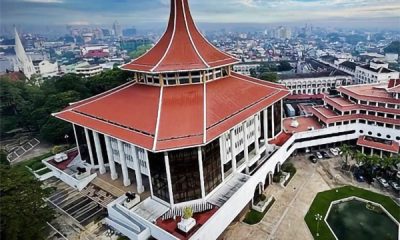
First cases taken up by SC after enactment of 22A dismissed