
News
Author V.V. Ganeshananthan goes beyond labels to tell the story of war, terrorism and Lanka’s Tamil community in Brotherless Night

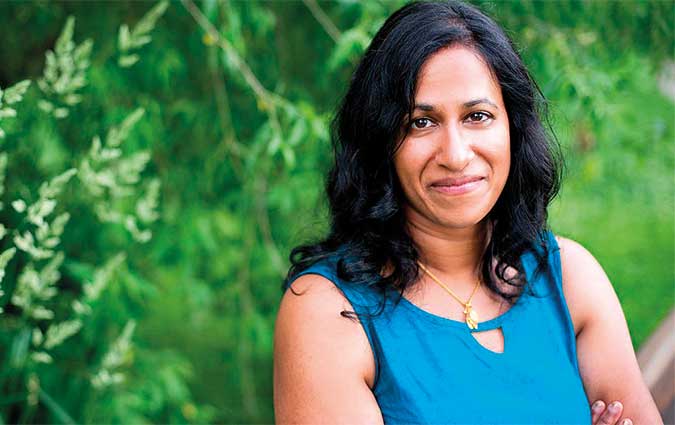
The opening line of V.V. Ganeshananthan’s sophomore novel, Brotherless Night, will give you pause. Maybe you’ve settled down in an armchair with a cup of tea, or maybe you’re leaning against a shelf in a bookstore, on the prowl for your next big read. Either way, the opening line will disarm you.
“I recently sent a letter to a terrorist I used to know.” In a way, the line speaks to the specific challenges of documenting the Sri Lankan civil war. Thousands of narratives clamour for precedence, and no single strand of politics, empathy or logic can do justice to them all. What Ganeshananthan, 43, American writer and journalist of Lankan Tamil descent, seeks to do is bring obscured voices back into the conversation. And for that, she first dismantles the very language of terrorism.
“I recently sent a letter to a terrorist I used to know.” In a way, the line speaks to the specific challenges of documenting the Sri Lankan civil war. Thousands of narratives clamour for precedence, and no single strand of politics, empathy or logic can do justice to them all. What Ganeshananthan, 43, American writer and journalist of Lankan Tamil descent, seeks to do is bring obscured voices back into the conversation. And for that, she first dismantles the very language of terrorism.
“One of the things that the rhetoric of terrorism seeks to do is to make the terrorist unintelligible,” says the author over a Zoom call from Minneapolis, where she teaches creative writing at the University of Minnesota. “The majority of people who have been referred to in that way are not unintelligible. Discussing their motivation doesn’t justify it, it just tries to understand it and to think about how someone might have arrived at that point
Ganeshananthan had been working on her first novel, Love Marriage (2008), about a Sri Lankan family fractured by the civil conflict, when she stumbled upon a significant piece of research. In 1987, a Tamil Tiger had gone on a widely-publicised hunger strike at the Nallur Kandaswamy Temple in northern Sri Lanka. His speeches were broadcast on some TV channels, and people from all over the Jaffna peninsula came to watch and to participate. After 12 days of abject theatricality, he died.
“The incongruity of that setting, the broad spectrum of people who were in attendance, the different stories that people were attempting to tell, and the way that those stories argued with each other… It was one of the first ways that I found my path to the point of view that I eventually used in Brotherless Night,” Ganeshananthan says.
Even though her book isn’t really about the hunger strike, it does manifest a lot of its broader themes. What motivates someone to become a militant? What makes them a martyr? And what happens, then, to the people they love and who love them? The character of Sashi, an aspiring doctor, coming of age during the first years of the war, was initially conceived to be the vantage point from which Ganeshananthan could question the events surrounding the hunger strike. Eventually, she emerged as a quiet but resolute protagonist in her own right.
“Sashi sometimes doesn’t actually know if she is doing things of her own volition or not,” says Ganeshananthan. “Sometimes she is and people think she is not, and sometimes she isn’t and people think she is and sometimes she herself can’t tell the difference.”
As the novel progresses, Sashi’s expression of her free will grows stronger, nurtured by University of Jaffna professor Anjali Premachandran. This character was inspired by real-life professor and activist Dr. Rajani Thiranagama, who was assassinated allegedly by the LTTE for speaking out against their atrocities, and was most recently commemorated by Shehan Karunatilaka in his Booker-winning novel The Seven Moons of Maali Almeida. Interestingly Thiranagama’s sister, Nirmala Rajasingam, narrates the audiobook for Brotherless Night.
The book is the product of over a decade of research into the Sri Lankan civil war, which saw Ganeshananthan poring over written accounts, unearthing old photographs, and speaking to those who had lived through it first-hand. Over the course of her conversations with survivors of the war, she repeatedly came across narratives that hadn’t often been documented.
In one chapter in the book, a militant comes to Sashi’s neighbour’s house and asks her to prepare food for his battalion. “How generous of you to say ‘ask’ when she has no choice,” Sashi’s brother Aran responds, articulating the sort of coded coercion that was often imposed on the civilian community.
“Some of that coded language is easier to represent in fiction,” Ganeshanthan says. “The form itself has an elasticity that allows me to represent truths of the community without subjecting them to a kind of verification that might be painful. I don’t think the people who went through this should have to prove it.”
In another chapter, the government requests all Tamil boys of a certain age to come in for what they claim will be a simple security check, necessitated by the increase in anti-state violence. Citizens are made to believe that if they comply, they will be absolved of all suspicion. Instead, all the boys who present themselves for checking are detained without cause, and released only after the women of Jaffna protest.
“There have been stories of women in the war, but the ones that have taken centrestage have by and large been of women who took up arms,” says Ganeshananthan. “The stories I grew up with were of women civilians who were doing things like helping their elderly move homes every time they got displaced, or studying by candlelight, or waiting it out in their houses when there was shelling. I have a lot of respect for these women.”
In many ways, Brotherless Night is a feminist novel, one that centres on women, students and civilians whose lives have been disrupted by war. It is a novel that exalts domestic labour and caregiving as valiant war-time efforts, and especially honours the sacrifices made by the medical fraternity.
It is also, in a way, a coming-of-age novel dedicated to young people whose lives have been defined by a conflict they had no choice but to respond to. “I’m not interested in justifying atrocities committed by either the state or non-state actors. What I am interested in, is restoring all people to the conversation,” Ganeshananthan signs off. (The Hindu)

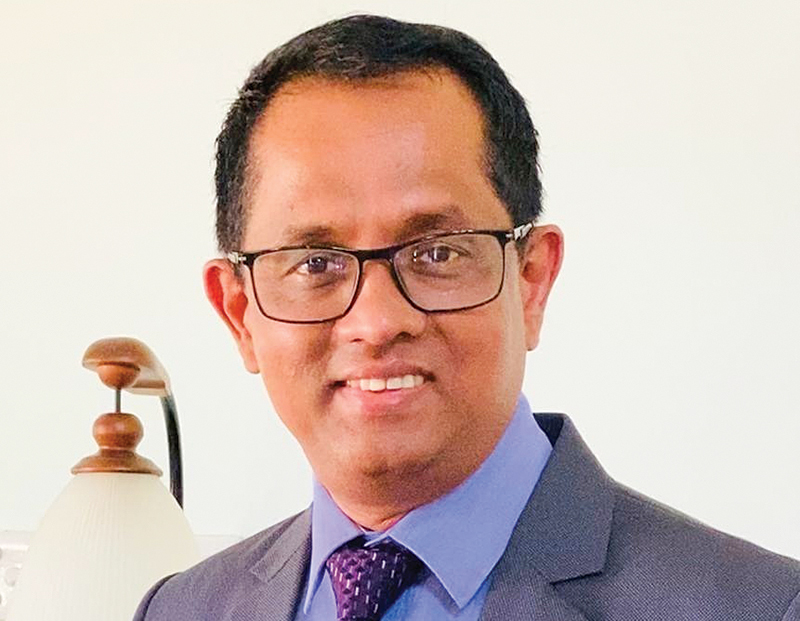
AKD’s request to Harsha:
Speaker Dr. Jagath Wickramaratne has frustrated an attempt by Chairman of the Committee on Public Finance (CoPF) Dr. Harsha de Silva, MP, to intervene to settle the continuing dispute over the appointment of a new Auditor General.
Dr. De Silva yesterday told The Island he had recently written to all members of the Constitutional Council (CC) drawing their attention to the urgent need to address the issue at hand. The AG’s position remains vacant since 08 Dec, 2025. AG W.P.C. Wickremanayake retired in April and since then there have been a couple of Acting appointments. The CC has declined to endorse any of President Dissanayake’s nominees as the AG.
Asked whether he had taken up the issue with the CC following President Anura Kumara Dissanayake soliciting his support in this regard, MP de Silva said that he had written to CC members as agreed with the President.
The former UNPer and one-time State Minister said: “I did so, giving due respect to CC’s independence, underscoring the critical importance in them working with the President to resolve the crisis. I alluded to the need to have transparency in public financial management during this post-cyclone period where large amounts of funds are being transacted on multiple fronts, both domestic and foreign.”
Responding to another query, Dr. De Silva emphasised that he had clarified that the President must send the names of qualified and experienced persons to the CC for consideration. “However, these letters were returned to me by the Speaker, without being delivered to members of the CC. The Speaker didn’t give an explanation. Thus, except for members who are MPs who had been copied via email by my committee office, others never received my letter of concern. Even though I questioned, in Parliament, the basis of his refusal to forward my communication to the members of the CC of which he is Chairman, no answer was given.”
The CC consists of Dr. Jagath Wickramaratne, Speaker and Chairman of the 10-member body. Dr. Harini Amarasuriya, Prime Minister, Sajith Premadasa, Leader of the Opposition, Bimal Rathnayake, Aboobucker Athambawa, Ajith P. Perera, Sivagnanam Shritharan, and three civil society members namely Dr. Prathap Ramanujam, Dr. Dilkushi Anula Wijesundere and Dr. Dinesha Samararatne. None of the President’s nominees could obtain CC’s approval as all of them were rejected by the CC.
The present CC was introduced by the 21st Amendment to the Constitution which was endorsed on 31 October 2022.
Both the Bar Association of Sri Lanka (BASL) and the Transparency International Sri Lanka Chapter recently requested President Dissanayake, in writing, to propose a suitable person to the post of AG. The BASL, in another statement that dealt with the forthcoming vacancies in the CC due to three civil society members completing their terms, declared its concern over possible attempts by the President and the NPP government to fill the vacancies with rubber stamps.
The three civil society members will complete their terms on 18 January. In terms of Article 41E of the Constitution, the CC meets at least twice every month, and may meet as often as may be necessary. The Chairman presides at all meetings of the CC and in the absence of the Chairman, the Prime Minister, and in the absence of the Prime Minister, the Leader of the Opposition presides at the meetings of the CC.
Asked whether the CC could be disrupted due to the end of civil society members’ terms, an authoritative official pointed out that in case new appointments were not made the current members could continue.
The Parliament has not so far called for applications to fill the forthcoming vacancies.
by Shamindra Ferdinando ✍️

The NPP government’s coal procurement process has once again come under scrutiny following allegations by the Frontline Socialist Party (FSP) that substandard coal has been imported for power generation and that tender procedures were manipulated to favour a specific supplier.
Addressing the media after a party meeting in Maharagama on Saturday, FSP Education Secretary Pubudu Jagoda said a test report issued by the government laboratory at the Lakvijaya Power Plant had confirmed that the latest coal shipment unloaded in Sri Lanka did not meet the required quality standards. According to the report, the coal’s calorific value ranged between 5,600 and 5,800 kilocalories per kilo, below the 5,900–6,200 kCal/kg range specified in tender requirements.
Jagoda warned that lower calorific value coal would require higher volumes to generate the same amount of electricity, increasing costs significantly. Preliminary estimates, he said, indicated an additional financial burden of around Rs. 7,500 million, which might eventually be passed on to consumers through higher electricity tariffs.
The FSP also accused the government of tailoring procurement rules to benefit the Indian supplier, which has deposited bonds for long-term coal supply for the upcoming season. Jagoda alleged that tender conditions had been altered to accommodate the company, pointing to changes in coal reserve requirements. Under the 2021 Sri Lanka Coal Registration Document, suppliers were required to maintain a minimum reserve of one million metric tonnes with a gross calorific value of 5,900 kCal/kg. This threshold, he said, had been reduced to 100,000 metric tonnes in the 2025 document which is a 90% reduction raising serious concerns.
He further cited past allegations against the Indian company, including findings in a 2016 Auditor General’s report that the company violated procurement guidelines regarding a rice supply contract with Sathosa in 2014. Jagoda also referred to legal issues involving individuals linked to the company, and the suspension of a representative by the International Cricket Council in 2019 over match-fixing allegations.
Beyond company-specific concerns, Jagoda criticised what he described as systemic manipulation of the coal tender process. He questioned why the coal tender, typically called in February or March, was delayed until July, despite electricity being declared an essential service. He also alleged that the tender submission period had been progressively shortened from the internationally accepted six weeks to five weeks, and now reportedly to three giving an unfair advantage to suppliers with existing stock.
The Ministry of Energy has recently issued an amended tender to procure 4.5 million metric tonnes of coal for the Lanka Coal Company for the 2025/26 and 2026/27 periods, following the cancellation of an earlier tender.
Jagoda warned that delays and irregularities could lead to coal shortages, higher spot market purchases, increased electricity costs, and even power cuts if hydropower generation falls short. He called for urgent investigations into the procurement process, insisting that the burden of alleged mismanagement and corruption must not be transferred to the public.
by Chaminda Silva ✍️

SJB Gampaha District MP Prasad Siriwardhana has been summoned to the CID today (12) for questioning in connection with a statement he made on a private television channel regarding education reforms.
He was earlier asked to report to the CID on 10 January to make a statement. However, as Siriwardhana had notified the authorities that he was unable to appear on that day, he was subsequently asked to come today.
Siriwardhana is one of the critics of the shortcomings of the education reforms introduced by the NPP government.

BCB’s integrity unit finds ‘credible suspicion’ during BPL

Devine’s 95 trumps Lee, Wolvaardt fifties in see-saw thriller

Fairly heavy showers about 75 mm are likely at some places in the Western, North-western and Sabaragamuwa provinces

President proposes; Speaker disposes

Sri Lanka loses Rs.7.5 bn due to coal tender irregularities: FSP

CID summons SJB MP for criticising education reforms

‘Dates have the highest sugar content to fight Coronavirus’

Sunday Island 27 December – Headlines

#SundayIsland 17th December – Headlines

Sunday Island – 28th March

Sunday Island Headlines – 21 March

Sunday Island – 21st February – Headlines
-
 News2 days ago
Sajith: Ashoka Chakra replaces Dharmachakra in Buddhism textbook
-

 Business2 days ago
Dialog and UnionPay International Join Forces to Elevate Sri Lanka’s Digital Payment Landscape
-

 Features2 days ago
The Paradox of Trump Power: Contested Authoritarian at Home, Uncontested Bully Abroad
-

 News7 days ago
Interception of SL fishing craft by Seychelles: Trawler owners demand international investigation
-

 Features2 days ago
Subject:Whatever happened to (my) three million dollars?
-

 News1 day ago
Level I landslide early warnings issued to the Districts of Badulla, Kandy, Matale and Nuwara-Eliya extended
-
 News7 days ago
Broad support emerges for Faiszer’s sweeping proposals on long- delayed divorce and personal law reforms
-

 News2 days ago
65 withdrawn cases re-filed by Govt, PM tells Parliament