
News
Attention of parliamentary committee drawn to need for expert assistance


Secretary General of Parliament Dhammika Dasanayake addressing the gathering. Speaker Mahinda Yapa Abeywardena, MP Angajan Ramanathan and Minister Dinesh Gunawardena look on (pic courtesy Parliament)
Secretary General of Parliament Dhammika Dasanayake said that the attention of the Parliamentary Liaison Committee had been drawn to the need to seek the assistance of experts and researchers for special committees such as the Committee on Public Finance, the Committee on Public Enterprises (COPE) and the Committee on Public Accounts (COPA).
A number of Committee Chairpersons who participated in this Committee meeting expressed their views in this regard and pointed out the need to obtain the contribution of experts in various fields including economics.
The meeting chaired by Speaker Mahinda Yapa Abeywardena, was attended by the Leader of the House and Foreign Minister Dinesh Gunawardena, Chairman of the Committee on Public Finance Anura Priyadarshana Yapa and the Minister of Trade Bandula Gunawardane.
MP Anura Priyadarshana Yapa pointed out that the assistance of experts as well as researchers was very much needed as committees such as the Committee on Public Finance had to meet daily during the budget period and had to discuss and approve economic and financial regulations.
Leader of the House and Foreign Minister Dinesh Gunawardena who approved that stance also stated that it was very important to seek the assistance of experts for special committees. He also said that the possibility of amending the Standing Orders and holding Ministerial Consultative Committee meetings within the Ministry should be explored and through that more officials could be involved.
In addition, attention was drawn to the possibility of holding committees with public engagement such as the Committee on Public Petitions outside Parliament, the Secretary General said. He also said that the members of the committee had instructed him to look for a place to use a government building outside the parliament premises for the purpose.
The Minister of Trade Bandula Gunawardane as well as Minister of Environment Mahinda Amaraweera pointed out the need for researchers to make the MPs more aware of the issues that needed to be addressed during parliamentary debates.
The Liaison Committee meets once in two months under the chairmanship of the Speaker. At the meeting the Secretary General said that officials were currently being contacted online at many committee meetings and that steps had also been taken to update the website and make the information of the committees more accessible to the public.
The Secretary General said that the Committee on Public Enterprises (COPE) meetings and the Committee on Public Accounts (COPA) meetings were recorded and broadcast. With the permission of the Chairpersons of other Committees, press releases were issued to the media through the Department of Communication of Parliament, he said.
Leader of the House Minister Gunawardena requested the Speaker to look into the possibility of holding Ministerial Consultative Committee meetings at the relevant ministry premises as it is possible to obtain the contribution of a large number of officials.

Latest News
Heat Index at ‘Caution level’ in the Western, Sabaragamuwa, Southern and North-western provinces and in Anuradhapura, Mannar, Vavuniya and Monaragala districts

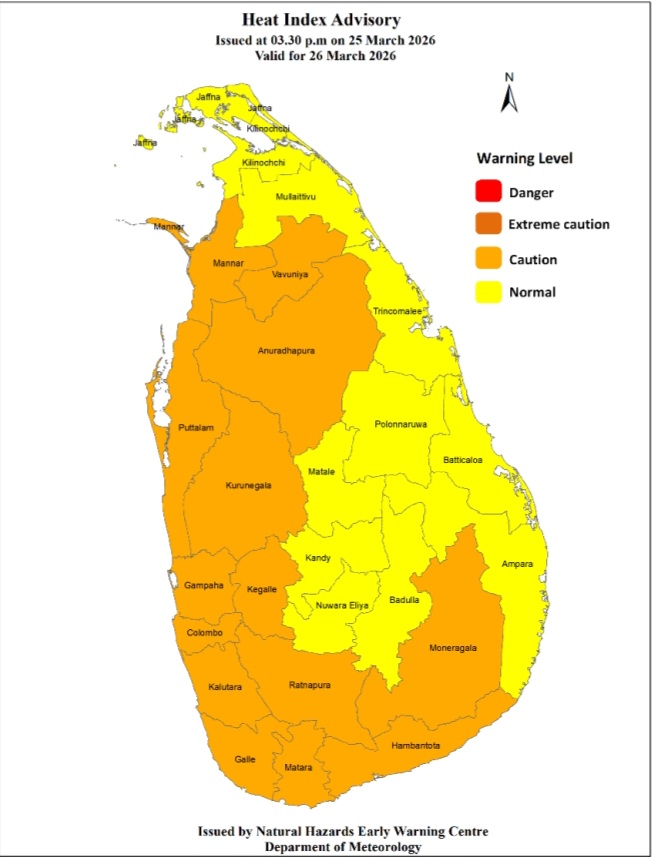
Warm Weather Advisory
Issued by the Natural Hazards Early Warning Centre of the Department of Meteorology
at 3.30 p.m. on 25 March 2026, valid for 26 March 2026.
The Heat index, the temperature felt on human body is likely to increase up to ‘Caution level’ at some places in the Western, Sabaragamuwa, Southern and North-western provinces and in
Anuradhapura, Mannar, Vavuniya and Monaragala districts.
The Heat Index Forecast is calculated by using relative humidity and maximum temperature and this is the condition that is felt on your body. This is not the forecast of maximum temperature. It is generated by the Department of Meteorology for the next day period and prepared by using global numerical weather prediction model data.

Effect of the heat index on human body is mentioned in the above table and it is prepared on the advice of the Ministry of Health and Indigenous Medical Services.
ACTION REQUIRED
Job sites: Stay hydrated and takes breaks in the shade as often as possible.
Indoors: Check up on the elderly and the sick.
Vehicles: Never leave children unattended.
Outdoors: Limit strenuous outdoor activities, find shade and stay hydrated.
Dress: Wear lightweight and white or light-colored clothing.
Note:
In addition, please refer to advisories issued by the Disaster Preparedness & Response Division, Ministry
of Health in this regard as well. For further clarifications please contact 011-7446491.
By Shamindra Ferdinando
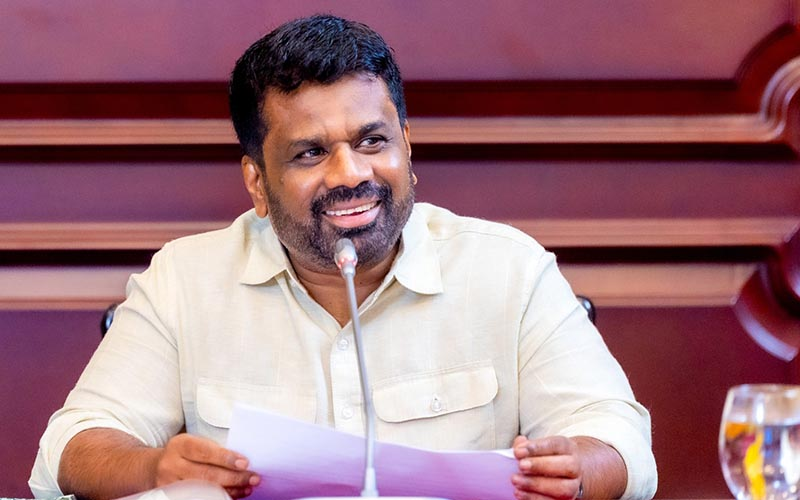
A spokesperson for the US Embassy in Colombo declared that the United States and Sri Lanka maintain a long-standing defence partnership, grounded in transparency, mutual respect, and shared interests.
The official said so in response to The Island query regarding President Anura Kumara Dissanayake’s recent bombshell disclosure, in Parliament, that his government declined to allow the US Air Force to use the Mattala Rajapaksa International Airport, following the eruption of the latest West Asia war.
We sought views of the US on President Dissanayake’s claim against the backdrop of Sri Lanka being a party to the Acquisition and Cross-Servicing Agreement (ACSA) since 2007. Sri Lanka extended the ACSA in 2017, for another 10-year period, and its extension comes up next year.
The President revealed that the US had requested permission to use Mattala, between 04 and 08 March.
Claiming that the request had been made on 26 February, two days before the war began, President Dissanayake said that the US had sought to land two aircraft, carrying eight anti-ship missiles, but that the request had been turned down to maintain Sri Lanka’s neutrality. The President revealed that the aircraft were to come from a US base in Djibouti.
The US embassy pokesperson explained that questions related to operational movements, including ‘Operation Epic Fury’, should be directed to the Department of War (DOW) in Washington.
Camp Lemonnier is the primary base of operations for US Africa Command in the Horn of Africa. China, too, has its only overseas military base in Djibouti in the vicinity.
Military sources said whatever various interested parties said about US-Sri Lanka relations, the former provided significant intelligence support during last phase of the conflict that enabled the Navy to hunt down floating LTTE arsenals in international waters. Of the eight LTTE vessels sunk, the US backed four hits with specific intelligence, sources said.
News
No decrease in remittances from workers due to Gulf conflict, but significant drop in tourist arrivals – CB Governor
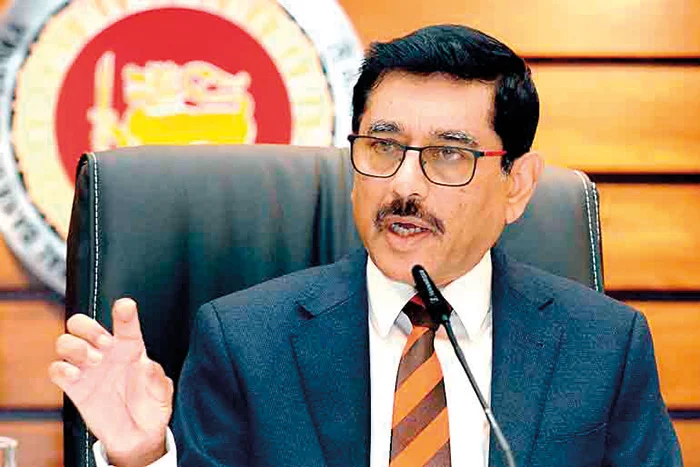
Sri Lanka’s worker remittances had not seen a decrease despite the ongoing conflict in West Asia, Central Bank (CBSL) Governor, Dr. Nandalal Weerasinghe said yesterday.
“Based on currently available data, they have not seen a decline in remittances. In fact, according to that we have observed, is a slight increase in remittances in the past few days, ” the Governor said at a media conference held at the Central Bank head office in Colombo.
Governor Weerasinghe also mentioned that he had not seen any reports about Sri Lankans returning to the country from the Middle East due to the ongoing conflict.
The Central Bank Governor, however, acknowledged that there had been a decrease in tourist arrivals. He confirmed that tourist arrivals had decreased by around 17 percent due to the current volatile situation in the Middle East.
Meanwhile, the Central Bank of Sri Lanka has decided to maintain the Overnight Policy Rate (OPR) at the current level of 7.75%, following its latest Monetary Policy Board meeting.
By Hiran H Senewiratne

Showers expected in the Western and Sabaragamuwa provinces and in Galle and Matara districts after 2.00 pm.

Heat Index at ‘Caution level’ in the Western, Sabaragamuwa, Southern and North-western provinces and in Anuradhapura, Mannar, Vavuniya and Monaragala districts

US dodges question on AKD’s claim SL denied permission for military aircraft to land

No decrease in remittances from workers due to Gulf conflict, but significant drop in tourist arrivals – CB Governor

Lal Kantha provides contact details for public grievances

Mannar’s silent skies: Migratory Flamingos fall victim to power lines amid Wind Farm dispute

‘Dates have the highest sugar content to fight Coronavirus’

Sunday Island 27 December – Headlines

#SundayIsland 17th December – Headlines

Sunday Island – 28th March

Sunday Island Headlines – 21 March

Sunday Island – 21st February – Headlines
-

 Features3 days ago
Trincomalee oil tank farm: An engineering marvel
-

 News6 days ago
CIABOC tells court Kapila gave Rs 60 mn to MR and Rs. 20 mn to Priyankara
-
 Features6 days ago
Science and diplomacy in a changing world
-

 Features3 days ago
The scientist who was finally heard
-
 News1 day ago
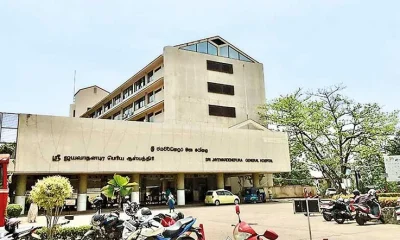
Japanese boost to Sri J’pura Hospital, an outright gift from Tokyo during JRJ rule
-

 News5 days ago
Colombo, Oslo steps up efforts to strengthen bilateral cooperation in key environmental priority areas
-
 News3 days ago
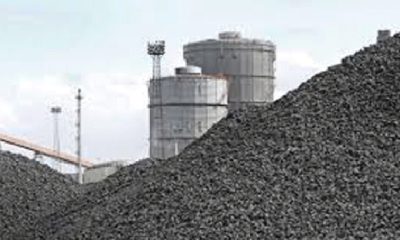
Substandard coal deepens energy crisis, warns former CEB Chief
-

 News1 day ago
CEB Engineers warn public to be prepared for power cuts after New Year