
News
Athurugiriya killings prompt fresh call for resumption of judicial executions


NPC asks for probe on exposure of key suspect
Tirantha Walaliyadda, PC, has urged the government to implement the death penalty without further delay in line with a fresh overall strategy to tackle organised crime.
Appearing on Aluth Parlimenthuwa on Wednesday (17) night, Walaliyadda, who had appeared for some of the notorious members of the netherworld said that the organised crime couldn’t be dealt with successfully unless the government resumed judicial executions.
Appearing on a programme that discussed post-war deterioration of law and order situation, Walaliyadda said that those engaged in narcotics trade and users should be harshly dealt with.
The lawyer questioned the rehabilitation of drug addicts at the taxpayers’ expense as such measures wouldn’t help to address the issues at hand.
Anchored by lawyer Sanka Amarjith, the participants in the programme were DIG Nihal Thalduwa (police spokesman and crime range), DIG Deepthi Hettiarachchi (Deputy Commandant STF), senior lecturer Udaya Kumara Amarasinghe and journalist Shamindra Ferdinando of The Island.
The focus was on the high profile killing of Surendra Wasantha Perera alias Club Wasantha at a tattoo and piercing studio near the Clock Tower in Athurugiriya on the morning of July 8. Another person identified as Nayana Wasula Wijesuriya was also killed. Among the wounded were songstress K. Sujeewa and Wasantha’s wife Menik Wijewardena.
Responding to a query raised by Amarjith, DIG Thalduwa said that the police weren’t in a position to either confirm or deny claims that the two gunmen who carried out the attack had managed to flee the country. Amarjith pointed out that the main gunman of the Beliatta killings in January this year had fled the country. The police spokesman said that having identified those who had been involved in the Beliatta shooting, the police were about to swoop down on the main gunman, when telecast of CCTV footage of the Beliatta shooting alerted the wanted man.
Amarjith pointed out that among the five dead at Beliatta was Saman Perera, the leader of Ape Jana Bala party represented in parliament by Ven. Athureliye Rathana thera.
The interviewer asked the police spokesman to explain the releasing of video footage of a key suspect in Athurugiriya shooting Dulan Sanjula, owner of a tattoo and piercing shop being questioned as it jeopardised the entire investigation. Sanjula was among seven persons arrested and remanded till July 22 pending investigations.
DIG Thalduwa said that IGP Deshabandu Tennakoon received a directive from the National Police Commission (NPC) to inquire into the incident. The Special Investigation Unit (SIU) of the department was in the process of investigating the incident on the instructions of the IGP, Thalduwa, who is also an Attorney-at-Law said. The official admitted that disciplinary action would be taken in this regard.
Walaliyadda emphasised that the releasing of that video footage had caused immense harm to the ongoing investigation. In terms of the British law, such would be considered contempt of court and will be appropriately dealt with.
Walaliyadda declined to name some of his notorious clients. When Amarjith pointed out that some lawyers went beyond their mandate to appease the underworld, the President’s Counsel said that once he refused to take a drug dealer in his car to the Hambantota court. Walaliyadda said that he also declined to allow the drug dealer to travel with one of his juniors and that brought an end to his contact with the party concerned.
In spite of declining to name five of his clients earlier, Walaliyadda later said that he never regretted representing Kanjipani Imran, Soththi Upali, Dhammika Amarasinghe, Chintaka Amarasinghe and M. Naufer. Walaliyadda compared the responsibilities of lawyers appearing for alleged criminals and police responsible for deaths of the underworld members. The lawyer asserted that both they and the police never regretted what they did ‘in the line of duty.’
Kanjipani Imran living overseas is widely believed to be involved in planning the Athurugiriya hit. Walaliyadda said that of the five clients he mentioned, three died in the hands of the underworld, Naufer, who had been found guilty of ordering the assassination of Colombo High Court judge Sarath Ambepitiya on Nov. 19, 2004, died in prison while Kanjipani remains at large.
Walaliyadda urged that the executive exercise his authority to sign death warrants. Judicial executions are a must to ensure the restoration of the supremacy of law. The lawyer stressed that the lives of children couldn’t be protected unless those in political authority took harsh measures to overcome the daunting challenges posed by organised crime. Unfortunately, the rights of the criminals received far more attention than the vulnerable communities, Walaliyadda said.
During the discussion, the need to examine whether the releasing of the video footage of Dulan Sanjula had been deliberate on the part of law enforcement authorities was stressed as they knew their actions could jeopardise the judicial process. The responsibility on the part of investigators and higher authorities to examine extremely serious allegations made by ex-SLAF officer and private investigator Keerthi Ratnayake, in two interview with Chamuditha Samarawickrema, on social media pertaining to the Aturugiriya killings was pointed out.
Against the backdrop of efforts to downplay the worsening of law and order situation, it was pointed out that there were many high profile killings such as The Sunday leader editor Lasantha Wickrematunga’s assassination, killing of ruggerite Wasim Thajudin as well as Dinesh Shafter’s murder remained unsolved.
The failure on the part of law enforcement authorities to address security issues was examined taking into consideration the nexus between organised crime and major political parties while DIG Thalduwa explained the difficulties experienced by them and the urgent need to strengthen relevant laws. Thalduwa also emphasised the need to modernise and strengthen laws meant to tackle large scale financial crimes as he lucidly explained the challenge in working with foreign law enforcement counterparts in current geopolitical developments. Lawyer Thalduwa said that even the current financial difficulties, too, mattered as issues at hand were addressed.
When a panelist pointed out that successive governments assured the international community that judicial executions wouldn’t be resumed, Walaliyadda insisted that in spite of such promises the death penalty remained in our statutes and the President exercised the right to hang those found guilty by the Supreme Court (SF)



Sri Lanka is emerging as a possible new operational base for transnational cyber-scam networks, amid a sharp increase in raids targeting foreign nationals suspected of involvement in online fraud, according to law-enforcement data and regional analysis by East Asia Forum (EAF).
An EAF report by Junqing Zhang, a postdoctoral researcher at the Faculty of Political Science, Chulalongkorn University, said that Sri Lankan authorities have conducted more than a dozen raids on suspected cyber-fraud operations since the beginning of the year, arresting or deporting hundreds of foreign nationals, many of whom had entered the country on tourist visas.
Police reported in August that 1,093 foreign nationals had been arrested in cybercrime raids in Sri Lanka in 2026, compared with 573 arrests recorded throughout 2024. Several operations have been conducted in the western coastal areas, with suspects including Chinese, Indian and other Southeast Asian nationals.
The increase comes amid intensified crackdowns on large-scale scam compounds in Cambodia, Myanmar, Thailand and Laos, many of which have been linked to Chinese-speaking criminal networks. Chinese authorities have also expanded joint operations, repatriations and judicial cooperation with governments across Southeast Asia as part of a broader campaign against online fraud.
However, the increase in scam activity in Sri Lanka does not by itself establish that criminal networks have relocated directly from Southeast Asia. Sri Lanka may instead be emerging as one of several destinations in a wider regional displacement of cybercrime operations.
The mobility of such networks was highlighted in April, when Sri Lankan authorities intercepted nine Chinese nationals arriving from Kunming who were reportedly carrying hundreds of electronic devices. The incident followed another operation in which more than 150 foreign nationals were detained over alleged online fraud.
Chinese authorities have publicly supported Sri Lankan investigations into such cases, reflecting growing concern over overseas scam operations, involving Chinese nationals.
Unlike the large compounds that have attracted attention in Southeast Asia, scam operations can increasingly be organised through smaller teams operating from multiple locations. This decentralised model makes them more difficult for authorities to detect and dismantle.
Sri Lanka offers several factors that could facilitate such temporary operations, including relatively accessible tourist and digital-nomad visas, comparatively low accommodation and office costs, telecommunications infrastructure and established cross-border financial networks. Its geographical position between South and Southeast Asia also makes it attractive to mobile criminal groups.
Authorities, however, face the challenge of moving beyond raids and arrests of frontline operators. Immigration monitoring, financial investigations, telecommunications regulation and cybercrime investigations need to be better coordinated to identify the organisers and financial networks behind such operations.
Law-enforcement agencies also need to distinguish between organised crime suspects and possible trafficking victims. International investigations have found that some people working in online scam operations in Southeast Asia were recruited through deception or coercion and subsequently forced to participate in criminal activities.
The growing presence of transnational scam networks could also have wider implications for Sri Lanka, including risks to its tourism and investment reputation, financial system and already stretched law-enforcement resources.
Experts have increasingly warned that enforcement action in one country can push scam networks into other jurisdictions rather than eliminate them. Sri Lanka’s experience, therefore, highlights the need for greater regional intelligence-sharing, coordinated financial investigations and cooperation on digital evidence if the networks behind online scams are to be dismantled rather than merely displaced.
by Norman Palihawadane
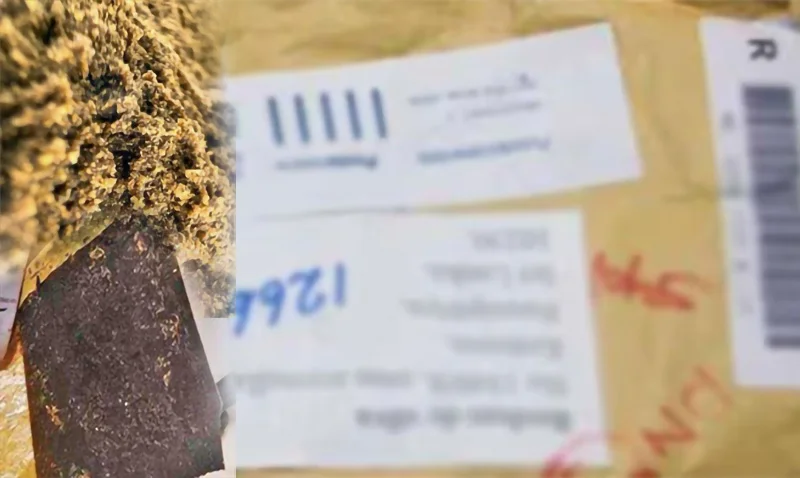
A consignment of 3.5 kilos of Kush cannabis and 2.4 kilos of hashish, smuggled into Sri Lanka through a private courier service, has been taken into custody.
The police said they had acted on a tip-off.
The suspect was arrested by the Western Province North Crime Division on 19 September in connection with the possession of narcotics and subsequently detained under a detention order, pending further investigations.
Acting on information provided by the suspect, investigating officers, with the assistance of Customs officials, recovered the consignment from Customs custody and took it into police custody on Thursday.
The Western Province North Crime Division is conducting further investigations into the incident.
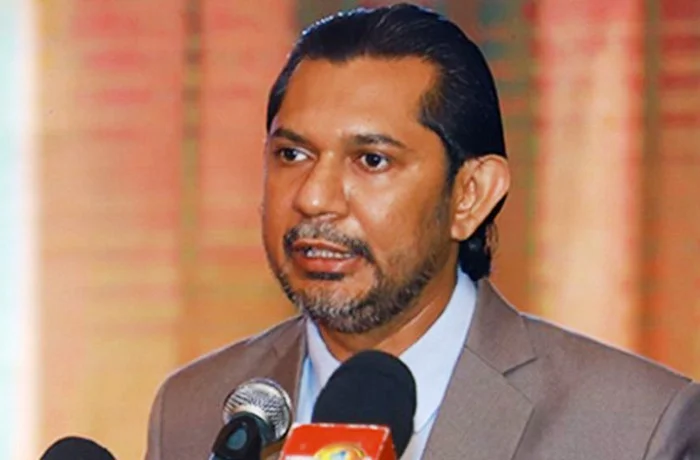
The Colombo Fort Magistrate’s Court yesterday rejected a bail application filed by former presidential aide Sugeeshwara Bandara, who is in remand custody over allegations of criminal misappropriation and criminal breach of trust involving more than Rs. 220 million.
Colombo Fort Magistrate Pasan Amarasena ordered Bandara to remain in remand custody until October 7, following the rejection of his bail application.
Bandara, who served as Personal Secretary to former President Gotabaya Rajapaksa, is accused of allegedly misappropriating and misusing more than Rs. 220 million while serving as Director General of Special Projects.
He was arrested by the Central Crime Investigation Bureau (CCIB) on June 18 in connection with an ongoing investigation into alleged irregularities involving the payment of government salaries.
According to investigators, Bandara had allegedly received salaries simultaneously from two separate government institutions.
Bandara was produced before the court yesterday, following which the Magistrate ordered that he be further remanded until the next hearing.
The case is scheduled to be taken up again on October 7.

UK digital expertise and Sri Lankan business leaders unite to explore growth through technology

Lanka emerges as possible new base for transnational scam networks

Buddhist law and constitutional amendments

From Colombo to Vegas: Sri Lankan talent shines at WCOPA

Dickwella in Sri Lanka’s T20I squad for the first time since 2021

The wild turmeric that blooms quietly on Pitawala Patana

‘Dates have the highest sugar content to fight Coronavirus’

Sunday Island 27 December – Headlines

#SundayIsland 17th December – Headlines

Sunday Island – 28th March

Sunday Island Headlines – 21 March

Sunday Island – 21st February – Headlines
-

 News7 days ago
US embassy won’t comment on IGP’s probe into joint drug raid
-

 News5 days ago
Shanakiyan urges urgent action over reported death sentence for Lankan in Saudi Arabia
-

 News6 days ago
Bid for Basil’s extradition nears final stage: Police
-

 News4 days ago
Namal Rajapaksa Buddhist gambit fails, bail denied
-

 Opinion7 days ago
A journalist who wrote across the divide
-

 Features4 days ago
Why the spelling Sri Lankan names in English vary
-

 Features4 days ago
Three bands, a new identity: Sri Lankan wolf snake recognised as distinct species
-

 Business4 days ago
SLIIT holds largest-ever convocation