
Opinion
Appeal for tobacco-free generation policy in Sri Lanka

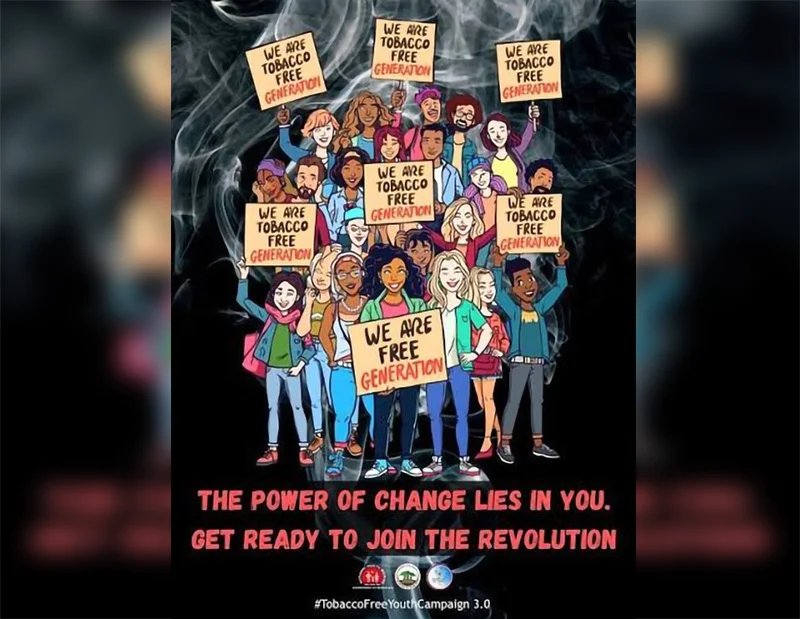
Open letter to President Anura Kumara Dissanayake
We respectfully call on Your Excellency and the Honourable Minister of Health to adopt a Tobacco-Free Generation policy, that prohibits the sale of all tobacco products to any person born on or after 01 January, 2010.
It is a futuristic, step-wise commitment to the children of our nation. Tobacco is the most destructive commercial product in the world, engineered deliberately by an industry that profits from it. Our children deserve to inherit freedom from this substance that kills one of two of its users. This appeal is based on the following grounds.
* In Sri Lanka it is estimated that tobacco kills 20,000 people annually, in addition to causing widespread economic losses which was estimated to Rs. 214 billion in 2019. This is in addition to the misery that tobacco causes to its users and families due to dependence, expenditure, economic loss and from diseases caused by tobacco. These diseases range from heart disease, strokes, and cancers to dementia and blindness. It is also a gateway drug to other substances including cannabis and heroin.
* It is well known that the tobacco industry deliberately and systematically targets young people through digital media, point of sale displays and product design. Children initiated into tobacco use during adolescence bear lifelong health consequences, contributing to reduced workforce productivity, increased healthcare costs and preventable premature death. Sri Lanka’s ageing population and declining birth rate make the health of younger generations a matter of direct national economic relevance. A Tobacco-Free Generation policy addresses these harms at source, with long-term benefits to public health, workforce capacity and health system sustainability.
* This is also a policy grounded on international commitments of Sri Lanka, as well as its own national laws. Sri Lanka is a State Party to the WHO Framework Convention on Tobacco Control (FCTC) – being the first country in Asia to ratify it – as well as the Convention on the Rights of the Child, the International Covenant on Economic, Social and Cultural Rights, and International Labour Organisation Conventions. Collectively, these instruments require states to protect children from preventable harm, uphold their right to the highest attainable standard of health, and shield them from commercial exploitation. Sustainable Development Goals further commits all signatory nations, which includes Sri Lanka, to strengthen FCTC implementation as a specific development obligation.
* The National Authority on Tobacco and Alcohol Act No. 27 of 2006 already mandates discouraging tobacco use among children and curtailing their access to tobacco products. The proposed policy is consistent with and is a direct extension of these existing obligations of this Act.
* This policy is by design a long-term measure. Its public health impact will be realised progressively as successive groups reach adulthood, free from tobacco initiation. Similarly, any effects on tobacco-related employment, revenues, retail and cultivation will unfold gradually over many years, providing ample time for affected industries and livelihoods to adapt other alternatives.
* The Tobacco-Free Generation model has gained significant momentum internationally. The Maldives became the first country in the world to enact such legislation, prohibiting tobacco sales to all persons born after 01 January, 2007. The United Kingdom followed, with the Tobacco and Vapes Act in 2026, permanently banning tobacco sales to anyone born on or after 01 January, 2009, Canada, Denmark, Singapore and the European Union are each at various stages of discussing, examining or adopting comparable measures. The policy is no longer at the margins of tobacco control debate.
Sri Lanka is no newcomer to this fight against this killer substance. In 2003, Sri Lanka ratified the WHO Framework Convention on Tobacco Control (FCTC) as the first country in Asia and the fourth in the world to do so. The Sri Lanka National Authority on Tobacco and Alcohol Act has been considered one of the best examples of comprehensive tobacco control laws during the last 20 years. As you are aware, this law was enacted, despite strong and sustained opposition from the tobacco industry.
Every day this policy is delayed, another group of Sri Lankan children are exposed to an industry whose profit depends on recruiting them. As around 50 people are killed by tobacco use each day in Sri Lanka, the industry needs to snare at least 50 new users daily to maintain its profits.
Sri Lanka has the legal framework, the international standing and consensus to act. Therefore, we earnestly urge Your Excellency and the Honourable Minister to take this step not only as a matter of sound public health policy, but also as a demonstration of your commitment to the wellbeing of the of children and young people who will define Sri Lanka’s future.
The Presidents of the following professional Colleges and Associations have strongly endorsed and signed this appeal to Your Excellency. This list is annexed for your perusal.
We assure that we stand ready to support Your Excellency in this effort in every way we can.
Dr. Manilka Sumanatilleke
President, Sri Lanka Medical Association
Dr. Anula Wijesundere
Chairperson, Expert Committee on Tobacco, Alcohol and illicit Drugs
President of Ceylon College of Physicians
Prof. Namal Wijesinghe
President of The College of Surgeons of Sri Lanka
Prof. Ajith Malalasekera,
President of Sri Lanka College of Obstetricians & Gynaecologists
Prof. Rukshan Fernandopulle,
President of College of Peadiatricians of Sri Lanka
Prof. Pujitha Wickramasinghe,
President of Sri Lanka College of Pulmonologists,
Dr Sumana Handagala,
President of Sri Lanka College of Cardiology
, Dr Asunga Dunuwille,
President of Sri Lanka College of Oncologists
, Dr Sanjeewa Gunasekera,
President of Ceylon College of Critical Care Specialists,
Dr A. D. Mudalige,
President of Association of Sri Lankan Neurologists,
Dr Dilum Palliyaguruge,
President of Sri Lanka College of Haematologists,
Dr T. Sooriyakumar,
President of the College of Ophthalmologists of Sri Lanka,
Dr K. R. Dayawansa
President of Sri Lanka College of Psychiatrists,
Dr Dasanthi Akmeemana
President of Sri Lanka College of Endocrinologists,
Dr Tharanga Samarakoon,
President of the College of General Practitioners of Sri Lanka,
Dr Pushpa Weerasinghe,
President of the College of Community Physicians of Sri Lanka,
Dr Vindya Kumarapeli,
President of Sri Lanka College of Radiologists,
Dr. Nayana Samarasinghe,
President of Sri Lanka College of Dermatology and Aesthetic Medicine,
Dr. Nayani Madarasingha,
President of the College of Dentistry and Stomatology,
Dr Pemith Liyanage
CC: Hon. Dr Nalinda Jayatissa, Minister of Health, Dr Anil Jasinghe, Secretary, Ministry of Health


World Gratitude Day
by Lalith de Silva
Senior Advisor for Governance and Transformation
As we commemorate World Gratitude Day on 21 September, perhaps it is an appropriate time for all of us to pause and ask ourselves a few simple but profound questions:
What have I received? Who contributed to what I have become? What is my responsibility in return? And what can I give back?
We live in a world where we are constantly encouraged to seek “more”—more income, a better career, a higher standard of living, greater recognition, greater comfort and greater success.
There is nothing wrong with aspiration. Individuals need aspirations, and nations need progress.
However, while constantly pursuing what we do not yet have, we can easily overlook something equally important: recognising and appreciating what we already have and what we have already received.
That is where gratitude begins.
Gratitude is much more than simply saying “thank you”. It is recognising the good we have received, appreciating the people, institutions, society and natural environment that have contributed to our lives, and allowing that appreciation to influence our behaviour, responsibilities and actions.
An Ancient and Universal Human Virtue
Gratitude does not belong to any one religion, nation or culture. The world’s major religious and philosophical traditions have recognised its importance for thousands of years.
For Sri Lanka, a particularly meaningful illustration comes from the Buddhist tradition.
Following his Enlightenment, before beginning his great teaching mission, the Buddha is traditionally described as spending the second week gazing at the Bodhi tree in appreciation and gratitude for the shelter it had provided him.
There is a profound message in this simple act.
Even after attaining Enlightenment, the Buddha did not take for granted the benefit received from a tree. Buddhist teachings also associate gratitude and thankfulness with the qualities of a good and virtuous person.
Christianity, Islam, Hinduism and other religious traditions similarly emphasise thanksgiving, appreciation, duty, compassion and service in different forms.
The underlying human message is universal:
Do not take the goodness we receive in life for granted. Recognise it. Appreciate it. And respond to it through positive action.
None of us succeeds alone
If we look honestly at our lives, none of us can truly claim to be entirely “self-made”.
Before we could walk, someone carried us. Before we could read, someone taught us. Before we could earn, someone fed, protected and supported us.
Parents and caregivers made sacrifices. Teachers gave us knowledge. Friends encouraged us. Organisations gave us opportunities. Doctors, nurses and other healthcare professionals cared for us. Farmers produced our food. Thousands of workers and service providers make our everyday lives possible.
Our lives also depend upon air, water, sunlight, soil, trees and complex natural ecosystems.
Our country provides education, infrastructure, institutions, security, cultural heritage and opportunities through which we build our lives.
Gratitude begins when we stop treating all these contributions as things to which we are automatically entitled.
It reminds us of a fundamental truth: we are interconnected and interdependent.
Gratitude and Happiness
Modern research in psychology and wellbeing has examined the relationship between gratitude and subjective wellbeing, life satisfaction, positive emotions, stronger relationships and behaviours that benefit others.
This is particularly relevant because many of us unconsciously postpone happiness.
“I will be happy when I earn more.”
“I will be happy when I receive that promotion.”
“I will be happy when this problem is over.”
Yet when one goal is achieved, another often appears.
Gratitude does not tell us to abandon ambition. Instead, it teaches us to build tomorrow without becoming blind to the goodness that exists today.
Gratitude may not change what we have, but it can change how we see what we have.
This does not mean that gratitude is a cure for illness, psychological distress, poverty or injustice. Such problems require appropriate professional, social, economic and institutional responses.
Gratitude does not ask us to deny suffering. Rather, it can help us recognise that even during difficult periods there may still be people, relationships, opportunities and sources of support worth appreciating.
From gratitude to compassion and responsibility
The wider social value of gratitude emerges when we move beyond the feeling of “I am grateful” and ask:
“If I am grateful, what is my responsibility?”
If I appreciate the sacrifices my parents made for me, what is my responsibility towards them?
If teachers and educational institutions contributed to my development, what can I contribute to the next generation?
If an organisation gave me opportunities, am I serving that organisation honestly and responsibly?
If my country provided education, infrastructure, opportunities and rights, what am I giving back to my country?
This changes our thinking from:
“What more can I get?”
to:
“What have I received, and what can I contribute?”
Recognising the contributions of others can encourage humility. Understanding their sacrifices can deepen empathy and compassion. Recognising how much we have received can encourage generosity, service and a greater sense of responsibility.
Gratitude therefore has the potential to move beyond personal wellbeing and become a foundation for responsible citizenship.
What Does This Mean for Our National Challenges?
Sri Lanka, like many countries, must address serious social and national challenges, including corruption, fraud, crime, substance and alcohol misuse, violence, misuse of public property and waste of public resources.
Gratitude is not a single solution to these complex problems.
We need strong laws, effective and independent institutions, transparency, accountability, education, appropriate treatment and rehabilitation, economic opportunities and good governance.
But alongside all of these, there is another important dimension:
Human character.
Laws are essential, but laws alone cannot create an ethical society.
Law seeks to control wrongdoing from outside. Good character can help prevent wrongdoing from within.
Consider a public official who genuinely thinks:
“This authority has been entrusted to me by the people.”
That mindset can influence how authority is exercised.
Consider a leader who thinks:
“This position is not merely a privilege; it is a responsibility.”
That can influence leadership behaviour.
Consider a citizen who understands:
“Public resources do not belong to somebody else. They belong collectively to all of us.”
That can influence how public property is treated.
Gratitude can therefore help encourage a movement from entitlement to responsibility, from selfishness to compassion, from exploitation to stewardship, and from merely receiving to giving back.
It cannot replace law, governance or accountability. But it can contribute to the character and values upon which good institutions ultimately depend.
Begin with Our Children
If we want to influence the future culture of our nation, we should begin with our children.
Teaching a child to say “thank you” is a good beginning. But we can go further.
“I am grateful to my parents.”
Then what is my responsibility towards them?
“I am grateful to my teachers and school.”
What is my responsibility as a student?
“I am grateful for my country.”
What kind of citizen should I become?
At this point gratitude becomes more than good manners.
It becomes character education.
Schools can help children connect gratitude with respect, responsibility, care for public property, kindness, service and good citizenship.
What Can We Do on 21 September?
World Gratitude Day should not become simply another commemorative day on the calendar. It can become a starting point for practical action.
Individuals can contact someone who has made a difference in their lives and sincerely thank them. A telephone call, letter or simple message of appreciation can be deeply meaningful. We can go further by doing something useful for another person or for our community.
Families can spend a few minutes together identifying what they appreciate about one another. We often assume that the people closest to us know how much we value them. Expressing it can strengthen relationships.
Schools, universities and Pirivenas can organise short discussions, essays, art, debates, gratitude letters and community-service activities around gratitude, responsibility and good citizenship.
Public and private organisations can recognise the contributions of employees, customers and communities and ask an important organisational question: What have we received from society, and what can we give back?
Religious and community organisations can highlight gratitude, compassion, service and responsibility through their own traditions while recognising gratitude as a universal human value.
A Simple National Initiative
The Government can also facilitate national awareness of World Gratitude Day on 21 September.
This need not require a large budget or elaborate celebrations.
A national awareness message could encourage citizens to reflect on gratitude. Schools and public institutions could be encouraged to undertake simple voluntary activities. Community service could be promoted. Public institutions could recognise people whose often-unnoticed work contributes to society.
Most importantly, World Gratitude Day could encourage a national conversation about gratitude, responsibility, service, integrity and good citizenship.
Such an initiative should be inclusive and non-sectarian, recognising gratitude as a universal human virtue shared across Sri Lanka’s religious, ethnic and cultural communities.
In future years, Sri Lanka might also consider developing the period around 21 September into a National Gratitude Week, allowing schools, government institutions, businesses, religious organisations, civil society and communities to develop activities appropriate to them.
The purpose should not be ceremony for ceremony’s sake. The objective should be to encourage reflection followed by action.
From One Day to a Way of Life
One day cannot transform Sri Lanka.
But one day can begin a practice.
Practice → Habit → Character → Culture → National Transformation
Repeated practice can become habit. Habits influence character. Character influences behaviour. When enough people practise similar values, they begin to influence the culture of families, organisations, communities and eventually society.
On 21 September, therefore, let us begin with four simple principles:
Pause. Recognise. Appreciate. Give Back.
Pause and look at our lives.
Recognise the people, opportunities, institutions, society and natural environment that have supported us.
Appreciate what we have received.
Then ask:
“If I am grateful, what is my responsibility—and what can I give back?”
Sri Lanka needs economic transformation. We need institutional and governance reform. We need technological progress and greater opportunities for our people.
But alongside all of these, we also need human transformation—a transformation that strengthens gratitude, compassion, responsibility, integrity and commitment to the common good.
The journey can be expressed simply:
Gratitude → Happiness → Compassion → Responsibility → Integrity → Good Character → Stronger Communities → A Better Nation
Let World Gratitude Day on 21 September become an opportunity to begin that journey.
Let us make gratitude not merely a feeling, but a practice; not merely a practice, but a habit; and ultimately a way of life.
Let us ignite a Gratitude Revolution—from the individual to the family, from the family to the community, and from the community to the nation.
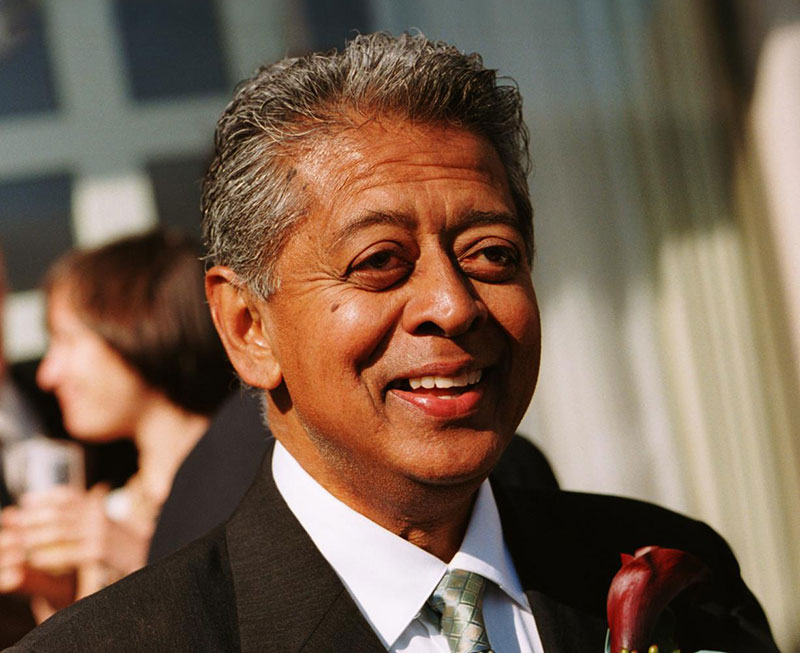
Vijaya Chandrasoma, a frequent and valued contributor to this newspaper I edit passed away at 85+ in Colombo a few days ago, far from his family domiciled in the United States; but his children with whom he was in close touch were able to make it for the funeral on Sunday. Vijaya or Vicky as he was best known to friends and family had a visceral hatred of President Donald Trump, no doubt shared by a majority of mankind. This he was not slow in expounding in the widely read columns he wrote for us.
In the covering letters accompanying his articles, he always included a cryptic note: “Yours to do as you please” demonstrating the generosity of his nature leaving open the exercise of any editorial judgment with no hard feelings whatever. That was the quintessential Vicky who sometimes wondered whether he was indulging in an overkill of Trump whom he detested as much as he loved Obama.
He loved Obama as much as he loved the USA which he felt had given him and his family a second chance which his family seized but he, as he freely admitted, allowed to slip by. He had the honesty to publish a self-deprecating book titled All Show And No Substance sub-headed A Cautionary Tale he meant mainly for his grandchildren “in the hope that they may learn something of the life and times of their grandfather and the world in which he lived.”
Vijaya Chandrasoma was second of the four sons of M. (Tissa) and Gertie Chandrasoma, his father being a member of the prestigious Ceylon Civil Service (CCS) reputed for his efficiency. While Vicky had classified his family as “upper middle class” a better description might have been “well to do.” As schoolboys we used to walk home for lunch together from Royal College along Fifth Lane, him to turn off at the barrel drain behind Ladies College now called 27th Lane and I onward to Charles Way further down the lane.
Vicky being a couple of years senior, my memories of him in school are dim but I do remember his telling me how his father, a reputed university athlete, cheered him with a “come on Vicky” at an inter-house athletics meet and how he and a partner defeated a champion combination in a game of tennis doubles. We had a distant kinship too through my mother’s paternal roots in Galle and he was very close to my cousin, best known by his nickname Koiman, who teamed up with him as fellow students in London.
The Chandrasomas went off to London after Tissa, a favourite of then Prime Minister, Sir. John Kotelawela, resigned after a disagreement with SWRD Bandaranaike, Sir John’s successor. He got a plum private sector job, number two at the foreign-managed Shell Company which dominated the petroleum import and distribution market in then Ceylon. Vicky makes no secret of what he called his “dissolute” life in London as a teenager concentrating on booze, horses and greyhounds.
Nevertheless he was accepted by St. Andrew’s University in Scotland, Cambridge and Oxford he eventually joined only to be “rusticated” after a year. His life in Colombo on his return from the UK was predictably fast with a stint in an accountancy firm his father got him into as an articled clerk, managing a hotel in the Maldives whose tourism industry was just taking off, running a tourism business in Colombo, an attempt at immigrating to Australia and finally ending up in Los Angeles.
He eventually relocated, alone to Colombo with his family remaining in LA. To his immense pride his children did very well in Ivy League Universities and thereafter “no thanks to me.” I bumped into him at the HSBC branch then at Dharmapala Mawatha and was able to introduce him to the bank to open an account. We reconnected and hence his many columns to these pages all written free gratis and for nothing.
He, like his father before him wrote very well and his copy was not all Trump bashing. There were so many readable pieces of his time at Oxford, his days with his friend Gamini Disssnayake to whom he was a trusted aide and speechwriter, and a memorable interview he did in Canada with Singapore Prime Minister Lee Kwan Yew. “This was sprung on me and I was absolutely unprepared. My heart was in the pit of my stomach. But PM Lee helped me through.”
A colourful life has ended, one where he blamed nobody but himself for anything that went wrong. Rest in peace my friend. Pity our long-promised meeting never happened.
Manik de Silva
by Sena Thoradeniya
I Refer to the article published under the above title in The Island of 14 Sept. It was written by Dr. Uswatte-aratchi, whose insights into art, literature, and culture have long resonated with mine. In those domains, we have shared similar views; yet in matters of political theory, political leadership, and governance, our perspectives have not converged.
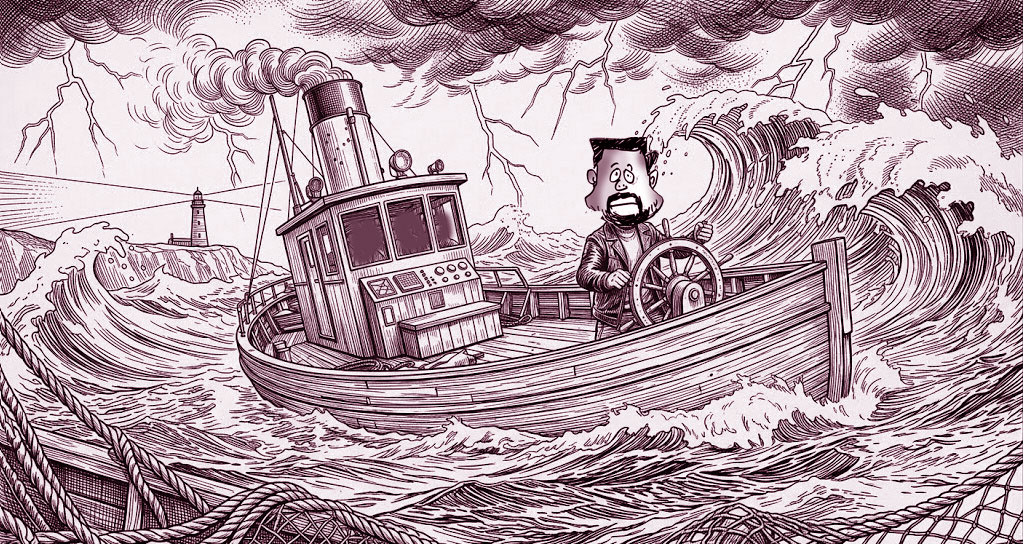
I do not intend to discuss the entire article by Dr. Uswatte, for he is entitled to his views on our politicians, even to the point of publicly attacking them when opportunity arises. I am neither an apologist nor an agent of any among those he has named. My concern here is solely to highlight Uswatte’s curious attribution of his knowledge of mathematics and physics to a person who, in his public addresses, has revealed no trace of intellectual capacity.
Dr. Uswatte says: “Unlike the earlier rulers Dissanayake (referring to the President) attended government schools in Tambuttegama and Kelaniya University. He studied science and mathematics. He can differentiate an equation for you and speak intelligently about Paul Dirac and Higgs Boson with the same felicity as accusations against former politicians”.
We are waiting for a theoretical or scientific publication by the current President that might justify such a claim. To ascribe scholarly depth to one whose record is not noticeable is absurd. It is a gesture that compliments without foundation and confers laurels where none have been earned.
This is what Dr. Uswatte says about the Prime Minister: “There is a Prime Minister who can talk to you impromptu about Auguste Comte and Claude LéviStrauss”.
A person who is said to have studied sociology should be knowledgeable about Comte, regarded as the father of sociology and the founder of positivism, and Claude Lévi-Strauss, a leading figure in structural anthropology; yet we remain uncertain whether she speaks of them with genuine familiarity and scholarly understanding, or is merely name-dropping them in an impromptu fashion. What on earth is she saying about these men on public platforms?
Since I possess no knowledge of either physics or mathematics, it was sheer curiosity that led me to consult AI only to discover what a marvelous President we have!
Paul Dirac was a pioneering English physicist, who helped establish quantum mechanics, co-founder of quantum electrodynamics and contributed to quantum field theory. In 1933, he shared the Nobel Prize in Physics. The Higgs boson is a fundamental particle discovered in 2012 that explains how particles acquire mass, solving a central mystery in physics. Peter Higgs, a British theoretical physicist won the Nobel prize for physics in 2013, decades after Anura Kumara obtained his degree.
Trying to rediscover theoretical physicists among ordinary science graduates who left university decades ago is indeed a futile exercise, like looking for a needle in a haystack. Theoretical physics thrives on continuity, requiring sustained engagement with evolving mathematics, new theories and experimental findings, and is a discipline that demands lifelong intellectual engagement.
Dr. Uswatte should listen to speeches made by his new found friends at public meetings and see the reaction of social media activists. As Chairman Mao observed, theory divorced from reality is useless. “No investigation, no right to speak (“Preface and Postscript to Rural Surveys” -1941).
For the time being, I refrain from commenting on some of the President’s promises, such as ‘producing graphite from graphene’ (which ought, of course, to be the reverse), producing sulphuric acid using seawater, fortifying the stem of the banana through advanced research, devising lifesaving remedies for cancer, or unveiling the world’s first app for locating shoals of fish. The list is too long to reproduce here. An exaggerated parade of claims and the sheer implausibility of such boasts are not the stuff of theoretical physics.

Kenya’s Ngetich breaks women-only half-marathon world record by a second

Showers about 100 mm are likely at times in the Western, Sabaragamuwa and North-western provinces and in Galle, Matara, Kandy and Nuwara-Eliya Districts

New Constitution to decide fate of executive presidency, PCs: NPP

NBRI issues landslide warning for three districts

Mahaweli rises as heavy rain triggers flood, landslide fears

SC determination on 22A to be conveyed to Speaker shortly

‘Dates have the highest sugar content to fight Coronavirus’

Sunday Island 27 December – Headlines

#SundayIsland 17th December – Headlines

Sunday Island – 28th March

Sunday Island Headlines – 21 March

Sunday Island – 21st February – Headlines
-

 News4 days ago
US embassy won’t comment on IGP’s probe into joint drug raid
-
 Features6 days ago
The emptying university: why are academics leaving?
-

 News3 days ago
Bid for Basil’s extradition nears final stage: Police
-

 Business4 days ago
All-new Bolero MaXX unveiled in Sri Lanka
-

 News2 days ago
Shanakiyan urges urgent action over reported death sentence for Lankan in Saudi Arabia
-
 Weather7 days ago
Showers above 100 mm are likely at some places in the Western, Central, Sabaragamuwa, Southern, North-central and North-western provinces
-
 Opinion6 days ago
Who committed genocide and created mass graves in Sri Lanka?
-
 Opinion4 days ago
A journalist who wrote across the divide