
Business
Apparel industry urged to increase value addition to its EU exports

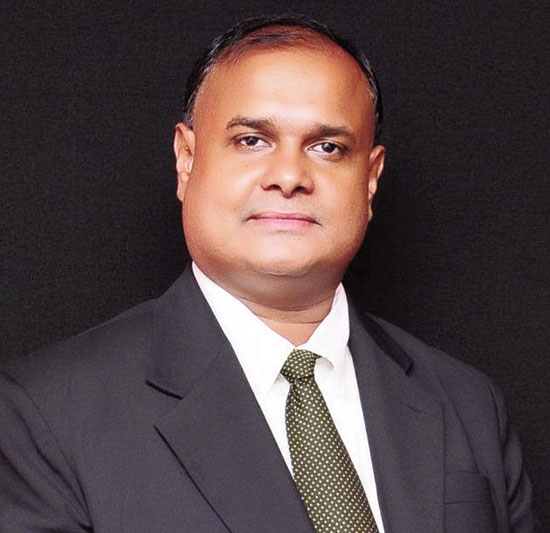
Sri Lanka’s apparel industry must increase value addition to its exports to the EU from the current 52 per cent to 65 per cent quickly if the industry wants to utilise the fullest extent of the GSP+ benefits, Hemantha Perera, Secretary of the Sri Lanka Chamber of Garment Exporters, a constituent member of Joint Apparel Association Forum (JAAF) said last week.
“Vertical integration in Sri Lanka’s apparel industry is one of the quickest ways to do that,” he said.
Hemantha, who is also an executive member of JAAF said so while speaking at a panel discussion, ‘GSP Plus; Past, Present and Future’, hosted by the Federation of Chambers of Commerce and Industry of Sri Lanka and the Colombo Chamber of Commerce.
The Joint Apparel Associations Forum (JAAF) has been working with the government and companies in the industry to develop solutions to increase value addition into apparel; the setting up of the Fabric Processing Park at Eravur is the first step, achieved with consistent government support.
Perera further noted that certain fabrics used for apparel production are currently being imported from regions that disqualify the manufactured product for tariff reductions under the EU’s GSP+ concessions. He noted that this disqualification could be resolved via local production of such inputs.
“Fabric is a key raw material required for apparel production. Synthetic fabric often has to be imported to Sri Lanka, making them ineligible for GSP+ concessions to the EU,” he said. “However, developments such as the Eravur Fabric Processing Park can change this situation and allow the industry to make greater utilization of GSP+ to the EU, our second-largest market.”
“We currently lack infrastructure for functions such as dyeing and printing. These are vital in improving key indicators such as lead times and strengthening the output potential of the industry. Even at present, our competitiveness primarily depends on factors like ethical manufacturing practices, compliances and the high skill levels of our employees,” he said.
At the forum, several other speakers highlighted the need for Sri Lanka to retain GSP+ concessions to the EU, including the Export Development Board (EDB) Chairman, Suresh de Mel and trade expert Dr. Dayaratna Silva, Sri Lanka’s former Ambassador and Permanent Representative to the World Trade Organisation (WTO).
“We need to do our best to retain the existing concessions to our exporters,” the EDB Chairman emphasized.”
Dr. Silva indicated that those who assumed that Sri Lanka could do without GSP+ concessions at this stage were mistaken. Dr. Silva referenced previous studies published by respected academics that highlight that the previous instance of GSP+ withdrawal had a negative impact on the country’s overall economy – with GDP declining by more than 1% – and, on employment levels, particularly in the apparel industry.
The other speakers at the event included the Ambassador of the European Union to Sri Lanka and the Maldives – Denis Chaibi, and Ambassador of Sri Lanka to the European Union – Grace Asirwatham.

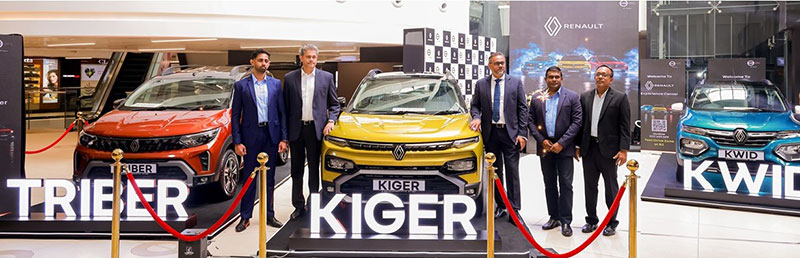
Renault has taken another significant step in its return to the Sri Lankan market with the opening of the Renault Experience Centre at Majestic City, Colombo, offering customers an opportunity to discover the brand and experience its latest models.
The Centre was officially declared open by Jawahar Ganesh, Group Managing Director of Associated Motorways (Private) Limited, accompanied by Prasanna de Silva, Director – Sales, AMW. The occasion was attended by AMW management and staff, members of the media, customers, well-wishers and other invited guests.
Located at the lobby of Majestic City, the Centre features three Renault models being introduced to the Sri Lankan market – the Renault Kwid, Renault Kiger and Renault Triber. Visitors can explore the vehicles, learn about their features and specifications, and take advantage of test drives available at the location.
Adding to the convenience for customers, AMW has ample stocks of Renault vehicles available in Sri Lanka, allowing customers to take delivery of their chosen vehicle without having to wait for months for it to arrive. Subject to completion of the necessary documentation and registration, customers can look forward to driving away in their new Renault within as little as one day, making the purchase experience faster and more convenient.
Customers can also enjoy greater peace of mind with a three-year manufacturer warranty, supported by dedicated Renault aftersales facilities to provide professional service and support throughout their ownership journey.
Commenting on the opening, Jawahar Ganesh, Group Managing Director of AMW, said, “We are delighted to welcome Renault back to Sri Lanka and to open the Renault Experience Centre at Majestic City. Renault is a brand with an exceptional heritage, a strong global presence and a reputation for innovation and distinctive automotive design. Through AMW, we are bringing that heritage and experience closer to Sri Lankan customers”.
Business
Dialog and Indira Cancer Trust continue breast cancer awareness initiative through Yeheli.lk

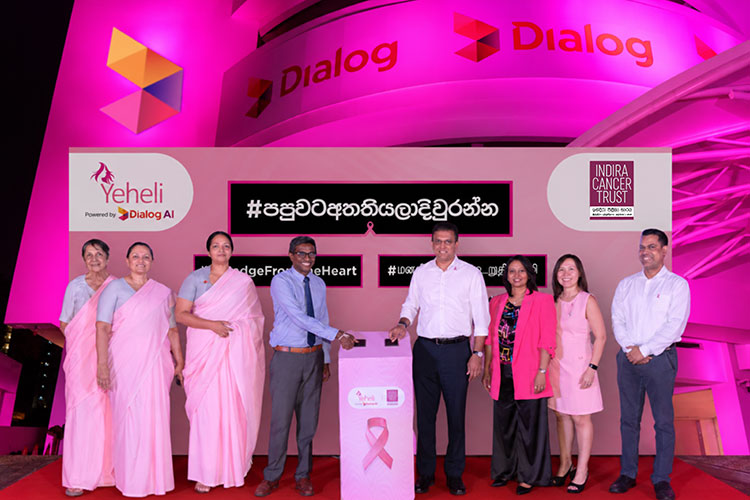
Dialog Axiata PLC, Sri Lanka’s #1 connectivity provider, marked the beginning of Breast Cancer Awareness Month by illuminating its Corporate Head Office in pink, in partnership with the Indira Cancer Trust, to stand in solidarity with individuals and families affected by breast cancer and encourage greater awareness, regular screening and early detection.
Building on previous breast cancer awareness campaigns conducted through Dialog’s Yeheli.lk platform in collaboration with the Indira Cancer Trust, this year’s initiative will continue throughout October under the theme, ‘A Pledge from the Heart’. As part of the campaign, members of the public can visit yeheli.lk to register for a free monthly SMS reminder and take their pledge for early detection throughout Breast Cancer Awareness Month.
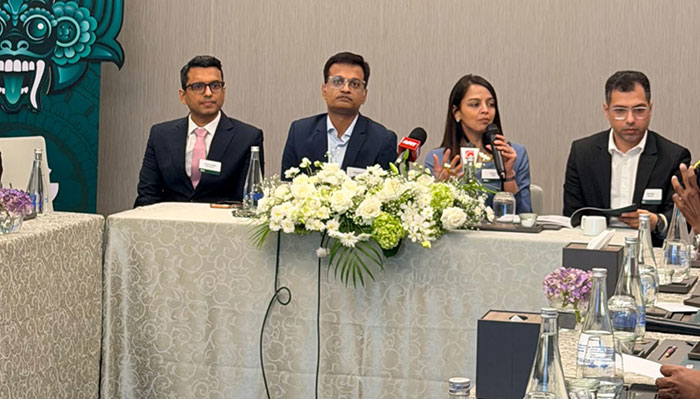
Boston Consulting Group (BCG) released a report, “The Changing Path to Purchase in Sri Lanka,” in collaboration with The Ceylon Chamber of Commerce. It examines how Sri Lanka discovers, selects and transacts in a recovering economy. Six years on from BCG’s first study of the Sri Lankan consumer in 2020, the report set out to establish where that consumer now stands.
Sri Lanka has gone through a period of sustained economic pressure, and household consumption has recovered to a record level. The crisis, however, redrew where spending power sits and how families allocate what they have. It prompted shifts in consumer behaviour, some of which persist even after conditions have eased.
Key findings from the report
Rural Sri Lanka carries the middle-class scale, affluent households spend above their weight: Household consumption stands at a record level of around LKR 9 trillion in real terms and remains the largest component of GDP. The middle class is the largest consumption pool at about 70% of national spending, with rural Sri Lanka accounting for 56% of middle-class households. Affluent households are increasingly concentrated in the Urban-West and account for 4% of all households, while contributing 11% of national consumption.
Choices are more intentional and preference must be re-earned: More brands enter the consideration set than in 2020, yet fewer convert into a single preferred brand. Incumbent channels lag on some key choice drivers, giving newer channels a right to win.
Spending intent runs ahead of income: 77% of consumers expect to spend more over the next six months, while 38% expect their income to rise. Consumers expect to spend more on essentials, hold everyday categories and cut back or defer discretionary purchases in the shorter term.
Discovery remains human-led, while the shortlist digitises: Word of mouth is still the strongest source of influence at 66%, while digital influence has risen to 51% from 32% in 2020, running highest in considered purchases like leisure and high-value purchases. Within digital, YouTube and social media lead discovery.
Generative AI is emerging as the next discovery frontier: 55% of consumers are aware of it and 18% have already used it, with about one in three using it to research brands and products.
Digital banking sees deep engagement: 25% of consumers use digital banking, but they are highly engaged. Digital payments are their preferred choice for routine transactions.
“Consumption has recovered to a record level, but the household behind that number is not the one companies planned for before the crisis. Essentials take a larger share of the wallet, and families are making more deliberate choices, category by category,” said Nishant Gupta, Managing Director & Senior Partner, BCG.

COPE: Oil issue and ‘slippery’ answers

Montana Governor here to strengthen agricultural trade and security cooperation

Lankan on Saudi death row: AI throws its weight behind to secure Anojan’s release

Why Sri Lankan sports need science, sanity, and substance

R. S. (Siri) Palihawadana

The silent hunters: Why Sri Lanka’s spiders matter

‘Dates have the highest sugar content to fight Coronavirus’

Sunday Island 27 December – Headlines

#SundayIsland 17th December – Headlines

Sunday Island – 28th March

Sunday Island Headlines – 21 March

Sunday Island – 21st February – Headlines
-
 Editorial7 days ago
Colombo Port drug bust: The plot thickens
-

 Features5 days ago
The first woman in the foreign service or Ceylon Overseas Service it was then called
-

 Editorial6 days ago
Fuelling discontent and protest
-

 News4 days ago
Geneva takes up Sallay’s case and govt. ignores opportunity to answer accusations
-

 Foreign News6 days ago
Ten injured after car crashes into rugby supporters in Australia
-

 Latest News6 days ago
Tharindu Rathnayake, bowlers secure Asian Games Bronze for Sri Lanka
-

 News5 days ago
Nearly 20 Iranian tankers stranded off Lanka amid US sanctions
-

 Features4 days ago
Sri Lanka Cricket Bill: Governance reform is not yet a cricket strategy