
Business
‘Animal Welfare Bill could put fisheries, poultry and pet breeding in legal limbo’

By Ifham Nizam
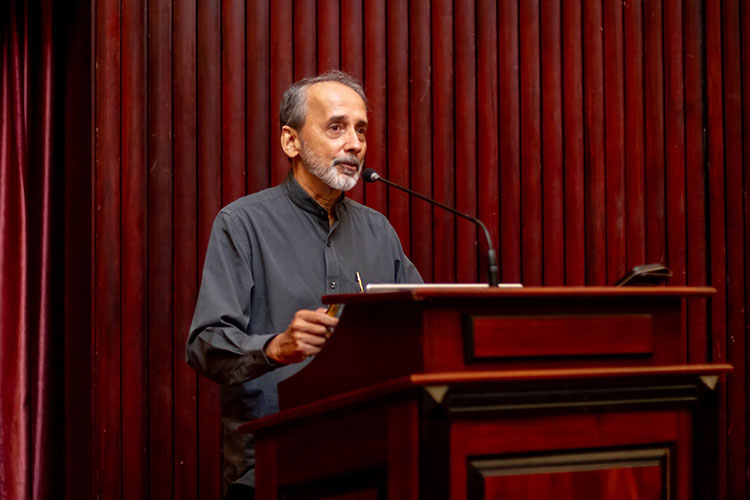
The proposed Animal Welfare Bill could have far-reaching legal and economic consequences for fisheries, poultry production, pet breeding and even small-scale ornamental-fish breeding, biodiversity expert Dr. Rohan Pethiyagoda has warned.
The long-awaited Bill, nearly two decades in the making, seeks to replace the Prevention of Cruelty to Animals Ordinance of 1907 with a modern framework for animal welfare. However, Pethiyagoda says several provisions require substantial revision to prevent unintended consequences.
The most glaring flaw, according to Pethiyagoda, is the Bill’s sweeping definition of an “animal”.
Section 48 defines an animal as “any living being other than a human being” and includes “aquatic animals”.
In plain terms, this could bring fish, prawns, crabs, cuttlefish and other seafood within the scope of the proposed law.
Pethiyagoda points out that, unlike mammal slaughter, commercial fisheries and aquaculture do not appear to benefit from the legal exclusions provided under the Bill for certain food-slaughter activities.
The Butchers’ Ordinance applies to livestock and does not regulate marine or inland fisheries. Commercial fishing, by its very nature, results in the physical injury and death of fish.
The Bill also prohibits recreational sport involving injury to or destruction of the lives of animals. This could create a legal problem for recreational angling, which necessarily involves hooking and handling fish.
With penalties including fines of up to Rs. 500,000 and imprisonment of up to three years for certain offences, Pethiyagoda warns that the consequences could extend well beyond individual fishermen.
The fisheries sector supports a large economic chain involving fishermen, traders, processors, transporters, ice suppliers, exporters, restaurants and other businesses. Any uncertainty over the legality of established fishing practices could therefore affect livelihoods, food supply and prices.
Birds fall within the Bill’s definition of an animal, while provisions criminalise causing unnecessary pain or killing an animal in a cruel manner.
Although the Bill provides exemptions relating to slaughter for food consumption, Pethiyagoda questions whether existing exemptions sufficiently cover poultry, given that the Butchers’ Ordinance primarily regulates livestock.
The potential economic implications are significant. Poultry production supports farmers, hatcheries, feed manufacturers, transporters, processors and retailers, and additional compliance costs could ultimately be passed on to consumers.
The Bill’s proposed licensing regime for pet shops and breeding centres could also affect ordinary households.
Section 25 requires annual licences for pet shops and breeding centres, while the definitions can extend to private residences.
According to Pethiyagoda, a person breeding and selling a litter of puppies from home could therefore be required to obtain a local-authority breeding licence and prior approval from the relevant Government Veterinary Surgeon.
The legislation does not clearly establish thresholds distinguishing commercial breeding establishments from occasional household breeding.
Pethiyagoda warns that excessive bureaucracy could even produce the opposite of the intended welfare outcome, with people potentially abandoning puppies rather than navigating a complicated licensing process.
The same broad definition could potentially affect people breeding ornamental fish in home aquariums or backyard tanks, creating additional barriers for small-scale breeders and an industry with commercial and export potential.
The Bill’s provisions on traditional use of animals could also affect the handling of elephants during religious and cultural events.
Although traditional use is permitted subject to the condition that no harm is caused, Pethiyagoda points out that terms such as “harm” and “unnecessary pain” could leave considerable room for interpretation.
Practices involving chaining, tethering and the use of traditional elephant-handling equipment could potentially come under scrutiny.
He has also questioned the Bill’s enforcement structure.
Overall administration is assigned to the Director General of Animal Production and Health, while Government Veterinary Surgeons are given enforcement responsibilities.
Pethiyagoda questions whether veterinarians, whose primary role is animal health, should also be expected to undertake functions involving criminal investigation, entry into private premises, seizure of evidence and court proceedings.
Section 33 gives authorised personnel powers to enter private property and seize evidence, making strong safeguards essential to prevent arbitrary enforcement and possible abuse.
Pethiyagoda also questions the composition of the proposed Animal Welfare Advisory Committee, particularly the relatively limited representation of registered animal welfare organisations.


The Asian Development Bank (ADB) has approved a $100 million results-based loan to help Sri Lanka transform its technical and vocational education and training (TVET) system, equip more young people with industry-relevant skills, and strengthen the country’s competitiveness and inclusive growth.
The Skills Development System Transformation Program will support the Government of Sri Lanka’s efforts in improving the quality and relevance of skills training, strengthening links between training providers and industries, and expanding employment opportunities for youth. The program will increase women’s employment opportunities in nontraditional jobs in fields including automotive technology, engineering, information and communications technology, construction, and renewable energy.
“A skilled workforce is essential to Sri Lanka’s long-term economic transformation and competitiveness,” said ADB Country Director for Sri Lanka Shannon Cowlin. “This program will help create stronger pathways from education to employment by making training more responsive to industry needs, expanding opportunities for young people and women, and ensuring that graduates have the skills required by a modern and evolving economy.”
Though Sri Lanka’s economy is recovering, it faces skills shortages in priority sectors, high youth unemployment, and low female labor force participation. Many employers report difficulty finding workers with the skills needed in a changing economy.
Aligned with the Government of Sri Lanka’s Technical and Vocational Education and Training Sector Strategic Framework 2026–2035, the nationwide program will be implemented from 2027 to 2031 and is expected to directly benefit more than 100,000 young people through improved access to quality, employment-oriented training.
By Ifham Nizam
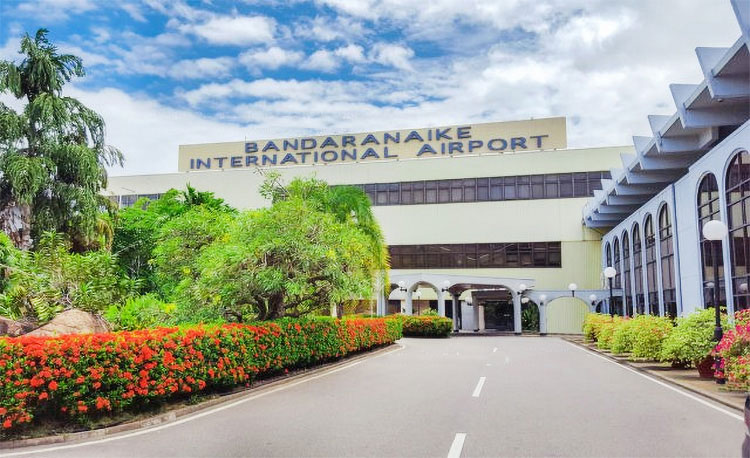
The government has cleared a USD 40.84 million and Rs. 8,548.75 million contract to build a dedicated aviation fuel pipeline from Muthurajawela to Bandaranaike International Airport (BIA), alongside a massive new fuel storage facility with a capacity of 92,000 cubic metres.
Energy Minister Anura Karunatilaka said the project represented a major investment in strengthening the infrastructure underpinning Sri Lanka’s aviation fuel supply and ensuring more reliable fuel availability at the country’s main international airport.
‘This project will provide the infrastructure required to strengthen the reliability and continuity of aviation fuel supplies to Bandaranaike International Airport, Karunatilaka said.
The contract has been awarded to China Petroleum Pipeline Engineering Company Limited, following an international competitive procurement process in which three bids were received.
The project will see a new aviation fuel storage tank complex constructed at Muthurajawela, together with the associated infrastructure required for handling and transferring aviation fuel.

By Hiran H Senewiratne
Trading activity on the Colombo Stock Exchange (CSE) gathered pace yesterday as global fuel prices began to show signs of easing, according to market analysts.In this context, both indices moved upwards. All Share Price Index up by 67.97 points while S and P SL20 up by 8.30 points.
Turnover stood at Rs 1.4 billion with seven crossings. Those crossings were reported in Sampath Bank 1.7 million shares crossed to the tune of Rs 238 million and its share price traded at Rs 140, Access Engineering two million shares crossed to the tune of Rs 159 million and its share price traded at Rs 79.50, LOLC one million shares crossed to the tune of Rs 129 million and its share price traded at Rs 129, HNB 100,000 shares crossed to the tune of Rs 38.4 million and its share price traded at Rs 384, JKH 1.9 million shares crossed to the tune of Rs 35 million and its share price traded at Rs 18.60, Hayleys 100,000 shares crossed to the tune of Rs 22.50 million and its share price traded at Rs 225 and Richard Pieris 847,000 shares crossed to the tune of Rs 22 million and its share price traded at Rs 25.50.
In the retail market top seven companies that have mainly contributed to the turnover were Sampath Bank Rs 114 million (813,000 shares traded), JKH Rs 100 million (5.3 million shares traded) LB Finance Rs 49 million (325,000 shares traded), HNB Finance Rs 30 million (27 million shares traded), HNB Rs 27 million (70000 shares traded), NTB Rs 25 million (82000 shares traded ) and Lanka IOC Rs 21 million (666,000 shares traded). During the day 65 million shares volumes changed hands in 10433 transactions.
The Banking and manufacturing sector counters performed well. In the banking sector Sampath Bank let the market while manufacturing sector especially JKH also significantly performed well. With the fuel revision Land IOC also a significant stock at the floor.
Meanwhile, First Capital Treasuries said that Ramesh Schaffter resigned as a Non-Independent Non-Executive Director with effect from October 1, to facilitate the restructuring of the company’s board.
Yesterday the Central Bank announced the US Dollar rate as against rupee. The rupee was quoted flat at Rs 330.65/80 to the US dollar in the spot market , while bond yields dropped, dealers said.

Showers or thundershowers will occur in most parts of the island after 1.00 p.m.

Unions resist tripartite EPF management plan

Two arrest warrants issued for Gnanasara thera

CA dismisses GR’s writ petition against arrest

ADB-backed virtual net metering project faces policy contradiction

Media action group flays NPP over new anti-terrorism law

‘Dates have the highest sugar content to fight Coronavirus’

Sunday Island 27 December – Headlines

#SundayIsland 17th December – Headlines

Sunday Island – 28th March

Sunday Island Headlines – 21 March

Sunday Island – 21st February – Headlines
-

 Editorial6 days ago
Birth of a bad law
-

 News4 days ago
Police remove Thileepan statue in Jaffna
-

 News6 days ago
TIN mandatory for key transactions from Nov. 1
-

 Features4 days ago
The 22nd Amendment, constitutional recovery and illiberal slippage
-

 Features4 days ago
Of foreigners as CEOs of Lankan ventures
-

 News4 days ago
Sajith rejects Jt. Opp. protest sabotage claim; SJB TU chief demands remedial action
-

 Latest News2 days ago
Gold winner Tharanga gets brand-new Honda Vezel from SLAAJ
-

 Features3 days ago
Thailand’s biggest new global star …