
News
AMS warns of chaos in health sector due to new retirement rule


The Association of Medical Specialists (AMS) has confirmed that nearly 300 of their members will have to retire from government service on or before 31 December 2022 and their retirement will have an adverse impact on the health sector.AMS President Dr. LakKumar Fernando has, in a letter to Health Minister Keheliya Rambukwella, said the National Hospital Sri Lanka will lose 43 consultants, the National Hospital Kandy 30, the Teaching Hospital Karapitiya 17, the Lady Ridgeway Hospital 15 and Apeksha Hospital 09.
“The medical specialists who are working in universities and Sri Jayewardenepura hospital have been exempted from this new rule on retirement age due to some unknown reasons,” he has said, adding that a large number of doctors are preparing for foreign licensing examinations (AMC for Australia, PLAB for the UK) instead of sitting for local postgraduate entry exams. This means that a significant number of these young doctors are very likely to move out of Sri Lanka.
“Significant numbers of Sri Lankan postgraduate medical trainees on overseas training are less likely to return due the current situation in the country. This will further reduce the number of qualified consultants in the future. A significant number of younger consultants who are in the state health sector have applied for foreign jobs. Some state sector hospitals have left / are leaving the country. E.g. more than 15 consultants in anesthesiology are leaving / have left in August / September 2022,” he said.
Given such a situation, it would be devastating if a large number of consultants are retired from the service en-bloc.Given below are excerpts of Dr. Fernando’s letter to the Minister.
“1. Dynamic and varying situation regarding age of retirement of consultants
“Consultants in the Ministry of Health play an important leadership role in clinical settings in hospitals and the community health sector. Making a medical specialist is a very resource intensive process as it takes approximately 12 years to produce a medical specialist from undergraduate days. Their importance and shortage were recognised and their retirement age was extended to 63 in 2018 (Government Gazette Extraordinary 2086/1 of 27th August 2018) by the government under Prime Minister Ranil Wickremesinghe. Medical specialists attached to universities who provide the same care in same government hospitals retiring at 65 years were also considered when this decision was taken.
“In the Budget proposals for 2022 (presented in 2021), the retirement of all government servants was extended to 65 years. In the Interim Budget Proposals presented this year, the retirement age of government servants was brought down to 60 years. Those who have completed 60 years or more are required to retire by 31st December 2022.
“Subsequently, the Secretary, Ministry of Public Administration issued a press release (PUB.ADM/SEC/07 of 1st September 2022) stating that the retirement age of more than 60 years of certain special categories of state employees, will remain unchanged as defined in the antecedent circulars. This meant that the Consultants’ retirement age will be 63 years going with the 2018 circular (described above).
“However, the Secretary, Ministry of Public Administration has issued another circular on 14 September 2022 specifying that the retirement age of all public servants will be 60 years, irrespective of the specifications defined in the previous circulars (except judicial officers) (Public Administration Circular: 19/2022 of 14th September 2022). This construes that the date of retirement of consultants will become 60 years, contrary to what was mentioned in the above press release (1st September 2022)
“2. What happens if this rule is applied?
“As the situation currently stands, if the 60-year-old rule is imposed, nearly 300 medical specialists will have to retire on 31st December 2022. This is the first time that such a large number of medical specialists will retire in one single day from state health service.
“This will no doubt create a major crisis in the state health sector (a) The replacement of these vacancies will require the movement / transfer of the remaining consultants from the provincial / base hospitals. It will not be possible to transfer them to vacant posts without replacement consultants. Replacement consultants are generally new consultants who come after foreign training. With the current situation in the country, a considerable number are not returning.
“(b) This will potentially cause collapse of the entire health service especially in the peripheral hospitals.
“To give a few examples to illustrate the grave situation – There were only 33 transfusion specialists in the country and eight will retire with the new rule while two have already retired and five have migrated and four are in the process of leaving the country bringing down the remaining number to only 14. Even before this, the waiting list for Bone marrow transplantation at Cancer hospital Maharagama was extending to 2025 and one can imagine the effect of further prolonging the waiting time. Many patients will die while waiting.
“Histopathologists are needed to report on biopsies. Though the country needs at least 80 of them, we only had 60. While 5 of them are already on overseas leave, 10 others are in the process of migrating for overseas jobs, and 5 will retire with the new rule. Having less than half to do the job, the waiting time for biopsy reports will go up impacting the outcome of patients in conditions like cancer.
“Lot more similar examples can be given and the impact is frightening and it will certainly affect the poor more than the rich. Further, it is pertinent to mention following data about the number of consultants retiring by major institutions under the new circular; NHSL – 43 consultants, NH Kandy – 30, TH Karapitiya – 17, LRH – 15 and Apeksha Hospital – 09.
“It’s interesting to note that the medical specialists who are working in universities and Sri Jayewardenepura hospital are exempted from this new rule on retirement age due to some unknown reasons.
“3. Exodus of doctors
“(a) A large number of newly passed out doctors are preparing for foreign licensing examinations (AMC for Australia, PLAB for the UK) instead of sitting for local postgraduate entry exams. Significant number of these young doctors are very likely to move out of Sri Lanka.
“(b) Significant numbers of Sri Lankan postgraduate medical trainees on overseas training are less likely to return due the current situation in the country. This will further reduce the number of qualified consultants in the future.
“(c) A significant number of younger consultants who are in the state health sector have applied for foreign jobs. Some state sector hospitals have left the country. E.g. more than 15 consultants in anesthesiology are leaving / have left in August / September 2022.
“The retirement of a large number of consultants at 60 years on a single day will further compound the crisis with the above detailed exodus. There is already a shortage of consultants in the state health sector.
“4. Shortage of Consultants / Spreading Transfers
“(a) Although there is a claim by few that there is a surplus of consultants, there is only a shortage. The annual transfer lists of Specialists bear testimony to this fact.
“(b) The annual transfer lists go on four-year cycles before it is implemented, therefore the filling of these vacancies cannot be immediate and will spread over a long time.
“5. Adverse impediment of postgraduate training
“The training of postgraduates who become future consultants is mainly done in the teaching hospitals by experienced consultants. With the retirement of senior experienced consultants suddenly in large numbers, training programmes and postgraduate examinations will be in severe jeopardy. The sudden retirement of senior consultants will create a vacuum of people with knowledge and experience in running postgraduate programmes and examinations. The number of qualified examiners and trainers will be suddenly reduced. The major hospitals will have new consultants who may not be eligible to train the trainees due to the PGIM requirements and this will adversely affect the quality of training programmes and examinations.
“Following are the current criteria to become trainer and examiner at the PGIM. A) Trainer – 3 years of post-board certification/ must have undergone a trainers training program. B) Examiner – Selection examination – 5-year post board certification, C) MD final examination – 7 year post board certification. They must have undergone trainers and examiners training programs.
“With all the facts mentioned above, it’s more than obvious that EN BLOC retirement of approximately 300 medical specialists in one single day will have a huge impact on maintaining health care services in our country. This situation is not seen in most parallel categories as the extension of retirement age to 63 years was in existence for a period more than 4 years only for medical specialists.
“We, as medical specialists, would like to highlight this to all the relevant authorities at this critical juncture as our country and our people have experienced enough wrong decisions in the past. No right-thinking government will allow the retirement of such a large number of medical specialists in one single day from state health service especially during a time where many technocrats are considering moving overseas.
The loss of lives, health crises will move people’s lives into peril. The cost of damage control measures will far exceed the saving of money by saving the salaries of those who retire. As a group of responsible professionals, the AMS has always come forward to explain correct facts to authorities whenever we foresee an event causing adverse consequences to the nation. We believe, in this instance too, it is our moral duty and social responsibility to represent the actual facts to the authorities as well as to the public, without remaining silent.”



More than 1,600 students sat this year’s Russian Classical Ballet Examination, the largest number ever to take part in the examination in Sri Lanka. Exams were held in Colombo from 5, to 18, October and in Galle on 10 October.
Students aged four and above came from across the island, including Colombo, Galle, Gampaha, Negombo, Matara, Kelaniya, Panadura, Wattala, Kiribathgoda, Ratnapura, Kandy, Kurunegala, Bandarawela and Badulla. They are taught by 15 dedicated teachers trained in the Vaganova method, the renowned Russian system of classical ballet training.
They were examined by Dr. Oxana Karnovich of the Moscow State Academy of Choreography, a distinguished academic and curator.
The Russian School of Ballet and Dancing was established in 2001 by Michael Ustinov, Buddhapriya Ramanayake and Mrs Chandi Aluvihare, with Mrs Galina Pleshakova as its founding instructor. Today the School is led by Director Madam Maria Popova, Counsellor of the Embassy of the Russian Federation in Sri Lanka.

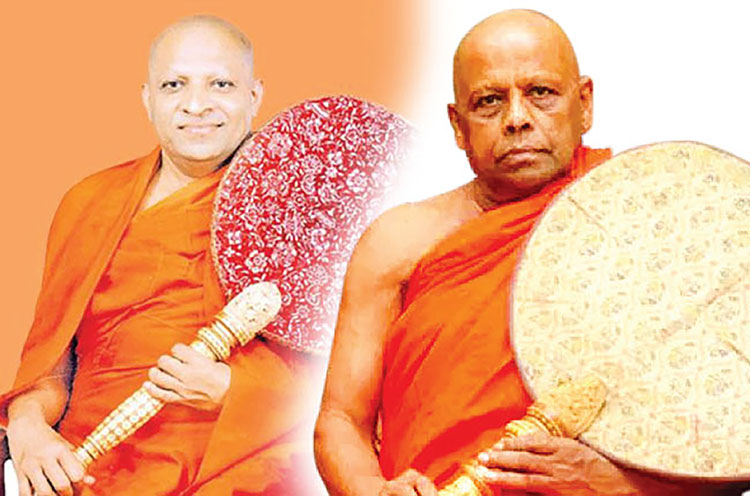
MONETABRIEF– Sri Lanka’s two most senior Buddhist chapters, Malwatte and Asgiriya, demanded special concessions for monks serving prison sentences, following the disrobing of convicted monk Ven. Galagodaatte Gnanasara in line with established procedures.
The chief prelate of the Asgiriya chapter, Most Venerable Warakagoda Sri Gnanarathana, told Prisons Commissioner Senaka Palletenna that Ven. Gnanasara, who is serving a six-year sentence for contempt of court, must be released immediately.
Prison authorities have no power to release or pardon convicts, but Palletenna told the monk in Kandy on Friday that he would convey his request to the relevant government authorities.
“There is no point in talking about this and that… The entire country has been shaken (??????? ) . He must be released,” the Asgiriya chief prelate said.
The Malwatte chief prelate, Most Venerable Thibbatuwawe Sri Siddhartha Sumangala, appeared to accept the court verdict against Ven. Gnanasara, but asked the prisons chief whether a separate section could be established for convicted monks.
Palletenna noted that a special ward for the clergy already existed at Welikada Prison.
At least 63 convicted Buddhist monks are currently incarcerated within Sri Lanka’s criminal justice system.
Meanwhile, a group of 34 Buddhist monks named in a Colombo Fort Magistrate’s Court order to vacate the vicinity of the Presidential Secretariat ended their protest and dispersed after lunch on Friday.The monks are demanding an unconditional pardon for Ven. Gnanasara, who has previously been imprisoned, making him a reconvicted prisoner.
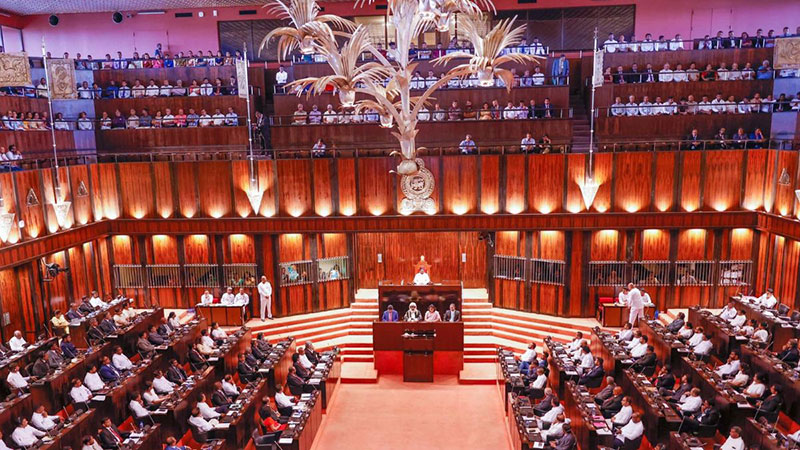
The debate on the no-confidence motion against Speaker Dr. Jagath Wickramaratne, submitted by the Samagi Jana Balawegaya (SJB), has been postponed indefinitely pending the Attorney General’s opinion on certain technical issues in the motion.
Government representatives raised the matter at a meeting of the Committee on Parliamentary Business, pointing out that several provisions of the motion required clarification and that the Attorney General’s advice should be obtained.
As obtaining the opinion would take time, the debate could not be scheduled for the next parliamentary week, parliamentary sources said.
Chief Opposition Whip Gayantha Karunatilaka said a date for the debate would be decided after the Attorney General’s advice was received.
Meanwhile, Parliament is scheduled to meet from October 20 to 23, Secretary General of Parliament Kushani Rohanadeera announced.
The parliamentary business for the week was finalised at a meeting of the Committee on Parliamentary Business held on Friday (16) under the chairmanship of Deputy Speaker Dr. Rizvie Salih.
On each sitting day, the period from 9.30 a.m. to 10 a.m. will be allocated for parliamentary business under Items 1 to 6 of Standing Order 22. Questions for Oral Answers will be taken up from 10 a.m. to 11 a.m., followed by questions under Standing Order 27(2) from 11 a.m. to 11.30 a.m.
On Tuesday, October 20, an Opposition-sponsored Adjournment Motion will be debated from 11.30 a.m. to 5.30 p.m.
On Wednesday, October 21, a resolution under the Public Debt Management Act and a Supplementary Estimate will be taken up for debate and approval from 11.30 a.m. to 5 p.m. The annual reports of five statutory institutions will subsequently be presented for approval without debate, while questions at the Adjournment Time will be taken up from 5 p.m. to 5.30 p.m.
On Thursday, October 22, the Second Reading debates on two Bills to amend the Poisons, Opium and Dangerous Drugs Ordinance (Bills Nos. 79 and 80) will be held from 11.30 a.m. to 5 p.m.
The annual reports of five statutory institutions will then be taken up for approval without debate, followed by an Opposition-sponsored Adjournment Motion from 5 p.m. to 5.30 p.m.
On Friday, October 23, the Second Reading debate on the Elimination of Rabies and Registration of Dogs Bill will be held from 11.30 a.m. to 5 p.m. A Government-sponsored Adjournment Motion will be debated during the final half-hour of the sitting.

Pakistan quicks seal win after Salman Agha ton sets tone

Record 1,600 students take Russian Classical Ballet examination in Sri Lanka

Half a million people join protests in France, but some turn violent

Deadly fire breaks out at Canada military base

Showers or thundershowers will occur in most parts of the island after 1.00 p.m.

Buddhist hierarchy demands prison perks for monk convicts

‘Dates have the highest sugar content to fight Coronavirus’

Sunday Island 27 December – Headlines

#SundayIsland 17th December – Headlines

Sunday Island – 28th March

Sunday Island Headlines – 21 March

Sunday Island – 21st February – Headlines
-

 Latest News6 days ago
Nissanka’s return headlines Sri Lanka’s Test squad against Pakistan
-

 Features7 days ago
Intake 16: 45 years of duty and honour
-
 News7 days ago
Malwathu Chapter issues statement on talks with President over Gnanasara Thera’s robes
-
 News7 days ago
CP alleges NPP has taken the blame for illegal US sanctions on Iranian vessels
-

 News5 days ago
Sri Lanka, India caught in US-Iran ship crisis
-

 Opinion7 days ago
How long can Sri Lanka remain silent on its demographic crisis?
-

 Latest News6 days ago
Imran Khan’s PTI braces to fight federal takeover of Khyber Pakhtunkhwa
-

 Latest News5 days ago
Kusal Mendis’ unbeaten 87 hands Sri Lanka consolation win