
News
American foreign agent who cheated SL out of $ 6.5 mn gets 12-year jail term in US

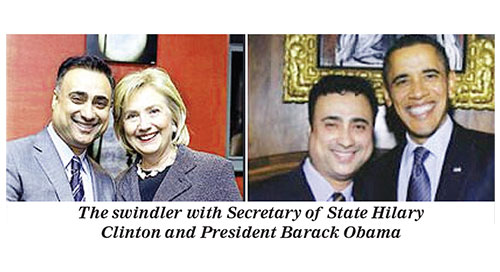
* Zuberi, American of Pakistani and Indian descent was hired by SL embassy in US in 2014
A Los Angeles-based venture capitalist and political fundraiser who faced several felony charges related to his work as a foreign agent, including cheating the Sri Lankan government out of millions of dollars promising to rebuild the country’s image following the end of the LTTE war, was sentenced on Thursday (18) to 144 months in federal prison, foreign media reported.
Imaad Shah Zuberi, 50, of Arcadia, California, was sentenced by U.S. District Judge Virginia A. Phillips, who also ordered him to pay $ 15,705,080 in restitution and a criminal fine of $1.75 million.
The media, including the US-based ‘Sri Lanka Express’ quoted prosecutors as having said Zuberi had given illegal campaign contributions to Joe Biden, Lindsey Graham and a host of other US politicians.
Investigations revealed that Zuberi had received USD 6.5 mn in 2014 from the then Sri Lankan government after the conclusion of the war in May 2009 to thwart US moves against this country. The following year, the US had an accountability resolution passed at the UNHRC against Sri Lanka.
The sentencing took place less than a week ahead of the commencement of the 46th sessions of the Geneva-based United Nations Human Rights Council (UNHRC)
The UNP-led yahapalana government exposed Zuberi’s involvement in high profile Sri Lanka project, but baulked at initiating a probe.
In November 2019, Zuberi pleaded guilty to a three-count information charging him with violating the Foreign Agents Registration Act (FARA) by making false statements on a FARA filing, tax evasion, and making illegal campaign contributions. In June 2020, Zuberi pleaded guilty in a separate case to one count of obstruction of justice. His sentence today pertains to both cases.
The obstruction charge to which Zuberi pleaded guilty in June 2020 stemmed from a federal investigation into a $900,000 donation from Zuberi through his company to the Donald Trump presidential inaugural committee in late 2016. Some of the funds Zuberi donated to the committee came from other people, including one individual who gave him a $50,000 check.
“Zuberi turned acting as an unregistered foreign agent into a business enterprise,” said Assistant Attorney General for National Security John C. Demers in a press statement issued by the U.S. Justice Department . “He used foreign money to fund illegal campaign contributions that bought him political influence, and used that influence to lobby US officials for policy changes on behalf of numerous foreign principals.”
Demers said Zuberi, while concealing lucrative agreements with foreign principals, also made false statements about them in a FARA filing.
“After learning he was under investigation, Zuberi doubled down on his criminal conduct, obstructing justice by creating false records, destroying evidence, and attempting to purchase witnesses’ silence. This sentence should deter others who would seek to corrupt our political processes and compromise our institutions in exchange for foreign cash.”
Zuberi operated Avenue Ventures LLC, a San Francisco-based venture capital firm, and solicited foreign nationals and representatives of foreign governments with claims he could use his contacts in Washington, D.C. to change U.S. foreign policy and create business opportunities for his clients and himself.
In addition to consulting fees, his foreign clients advanced funds to Zuberi to make investments, or to fund campaign contributions. Zuberi hired lobbyists, retained public relations professionals, and made campaign contributions that gave him access to high-level U.S. officials, some of whom acted in support of his clients.
As evidence of his access and influence, Zuberi distributed to his clients photographs of himself discussing policy with elected officials.
Among the top-ranking politicians with whom Zuberi met were former President Obama, then Senator Biden, former President Bill Clinton, and Secretary of State Hillary Clinton.
“Through myriad international contacts and business partners, Imaad Shah Zuberi was able to raise money and gain influence among the highest political circles in the US. Zuberi used his status to solicit funds for lobbying, campaign contributions, and investments, but ultimately swindled his business partners and pocketed most of the funds for himself,” said Special Agent in Charge Ryan Korner of IRS-Criminal Investigation Los Angeles Field Office.
Korner accused Zuberi, Zuberi is a naturalized American of Pakistani and Indian descent, of being “an opportunist at his core” who used political figures across the aisle to lend an appearance of credibility to his “political charades.”
The Sri Lankan government through its embassy in Washington hired Zuberi in 2014 to boost the country’s image in the United States vis-a-vis various allegations.
The Justice Department said: “Zuberi promised to make substantial expenditures on lobbying efforts, legal expenses, and media buys, which prompted Sri Lanka to agree to pay Zuberi a total of $8.5 million over the course of six months in 2014. Days after Sri Lanka made an initial payment of $3.5 million, Zuberi transferred $1.6 million into his personal brokerage accounts and used another $1.5 million to purchase real estate.”
In total, Sri Lanka wired $6.5 million pursuant to the contract, and Zuberi used more than $5.65 million of that money to the benefit of himself and his wife. Zuberi paid less than $850,000 to lobbyists, public relations firms and law firms, and refused to pay certain subcontractors based on false claims that Sri Lanka had not provided sufficient funds to pay invoices.
On his 2014 tax return, Zuberi claimed income of $558,233 received as lobbying fees from the Sri Lankan government while failing to report more than $5.65 million paid by Colombo. “Zuberi’s tax evasion over the course of four years – 2012 through 2015 – caused tax losses ranging from $3.5 million to as much as $9.5 million.”
Zuberi was also accused of siphoning funds invested in U.S. Cares, a company set up to export humanitarian aid to Iran. In 2013 and 2014, Zuberi used more than 90 percent of the approximately $7 million investors deposited into U.S. Cares for his personal benefit, which included purchasing real estate, paying down debt such as mortgages and credit card bills, remodeling properties, investing in brokerage accounts, and donating $250,000 to a non-profit organization established by a former high-ranking elected official.
Zuberi violated the Federal Election Campaign Act in 2015 by making conduit contributions in the names of other people, reimbursing contributions made by others, and being reimbursed for contributions he made. Over a five-year period – 2012 through 2016 – he made or solicited more than $250,000 in illegal campaign contributions.
Zuberi is expected to report to prison May 25.




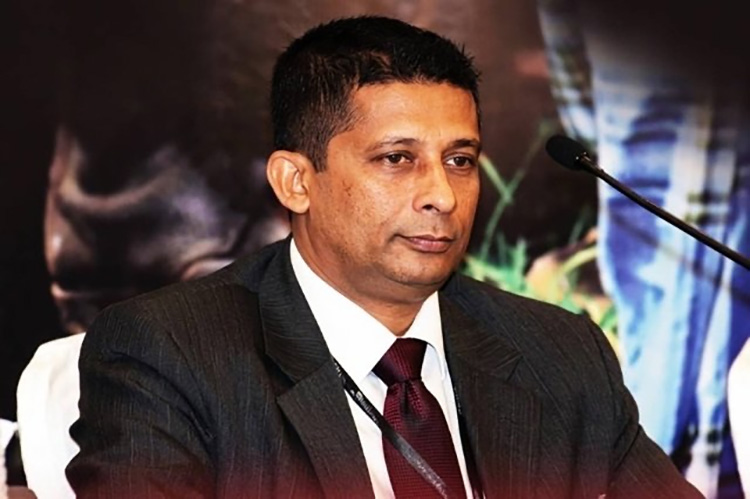
The government has chosen not to respond to questions raised by the United Nations Human Rights Council (UNHRC) regarding the detention of retired Maj. Gen. Suresh Sallay in connection with the ongoing investigations into the 2019 Easter Sunday attacks.
The Criminal Investigation Department (CID) arrested the ex-official in late February this year. The Special Rapporteur on the promotion and protection of human rights and fundamental freedoms while countering terrorism, the Working Group on Arbitrary Detention, the Special Rapporteur on the right of everyone to the enjoyment of the highest attainable standard of physical and mental health and the Special Rapporteur on the independence of judges and lawyers have jointly raised the issue on 20 July, 2026.
Drawing attention of President Anura Kumara Dissanayake to what they called alleged arbitrary detention of Sallay, former Director General of the State Intelligence Service (SIS) and former Director of Military Intelligence (DMI), under the Prevention of Terrorism Act (PTA), as well as allegations of torture and other cruel, inhuman or degrading treatment while in custody, resulting in the grave deterioration of his health, and imminent risks of retaliation through further torture and ill-treatment resulting in irreparable harm, should he be released from hospital and returned to custody, the UN sought the government explanation with a 60-day period.
The UN has stated: “This communication, and any response received from your Excellency’s Government, will be made public via the communications reporting website at the 60 days mark. Should your Excellency’s Government respond within 60 days, both the communication and the response, may be published before the 60 days mark. The communications and responses
will also be made available in the subsequent periodic report to be presented to the Human Rights Council.”
In the absence of the government’s response, the UN posted the letter, dated 20 July, 2026, addressed to President Dissanayake. The full letter can be accessed https://spcommreports.ohchr.org/TMResultsBase/DownLoadPublicCommunicationFile?gId=31125
News
Section of wartime KKS High Security Zone vacated to facilitate economic development in the area

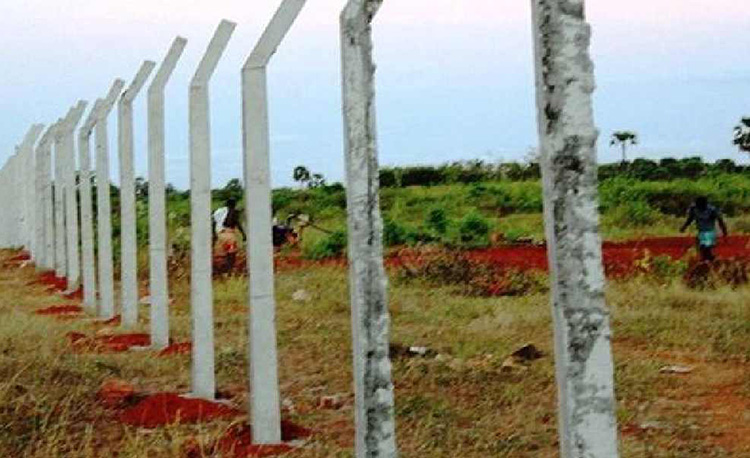
The Army, last week, vacated an area, within the wartime high security zone in the Jaffna peninsula. The Defence Ministry said that an extent of 187.56 acres of land, belonging to the Cement Corporation in Kankesanthurai, Jaffna, has been released by the military. The released land, located in Grama Niladhari Division J/233, Kankesanthurai West, within the Valikamam North (Tellippalai) Divisional Secretariat Division, had been utilised by the Sri Lanka Army since the middle of 1997.
The release of the 187.56-acre extent forms part of the initiative to make State land available for the proposed investment zone in Kankesanthurai, thereby facilitating future investment and economic development in the area.
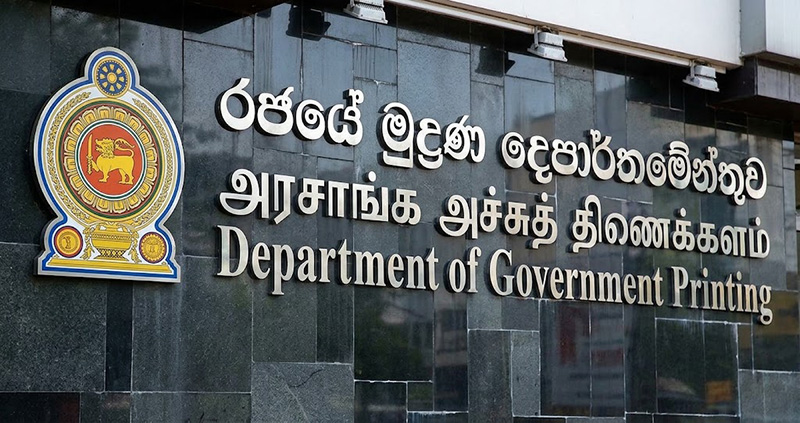
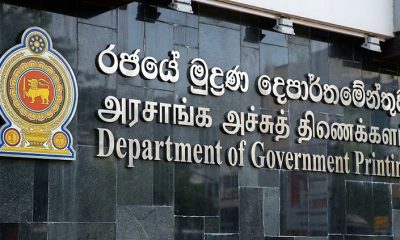
A complaint has been lodged with the Colombo Fraud Investigation Bureau against the Government Printer and the Secretary to the Ministry of Media regarding the online release of falsified documents bearing a forged Speaker’s certificate.
Attorney-at-Law Aruna Laksiri has lodged a complaint with the Colombo Fraud Investigation Bureau requesting legal action against the Government Printer of the Department of Government Printing (No. 118, Dr. Danister de Silva Mawatha, Colombo 08), Prasanna Jayaratne, and the Secretary to the Ministry of Mass Media (Asidisi Medura, 163, Kirulapone Mawatha, Polhengoda, Colombo 05), Dr. Anil Jasinghe.
The complaint alleges the commission of offences by forging and uploading falsified documents online using a forged Speaker’s certification, failure to perform statutory duties, and misappropriation of public property.
The complaint states that a copy of the English translation of the 22nd Amendment to the Constitution was downloaded and printed from the official website of the Government Printing Department (www.documents.gov.lk), which operates under the Ministry of Mass Media. On its outer cover and on page 1, the text “certified on 25th of September, 2026” is inscribed inside brackets.
The complaint pointed out that the Speaker has certified an English translation. Under Articles 23, 79, 83, and 80 of the Constitution, Parliament enacts laws and the Speaker certifies bills strictly in the Sinhala and Tamil languages; under the Constitution, therefore the Speaker cannot apply such certification to an English translation.

Showers or thundershowers will occur at several places in the most part of the island after 1.00 p.m

GS1 Lanka drives Sri Lanka’s shift to 2D barcodes

Geneva takes up Sallay’s case and govt. ignores opportunity to answer accusations

Section of wartime KKS High Security Zone vacated to facilitate economic development in the area

Lawyer lodges complaint against Govt. Printer, Media Ministry Secy.

Sri Lankan troops in joint anti-terrorist exercise in Russia

‘Dates have the highest sugar content to fight Coronavirus’

Sunday Island 27 December – Headlines

#SundayIsland 17th December – Headlines

Sunday Island – 28th March

Sunday Island Headlines – 21 March

Sunday Island – 21st February – Headlines
-

 Latest News5 days ago
Gold winner Tharanga gets brand-new Honda Vezel from SLAAJ
-

 Features5 days ago
Why Sri Lanka needs an Inclusive Civic Nationalism – urgently
-

 News4 days ago
US-assisted ‘Ice’ detection: NPC to examine IGP’s move to transfer drug-busting team
-

 Features6 days ago
Thailand’s biggest new global star …
-
 News6 days ago
First cases taken up by SC after enactment of 22A dismissed
-

 News5 days ago
Civil society activist accuses govt. of favouring Ven. Gnanasara
-

 Editorial3 days ago
Colombo Port drug bust: The plot thickens
-

 Editorial6 days ago
Aftershocks of 22A