
News
Amendments to PTA: Civil society not satisfied, make own proposals


An influential civil society grouping comprising 70 individuals and 32 organisations has alleged that the proposed amendments to the Prevention of Terrorism Act (PTA) failed to address the fundamental shortcomings of the controversial security law. The proposed changes already existed but were often observed in the breach, or cosmetic changes that did not substantively or meaningfully change the status quo, the grouping alleged.
The following is the text of the statement: “On 27 January 2022 the government gazetted the PTA (Temporary Provisions) (Amendment) Bill. We express our deep disappointment that the proposed amendments do not address any of the shortcomings in the PTA that enable grave human rights violations. We highlight that the PTA has been historically used against the Tamils, later Muslims after the Easter Sunday attacks and now dissenters as well.
We restate our call for repeal of the PTA and in the interim an immediate moratorium on the use of the law. This is in line with the requests of persons and communities adversely affected by the law. We call upon the government to release all persons on bail, except those that would not qualify under the Bail Act, and halt prosecutions where the confession is the primary or only evidence.
The proposed amendments do not adhere to human rights standards enshrined in international conventions, such as the International Covenant on Civil and Political Rights (ICCPR), which the government of Sri Lanka has ratified and hence has an obligation to respect and protect. Nor do they adhere to many provisions in the Constitution of Sri Lanka. We set out the main shortcomings of the amendments below:
1. The proposed amendments do not contain a definition of terrorism. In this regard, we urge the government to take note of the letter dated 9 December 2021 sent by seven UN Special Procedure mandate holders to the government that clearly set out the elements the definition of terrorism must include. In the current law the decision as to whether the PTA would apply in a certain instance is a subjective decision that can be shaped by personal prejudice and bias, rather than objective standards. We highlight arrests in the past for spurious reasons such as possessing books in Arabic and decorative swords, and for memorializing those who were killed during the war.
2.Administrative detention has been reduced from 18 to 12 months, which does not address the core problems with administrative detention. There is still a lack of basic due process safeguards which enables arbitrary arrest and detention.
3.We note with dismay that Section 16, which allows the admissibility of confessions made to an Assistant Superintendent of Police (ASP) or above as evidence, and which for decades has enabled torture to extract confessions, has been retained. We point to Supreme Court decisions and the Human Rights Commission’s (HRCSL) reports, which illustrate that, this provision has resulted in gross violations of human rights. Even if the confession is ruled inadmissible during trial, the existence of the provision creates room for persons to be subject to torture.
This violates basic due process and fair trial rights of a person accused of an offence, because the onus is placed on the accused to prove the confession was obtained under duress. It also calls into question the competence of the criminal justice system that has to rely on confessions to prosecute persons. Such a provision, which is a deviation from the norm, has no place in law.
4.Section 7(3), which allows a person to be taken out of judicial custody to any other place for investigation, and Section 15A which empowers the Secretary, Ministry of Defence, to determine a person’s place of detention even after the person is remanded also remain. We restate our concern that this removes a person from the protection of judicial custody. The order of the Secretary thereby takes precedence over a judicial order. As the Human Rights Commission’s national study of prisons documented, persons remanded under the PTA were subjected to severe torture when taken out of judicial custody or held in other places upon the instructions of the Secretary, Ministry of Defence.
5.Section 11, which empowers the Minister of Defence to issue restriction orders that impinge upon a wide range of civil liberties, has been retained. The proposed amendment to this section requiring the person to be produced before a Judicial Medical Officer and a Magistrate prior to the issuance of the order does not prevent or address the infringement of civil liberties.
6.The proposed amendment on the granting of bail is cosmetic and does nothing to address prolonged periods of time in pretrial detention. The proposed new provision states bail can be given only if the trial against a person has not commenced 12 months after the arrest of the person who has been detained or remanded, or if the trial has not begun 12 months after the indictment has been filed the High Court. If the trial has begun the person can be remanded in judicial custody until the conclusion of the trial. Therefore, in practice, this does not bring substantive change in the situation of a detained person.
7.The provision in the proposed amendment that requires magistrates to visit places of detention at least once a month is inadequate to prevent torture.
According to the section, if the magistrate thinks the person may have been subject to torture the magistrate “may” refer the person to a Judicial Medical officer. Referral to the JMO is therefore discretionary and not mandatory. It also gives the magistrate the discretion to decide whether or not to refer the incident of torture to the IGP for investigation.
8.The proposed amendments include the right to challenge administrative detention in the Supreme Court and by way of Writ. We point out that the right to challenge arbitrary detention, including under the PTA, is enshrined in the Constitution of Sri Lanka and is not a new right the proposed amendment bestows on detained persons. In practice, given the paucity of legal aid, most persons detained under the PTA face challenges accessing competent legal representation due to lack of financial means to pursue these remedies. Even in instances when they do pursue them, long delays in the judicial process prevent them from obtaining redress for months and even years.
9.Similarly, the Human Rights Commission of Sri Lanka Act already mandates the Commission to monitor the welfare of persons deprived of liberty and empowers it to access any place of detention unannounced. However, following the 20 th Amendment to the Constitution in 2020, the HRCSL is no longer a legally independent body as appointment of the members of the Commission is at the discretion of the President. The proposed amendment to the PTA in no away addresses the adverse impacts of the 20 th amendment to the Constitution on the Commission.
10.During the last couple of years in particular, the PTA has been used to intimidate and harass civil society, human rights defenders and journalists, especially those in the North and East, through visits to their offices by the TID to gather information about their activities, summoning them to TID offices for inquiry about their finances and even arrest and detain them. They are yet to provide evidence of any illegal financial activity by civil society organisations linked to the perpetration of terror offences.
Way forward
The proposed amendments fail to address the fundamental shortcomings of the PTA. Instead, they propose changes that already exist but are often observed in the breach, or cosmetic changes that do not substantively or meaningfully change the status quo. The actions of the government, such as the issuance of the regulations on the Deradicalisation From Holding Violent Extremist Religious Ideology, call into question the government’s reform claims.
We note with deep concern that despite our repeated calls for transparency in the drafting process and consultation with key stakeholders, our appeal was ignored.
We reiterate that national security cannot be achieved by creating insecurity for already discriminated against and marginalized communities, and once again call for the repeal of the PTA. The repeal of the PTA must also be considered in light of the anti-terrorism and public security legal framework that Sri Lanka has in place, and the historical abuse of power by state entities.
The way forward must give due recognition to the protection of physical liberty. Deprivation of physical liberty by the executive must be used only as last resort and strictly require sufficient basis that is determined on objective factors, judicial supervision of such basis, legal aid and prompt trials or release. Furthermore, any process which seeks to tackle issues related to the PTA must ensure those adversely affected by the law will receive justice, and include an enforceable right to compensation for arbitrary detention. The prohibition of arbitrary deprivation of liberty has acquired customary international law status and constitutes a jus cogens norm which Sri Lanka is duty bound to secure for its citizens.
The balance the government wishes to achieve between personal liberties and national security can only be achieved through addressing the root causes of conflict and violence. Attempts to further curtail civil liberties in the guise of national security will only exacerbate the insecurity of all communities and undermine the rule of law and democracy in Sri Lanka.”

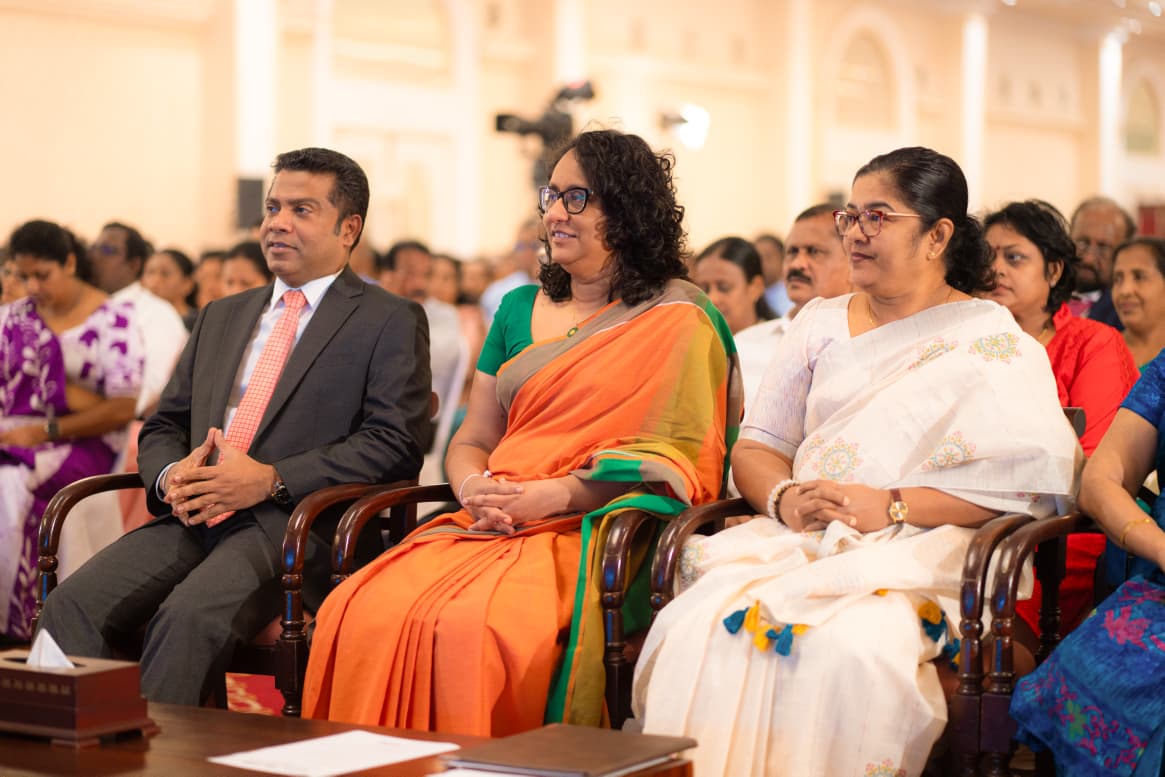
Prime Minister Dr. Harini Amarasuriya stated that the Government has commenced necessary measures to maintain preschool education under a framework, align preschool education with a unified curriculum, conduct teacher training in a systematic manner, and ensure quality standards.
The Prime Minister made these remarks on Saturday (10) at the Temple Trees, participating in the launch of the National Communication Programme for Child Health Promotion, aimed at promoting social and behavioural change (SBCC) among early childhood children. The programme is jointly organized by the Health Promotion Bureau, the Ministry of Women and Child Affairs, the Ministry of Education, Higher Education and Vocational Education, UNICEF, and the Clean Sri Lanka Programme.
Addressing at the event, Prime Minister Dr. Harini Amarasuriya stated:
“Early Childhood Development (ECD) has a major impact on a country’s human development and future progress. It is a widely accepted fact that a child’s future depends largely on early childhood development. Many aspects essential for a child’s growth occur within the first five years of life. The experiences, care, and love a child receives during this period are decisive.
The social integration, relationships, and environmental influences experienced in early childhood form the foundation for shaping an individual as an adult. Early childhood development influences life to an extent that it becomes difficult to change when it grows into adulthood.
The responses of adults to children’s actions, the way they interact with them, and the care they provide are extremely important. Therefore, early childhood development should never be viewed as the sole responsibility of parents. It is a collective responsibility of all citizens.
No child can be raised into a good citizen by parents alone. In all our lives, beyond our parents, there have been many who influenced us, showed us love, and provided care. It is due to the collective support of all these individuals that we have reached where we are today. The government views child care as a social responsibility. Supporting a child, providing care, ensuring protection, education, and health facilities are social responsibilities. In this regard, the intervention of the Clean Sri Lanka Programme to communicate these values to the public is important.
The role of the preschool teachers plays a special and vital role for children. The love, care, attentive listening, and responses children receive during this stage are decisive for their development. Teachers carry out a crucial intervention in the lives of children. An education policy on early childhood development has been formulated, with UNICEF providing technical assistance. Steps are being taken to operate preschool education under a single framework, align it with a unified curriculum, systematically conduct teacher training, and ensure quality standards.
Recognising early childhood development as a specialised area within education, the Prime Minister affirmed that the relevant interventions will be made accordingly.
Addressing the event, Minister of Women and Child Affairs, Ms. Saroja Paulraj stated that the Ministry has identified the standardisation and development of early childhood development as a primary goal for the year 2026. She noted that children who leave the warmth of their mother’s embrace and father’s shoulder and come to preschool teachers expecting the same love and care from their teachers. Conveying that warmth through words and expressions is a responsibility entrusted to teachers. The love and safe environment children receive shape their ability to love the environment and respect others.
Minister of Health and Mass Media, Nalinda Jayatissa, also addressed the gathering, stating that the goal of the government is to build a beautiful future generation capable of leading the country, free from the various hardships and challenges faced today.
He emphasised that creating a healthy population is a challenge, particularly in preventing non-communicable diseases. Children aged three to five today will become a generation aged 18 to 20 by 2040. Continuous and comprehensive programmes such as this are essential to protect that generation from non-communicable diseases. In some instances, interventions are required even during the preconception and prenatal stages.
He further highlighted that preschool and early childhood development centre teachers shoulder a tremendous responsibility in driving a major transformation in the country’s future.
The event was attended by the Governor of the Sabaragamuwa Province, Ms. Champa Janaki Rajarathne; the Governor of the Uva Province, Attorney-at-Law Kapila Jayasekara; the Governor of the North Central Province, Wasantha Jinadasa; the Governor of the North Western Province, Thissa Kumarsiri Warnasuriya; the Deputy Minister of Women and Child Affairs, Dr. Namal Sudarshana; the Member of Parliament, Dr. Najith Indika; the Representative of the United Nations Children’s Fund (UNICEF) in Sri Lanka, Ms. Emma Brigham; the Secretary to the President, Dr. Nandika Sanath Kumanayake; the Senior Additional Secretary to the President (Finance and Economic Affairs), Mr. Russell Aponsu; the Additional Secretary to the President (Clean Sri Lanka), S. P. C. Sugishwara; Secretaries to Ministries; Provincial Chief Secretaries; the Commanders of the Tri-Forces; officials of subject-related ministries; provincial council officials; preschool teachers; preschool children; and parents.


(Prime Minister’s Media Division)
News
Level I landslide early warnings issued to the Districts of Badulla, Kandy, Matale and Nuwara-Eliya extended


The Landslide Early Warning Centre of the National Building Research Organization (NBRO) has extended the landslide early warnings issued to the Districts of Badulla, Kandy, Matale and Nuwara-Eliya till 1600hrs today (11).
Accordingly, the LEVEL I YELLOW early warnings issued to the Divisional Secetaries Divisions and surrounding areas of Lunugala, Meegahakiwula,Welimada, Kandaketiya, Hali_Ela, Badulla, Uva Paranagama in the Badulla district, Minipe and Ududumbara in the Kandy district, Wilgamuwa, Ukuwela, Ambanganga Korale, Rattota and Laggala_Pallegam in the Matale district, and Nildandahinna, Walapane, Mathurata and Hanguranketha in the Nuwara-Eliya district will be in force until 1600hrs today (11)


Proposed education reforms have drawn sharp criticism from education professionals, teacher unions and student organisations, who warned on Thursday that the changes risk undermining child safety, widening inequality and imposing unaffordable costs on parents.
Addressing a press conference in Colombo, Dr Ayomi Irugalbandara of the Faculty of Education at the Open University of Sri Lanka said the proposed reforms appeared to be largely modelled on foreign education systems without adequate consideration of local realities.
She took particular issue with proposals to integrate social media use into the school curriculum, noting that several developed countries have moved in the opposite direction by preventing children under the age of 15 from accessing social media platforms.
“Most of these modules are not appropriate for this country,” Dr Irugalbandara said. “We warn parents that these reforms place children at risk.”
Concerns were also raised over digital content linked to the revised curriculum. Inter-University Students’ Federation Convener Madushan Chandrajith said the Grade Six Information and Communication Technology (ICT) module included QR codes that directed students to a controversial YouTube channel.
“Who will take responsibility for children accessing such content?” he asked, calling for clear accountability mechanisms for material linked through digital platforms used in schools.
Secretary of the Workers’ Struggle Centre, Duminda Nagamuwa, criticised the government’s approach to the reform process, comparing it to the fertiliser policy introduced under former President Gotabaya Rajapaksa. He alleged that the authorities were pushing ahead with education reforms despite opposition from academics, teachers and other stakeholders.
Nagamuwa also highlighted the economic burden on families, noting that Sri Lanka’s poverty rate had increased from 12.5 percent to 25 percent. He questioned how parents were expected to afford smartphones or tablet computers required for students to access QR code-linked educational content.
“The government is asking parents to bear costs they simply cannot afford,” he said.
Ceylon Teachers’ Union General Secretary Joseph Stalin said schools had already begun collecting money from parents in anticipation of the reforms, including funds to purchase smart boards.

National Communication Programme for Child Health Promotion (SBCC) has been launched. – PM

Level I landslide early warnings issued to the Districts of Badulla, Kandy, Matale and Nuwara-Eliya extended

Rescuers race to find dozens missing in deadly Philippines landfill collapse

Trump seeks $100bn for Venezuela oil, but Exxon boss says country ‘uninvestable’

US military strikes Islamic State group targets in Syria, officials say

Gardner and Wareham lead Giants to opening-game victory

‘Dates have the highest sugar content to fight Coronavirus’

Sunday Island 27 December – Headlines

#SundayIsland 17th December – Headlines

Sunday Island – 28th March

Sunday Island Headlines – 21 March

Sunday Island – 21st February – Headlines
-

 News5 days ago
Interception of SL fishing craft by Seychelles: Trawler owners demand international investigation
-
 News5 days ago
Broad support emerges for Faiszer’s sweeping proposals on long- delayed divorce and personal law reforms
-
 News9 hours ago
Sajith: Ashoka Chakra replaces Dharmachakra in Buddhism textbook
-

 Opinion2 days ago
The minstrel monk and Rafiki, the old mandrill in The Lion King – II
-

 Features2 days ago
The Venezuela Model:The new ugly and dangerous world order
-

 Latest News2 days ago
Rain washes out 2nd T20I in Dambulla
-
 Business1 day ago
Sevalanka Foundation and The Coca-Cola Foundation support flood-affected communities in Biyagama, Sri Lanka
-

 News4 days ago
Prez seeks Harsha’s help to address CC’s concerns over appointment of AG