
Latest News
Allocating funds alone is not sufficient. Policies must be implemented through a strong institutional framework – PM


Prime Minister Dr. Harini Amarasuriya stated that the highest amount allocated for education has been marked in this year’s budget and emphasized that allocating funds alone is not sufficient and policies must be implemented through a strong institutional framework.
The Prime Minister made these remarks on 25th of November in Parliament during the debate on the budget allocation for the Ministry of Education, Higher Education and Vocational Education.
The Prime Minister Dr. Harini Amarasuriya further stated,
“When discussing education, it is essential to base our decisions on sound educational policies in order to establish a quality education system in the country. In order to implement policies effectively, a strong institutional structure is required and both components need adequate financial support. The longstanding failure to accomplish these three aspects has resulted in the significant challenges we see today in the education sector. Despite these challenges, the commitment of teachers, principals, and officials we have been able to maintain the quality of education.
The most important achievement in 2025 was strengthening decision-making processes within the education sector by identifying institutions, resolving existing issues, rectifying institutional structures, aligning with policy frameworks, and ensuring that funds are spent according to policy priorities. These steps were taken in preparation for the education reforms scheduled to commence in 2026.
It is not only about formulating policies but it also requires proper planning for implementing quality education. Officials need clear targets, and responsibilities must be allocated appropriately. Looking back at the policies proposed throughout history, there is no substantial change in school curricula archived. This has mainly been due to the lack of planning, weaknesses in institutional structures, and inadequate financial allocations resulting in the failure of policy implementation.
In 2025, we were able to take commendable steps to address these issues and establish a cohesive institutional system. The Ministry of Education focused its decisions on four core areas: reducing inequalities through equity, enhancing quality, strengthening governance, and formulating evidence-based policies using data and scientific analysis. I am pleased that we were able to formulate policies, prepare plans, and build institutional structures based on these four pillars.
Referring to the report presented by the committee appointed to address issues at Gampaha Wickramarachchi University of Indigenous Medicine, the matter revealed how past decision-making processes had deteriorated, with personal interests and political agendas replacing proper principles and policies. This had undermined the quality of the university and resulted in injustice to the students. The lack of proper planning and weaknesses in institutional structures had affected almost all institutions related to education. In 2025, the government was able to rectify these shortcomings and restore the order.
After many years, the highest allocation for education is Rs. 7.04 billion, amounting to 2.04% of GDP has been allocated in this year’s budget. At no point we claim that we would reach 6% of GDP in the first year. We recognize that achieving this target requires policy development and strengthened institutions. Allocating funds alone is not sufficient; funds must be allocated in alignment with policies, while strengthening institutions and policy implementation.
A sum of Rs. 3,000 million has been allocated to the Ministry of Education for education reforms, under which the ongoing initiatives are being implemented. The expenditures for the year 2025 were discussed. Our budget was passed at the end of April 2025, and we began expenditure from May. Accordingly, our financial progress was 18%, and by December it had reached 69%. This level of efficiency has not been demonstrated in the education sector before. This progress was possible because we set clear targets for officials, ensured close monitoring, and strengthened accountability. By 2026 and 2027, we aim to achieve even greater progress.”
The Prime Minister further sateted that there are still challenges remaining. This sector moves forward with addressing many weaknesses along with the continuous improvement. Efficiency must be further enhanced. When issues arise in schools or universities, swift and effective action is essential. We must work to minimize constraints. This involves taking responsibility, forming policies, preparing plans, and moving forward step by step.
(Prime Minister’s Media Division)

Latest News
PM departs Sri Lanka to participate in the 56th World Economic Forum Annual Meeting in Davos-Klosters, Switzerland.
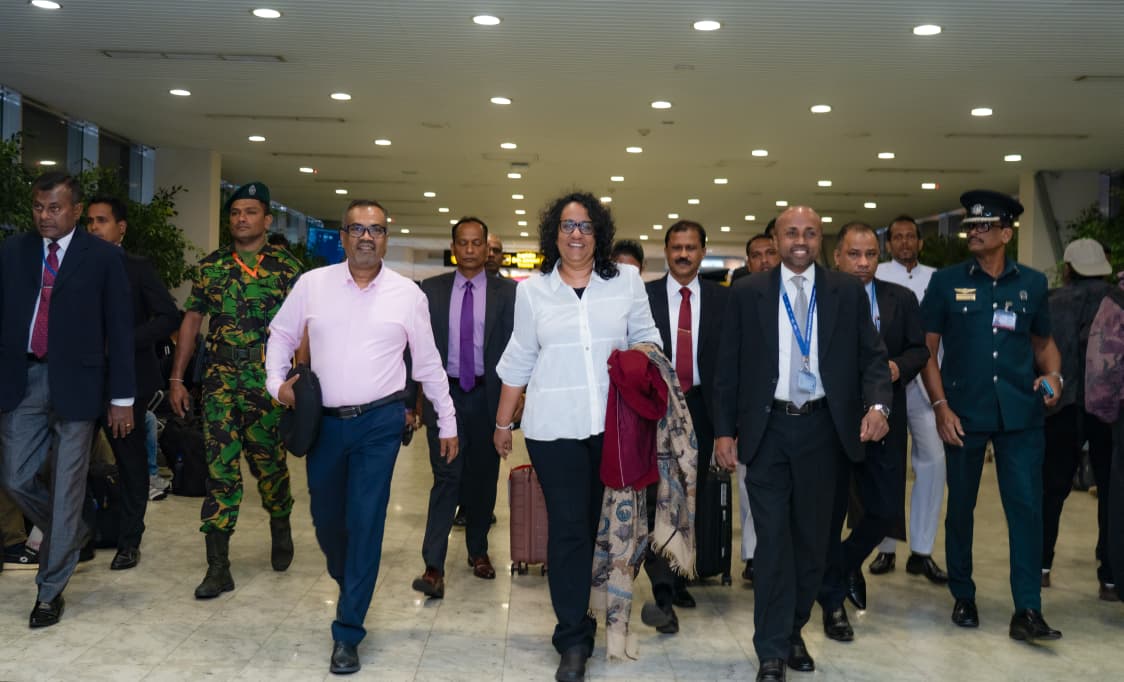
Prime Minister Dr. Harini Amarasuriya departed Sri Lanka on this morning (19 January) to participate in the 56th Annual Meeting of the World Economic Forum (WEF), to be held in Davos-Klosters, Switzerland, from 19 to 23 January 2026.
The World Economic Forum 2026 will be convened under the theme “A Spirit of Dialogue” and will bring together over 3,000 global leaders, including heads of state, government leaders, chief executive officers of leading multinational corporations, policymakers, and technology innovators.
During the visit, the Prime Minister is scheduled to hold a series of high-level bilateral meetings with key international leaders, heads of global institutions, and other distinguished dignitaries.
(Prime Minister’s Media Division)
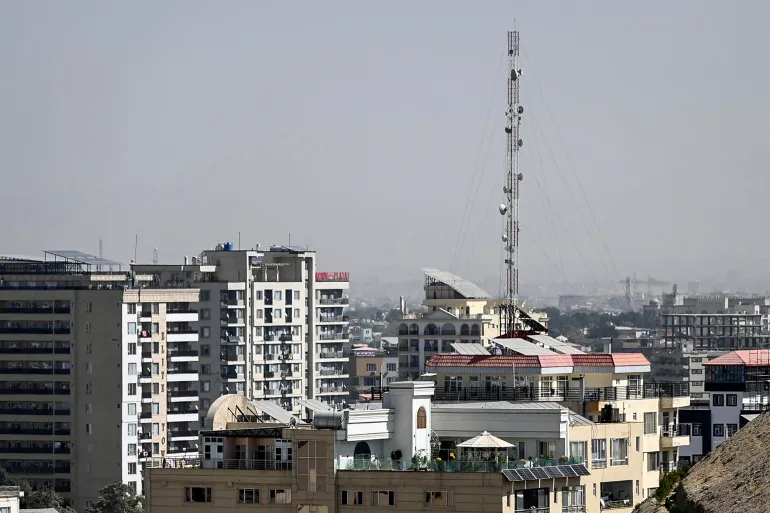
Several people have been killed in a blast in Afghanistan’s Kabul, the Taliban Interior Ministry said.
The explosion occurred on Monday in the Shahr-e-Naw area of the capital, which is home to foreigners and thought to be one of the most secure areas in Kabul.
“According to preliminary reports, a number of people were killed and injured,” Interior Ministry spokesperson Abdul Mateen Qani told the Reuters news agency, adding that details would be released later.
Blasts in Kabul, and across Afghanistan, are rarer since the Taliban returned to power following the United States Withdrawl in 2021, but ISIL affiliates are still active in the country and carry out sporadic attacks.
(Aljazeera)

Senegal stormed off the field in protest at a penalty awarded against them before returning to beat hosts Morocco 1-0 after extra time, and win the Africa Cup of Nations (AFCON), amid farcical scenes in the final.
Midfielder Pape Gueye netted the 94th-minute winner on Sunday, after Morocco’s star player Brahim Diaz squandered the chance to win it for the home side by fluffing the last-gasp penalty in normal time following a 14-minute delay.
Senegal coach Pape Bouna Thiaw ordered his players off, and it was talisman Sadio Mane who persuaded them to return.
The penalty was awarded following a VAR check by Congolese referee Jean-Jacques Ndala after Diaz had been tugged to the ground by Senegal full-back El Hadji Malick Diouf while defending a corner kick five minutes into stoppage time.
Officials and players jostled with each other while the referee consulted the touchline screen, and then again when Senegal walked off.
Once the players returned to the field, Diaz inexplicably tried a Panenka-style chip, and his soft penalty effort sailed tamely into the arms of Senegal goalkeeper Edouard Mendy.
Senegal’s actions will be seen as a major blight on an otherwise successful tournament, although defeat continues Morocco’s poor record in the tournament, which they only previously won 50 years ago.

The Senegal team had initially been riled by the referee’s decision to disallow for a foul a goal they scored in the second added minute, when Abdoulaye Seck headed off the post at a corner, and Ismaila Sarr nodded in the rebound.
After Diaz’s penalty miss, however, it felt almost inevitable that a galvanised Senegal would go on to score, and they did so in the fourth minute of extra time to stun the home fans in the crowd of 66,526 at the Prince Moulay Abdellah Stadium.
Mane won possession in midfield and found Idrissa Gana Gueye, who released his namesake Pape Gueye.
The Villarreal midfielder held off the backtracking Moroccan captain Achraf Hakimi as he advanced towards the box, before beating goalkeeper Yassine Bounou with a superb strike into the top corner.
Morocco were distraught, in particular Diaz, who was promptly substituted.
They could still have forced a penalty shootout, with Nayef Aguerd heading against the crossbar in the second half of extra time.
But it was not to be for the hosts, who had been dreaming of winning the title in front of their own fans to end a 50-year wait to become African champions for just the second time.
(Aljazeera)

PM departs Sri Lanka to participate in the 56th World Economic Forum Annual Meeting in Davos-Klosters, Switzerland.

Several killed in Kabul blast, Afghan Interior Ministry says

Senegal beat hosts Morocco to win AFCON 2025 after farcical walk-off

At least six killed in Pakistan as fire rips through Karachi shopping mall

Chile declares ‘state of catastrophe’ as deadly wildfires menace cities

At least 21 killed in Spain after crash involving high-speed trains

‘Dates have the highest sugar content to fight Coronavirus’

Sunday Island 27 December – Headlines

#SundayIsland 17th December – Headlines

Sunday Island – 28th March

Sunday Island Headlines – 21 March

Sunday Island – 21st February – Headlines
-

 Editorial2 days ago
Illusory rule of law
-
 News3 days ago
UNDP’s assessment confirms widespread economic fallout from Cyclone Ditwah
-

 Business5 days ago
Koaloo.Fi and Stredge forge strategic partnership to offer businesses sustainable supply chain solutions
-
 Editorial3 days ago
Crime and cops
-
 Features2 days ago
Daydreams on a winter’s day
-

 Editorial4 days ago
The Chakka Clash
-
 Features2 days ago
Surprise move of both the Minister and myself from Agriculture to Education
-
 Business5 days ago
SLT MOBITEL and Fintelex empower farmers with the launch of Yaya Agro App