
News
Alleged War crimes: Lord Naseby: UK dispatches have cleared Sri Lanka of five major accusations


By Shamindra Ferdinando
Member of House of Lords, Michael Naseby, has assured that he will try very hard to convince the UK to make public the sections of the Colombo British High Commission dispatches censored by London, pertaining to the last phase of the Vanni offensive.
Lord Naseby gave this assurance at the launch of his memoirs, ‘Paradise Lost, Paradise Regained’ at the BMICH on Tuesday (29).
Among those present on the occasion were Foreign Affairs Minister Prof. G. L. Peiris, Secretary to the Ministry of Defence General Kamal Gunaratne and Commander of the Army General Shavendra Silva.
Dismissing British justification for deleting large sections of the dispatches from Colombo, during the period January-May 2009, Lord Naseby emphasised that the incumbent government, or previous administrations, shouldn’t worry about the content of those dispatches.
The British politician declared that there was nothing in them to implicate Sri Lanka in alleged war crimes. Lord Naseby said that he had got an opportunity to meet the then British Defence Advisor Lt. Colonel Anthony Gash, the author of those dispatches, at the Colombo Hilton.
Lord Naseby stressed that the dispatches from Colombo didn’t collaborate the five main accusations levelled against Sri Lanka. The House of Lords member quoted Lt. Colonel Gash having denied accusations that the then President Mahinda Rajapaksa ordered the elimination of Tamil civilians, and there was no basis for claims that specific no-fire zones had been established by the military to kill those who gathered in them, and attempts had been made to starve the Vanni population. There was absolutely no justification of claims of genocide, and the dispatches had cleared Sri Lankan military of holding civilians in clandestine detention camps such as Menik Farm. Lord Naseby pointed out that the ICRC had been present at the Menik Farm from day one.
Lord Naseby stressed that it was the LTTE that compelled the civilians to move towards the eastern coastal areas as they retreated. He reiterated that it was a war not an uprising.
The present Defence Secretary Gunaratne commanded the 53 Division and the Army Commander served as the General Officer Commanding (GoC) of the much celebrated 58 Division that advanced from the Northwestern coast to Nanthikadal across the Kandy-Jaffna A- 09 road.
Lord Naseby asked how over 300,000 civilians would have survived if the Sri Lankan military had practised genocide. He also emphasised that in spite of the war, Sri Lanka’s civil service had functioned in both Northern and Eastern Provinces. That had ensured the supply of essential items, he pointed out.
Lord Naseby had fought for nearly three years to obtain dispatches from Colombo.
The UK, in spite of being leader of Sri Lanka Core Group at the Geneva-based United Nations Human Rights Council (UNHRC), has declined to release the dispatches to assist the ongoing investigations for obvious sinister reasons.
Lord Naseby revealed the existence of dispatches in the House of Lords in Oct 2017.


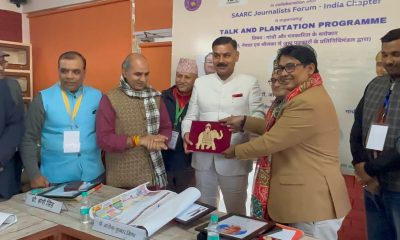


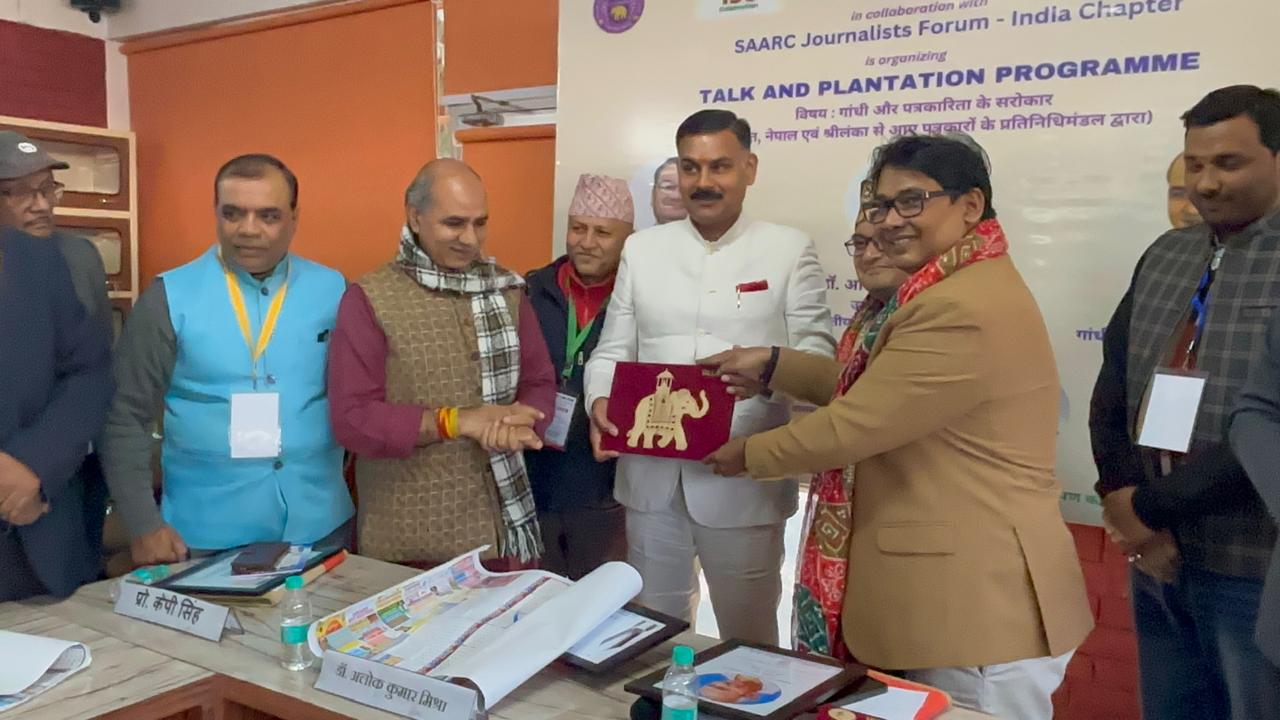
Members of the South Asian Journalists Forum have gathered at the University of New Delhi for a two day conference themed ‘Peace and Co-operation’.
Journalists from Bangladesh, Nepal, Sri Lanka and India are attending the conference hosted by the University of Delhi in collaboration with the India Chapter of SJF, and will deliberate on how the media can act as a catalyst for regional stability and mutual coexsistence.
A tree plantation campaign was also held at the Ghandi Bhawan premises of the University to mark the event and symbolize growing regional ties.
The Sri Lanka delegation is led by President of SJF’s Sri Lanka Chapter Rahul Samantha Hettiarachchi.

The Governor of the of Gujarat, Acharya Devvrat, along with the Deputy Chief Minister of Gujarat, Harsh Sanghvi, met with Prime Minister Dr. Harini Amarasuriya on Thursdy [February 05] at the Parliamentary Complex to discuss the arrangements related to the exposition of the Devnimori Sacred Relics of Lord Buddha, which have been brought to Sri Lanka under the patronage of Indian Prime Minister Narendra Modi and the Government of India.
These sacred relics of Lord Buddha were discovered during archaeological excavations conducted in the 1960s at the historic Devnimori site in Gujarat, the home state of Indian Prime Minister Narendra Modi. Until now, these relics had never been taken outside India. As a result of discussions held between President Anura Kumara Dissanayake and Indian Prime Minister Narendra Modi during his recent visit to Sri Lanka, the people of Sri Lanka have been granted this rare opportunity to venerate these sacred relics.
The exposition of the relics is being held for a period of seven days, from February 05 to February 11, at the Gangaramaya Temple in Hunupitiya, Colombo. Discussions were held between both parties regarding the arrangements related to this event.
The discussion was attended by Samar Nanda, Joint Secretary of the Indian Ministry of Culture; Dr. Satyanjal Pandey, Acting High Commissioner of India in Sri Lanka; Abhijit Halder, Director General of the International Buddhist Confederation; along with several others.
[Prime Minister’s Media Division]

The Indian Naval Ship (INS) GHARIAL made a port call in Colombo for operational turnarounds on 04 Feb 26. The Sri Lanka Navy welcomed the visiting ship in compliance with naval traditions.
Commanded by Commander Gaurav Tewari, INS GHARIAL is a vessel with a length of 124.8 meters.
During this visit, ten (10) Bailey Bridges, brought by ship, through the coordination of the High Commission of India in Sri Lanka, will be handed over to the Disaster Management Center. These bridges will provide temporary transportation links while bridges damaged across the island by adverse weather conditions are repaired.
The crew’s itinerary features scheduled goodwill activities with the Sri Lanka Navy, alongside visits to several tourist attractions across the island.

Mighty India meet multicultural USA in polarised World Cup

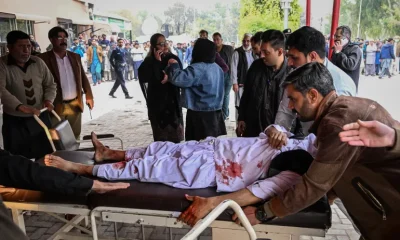
At least 31 killed, dozens wounded in Islamabad mosque blast

The SSC finally steps out of the sunshine and into the floodlights

SAARC journalists meet in New Delhi

Governor of Gujarat met with Sri Lanka PM to discuss exposition of Devnimori Relics

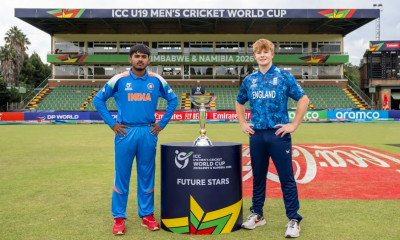
India chase sixth Under-19 World Cup title, England their first since 1998

‘Dates have the highest sugar content to fight Coronavirus’

Sunday Island 27 December – Headlines

#SundayIsland 17th December – Headlines

Sunday Island – 28th March

Sunday Island Headlines – 21 March

Sunday Island – 21st February – Headlines
-

 Business7 days ago
Hayleys Mobility ushering in a new era of premium sustainable mobility
-

 Business4 days ago
SLIM-Kantar People’s Awards 2026 to recognise Sri Lanka’s most trusted brands and personalities
-
 Business7 days ago
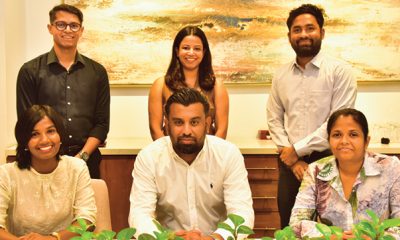
Advice Lab unveils new 13,000+ sqft office, marking major expansion in financial services BPO to Australia
-
 Business7 days ago
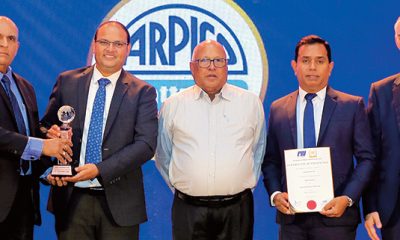
Arpico NextGen Mattress gains recognition for innovation
-
 Business6 days ago
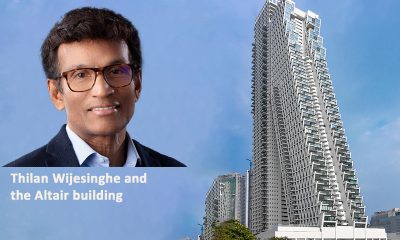
Altair issues over 100+ title deeds post ownership change
-

 Editorial7 days ago
Govt. provoking TUs
-
 Business6 days ago
Sri Lanka opens first country pavilion at London exhibition
-

 Business5 days ago
All set for Global Synergy Awards 2026 at Waters Edge