
Editorial
Aiyo, Aragalaya!


Thursday 3rd November, 2022
Opposition parties are in a perpetual state of confusion; they seem to be labouring under the delusion that united, they will fall, and divided, they can stand. The JVP not only refused to take part in yesterday’s protest march in Colombo but also disparaged the organisers thereof. It has said it will have no truck with opportunists!
The SJB, the SLFP and some trade unions have taken up the cudgels on behalf of the Aragalaya activists who are being detained and grilled under the Prevention of Terrorism Act. Their campaign is not devoid of politics; they are trying to mobilise the people in view of the local government elections expected early next year, but without such protests pressure cannot be brought to bear on the government to refrain from suppressing democratic dissent. The JVP has chosen to conduct a separate protest campaign, we are told. The disunity among oppositional forces must have gladdened the hearts of the government leaders, who may not have expected its political rivals to fall out and go for one another’s jugular so soon.
All it takes to ruin a people’s protest is a smidgeon of dirty politics. Politicians with hidden agendas polluted Aragalaya by infiltrating and politicising it to compass their ends. The Galle Face protest movement began as a popular agitation, which was similar, mutatis mutandis, to the wall painting campaign launched by the youth, immediately after the election of President Gotabaya Rajapaksa in celebration of what seemed to be a new beginning, which sadly turned out to be yet another false dawn. The occupation of the Galle Face Green reminded us of the Occupy Wall Street protest (2011) in New York.
The Galle Face agitation was a coming together of frustrated citizens from all walks of life, mostly youth, to protest against their hardships and pressure the government to make an urgent course correction on the economic front. That it emerged as a truly apolitical, leaderless protest became evident from the fact that even the JVP and the other Opposition parties warned that such agitations could lead to anarchy. When the Galle Face protest began to run out of steam for want of funds and direction, the JVP, the FSP, etc., moved in and hijacked it. Even the UNP has admitted that it had its activists mingling with the protesters.
The Galle Face protesters were like a group of unskilled workers pulling down a massive wall and exposing themselves to the danger of being buried alive in the process. They succeeded in ousting President Gotabaya Rajapaksa, but the Rajapaksa regime has got a new lease of life under Ranil Wickremesinghe’s presidency and is making up for lost time while the Opposition is exploiting the woes of the victims of the government’s witch-hunt in a bid to gain political mileage. Now, the Oppositional forces are on the defensive and divided!
This is not the first time the JVP has broken ranks with other Opposition parties and trade unions affiliated to them over a crucial national issue. One may recall that the JVP did something similar in July 1980, when the then SLFP-led Opposition and trade unions organised a general strike against the J. R. Jayewardene government, demanding a pay hike. It pulled out at the eleventh hour. The UNP crushed the strike ruthlessly, and sacked about 50,000 strikers. The Opposition accused the JVP of collaborating with the UNP.
The government seems to think Aragalaya is dead and gone, and the path is now clear for it to do as it pleases. True, ultra-radical political groups and various organisations with hidden agendas gave the Galle Face protest movement the kiss of death. The JVP has gained a turbo boost for its approval ratings, and the FSP is in seventh heaven. The SLPP has launched a reorganisation campaign, and the UNP is busy trying to shore up its image and support base, having secured the presidency. Some of the self-appointed leaders of Aragalaya have laughed all the way to the bank. But Aragalaya is far from dead. All the problems that drove the people to stage street protests remain unsolved. The economy is contracting; the cost of living is soaring; taxes and tariffs are increasing exponentially; hospitals are experiencing drug shortages; people are skipping meals, malnutrition is on the rise among children; corrupt deals continue to be struck; stress on the banking system is worsening; the abuse of power continues unabated, and the government is stepping up the suppression of dissent. There is a massive build-up of public anger in the polity. Unless the government holds the local government polls thereby providing the people with an opportunity to canalise their anger in a democratic manner, there will be another uprising.
Self-serving politicians, in power as well as in opposition, are creating conditions for a truly leaderless uprising, which will be fuelled by anti-politics. Let them be warned that none of them will be safe in such an eventuality. Given the huge increases in food prices and other essentials and the shortages thereof, the day may not be far off when we witness, in Colombo, something similar to the Women’s March on Versailles (1789) against food scarcities and the suppression of their rights, in Paris.


Tuesday 16th June, 2026
The world must have breathed a sigh of relief yesterday following the announcement that the US and Iran had agreed to sign a peace deal soon and begin negotiations in earnest to resolve contentious issues. The peace plan has renewed hope that no more lives will be lost due to military strikes in West Asia; precious assets, especially oil infrastructure, in that part of the world will be safe, and disruptions to global oil supplies will be over.
Interestingly, as US President Donald Trump turned 80, global oil prices which had shot up to extremely high levels, owing to his war on Iran, dropped to about USD 80 a barrel, the lowest since the eruption of the war in February. Upon the announcement of the US-Iran peace deal, WTI, the US oil benchmark, decreased to USD 80 a barrel, and the global oil benchmark, Brent crude, which was about USD 70 a barrel before the conflict and peaked at about USD 120 during the war, dropped to USD 83 a barrel. Share markets surged in Asia. These are very positive signs.
The US-Iran peace deal and the resultant oil price drops could not have come at a better time for developing nations, especially Sri Lanka, which is struggling to stabilise its rupee and shore up its forex reserves.
However, a return of global oil prices to the pre-conflict level of USD 70 a barrel may not be possible in the short term, given some factors, such as the lost production capacity in West Asia, strategic oil reserve replenishment and higher risk premium. The situation may improve sooner than expected if OPEC, the US, Canada, Brazil, etc., care to increase oil production and help stabilise the world energy market, thereby strengthening the global economy, which has shown signs of severe decline due the West Asian conflict.
US President Donald Trump pretends that he has done Iran a big favour by agreeing to a peace deal. However, Trump has apparently made a virtue of necessity. It was difficult for him to go on fighting, particularly in view of the passage of a crucial War Powers bill. Besides, US Vice President J. D. Vance, in an interview with Fox News, has said, inter alia, that Americans were facing economic hardships due to the Iran war; he has expressed hope that energy prices will start coming down shortly much to their relief. This shows that the Trump administration was also badly in need of a peace deal.
The US-Iran peace deal to be signed has been described in some quarters as a birthday gift for Trump. It must have gladdened his heart beyond measure, for his approval rating has plummeted due to his handling of the economy and the Iran war, and his Grand Old Party is expected to perform poorly at the midterm elections in November. One may recall that General Sherman, after completing his March to the Sea, famously “presented” the city of Savannah, the Confederacy’s most important port, as a Christmas gift to President Lincoln, in December 1864. Trump may have expected his military commanders to do likewise and present something like Iran’s Kharg Island to him as a birthday gift, but his plans went awry owing to Iran’s fierce resistance, with Tehran effectively shifting the war to the economic front by using the Hormuz Strait as a strategic lever. So, Trump apparently had to settle for a peace deal as a birthday gift, so to speak.
Israeli Prime Minister Benjamin Netanyahu is obviously not well-disposed towards the peace deal to be inked. He was dependent on the Iran war for political survival. His opponents are closing ranks, and he has court cases to contend with. So, if he carries out attacks on Hezbollah targets again, as speculated in international defence circles, Iran may be compelled to respond, maybe by closing the Hormuz Strait again. In the world of cloak-and-dagger geopolitics, anything is possible. It is up to Trump to ensure that his friend behaves.
World powers have welcomed the peace deal to be signed and praised the US, Iran and Pakistan, which made it possible. They themselves have been reeling from the knock-on economic effects of the West Asian conflict, and it will be in their best interest to do everything in their power to ensure that the peace deal will reach fruition and the Iran war will be a thing of the past.


Monday 15th June, 2026
Sri Lanka apparently has more than its fair share of extreme weather events, ranging from floods to droughts and now the disruptive effects of a mega climate anomaly. The World Meteorological Organization (WMO) has warned that due to unusually warm ocean waters in the tropical Pacific, El Niño conditions are developing fast, and they are expected to drive more extreme temperature and rainfall patterns in the coming months. Sri Lanka is among the countries that are expected to suffer the severest impact of this phenomenon.
Some climate experts have suggested that Sri Lanka may not experience a severe El Niño impact. However, it is prudent to prepare for the worst-case scenario.
The WMO has stressed that the time for informed decision-making, planning and preparedness is now. “The science is clear: El Niño is arriving on our doorstep in the coming months with 90% certainty. The world must treat it as the urgent climate warning it is,” UN Secretary-General António Guterres has said. The world has experienced El Niño events for many years and therefore knows what it is like to face them. However, the question is whether such warnings will jolt Sri Lanka into taking urgent action to mitigate the impact of El Niño, which will deal a double whammy, with floods and droughts affecting different parts of the country simultaneously.
Sri Lanka has earned notoriety for ignoring and failing to respond to crises and disasters swiftly. One may recall that in December 2004, nobody sensed danger on seeing the eerie drawback of the sea minutes before the landfall of the Boxing Day tsunami. Thousands of lives were lost as a result. There were quite a few warnings of the impending Easter Sunday terror attacks in 2019, but nobody cared to take preventive action. Many experts warned of a crippling economic crisis in 2022, but no action was taken to prevent it. So, fear being expressed in some quarters that nothing serious is likely to be done by way of disaster risk reduction in view of El Niño is not unfounded. Last year, Cyclone Ditwah caught the incumbent government unprepared and overwhelmed the state disaster response system initially. The impact of El Niño is expected to be far severer as it will last for months.
The first casualty of El Niño is agriculture dependent on monsoon rainfall. Most countries affected by El Niño-driven droughts and floods face crop losses in multiple seasons and the resultant prolonged food shortages have the potential to lead to political upheavals. A possible increase in food imports is bound to worsen Sri Lanka’s foreign currency woes. Perhaps, many countries will be compelled to restrict agricultural exports. There’s the rub. Hence, agricultural experts have called for a climate-smart home gardening initiative to meet such an eventuality.
The impact of El Niño usually spreads to other sectors, such as power and energy. The use of substandard coal has caused a sharp decline in power generation at Norochcholai. If reservoir levels recede steeply, decreasing the country’s hydro power capacity drastically, it will not be possible to meet the Norochcholai generation shortfall by burning diesel, etc., due to the cost factor and forex constraints. Shortages of power, energy and water take their toll on the industrial sector and impede economic growth. Beyond economic losses, El Niño entails broader social costs such as poverty, disease outbreaks and disruptions to education.
The JVP-NPP government would have the public believe that it has a well-thought-out plan to mitigate the severe impact of El Niño by focusing on water conservation, climate-resilient agriculture, food and energy security while strengthening disaster preparedness. The Food Policy and Security Committee, appointed by the government, has reportedly discussed ways and means of mitigating the impact of El Niño with particular focus on agriculture, water storage and drinking water supplies. The proof of the pudding is said to be in the eating. One can only hope that the government will succeed in this endeavour and all other stakeholders will put their shoulders to the wheel.

Public Security Minister Ananda Wijepala has informed Parliament of some root causes of the country’s foreign exchange woes. He told the House the other day that a mega fraud involving the transfer of millions of dollars overseas under the guise of payments for non-existent imports, had been uncovered by the police and the Customs. However, the racket of phantom imports is a common mechanism that facilitates capital flight and illicit financial outflows. It is not of recent origin.
Minister Wijepala informed Parliament that investigations by the Central Crime Investigation Bureau , the Financial Crimes Investigation Division and Sri Lanka Customs had revealed that large-scale foreign exchange transfers were being routed abroad for goods that were never imported, and they contributed to significant dollar outflows from the country.
Minister Wijepala told the House that the loopholes exploited for illicit capital flight had been created through the Foreign Exchange Act No. 12 of 2017 (FEA-2017) during the UNP-led Yahapalana government, which did away with some crucial provisions of the Prevention of Money Laundering Act, No. 5 of 2006, according to which foreign exchange offences were predicate offences for money laundering. One may recall that the JVP backed the UNP-led Yahapalana government, which repealed the Exchange Control Act, No 24 of 1953 (ECA-1953) for the sake of crooks among its cronies. The JVP was even represented on the National Executive Council of that UNP-led administration.
The ECA-1953 was the primary legislative framework governing foreign currency, gold, securities, and cross-border financial transactions in Sri Lanka. In 2017, the Yahapalana government replaced the ECA-1953 with the FEA-2017 on the pretext of liberalising the foreign exchange flow. As per the ECA-1953, violations of its provisions were non-bailable criminal offences and they led to the confiscation of offenders’ property. By the time of its repeal, there were 30 court cases against offenders who included cronies of the UNP and the SLPP. The Frontline Socialist Party has rightly pointed out that when a new Act is introduced, repealing the old one, mention is made of the procedure to be adopted for the cases pending before court over previous offence. The FEA–2017 converted criminal offences under the previous Act into civil offences, which were relegated to the jurisdiction of the Magistrates’ Courts from the High Courts, and allowed bail to be granted by Magistrates. The confiscation of property, which was previously mandatory, was left to the judges’ discretion. The cases filed under the ECA-1953 came to an end. The new Act required frsh cases to be filed within a period of three months, but no such action was taken, and the offenders got off scot-free for all intents and purposes.
The FEA-2017 made an already bad situation worse. It has stood foreign exchange racketeers including errant exporters in good stead, and contributed to the present foreign currency crisis. Now that it has been revealed that errant exporters are parking proceeds from exports overseas and resorting to phantom imports, there is a pressing need for the ECA-1953 to be restored urgently to deal with such racketeers and shore up the country’s forex reserves.
The ongoing desperate measures to stabilise the rupee and tackle the forex issues must be complemented with drastic measures, such as a crackdown on hawala and undiyal networks. Successive governments have baulked at doing so, for their members themselves use these informal channels to stash away their ill-gotten funds in offshore accounts. Unless the illegal outflow of forex is blocked, with errant exporters being made to repatriate export proceeds, it will be well-nigh impossible to overcome the forex problems.
Most of all, there is a pressing need for a new law with provision for foreign exchange racketeers who got away with their crimes following the introduction of the FEA-2017 to be brought to justice. Their illegal operations have stood in the way of the country’s effort to tackle a worsening currency crisis.
Having talked the talk, the JVP-NPP government must walk the walk. It must fish or cut bait. After all, the JVP-led NPP came to power, promising to bring all racketeers to justice.

Report on the Final Budgetary Condition (Annual Report) – 2025 submited to parliament
Cabinet nod to accept increased Loan Grant provided by the Asian Development Bank under Policy Based Loan Facilities – 2026
Submission of Revenue Protection Order Prepared under the Provisions of the Revenue Protection Act No. 19 of 1962 to the Parliament for its approval.
Resettlement of unauthorized settlers affected by the Land Acquisition process for the implementation of Phase III of the Baseline Road Extension Project
Cabinet approves project to modernize school hostel facilities during the 2026–2028 period at an estimated cost of Rs. 1,008 million
New National Action Plan for Human-Elephant Conflict Management to be drafted

‘Dates have the highest sugar content to fight Coronavirus’

Sunday Island 27 December – Headlines

#SundayIsland 17th December – Headlines

Sunday Island – 28th March

Sunday Island Headlines – 21 March

Sunday Island – 21st February – Headlines
-
 News5 days ago
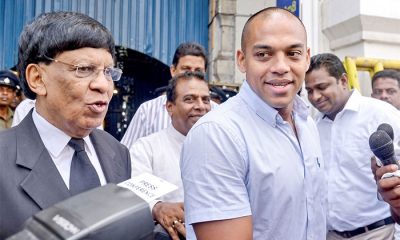
CIABOC summons Yoshitha over his participation in British Navy training programme
-
 News7 days ago
Local firms move millions of dollars overseas for phantom imports: Govt.
-
 Midweek Review7 days ago
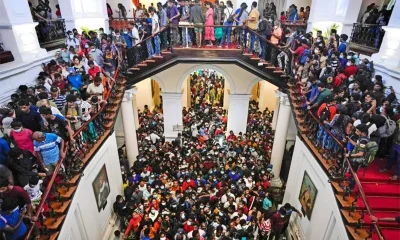
July 09: An inexcusable overall security failure and exceptional contingency plan
-

 Sports2 days ago
Tharanga set for high-profile javelin clash in Ostrava
-

 News4 days ago
Commonwealth lawyers urge Lanka to uphold rule of law
-

 News5 days ago
Justice Minister responds to social media claims he represented Easter Sunday ringleader
-

 Features3 days ago
Politics of protected species
-

 News7 days ago
AI raises concerns over arrest of Sallay and rapper under PTA