
Editorial
Aftermath of X-Press Pearl


The recovery of the voyage data recorder (VDR) of the dangerous cargo laden container ship, X-Press Pearl, the burning and subsequent sinking of which caused this country an unprecedented and unimaginable environmental disaster may help ongoing investigations to establish where culpability for alleged negligence or irresponsibility lie. The VDR is the equivalent on a ship of the ‘black box’ voice and data recorder in the cockpit of an aircraft vital for investigation of a plane crash. Fortunately, merchant shipping authorities, assisted by the navy, were able to recover this instrument, from the bridge of the now submerged vessel. It is now available for analysis and a court order has already been made to begin this process.
But there have been reports that because there had been little, if any, navigation on the bridge since the ship’s crew was evacuated from the vessel on May 25, the VDR may not have recorded substantial new information about recent events on board. Nevertheless it provides an added resource for investigation of the disaster.
The matter that is most in contention at the time this is being in written is whether ship’s local agent had deleted email communications between the vessel and himself as has been alleged. The fact that there was a leak in a container of nitric acid on board the ship has been known several days before the vessel anchored in Colombo’s outer harbor. The vessel had in fact attempted to off load the leaking container at two other ports, one in the Middle East and the other in India. Hamad in Qatar said it did not accept transshipment containers while Hazira in India had pleaded lack of facilities.
If the port authorities here knew of the problem well in advance, it would most likely have permitted priority berthing to deal with the emergency. The Chinese-run CICT (China International Container Terminals) controlled by China Merchant Port Holdings, one of the world’s largest port operators, with state-of-the-art equipment, would well have been able to handle the task. This is what the head of the Ceylon Association of Steamer Agents said in a recent television interview.
But from the narrative now in the public domain, it appears that the port authorities here had not been informed of the problem when the ship entered anchorage on the night of May 19 although the local agent had the information. How true or not that is remains to be established. If emails have been deleted as alleged, it will be possible to retrieve them through the ship’s server and this has been ordered.
Events had subsequently unfolded rapidly. First a fire on hold number two was reported but Colombo was told that the fire fighting capability on board had dealt with it. Thereafter the fire reignited and winds blowing at speeds of up to 100 kilometres per hour fanned the flames. The massive effort mobilizing all available resources, including air support and fire fighting tugboats, to bring the blaze under control failed dismally.
According to international safety requirements, no dangerous cargo can be stored below deck and the nitric acid containers could not have been in the hold where the first fire was reported. Whether the leaking acid triggered the fire below remains an open question.
On top of all else, it is feared that we at risk of a massive oil spill as we stagger under the Covid pandemic Whether that will come to pass has not been made clear as this comment is being written. But we have to be prepared for the worst even with the limited resources we command. International assistance that will always be available to combat a catastrophe as big as this has already been mobilized. An Indian ship equipped for such emergencies is on standby at the scene.
The stricken vessel is reported to have been carrying about 350 tonnes of fuel on board when she arrived at the Colombo anchorage. The optimistic assessment, not yet confirmed, is that much of this would have been burnt in the massive fire that raged aboard before the ship began to sink. But pictures of what appeared to be an oil slick were beamed by at least one local television station that sent a crew to cover the sinking ship. Hopefully much of the fuel oil, if not all of it, has been destroyed in the fire.
The X-press Pearl was carrying among other cargo a large volume of plastic pellets, raw material for the plastic industry, some of which was consigned to Colombo, among other cargo like chemicals and cosmetics. Billions of these pellets have been washed ashore on our beaches and many more would yet be in the sea. Beach clearing operations have begun but how effective they would be even in the short and medium term is yet to be seen.
Dead sea creatures including turtles are being washed ashore and marine environmentalists predict vast damage that can extend to a hundred years. Fishermen fear for their livelihood. What would polluted beaches do to out tourist industry? It is unlikely that even if we are compensated in billions by insurers, as is being freely claimed, that this country can never again be what it was before the disaster. There is no escaping the reality that a long tough haul lies ahead.


Wednesday 8th July, 2026
Prison riots in Negombo have claimed 27 lives including those of seven officers and left more than 100 others injured. It is believed that a clash between a group of drug peddlers among inmates and those who opposed their illegal operations led to the deadly mayhem. A committee has been appointed to probe the violence.
The drug Mafia has flexed its muscles again. The government has embarked on an ambitious campaign to rid the country of narcotics, and rightly so. The ongoing nationwide drug bust deserves the fullest public cooperation. However, if the latest outbreak of prison violence is anything to go by, a special programme needs to be launched to root out the scourge of narcotics in prisons, where some corrupt officers are in league with drug dealers.
The mastermind behind the Negombo Prison riots has been identified. He is an associate of a powerful drug dealer, according to media reports. The netherworld of narcotics and crime has emerged so powerful that it can plunge the country’s prison system into utter chaos at will. Worse, in 2023, an underworld gang planned a commando-style operation to free a drug dealer, called Nadun Chinthaka alias Harak Kata, detained at the CID headquarters. The STF managed to scuttle their plan. We reported that the gang had enrolled some serving military personnel and a sniper for the attack to spring its leader free. Another drug leader had High Court Judge Sarath Ambepitiya and his MSD bodyguard Inspector Upali Ranasinghe gunned down in late 2004. An underworld gang attacked a prison bus in Kalutara, killing five of its rivals and two prison guards, in 2017. Successive governments have only made half-hearted attempts to neutralise powerful crime syndicates run by drug dealers.
It is puzzling why the prison authorities did not transfer all troublemakers responsible for Sunday’s clash in Negombo to other prisons, after bringing the situation under control. On Monday morning, they gave the all-clear. It was the calm before the storm; violence erupted again soon afterwards. There was a total intelligence failure. If the rioters had been sent to other prisons on Sunday itself, Monday’s violence could have been averted.
Sadly, incidents of prison violence lead to political clashes between the government and the Opposition. There have been several deadly riots in prisons during the past several decades. In 1983, about 50 Tamil prisoners were massacred inside the Welikada Prison in two separate attacks. In the same prison, 27 inmates were killed in 2012 during a riot that followed a search operation conducted by the STF for weapons, drugs and mobile phones. In 2020, violent clashes in the Mahara Prison left 11 inmates dead. All those incidents triggered political battles, with Opposition politicians flaying their ruling party counterparts for failure to ensure the safety of prisoners. If they had put their heads together and taken action to eliminate the root causes of prison unrest and violence, instead of fighting political battles, perhaps the Negombo prison riots would not have occurred.
There have been some half-hearted attempts at prison reforms under successive governments. But the structural problems in Sri Lanka’s prison system remain unresolved. They include overcrowding, delays in court proceedings, gang rivalries, drug peddling, inadequate facilities, corruption and difficulties in maintaining security in large custodial institutions. The Negombo prison is reported to have been experiencing a shortage of officers. These issues have to be resolved urgently as part of a multi-pronged strategy to make prisons safe. Rhetoric won’t do.
Following the Mahara prison violence in 2020, President Anura Kaumara Dissanayake, who was an Opposition firebrand at that time, went ballistic in Parliament, condemning the then SLPP government for its failure to protect prisoners. A video of his fiery speech is doing the rounds in the digital realm. It has become grist for the Opposition’s mill.
Opposition politicians are now doing what the JVP did in the past; they are tearing into the JVP-NPP government over the Negombo prison violence. But prisons will not be any less vulnerable to violence even if the holders of power change; those who are berating the current administration may find themselves in the dock one day if they form a government.
Tuesday 7th July, 2026
A major El Niño event is developing rapidly, and it is expected to intensify in the coming weeks. Some climatologists are of the view that the unfolding El Niño may not impact Sri Lanka to the extent of triggering a nationwide catastrophe. This is certainly good news, but the possibility of El Niño causing drought, reduced monsoon rainfall and agricultural losses in this country cannot be ruled out.
Meanwhile, France is reeling from a record-breaking European heatwave, which has claimed more than 2,000 lives and left people scrambling for cooling devices in shops. It has been placed under a red heat alert. This situation cannot be directly attributed to the current El Niño, which has only aggravated it. The current heatwave is mainly due to climate change, which has caused hot air to be trapped over Europe, according to experts.
There are media reports of global temperatures rising across all regions, but at different rates of warming. All major land areas across the globe are getting warmer, the worst affected being the Arctic region (covering parts of northern Canada, Greenland, Russia, Alaska, and northern Europe), with faster increases reported from Europe and Asia. There is no need for panic, but prudence demands the formulation of strategies urgently to meet possible outcomes.
El Niño is unpredictable, and anything is possible, the worst-case scenario being prolonged drought and the resultant drop in agricultural production. In Sri Lanka, reservoirs run dry even during short dry spells, causing severe water stress.
Sri Lanka is no stranger to heatwaves, albeit not of the same severity as the ones in Europe at present. However, recent studies indicate increasing frequency and intensity of heatwaves. There have been several such events during the past seven years or so in this country, with the Department of Meteorology and the government issuing warnings of increased risks of heat stroke, heat exhaustion, and dehydration, especially among outdoor workers, children and elders. It may be recalled that according to media reports based on research findings, between 2001 and 2013, about 23% of Sri Lankans were exposed to dangerous heatwave conditions.
Besides, urban centres, such as Colombo, are experiencing the so-called urban heat island effect due to buildings, pavements, etc., retaining heat. Sri Lanka should seriously consider adopting the Miyawaki method, a Japanese technique of creating dense micro-forests or ‘pocket forests’ in small urban spaces to improve biodiversity, capture carbon, reduce urban heat and improve air quality. London has reportedly adopted this method successfully. The question is why the city of Colombo, accredited as an international Wetland City by the Ramsar Convention of Wetlands, and its suburbs have not adopted the Miyawaki method.
As for Sri Lanka, two main El Niño and climate change mitigating factors are said to be its geographical location and its central mountain range, which helps maintain atmospheric moisture, reducing the likelihood of severe droughts experienced in some other countries affected by El Niño. Hence, the need to conserve the country’s forest cover, which is unfortunately shrinking.
For Sri Lanka as well as other countries, deforestation is no longer an environmental issue; it is a serious existential problem as well. Sri Lanka’s forest cover is believed to be about 29-30% of the total land area. The government has set an ambitious target of increasing it up to 32% of the land area. The ongoing reforestation initiatives deserve fullest public cooperation.
Nothing is said to be so certain as the unexpected in climatic events; forecasts about them could go wrong. Therefore, the need for Sri Lanka to remain alert and have contingency plans to mitigate their impact cannot be overstated.
Monday 6th July, 2026
President Anura Kumara Dissanayake’s recent attempt in Parliament to defuse the ongoing controversy over his government’s plan to extend the retirement ages of the judges of the Supreme Court (SC) and the Court of Appeal (CA) has been in vain. He spoke at length, offering excuses for his failure to initiate action to fill judicial vacancies, but they did not sound convincing. They have only prompted the Bar Association of Sri Lanka (BASL) and other lawyers’ associations to reiterate their opposition to the prospect of a constitutional amendment being moved to raise the retirement ages of the SC and CA judges.
Addressing a public forum, on Saturday, BASL President Rajeev Amarasuriya reiterated his association’s opposition to the proposed move to change the SC and CA judges’ retirement ages arbitrarily. The BASL’s position has been endorsed by several legal associations, including the Colombo Law Society, the Colombo High Court Lawyers’ Association (CHCLA), LAWASIA, and the Commonwealth Lawyers’ Association (CLA).
CLA President Steven Thiru has gone to the extent of warning that Sri Lanka risks repeating Zimbabwe’s judicial crisis if it goes ahead with its controversial plan to extend the retirement ages of sitting superior court judges arbitrarily. Stating that the CLA did not object to the extension of the mandatory retirement age of judges, given changing demographic realities, Thiru pointed out that the danger lay in the politicised context and particularised application of the proposed move by the sitting executive and the legislature to alter the tenure of a few judges. He stated that Sri Lankan leaders had to heed “the sobering lesson of the Zimbabwean crisis; when a ruling government alters the rules of judicial longevity mid-stream, the damage to the legal fabric is severe. “If Sri Lanka proceeds with an ad hoc, non-transparent extension of Superior Court judges’ tenure without a broad consultative process, it risks plunging its legal system into a similar crisis of legitimacy,” he warned, noting that a structural policy matter must not be perceived as a personalised intervention; to do so would fundamentally invite public cynicism, compromise the appearance of judicial neutrality and shatter the very institutional stability that is to be protected.”
It is hoped that the JVP-NPP government will heed the concerns of lawyers’ associations, abandon its plan at issue and ensure that constitutional reforms follow proper consultation, without undermining judicial independence or public confidence in the judiciary. The JVP/NPP came to power promising a new Constitution and not politically motivated piecemeal constitutional amendments. It said in its election manifesto, inter alia, “A new constitution will be drafted and passed through a referendum with necessary changes, if any, after going through a public discourse” (A Thriving Nation: A Beautiful Life, 2024, p. 109).
As the CHCLA, in a letter to President Dissanayake, has rightly pointed out, “the Judicial Service of Sri Lanka is constituted by officers who ascend through a rigorous hierarchy … This progression is not merely a career ambition; it is a legitimate expectation, recognised and protected by the principles of natural justice and the law governing public service. Officers of the Judicial Service plan their professional and personal lives around the reasonable anticipation of such advancement.” The CHCLA’s views deserve serious consideration.
Meanwhile, Chief Justice Preethi Padman Surasena, addressing a group of newly recruited Magistrates, at Sri Lanka Judges’ Institute, recently, stressed the need for judicial officers to do their best to preserve public confidence in the judiciary. A country could be destroyed by a bad judiciary in the same way it could be devastated by natural disasters, the Chief Justice said, stressing the need to safeguard the integrity, independence and dignity of the judiciary. His message was loud and clear.
However, some factors that erode public confidence in the judiciary are beyond the control of judges. The alleged government move to extend the retirement ages of the judges of the SC and the CA is a case in point. It is widely seen as an instance of political interference with the judiciary. One can only hope that the Sr Lankan legal fraternity and international lawyers’ associations will be able to knock some sense into the JVP-NPP government, and prevent this country from facing the same fate as Zimbabwe, where a serious constitutional crisis erupted in 2021, when its Constitution was arbitrarily amended to change the judges’ retirement ages. That issue raised broader concerns about the separation of powers and judicial independence. The constitutional amendment undermined public confidence in courts and amounted to political interference with the judiciary. Another crisis is the last thing Sri Lanka needs at this juncture.

Archer, Tongue hand India their biggest T20I defeat

“Badhu Shakthi 2026” National Tax Week begins

Renovated Narahenpita Railway Station reopens to the public under the ‘Dream Destination’ initiative

High-scoring draw gives West Indies rare series win

Bus Sector Clustering Pilot Program on route numbers 170, 177, and 190

Switzerland face Argentina in World Cup quarterfinal after beating Colombia

‘Dates have the highest sugar content to fight Coronavirus’

Sunday Island 27 December – Headlines

#SundayIsland 17th December – Headlines

Sunday Island – 28th March

Sunday Island Headlines – 21 March

Sunday Island – 21st February – Headlines
-

 News3 days ago
Singapore-based Buddhist monk marks nearly four decades of humanitarian service
-

 News4 days ago
Freedom 250: US Embassy celebrates America’s 250th Independence Day through magic of American cinema
-
 News5 days ago
CIABOC to question Harak Kata on Rs. 200 mn bribery allegation
-
 News5 days ago
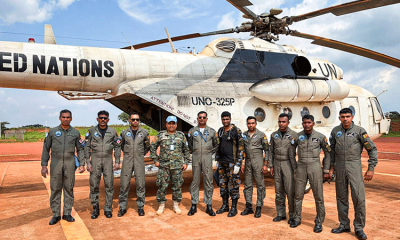
SLAF conducts successful rescue mission under UN command in Central African Republic
-

 News2 days ago
AI concerned over proposed SL military deployment in Haiti
-
 News5 days ago
UNEP support pledged to strengthen Sri Lanka’s Environmental Priorities
-

 Business5 days ago
‘Dialog Air Fibre powers a new era of Ultra Fast Home WiFi’
-

 Features3 days ago
The NPP’s New Challenge: Balancing Easter Lawfare and Economic Welfare