
Business
ADB-funded Thalaiyadi plant serves as blueprint for vulnerable dry zones in Sri Lanka

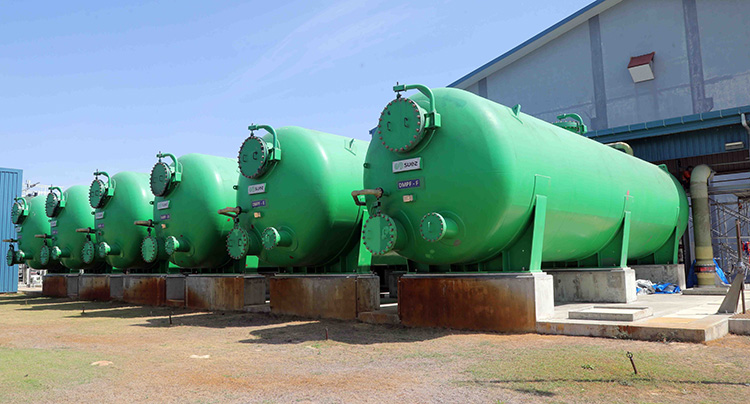
Sri Lanka should adopt a diversified water-security strategy, says chief engineer
By Sanath Nanayakkare
For generations, the Jaffna Peninsula has relied almost entirely on an underground freshwater lens. With no major perennial rivers to lean on, the region has long walked a tightrope between water scarcity, seasonal droughts, and a creeping groundwater salinity that has challenged communities across the North. Today, however, a monumental shift is underway along the windswept Vadamaradchi coast.
To understand how Sri Lanka is rewriting its water security playbook, one need only look to the Thalaiyadi Seawater Reverse Osmosis (SWRO) Plant.
V. Vijayakanth, Chief Engineer of the Jaffna Kilinochchi Water Supply and Sanitation Project (JKWSSP), recently explained the engineering marvels, environmental safeguards, and long-term vision driving this landmark infrastructure project.
“Building a multi-million-gallon desalination plant on an open, deep-sea coastline facing the Indian Ocean was no small feat,” he said.
Vijayakanth noted that the project required extensive marine, geotechnical, and ecological investigations before a single pipe was laid.
“The scale of the marine installation was striking: an intake and outfall system featuring roughly 1,300 metres of large-diameter pipeline, buried two metres beneath the seabed in water depths reaching up to 12 metres. Because ocean work is strictly dictated by nature, the team had to mobilise an excavator-mounted barge from India and execute a complex offshore operation within a very tight window before the onset of the monsoon.”
“One of the greatest historical hurdles of reverse osmosis technology has been its heavy appetite for electricity. To keep operational costs in check, the Thalaiyady plant integrates state-of-the-art isobaric pressure-exchanger energy recovery systems. These devices capture hydraulic energy from the high-pressure brine reject stream and transfer it directly back to the incoming seawater feed – recovering roughly 95% of available energy and slashing power requirements.”
“Environmental stewardship was equally central to the design. To prevent high-salinity discharge from harming the marine ecosystem, the plant utilizes an offshore outfall equipped with specialized diffusers positioned more than 500 metres from the shore. This ensures rapid mixing within a tightly monitored zone, safeguarding local marine life,” he said.
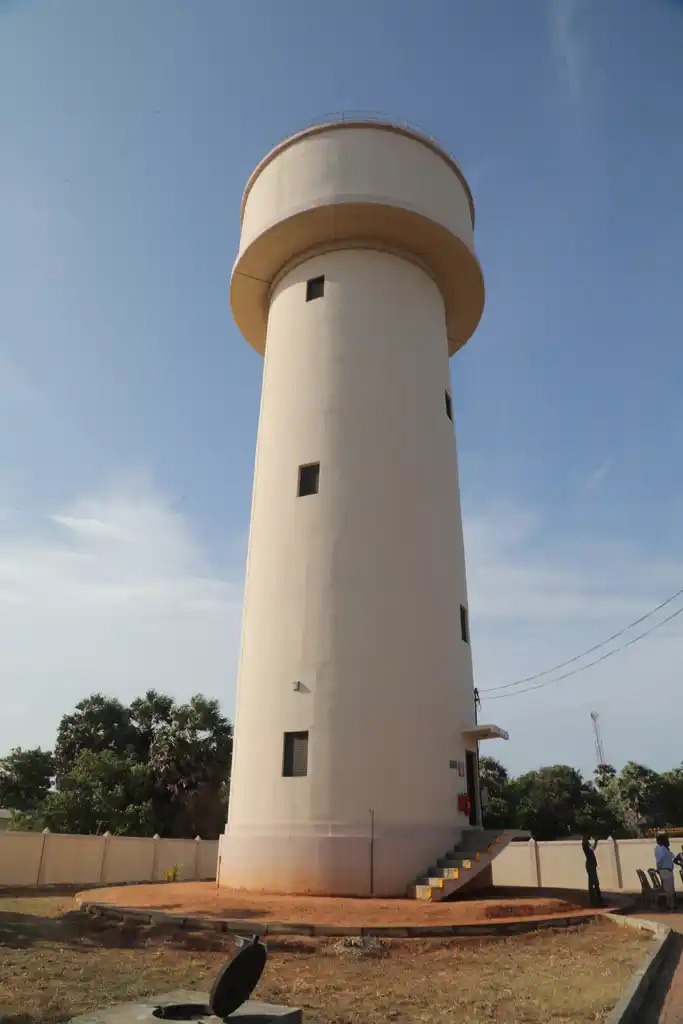
Karaveddi Water Supply Scheme
The impact of the plant is already tangible on the ground. Producing water that meets rigorous national quality standards (SLS 614:2013), the facility feeds into a vast transmission network linked to elevated service reservoirs. These tanks regulate hydraulic pressure across sprawling distribution routes, bringing relief to areas historically plagued by hard, brackish water.
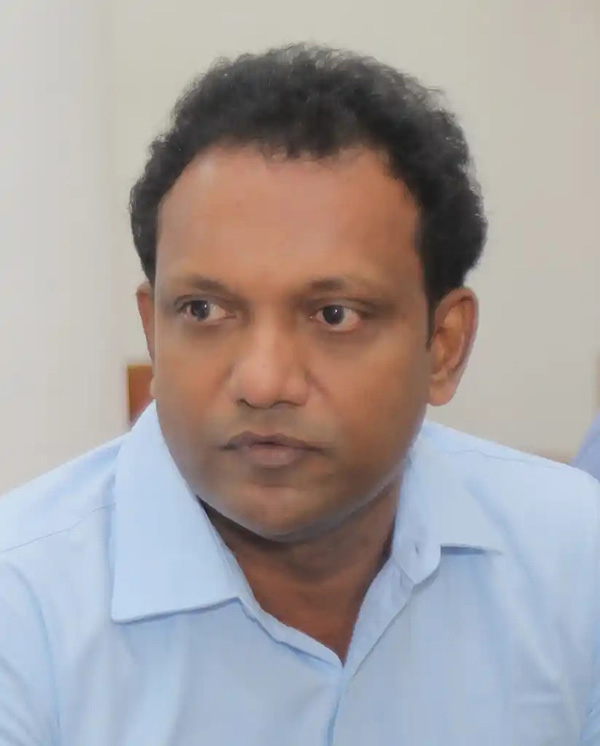
V. Vijayakanth, Chief Engineer of Jaffna Kilinochchi Water Supply and Sanitation Project (JKWSSP)
Currently, about 1,600 households in the Karaveddi Zone are actively connected to the desalinated supply, with water flowing across a regional network stretching from Kodikamam and Jaffna City down to distant island communities like Delft, Kayts and Punguduthivu.
The peninsula’s total daily drinking water demand hovers around 50,000 cubic metres for a population of roughly 600,000. Operating at full capacity, the Thalaiyadi plant yields 24,000 cubic metres per day – meeting nearly half of the region’s current needs.
Yet, planners are already looking decades ahead. Driven by economic development, tourism, and proposed industrial zones like Kankesanthurai, projected potable water requirements for domestic, commercial, and industrial needs are expected to climb from 95,000 cubic metres per day in 2025 to 135,000 by 2045, and 175,000 by 2065. Meeting this future trajectory will require a diversified national strategy combining desalination with surface-water preservation and rainwater harvesting.
When asked whether Sri Lanka should lean exclusively on seawater conversion amid intensifying climate volatility, Vijayakanth emphasised the need for a balanced approach: “Sri Lanka should adopt a diversified water-security strategy, prioritising sustainable surface-water development, groundwater protection, rainwater harvesting, water conservation, treated wastewater reuse and catchment protection. Desalination can complement these sources as a valuable climate-resilient and drought-proof option where appropriate.”
Backed by financial and technical collaboration from the Asian Development Bank (ADB), the project has given the National Water Supply and Drainage Board (NWSDB) invaluable expertise in advanced desalination management. Crucially, a two-year hands-on training program is ensuring that local technical staff master everything from membrane upkeep to preventive maintenance.
As climate variability accelerates, Thalaiyadi serves as a vital proof-of-concept. While energy-intensive desalination cannot replace conventional freshwater sources everywhere, Vijayakanth emphasises that it stands as an indispensable, drought-proof shield for Sri Lanka’s vulnerable dry zones – turning the ocean itself into a secure foundation for the nation’s future.


The Asian Development Bank (ADB) has approved a $100 million results-based loan to help Sri Lanka transform its technical and vocational education and training (TVET) system, equip more young people with industry-relevant skills, and strengthen the country’s competitiveness and inclusive growth.
The Skills Development System Transformation Program will support the Government of Sri Lanka’s efforts in improving the quality and relevance of skills training, strengthening links between training providers and industries, and expanding employment opportunities for youth. The program will increase women’s employment opportunities in nontraditional jobs in fields including automotive technology, engineering, information and communications technology, construction, and renewable energy.
“A skilled workforce is essential to Sri Lanka’s long-term economic transformation and competitiveness,” said ADB Country Director for Sri Lanka Shannon Cowlin. “This program will help create stronger pathways from education to employment by making training more responsive to industry needs, expanding opportunities for young people and women, and ensuring that graduates have the skills required by a modern and evolving economy.”
Though Sri Lanka’s economy is recovering, it faces skills shortages in priority sectors, high youth unemployment, and low female labor force participation. Many employers report difficulty finding workers with the skills needed in a changing economy.
Aligned with the Government of Sri Lanka’s Technical and Vocational Education and Training Sector Strategic Framework 2026–2035, the nationwide program will be implemented from 2027 to 2031 and is expected to directly benefit more than 100,000 young people through improved access to quality, employment-oriented training.
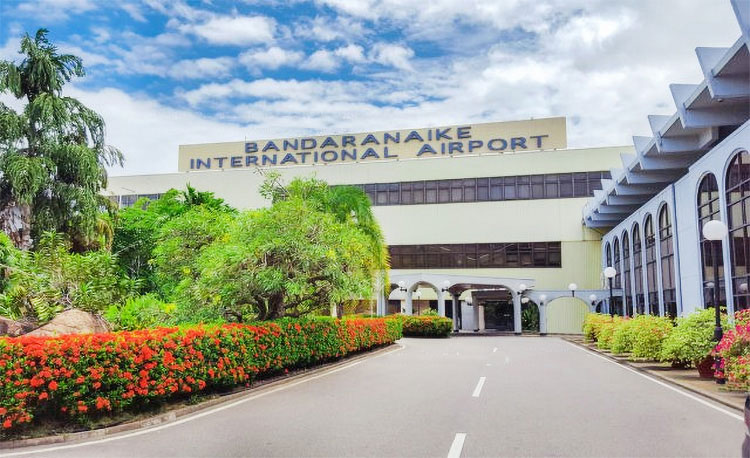
By Ifham Nizam
The government has cleared a USD 40.84 million and Rs. 8,548.75 million contract to build a dedicated aviation fuel pipeline from Muthurajawela to Bandaranaike International Airport (BIA), alongside a massive new fuel storage facility with a capacity of 92,000 cubic metres.
Energy Minister Anura Karunatilaka said the project represented a major investment in strengthening the infrastructure underpinning Sri Lanka’s aviation fuel supply and ensuring more reliable fuel availability at the country’s main international airport.
‘This project will provide the infrastructure required to strengthen the reliability and continuity of aviation fuel supplies to Bandaranaike International Airport, Karunatilaka said.
The contract has been awarded to China Petroleum Pipeline Engineering Company Limited, following an international competitive procurement process in which three bids were received.
The project will see a new aviation fuel storage tank complex constructed at Muthurajawela, together with the associated infrastructure required for handling and transferring aviation fuel.

By Hiran H Senewiratne
Trading activity on the Colombo Stock Exchange (CSE) gathered pace yesterday as global fuel prices began to show signs of easing, according to market analysts.In this context, both indices moved upwards. All Share Price Index up by 67.97 points while S and P SL20 up by 8.30 points.
Turnover stood at Rs 1.4 billion with seven crossings. Those crossings were reported in Sampath Bank 1.7 million shares crossed to the tune of Rs 238 million and its share price traded at Rs 140, Access Engineering two million shares crossed to the tune of Rs 159 million and its share price traded at Rs 79.50, LOLC one million shares crossed to the tune of Rs 129 million and its share price traded at Rs 129, HNB 100,000 shares crossed to the tune of Rs 38.4 million and its share price traded at Rs 384, JKH 1.9 million shares crossed to the tune of Rs 35 million and its share price traded at Rs 18.60, Hayleys 100,000 shares crossed to the tune of Rs 22.50 million and its share price traded at Rs 225 and Richard Pieris 847,000 shares crossed to the tune of Rs 22 million and its share price traded at Rs 25.50.
In the retail market top seven companies that have mainly contributed to the turnover were Sampath Bank Rs 114 million (813,000 shares traded), JKH Rs 100 million (5.3 million shares traded) LB Finance Rs 49 million (325,000 shares traded), HNB Finance Rs 30 million (27 million shares traded), HNB Rs 27 million (70000 shares traded), NTB Rs 25 million (82000 shares traded ) and Lanka IOC Rs 21 million (666,000 shares traded). During the day 65 million shares volumes changed hands in 10433 transactions.
The Banking and manufacturing sector counters performed well. In the banking sector Sampath Bank let the market while manufacturing sector especially JKH also significantly performed well. With the fuel revision Land IOC also a significant stock at the floor.
Meanwhile, First Capital Treasuries said that Ramesh Schaffter resigned as a Non-Independent Non-Executive Director with effect from October 1, to facilitate the restructuring of the company’s board.
Yesterday the Central Bank announced the US Dollar rate as against rupee. The rupee was quoted flat at Rs 330.65/80 to the US dollar in the spot market , while bond yields dropped, dealers said.

Showers or thundershowers will occur in most parts of the island after 1.00 p.m.

Unions resist tripartite EPF management plan

Two arrest warrants issued for Gnanasara thera

CA dismisses GR’s writ petition against arrest

ADB-backed virtual net metering project faces policy contradiction

Media action group flays NPP over new anti-terrorism law

‘Dates have the highest sugar content to fight Coronavirus’

Sunday Island 27 December – Headlines

#SundayIsland 17th December – Headlines

Sunday Island – 28th March

Sunday Island Headlines – 21 March

Sunday Island – 21st February – Headlines
-

 Editorial6 days ago
Birth of a bad law
-

 News4 days ago
Police remove Thileepan statue in Jaffna
-

 News6 days ago
TIN mandatory for key transactions from Nov. 1
-

 Features4 days ago
The 22nd Amendment, constitutional recovery and illiberal slippage
-

 Features4 days ago
Of foreigners as CEOs of Lankan ventures
-

 News4 days ago
Sajith rejects Jt. Opp. protest sabotage claim; SJB TU chief demands remedial action
-

 Latest News2 days ago
Gold winner Tharanga gets brand-new Honda Vezel from SLAAJ
-

 Features3 days ago
Thailand’s biggest new global star …