
Features
A Tribute to Sir Ivor Jennings

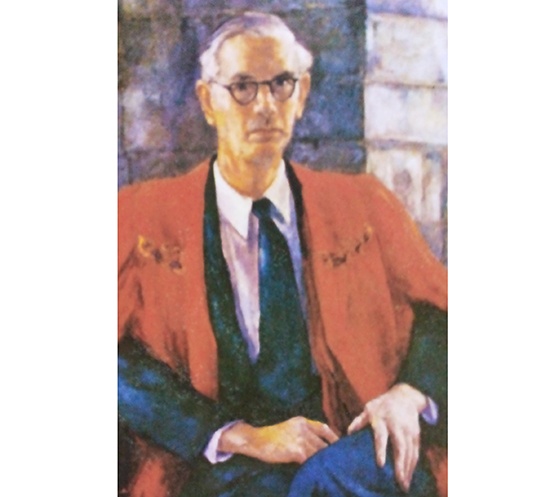
Continued from last Saturday
by Prof. K.N.O. Dharmadasa Efflorescence
Going back to the “cultural desert” remark, Goonetilleke records that Jennings thought of “Thurstan Road as an oasis” He was eagerly awaiting the transfer to Peradeniya where ” the desert would blossom like the rose” ( KR, Intro. Xxiii) .As we all know it did indeed. (Let us leave aside the “cultural desert” part.) . Being empowered to “develop” in a separate Faculty, Sinhalese, Tamil, Pali and Sanskrit studies expanded their academic vistas. I think the most momentous development was in the Department of Sinhalese. In Peradeniya, it had come under a new Professor and Head of Department, D.E.Hettiarachchi (B.A.;Ph.D. Lond; M.A.; Ph.D. Calcutta) The study of modern Sinhala literature was added to the curriculum of the Department enlisting the services of Ediriweera Sarachcnadra, a scholar who had been making pioneering studies on modern Sinhala literature, getting him transferred from the Department of Pali. This proved to be the most appropriate choice. For, Sarachchandra by his critical writings, not only guided the course of new developments in the art of the novel, short story and poetry, but also became “the father of modern Sinhala drama” in the years to come, producing the monumental ‘Maname’ in 1956. His research interests were wide and varied. In 1952 he brought out the book The Sinhalese Folk Play , described by the Times of London, Literary Supplement as ” the most interesting, indeed unique, account of the many phases of drama in Ceylon… is so wide in scope that it must surely interest all who wish to trace the development of dramatic forms” (Q. in J.B.Disanayaka, “Sarachchandra the trail-blazer”, The Birth Centenary of Sarachcandra, Ministry of Cultural Affairs, 2014)Apart from literature the Department expanded its academic concerns to various branches of Socio-cultural Studies as for example in the research done by M.B.Ariyapala and P.E.Fernando. In the ‘fifties young scholars were trained in various foreign universities in new areas of research : M.W. Sugathapala De Silva (structural linguistics) Hemapala Wijayawardhana (Sanskrit aesthetics) Ariya Rajakaruna (Theatre and Cinema).
Similar expansion of vistas was noted in the Department of Tamil as well. The first Professor of Tamil Swami Vipulananda had a very progressive outlook which set the tone for Tamil scholarship in Sri Lanka taking an independent course of development which was in marked contrast to the traditionalism which characterized Tamil studies in Tamilnadu. Vipulananda is on record as being the “first Tamil Professor to recognize the spoken Tamil dialects”( M.A.Nuhuman, “The University of Peradeniya and the Development of Tamil Literary Criticism” in R.A.L.H.Gunawardene ed,pp.185-98)Among the other academics, it is noted that venturing into newer fields of research had been inaugurated by K.Kanapathipillai who wrote his doctoral dissertation on the Tamil Inscriptions of Sri Lanka. In the late ‘forties and the fifties’ several others took his lead in pursuing linguistic studies. For example, A Velupillai who worked on Tamil Inscriptions, S.Thanajayarajasinham who studied the Tamil documents during the Dutch period and A.Shanmugadas who made a linguistic study of the Jaffna Tamil dialect. The more striking departure from the South Indian tradition was noted in the field of literary criticism. In South India, traditionalism was so strong in the academia that in the early days “modern literature and literary criticism were excluded from the curriculum in …the universities and Colleges.” (Nuhuman) In Sri Lanka, on the other hand, the study of modern literature was undertaken because of the progressive attitudes of the first Professor and his juniors, notably Dr. K.Kanapathipilla, who took the revolutionary step of writing plays in the colloquial dialect. The progressive Tamil academics in Sri Lanka forged ahead and it was later recognized that as far as in the field of literary criticism, Sri Lanka was ahead of Tamilnadu (Nuhuman, op. cit.).The outstanding scholar in the field of literary history and literary criticism in Tamil was V. Chelvanayagam who approached literature in a social, political and historical perspective. His pioneering studies had not been superseded. (Nuhuman, op.cit.)
In illustrating the great impetus received by the academic departments in the Oriental Studies during the early years of the Peradeniya period I have described only the case of the two modern languages, Sinhala and Tamil. Similar expansion in academic vistas could be seen in the case of the two classical language departments Pali and Sanskrit.
The point that has to be made is that these two national languages were able to expand their academic vistas because of the recognition they received in the University of Ceylon. The pre-eminent position enjoyed by the Humanities studies in the University of the 1950’ and “60’s is best summed up by the Geographer Prof. G.H.Pieris, “in the Faculties of Arts and Oriental Studies…academic disciplines concerned with historical,linguistic and aesthetic occupied centre stage while the so-called social sciences Economics, Sociology geography etc……maintaining a relatively low profile”( Pieris, op.cit.)
Historical Heritage
Talking of the country’s cultural heritage, Jennings in 1950, pays a tribute to the work done by Bell, Codrington John Still and Paranavitana ( RP , p168). He mentions that the University had taken the necessary steps to make that knowledge available to the undergraduates and graduates. But he saw that a lot more had to be done. With his vision for a University Museum where our history could be studied more intimately, he was hoping that the facility would eventually be provided in Peradeniya. He was engaged in a “battle” to get that established and the Archives (then in Nuwara Eliya) shifted there so that the whole complex would be a “convenient centre for research scholars” Ibid).We know that these things did not happen. But his vision for the study of our national heritage should be appreciated. Much more significant, as far as vision becoming reality is concerned, was Jenning’s proposal in the Senate that the University should undertake the job of writing “a comprehensive History of Ceylon”. (The Preface to pt. 1, vol.I by Sir Nicholas Attygalle, Chairman Editorial Board). People who have watched the progress of this massive project are aware of the trials and tribulations through which it went until it was completed in 1995. But what needs mention is that it was again Sir Ivor Jennings who took the initiative in launching the project.
We mentioned earlier about the Museum. It was in fact a museum cum art gallery he had in mind. Sir Ivor established The Arts Council of the university to sponsor artistic activities which he thought was an essential part of education, “the training of the emotions” as he saw it. One of the first acts of the Arts Council was an Exhibition of paintings by George Keyt, a denizen of Kandy who had achieved international fame. From the proceeds of the exhibition Sir Ivor bought the painting titled “The Offering” by Keyt which was to be the first item in a collection which would form the exhibits of the envisaged Art Gallery. Jennings is said to have established the “Peradeniya Fund” vested in the Vice Chancellor “intended to enhance the beauty of the University Park and its environs”.( H.A.I.G. , Intro. KR p.xiv) and he had hoped that contributions “would flow in like the Great Sandy River”. In 1953 its balance was Rs. 50 .”perhaps the author’s own initial contribution”. And in 1956 it stood at Rs. 146.49 and the university authorities decided to close down the Fund and remit the balance to the General Fund (Ibid.)In the last pages of his autobiography Jennings wrote about the various Endowments the University had received during the first eight years . He added in the end “the endowment nearest my heart , however, is the Peradeniya Fund which caused this book to be written”. The proceeds from the sale of the book, The Road to Peradeniya was to go to that fund. It was his hope that the proceeds of the Fund would enable the University not only to enhance the physical beauty of the University Park but also to purchase works of art to be exhibited in the Museum cum art gallery that was to come up. The following are the last words in the autobiography: “By writing this book I have made a small contribution. History will say that it was small indeed. But at least my name will appear among the thousands of benefactors listed in the Calendar of the year 2950” (RP, pp201 -2). There is no need to comment on the above facts.
Integrity
The education of the two daughters of the Jennings family, Claire and Shirley was disrupted due to the war and their father’s departure to Ceylon in 1941. When the family got together finally in Ceylon, Shirley was educated in South India and later in Melbourne in Australia where she married a lecturer in the university. Claire’s education was haphazard . She worked as a journalist in Colombo and in 1952, asked her father whether she could join the university of Ceylon. His immediate retort was” you are not intelligent enough.” When they went back to England, years later, Claire passed the necessary exams and entered the university of Cambridge, graduating six before her father passed away. This story communicated to Ian Goonatilleke by Claire appears in his introduction to RP (p.xiii).
In coming to the end of this tribute, I would like to quote Ian Goonatilleke again.
” The very title of his autobiography, the cast of its content and the fact that he made no attempt to extend its coverage into his later illustrious years may well be regarded as further pointers to his single-minded resolve to place Peradeniya on the academic map of the world- the shining peak he had set himself to scale” ( intro too KR, p.xxii)
To conclude,I would like to place on record the salutary steps taken by the present Vice Chancellor, Prof. Upul B. Dissanayake to erect a bronze statue of Sir Ivor Jennings in a prominent place on the campus. Future generations of university students who have never heard of this great academic will at least get a fleeting impression of him and hopefully be inspired to discover more about the founder Vice Chancellor of the university.



 ‘Adapt, shrink or die’ – thus runs the warning issued by the Trump administration to UN humanitarian agencies with brute insensitivity in the wake of its recent decision to drastically reduce to $2bn its humanitarian aid to the UN system. This is a substantial climb down from the $17bn the US usually provided to the UN for its humanitarian operations.
Considering that the US has hitherto been the UN’s biggest aid provider, it need hardly be said that the US decision would pose a daunting challenge to the UN’s humanitarian operations around the world. This would indeed mean that, among other things, people living in poverty and stifling material hardships, in particularly the Southern hemisphere, could dramatically increase. Coming on top of the US decision to bring to an end USAID operations, the poor of the world could be said to have been left to their devices as a consequence of these morally insensitive policy rethinks of the Trump administration.
Earlier, the UN had warned that it would be compelled to reduce its aid programs in the face of ‘the deepest funding cuts ever.’ In fact the UN is on record as requesting the world for $23bn for its 2026 aid operations.
If this UN appeal happens to go unheeded, the possibilities are that the UN would not be in a position to uphold the status it has hitherto held as the world’s foremost humanitarian aid provider. It would not be incorrect to state that a substantial part of the rationale for the UN’s existence could come in for questioning if its humanitarian identity is thus eroded.
Inherent in these developments is a challenge for those sections of the international community that wish to stand up and be counted as humanists and the ‘Conscience of the World.’ A responsibility is cast on them to not only keep the UN system going but to also ensure its increased efficiency as a humanitarian aid provider to particularly the poorest of the poor.
It is unfortunate that the US is increasingly opting for a position of international isolation. Such a policy position was adopted by it in the decades leading to World War Two and the consequences for the world as a result for this policy posture were most disquieting. For instance, it opened the door to the flourishing of dictatorial regimes in the West, such as that led by Adolph Hitler in Germany, which nearly paved the way for the subjugation of a good part of Europe by the Nazis.
If the US had not intervened militarily in the war on the side of the Allies, the West would have faced the distressing prospect of coming under the sway of the Nazis and as a result earned indefinite political and military repression. By entering World War Two the US helped to ward off these bleak outcomes and indeed helped the major democracies of Western Europe to hold their own and thrive against fascism and dictatorial rule.
Republican administrations in the US in particular have not proved the greatest defenders of democratic rule the world over, but by helping to keep the international power balance in favour of democracy and fundamental human rights they could keep under a tight leash fascism and linked anti-democratic forces even in contemporary times. Russia’s invasion and continued occupation of parts of Ukraine reminds us starkly that the democracy versus fascism battle is far from over.
Right now, the US needs to remain on the side of the rest of the West very firmly, lest fascism enjoys another unfettered lease of life through the absence of countervailing and substantial military and political power.
However, by reducing its financial support for the UN and backing away from sustaining its humanitarian programs the world over the US could be laying the ground work for an aggravation of poverty in the South in particular and its accompaniments, such as, political repression, runaway social discontent and anarchy.
What should not go unnoticed by the US is the fact that peace and social stability in the South and the flourishing of the same conditions in the global North are symbiotically linked, although not so apparent at first blush. For instance, if illegal migration from the South to the US is a major problem for the US today, it is because poor countries are not receiving development assistance from the UN system to the required degree. Such deprivation on the part of the South leads to aggravating social discontent in the latter and consequences such as illegal migratory movements from South to North.
Accordingly, it will be in the North’s best interests to ensure that the South is not deprived of sustained development assistance since the latter is an essential condition for social contentment and stable governance, which factors in turn would guard against the emergence of phenomena such as illegal migration.
Meanwhile, democratic sections of the rest of the world in particular need to consider it a matter of conscience to ensure the sustenance and flourishing of the UN system. To be sure, the UN system is considerably flawed but at present it could be called the most equitable and fair among international development organizations and the most far-flung one. Without it world poverty would have proved unmanageable along with the ills that come along with it.
Dehumanizing poverty is an indictment on humanity. It stands to reason that the world community should rally round the UN and ensure its survival lest the abomination which is poverty flourishes. In this undertaking the world needs to stand united. Ambiguities on this score could be self-defeating for the world community.
For example, all groupings of countries that could demonstrate economic muscle need to figure prominently in this initiative. One such grouping is BRICS. Inasmuch as the US and the West should shrug aside Realpolitik considerations in this enterprise, the same goes for organizations such as BRICS.
The arrival at the above international consensus would be greatly facilitated by stepped up dialogue among states on the continued importance of the UN system. Fresh efforts to speed-up UN reform would prove major catalysts in bringing about these positive changes as well. Also requiring to be shunned is the blind pursuit of narrow national interests.

 Hi! Great to be back after my Christmas break.
Thought of starting this week with egg white.
Yes, eggs are brimming with nutrients beneficial for your overall health and wellness, but did you know that eggs, especially the whites, are excellent for your complexion?
OK, if you have no idea about how to use egg whites for your face, read on.
Egg White, Lemon, Honey:
Separate the yolk from the egg white and add about a teaspoon of freshly squeezed lemon juice and about one and a half teaspoons of organic honey. Whisk all the ingredients together until they are mixed well.
Apply this mixture to your face and allow it to rest for about 15 minutes before cleansing your face with a gentle face wash.
Don’t forget to apply your favourite moisturiser, after using this face mask, to help seal in all the goodness.
Egg White, Avocado:
In a clean mixing bowl, start by mashing the avocado, until it turns into a soft, lump-free paste, and then add the whites of one egg, a teaspoon of yoghurt and mix everything together until it looks like a creamy paste.
Apply this mixture all over your face and neck area, and leave it on for about 20 to 30 minutes before washing it off with cold water and a gentle face wash.
Egg White, Cucumber, Yoghurt:
In a bowl, add one egg white, one teaspoon each of yoghurt, fresh cucumber juice and organic honey. Mix all the ingredients together until it forms a thick paste.
Apply this paste all over your face and neck area and leave it on for at least 20 minutes and then gently rinse off this face mask with lukewarm water and immediately follow it up with a gentle and nourishing moisturiser.
Egg White, Aloe Vera, Castor Oil:
To the egg white, add about a teaspoon each of aloe vera gel and castor oil and then mix all the ingredients together and apply it all over your face and neck area in a thin, even layer.
Leave it on for about 20 minutes and wash it off with a gentle face wash and some cold water. Follow it up with your favourite moisturiser.

 Superlatives galore were used, especially on social media, to highlight R&B singer Ne-Yo’s trip to Sri Lanka: Global superstar Ne-Yo to perform live in Colombo this December; Ne-Yo concert puts Sri Lanka back on the global entertainment map; A global music sensation is coming to Sri Lanka … and there were lots more!
At an official press conference, held at a five-star venue, in Colombo, it was indicated that the gathering marked a defining moment for Sri Lanka’s entertainment industry as international R&B powerhouse and three-time Grammy Award winner Ne-Yo prepares to take the stage in Colombo this December.
What’s more, the occasion was graced by the presence of Sunil Kumara Gamage, Minister of Sports & Youth Affairs of Sri Lanka, and Professor Ruwan Ranasinghe, Deputy Minister of Tourism, alongside distinguished dignitaries, sponsors, and members of the media.
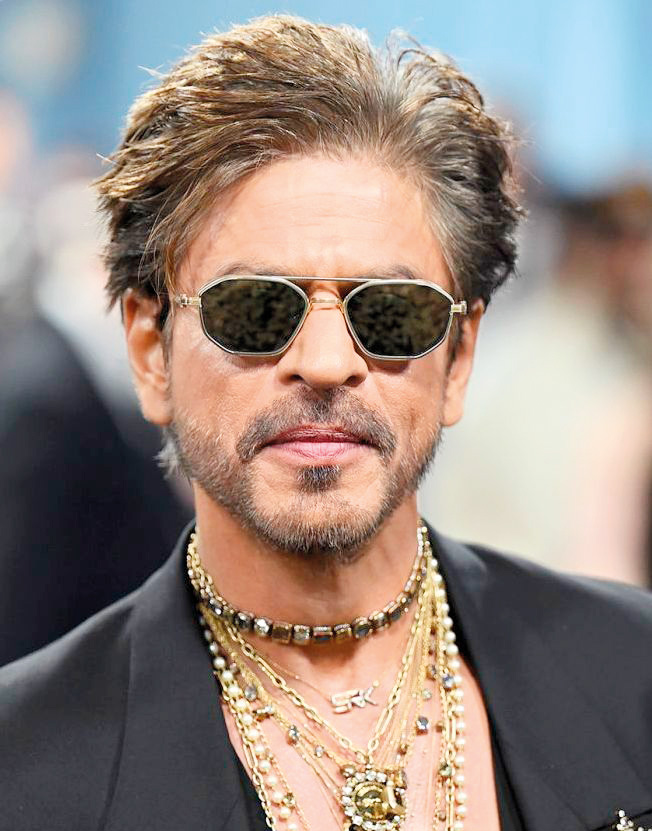
Shah Rukh Khan: Disappointed his fans in Sri Lanka
According to reports, the concert had received the official endorsement of the Sri Lanka Tourism Promotion Bureau, recognising it as a flagship initiative in developing the country’s concert economy by attracting fans, and media, from all over South Asia.
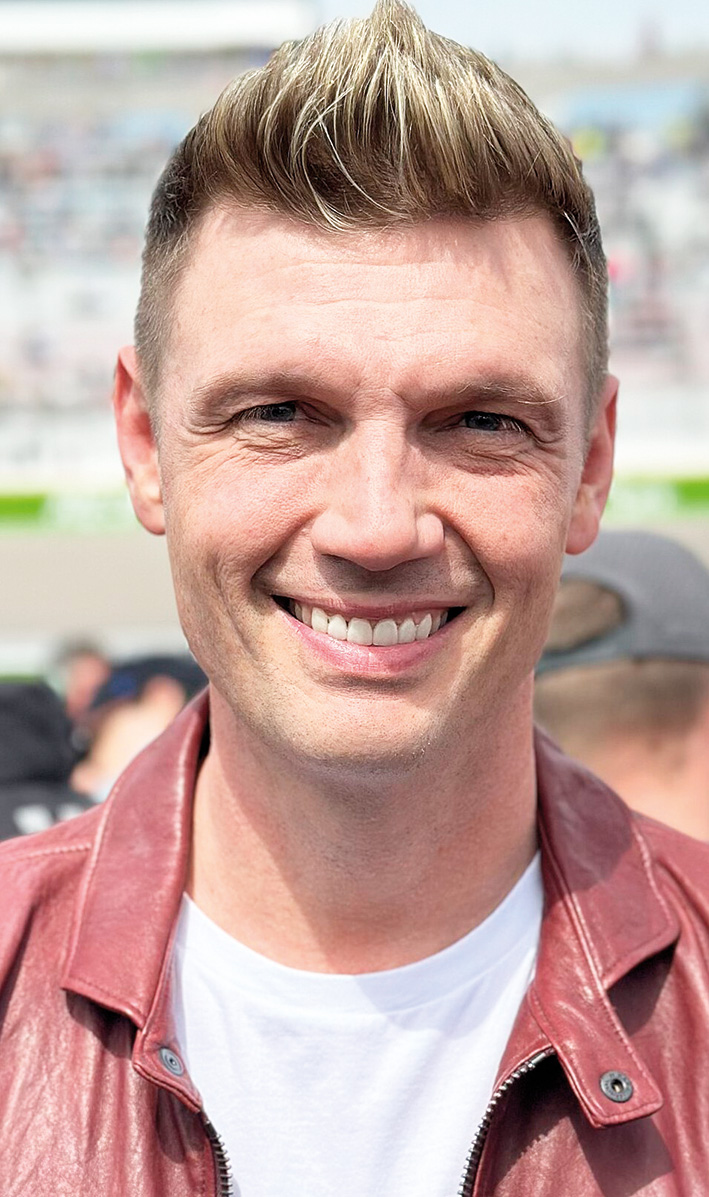
Nick Carter: His concert, too, was cancelled due to “Unforeseen circumstances
However, I had that strange feeling that this concert would not become a reality, keeping in mind what happened to Nick Carter’s Colombo concert – cancelled at the very last moment.
Carter issued a video message announcing he had to return to the USA due to “unforeseen circumstances” and a “family emergency”.
Though “unforeseen circumstances” was the official reason provided by Carter and the local organisers, there was speculation that low ticket sales may also have been a factor in the cancellation.
Well, “Unforeseen Circumstances” has cropped up again!
In a brief statement, via social media, the organisers of the Ne-Yo concert said the decision was taken due to “unforeseen circumstances and factors beyond their control.”
Ne-Yo, too, subsequently made an announcement, citing “Unforeseen circumstances.”
The public has a right to know what these “unforeseen circumstances” are, and who is to be blamed – the organisers or Ne-Yo!
Ne-Yo’s management certainly need to come out with the truth.
However, those who are aware of some of the happenings in the setup here put it down to poor ticket sales, mentioning that the tickets for the concert, and a meet-and-greet event, were exorbitantly high, considering that Ne-Yo is not a current mega star.
We also had a cancellation coming our way from Shah Rukh Khan, who was scheduled to visit Sri Lanka for the City of Dreams resort launch, and then this was received: “Unfortunately due to unforeseen personal reasons beyond his control, Mr. Khan is no longer able to attend.”
Referring to this kind of mess up, a leading showbiz personality said that it will only make people reluctant to buy their tickets, online.
“Tickets will go mostly at the gate and it will be very bad for the industry,” he added.

Zohran Mamdani sworn in as New York City mayor

In pictures: New Year welcomed around the world

Foreign warships commended for their assistance during weather disaster in Sri Lanka

Machu Picchu train crash leaves one dead and dozens injured

I invite you to step into 2026 with renewed energy, hope, and determination – PM

Fairly heavy showers about 75 mm are likely at some places in the Central and Uva provinces and in Batticaloa and Ampara districts

‘Dates have the highest sugar content to fight Coronavirus’

Sunday Island 27 December – Headlines

#SundayIsland 17th December – Headlines

Sunday Island – 28th March

Sunday Island Headlines – 21 March

Sunday Island – 21st February – Headlines
-
 News7 days ago
Street vendors banned from Kandy City
-

 Sports4 days ago
Gurusinha’s Boxing Day hundred celebrated in Melbourne
-

 News7 days ago
Lankan aircrew fly daring UN Medevac in hostile conditions in Africa
-
 News2 days ago
Leading the Nation’s Connectivity Recovery Amid Unprecedented Challenges
-

 Sports5 days ago
Time to close the Dickwella chapter
-

 Features3 days ago
It’s all over for Maxi Rozairo
-

 Features7 days ago
Rethinking post-disaster urban planning: Lessons from Peradeniya
-

 Opinion7 days ago
Are we reading the sky wrong?