
News
A sizable Viyathmaga group enters parliament; Yuthukama receives two slots

By Shamindra Ferdinando
Civil society organisation Viyathmaga has emerged as an influential group within the SLPP (Sri Lanka Podujana Peramuna) parliamentary group with eight out of nine contestants gaining entry into parliament at the just concluded general election.
The SLPP won 145 seats, including 17 National List slots. The parliament comprises 196 elected and 29 appointed members.
Of the winners, retired Rear Admiral Sarath Weerasekera (328,092) and Dr. Nalaka Godahewa (325,479) polled the highest preferential votes in Colombo and Gampaha electoral districts, respectively.
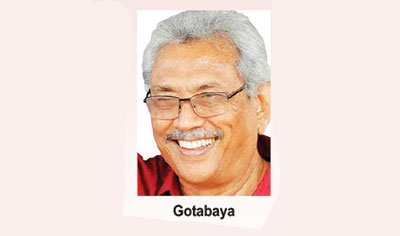
President Gotabaya Rajapaksa fielded the group on the SLPP ticket whereas former Central Bank Governor Ajith Nivard Cabraal and Dr. Seetha Arambepola were accommodated on the National List.
Of the successful Viyathmaga members, only Weerasekera has represented the parliament before having served the Navy for over three decades. Weerasekera represented Digamadulla electorate during Mahinda Rajapaksa’s second tenure (2010-2015) as the President.
Viyathmaga nominees Prof. Channa Jayasumana (Anuradhapura/133,980), Gunapala Ratnasekera (Kurunegala/141,991), Nalaka Kottegoda (Matale/71,404), Tilak Rajapaksha (Digamadulla/54,203), Dr. Upul Galappatti (Hambantota/63,369), and Udayana Kirindigoda (Mahanuwara/39,904) entered Parliament at the expense of those who represented the last parliament on the UPFA ticket.
A second Viyathmaga nominee Businessman Anura Fernando who nursed Colombo (north) electorate failed to get returned.
At the onset of Gotabaya Rajapaksa’s entry into active politics, the wartime Defence Secretary launched Viyathmaga in early 2016 to take his message to the masses. Viyathmaga was followed by second civil society group Eliya that focused on countering moves to introduce a new Constitution at the expense of the country’s unitary status.
In the run-up to the Aug 5 election, Rear Admiral Weerasekera told The Island that he had moved from Digamadulla to Colombo at the behest of President Gotabaya Rajapaksa. Weerasekera said that having successfully contested Digamadulla at the 2010 general election he felt comfortable with joining the fray there in spite of being unsuccessful at the 2015 parliamentary election.
Weerasekera said that there hadn’t been a previous instance of a President fielding a team of his own for parliamentary election since the introduction of the proportional representation system.
Dr. Arambepola quit the post as the Governor of the Western Province to join the SLPP National List.
The emergence of the Viyathmaga as a political entity at the 2020 general election was a significant development that would shape the political landscape and give President Gotabaya Rajapaksa strength, Dr. Godahewa said during his campaign.
Dr. Godahewa, who had held several important public sector appointments, including SEC Chairman, pushed SLPP Gampaha District leader Prasanna Ranatunga to the second place by topping the preferential vote count there, whereas Weerasekara polled more than National Freedom Front (NFF) leader Wimal Weerawansa, the second highest recipient of the Colombo vote.
Prof. Channa Jayasumana came second in the Anuradhapura District. Six others were elected on the SLPP ticket.
Speculation is rife that the Viyathmaga will be represented in the Cabinet. In terms of the 19th Amendment to the Constitution, the Cabinet has to be restricted to 30 members.
Parliament is scheduled to meet on Aug 20.
Political sources told The Island that the emergence of Viyathmaga contestants as President Gotabaya Rajapaksa’s nominees caused issues in some districts though the ruling party managed to prevent untoward incidents.
Viyathmaga sources said that though SLPP National List nominees Ali Sabri and Charitha Herath hadn’t been named as Viyathmaga members; they earnestly backed the project. Sources added that Viyathmaga campaign had got underway even before SLPP secured Election Commission recognition on Nov 1, 2016 as a political party.
In addition to Viyathmaga, President Gotabaya Rajapaksa paved the way for Yuthukama to field Anupa Pasqual on the SLPP Kalutara District list. Pasqual polled 97,777 preferential votes to be sixth out of eight elected from the Kalutara District by the SLPP. Yuthukama leader Gevindu Cumaratunga, who campaigned for the change of UNP-led government since 2015, has also received an SLPP National List slot.
Both Viyathmaga and Yuthukama campaigned for Gotabaya Rajapaksa at the 2019 presidential election.
The Samagi Jana Balavegaya, the UNP and the JVP-led Jathika Jana Balavegaya (JJB), too, accommodated half a dozen civil society activists in their National Lists. Among them were former National List MP Saman Ratnapriya Silva (UNP), attorney-at-law Lal Wijenayake (JJB), Dr. Harini Amarasuriya (JJB), Maheem Pradeep Mendis (SJB), Shiral Lakthilake (SJB), Chamira Perera (SJB) and Anuruddha Pradeep Karnasuriya (SJB).

Latest News
Heat index likely to increase up to ‘Caution level’ at some places in the Northern, North-central, North-western, Western, Sabaragamuwa, Southern and Eastern provinces and Monaragala district


Warm Weather Advisory
Issued by the Natural Hazards Early Warning Centre at 3.30 p.m. on 11 April 2026, valid for 12 April 2026
The Heat index, the temperature felt on the human body is likely to increase up to ‘Caution level’ at some places in the Northern, North-central, North-western, Western, Sabaragamuwa, Southern and Eastern provinces and Monaragala district.
The Heat Index Forecast is calculated by using relative humidity and maximum temperature and this is the condition that is felt on your body. This is not the forecast of maximum temperature. It is generated by the Department of Meteorology for the next day period and prepared by using global numerical weather prediction model data.

Effect of the heat index on human body is mentioned in the above table and it is prepared on the advice of the Ministry of Health and Indigenous Medical Services.
ACTION REQUIRED
Job sites: Stay hydrated and takes breaks in the shade as often as possible.
Indoors: Check up on the elderly and the sick.
Vehicles: Never leave children unattended.
Outdoors: Limit strenuous outdoor activities, find shade and stay hydrated.
Dress: Wear lightweight and white or light-colored clothing.
Note: In addition, please refer to advisories issued by the Disaster Preparedness & Response Division, Ministry of Health in this regard as well. For further clarifications please contact 011-7446491.
Latest News
Sun directly overhead Cheddikulam, Kebithigollewa, Gomarankadawala and Nilaveli about 12:11 noon. today [12]

On the apparent northward relative motion of the sun, it is going to be directly over the latitudes of Sri Lanka from 05th to 15th of April in this year.
The nearest areas of Sri Lanka over which the sun is overhead today (12th) are Cheddikulam, Kebithigollewa, Gomarankadawala and Nilaveli about 12:11 noon.


The Ceylon Electricity Board (CEB) has directed owners of large-scale rooftop solar systems to temporarily disconnect their installations for a 10-day period beginning from Friday (April 10), citing growing concerns over grid stability amid low electricity demand and high solar generation.
The directive applies to rooftop solar systems exceeding 300 kW capacity, which are required to remain switched off until April 20. The move coincides with the extended holiday season, during which national electricity demand typically declines, alongside prevailing sunny weather conditions that significantly increase solar output.
Senior electrical engineers told The Island that the decision, though exceptional, was necessitated by operational risks posed to the national grid.
“We are seeing a pronounced imbalance between supply and demand,” a senior CEB system control engineer said. “With industries and commercial establishments operating at reduced levels during the holidays, demand drops. At the same time, solar generation remains high, creating excess power that the grid struggles to absorb.”
He explained that such imbalances could lead to fluctuations in system frequency, potentially threatening the stability of the grid. “If generation exceeds demand, frequency rises beyond acceptable limits.
This can trigger automatic protection mechanisms or, in extreme cases, lead to partial outages.”Another senior engineer attached to the transmission division noted that managing distributed solar generation remains a technical challenge.
“Unlike conventional power plants, rooftop solar systems are not centrally dispatchable. We cannot directly control their output in real time. This limits our ability to balance the system during periods of excess generation,” he said.
He added that the country’s grid infrastructure is still adapting to the rapid growth of renewable energy. “We lack sufficient large-scale battery storage and advanced grid management systems to effectively handle these fluctuations. Until such capabilities are enhanced, temporary curtailment becomes necessary.”
Engineers also pointed out that conventional thermal plants cannot be abruptly shut down or adjusted to compensate for sudden surges in solar generation.
“These plants require minimum stable operating levels. When solar floods the grid during low demand, it creates operational constraints that are not easy to manage,” one official said.
The CEB, in its statement, expressed appreciation for the cooperation of solar system owners affected by the measure, stressing that it is a short-term intervention aimed at ensuring uninterrupted and stable electricity supply across the country.
Energy experts say the development underscores the urgent need for grid modernization, including investment in battery energy storage systems, smart grid technologies, and improved demand-side management.
“This is part of the transition challenge,” an independent analyst noted. “As solar penetration increases, the grid must evolve to become more flexible. Otherwise, curtailment will remain a recurring necessity.”
Despite the temporary shutdown, CEB engineers reaffirmed their commitment to expanding renewable energy.
“Solar power is a key pillar of Sri Lanka’s future energy mix,” a senior engineer said. “But integration must be carefully managed. Grid stability cannot be compromised.”
The temporary disconnection order, which took effect yesterday, marks a critical moment in Sri Lanka’s energy transition—highlighting both the progress made in renewable energy adoption and the technical hurdles that remain.
By Ifham Nizam

Arya, Prabhsimran and Shreyas help Punjab Kings ace another 200-plus chase

Beauty of Sri Lanka in focus: Global showcase blends art, diplomacy and conservation

Showers expected in the Western, Sabaragamuwa, Central, Southern, North-western and Uva provinces and in Ampara, Batticaloa and Polonnaruwa districts after 1.00 p.m.

Heat index likely to increase up to ‘Caution level’ at some places in the Northern, North-central, North-western, Western, Sabaragamuwa, Southern and Eastern provinces and Monaragala district

Sun directly overhead Cheddikulam, Kebithigollewa, Gomarankadawala and Nilaveli about 12:11 noon. today [12]

Peru holds presidential election amid decade of political tumult

‘Dates have the highest sugar content to fight Coronavirus’

Sunday Island 27 December – Headlines

#SundayIsland 17th December – Headlines

Sunday Island – 28th March

Sunday Island Headlines – 21 March

Sunday Island – 21st February – Headlines
-

 News5 days ago
Lankan-origin actress Subashini found dead in India
-

 News3 days ago
AG: Coal procurement full of irregularities
-

 Business2 days ago
Israeli attack on Lebanon triggers local stock market volatility
-

 Business3 days ago
Hayleys Mobility introduces Premium OMODA C9 PHEV
-

 Business2 days ago
HNB Assurance marks 25 years with strategic transformation to ‘HNB Life’
-

 Sports3 days ago
DS to face St. Anthony’s in ‘Bridges of Brotherhood’ cricket encounter
-

 News5 days ago
UN Regional Director launches SL’s first Country Gender Equality Profile during official visit
-
 News4 days ago
AKD admits import of substandard coal, blames technicalities and supplier