
Sports
A Request to Chairman of National Sports Council


A Request to Chairman of National Sports Council Mr. Mahela Jayawardene, and to its members, especially Mr. Kumar Sangakkara.
Nagalingam Ethirveerasingam. Ph.D. (Cornell)
Olympian 1952 and 1956.
Gold Medalist 1958 Asian Games, Tokyo.
My appreciation to Mr. Sangakkara for addressing, in his interview with Rex Clementine in the Island newspaper of August 22, 2020, the need to update the Sports Law of 1973 and its subsequent amendments. Though there are many sections that needed to be updated, I would like to specifically address two that need to be included or updated. I am making my observations and recommendation to improve the sports associations’ noble efforts in the spirit of the Olympic Games and not as a criticism.
They are:
1. Specify new requirements for registration of any Olympic Sport to be formed as a National Sports Association in addition to the current requirement.
2. Specify new requirements for any National Sports Association that wants to be affiliated to the corresponding International Association and the National Olympic Committee (NOC), in addition to the current requirement.
There are, as of end of 2019, thirteen (13) Olympic Sports Associations or Federations affiliated to the NOC Sri Lanka. Out of them Cricket, Athletics, Soccer, Volleyball, Basketball have functioning District Associations in all, or a majority, of the 25 Districts in Sri Lanka. The other registered National Sports Associations affiliated to the NOC are not as well registered in Districts across the country. This assessment is by personal observation. None of the associations have indicated in their websites the number of District Associations, their membership, or whether the District associations are represented in their Council. Such information should be published.
The rational for my suggestion of item 1 and 2 is based on the Spirit of the Olympic Games and Olympism, Vision and Mission that were adopted by the NOC SL (See Constitution of NOC SL adopted 04-01-2018)
“Olympism is a philosophy of life which places sport at the service of humanity. This philosophy is based on the interaction of the qualities of the body, will and mind. Olympism is expressed through actions which link sport to culture and education.”
Vision
Contribute to the building of a peaceful and better world by educating youth through sport practices without discrimination of any form whatsoever and in the Olympic spirit, which requires mutual understanding with a spirit of friendship, solidarity and fair play.
Mission
Develop, promote and protect the Olympic movement in Sri Lanka, in accordance with the Olympic Charter”. “Also committed to propagate Sports in Sri Lanka and thereby to achieve unity and brotherhood among the different communities living in Sri Lanka and to promote sportsmanship and healthy competition in the World Sports Arena.
Except for the Associations or Federations mentioned above none of the others are abiding by the spirit of Olympism or the NOC’s Vision and Mission. In most of such associations they do not abide by their Mission, Vision and Aim as stated in their websites.
The rationale for Items 1 and 2 above is based on observation of the activities of the National Sports Associations. For example, Soccer, Cricket, Athletics have functioning District Associations and have also spread their sport activities to most schools in almost all of the 25 Districts in Sri Lanka.
Many of the National Associations that are affiliated currently as members of the National Olympic Committee are not active in more than 3 – 5 Districts. Examples are Tennis, Golf, Archery, Rowing, Aquatic Sports, Yacht Association of Sri Lanka (YASL). Such organisations however represent Sri Lanka, at the expense of funds allocated by the Sports Ministry, because of their affiliation to the NOC and International Associations of their respective sports.
International Associations, except the ICC, do not have or have not published established criteria of representation a country should require to represent and to be affiliated to the International Association beyond the legal requirement to register an organisation within a country. It is therefore important for the Sports Law to address the issue. National Sports Council can examine the problem and make amendments to the Sports Law to ensure that the National Sports Associations and Federations adhere to Olympism and the Vision and Mission of the NOC. The NOC Constitution has provisions to consider and make amendments in its Annual General Assembly.
It is important to require all of the NOC affiliates to establish District Associations to increase the pool of events Participants and Officials in their sport. Such a spread will improve performance and number of performers in their sports in local and international competitions. Such a spread will also give the youths in all of Sri Lanka equal opportunities to achieve their potential.
National Sports Associations and Federations may not have the financial resources to establish District Associations in all 25 Districts. To start with the Sports Ministry and the Mercantile sector can help Olympic Sports Associations in at least 13 Districts first and then increase to at least one each year.
An Association of any sport should not be accredited as a National Sports Association for membership in its corresponding International Association if it cannot give a chance to citizens in all or at least most of the Districts in Sri Lanka to be selected for a National Team.




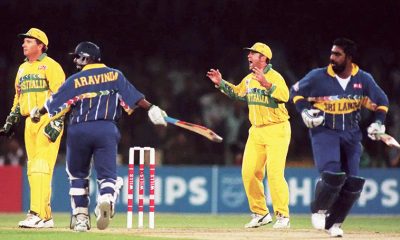


The autobiography of Mr. Ranjit Fernando, launched last month, offers a fascinating peek behind the curtain into how a clutch of Sri Lanka’s finest cricketers were groomed in their formative years. Mr. Fernando was in charge when the Sri Lanka Under-19 side toured Australia in 1984 under the captaincy of Aravinda de Silva, a team that read like a who’s who of future stars, featuring Roshan Mahanama, Asanka Gurusinha and Jerome Jayaratne among others. The Aussies had Mark Taylor, the Waugh brothers and Craig McDermott.
As Mr. Fernando kept a watchful eye on his young charges, there was mischief brewing beneath the surface. At the book launch at the Galle Face Hotel, Aravinda let the cat out of the bag. Gurusinha, it turns out, had masterminded a daring escape plan, players sneaking out through the hotel window, climbing onto the roof and sliding down a pole to freedom to enjoy the night life in Brisbane..
Mr. Fernando, ever the hawk-eyed disciplinarian, caught wind of the escapade. Yet in a twist that raised a few eyebrows, it was Gurusinha who was handed the captaincy for the next Under-19 tour to England. Some insist Fernando had missed the mischief; others, who know him better, reckon he was playing a long game, setting a thief to catch thieves, backing a natural leader who could keep the dressing room in check.
Fast forward to 1996 and Gurusinha found himself cast in a very different role on cricket’s biggest stage. During Sri Lanka’s victorious World Cup campaign, he was often seen as the quiet man at the crease, a grafter in a team of dashers. To the untrained eye, his batting seemed workmanlike, even pedestrian. Fans, spoilt for choice with the pyrotechnics of Sanath Jayasuriya, Romesh Kaluwitharana and Aravinda de Silva, wanted fireworks, not forward defence. In a line-up full of strokemakers, many wondered what Gurusinha brought to the table.
Gura was no mug with the bat. He could clear the ropes and put bowlers to the sword when the situation demanded. But in that 1996 campaign, every cog in the wheel had a purpose. His job was to drop anchor, bat time and allow the strokemakers to play with freedom around him. It was a role that demanded discipline, selflessness and a thick skin, especially when the crowd was baying for boundaries.
While others were flaying attacks and ending the careers of bowlers like Manoj Prabhakar and Richard Illingworth, Gura was content to rotate the strike, even if it meant playing second fiddle. The fans, unaware of the team’s blueprint, were not always appreciative. Their impatience did not go unnoticed.
At one point, a frustrated Gurusinha had had enough. He approached captain Arjuna Ranatunga and Manager Duleep Mendis, keen to throw off the shackles and play his natural game. But the think tank stood firm, urging him to see the bigger picture, to play for the team, not the gallery. Gurusinha bought in, rolled up his sleeves and stuck to the script. The rest, as they say, is history.
As Sri Lanka marked the 30th anniversary of that famous triumph this week, Gurusinha reflected on the campaign in an interview with the Australian Broadcasting Corporation, offering fresh insight into the tactical nous that underpinned their success.
Sri Lanka’s batting line-up featured four left-handers in the top seven, no accident, but a calculated move. The plan was clear: take on Shane Warne, Australia’s trump card and knock him off his rhythm.
The Australians had a well-worn blueprint, build pressure through dot balls, squeeze the scoring and force batters into mistakes. Sri Lanka were determined not to fall into that trap. At that stage of his career, Warne was still developing his armoury and did not possess a reliable wrong’un to trouble left-handers.
When Jayasuriya fell early in the final, the baton passed to Gurusinha. True to plan, he stepped up, using his feet, unsettling Warne and disrupting Australia’s chokehold. It was a knock that didn’t grab headlines but played a crucial hand in tilting the contest Sri Lanka’s way.
For many, the World Cup win was life-changing; lucrative contracts for players, solid match fees and financial security followed. But Gurusinha’s story took a different turn. He walked away from the game the very same year, at just 29, missing out on the financial rewards that came in the aftermath.
Cricket, however, remembers more than just numbers and pay cheques. It remembers moments, roles played under pressure and men who put the team before self.In that sense, Asanka Gurusinha remains what every great side needs but few celebrate, the glue that held it all together. An unsung hero, in every sense of the word.
by Rex Clementine
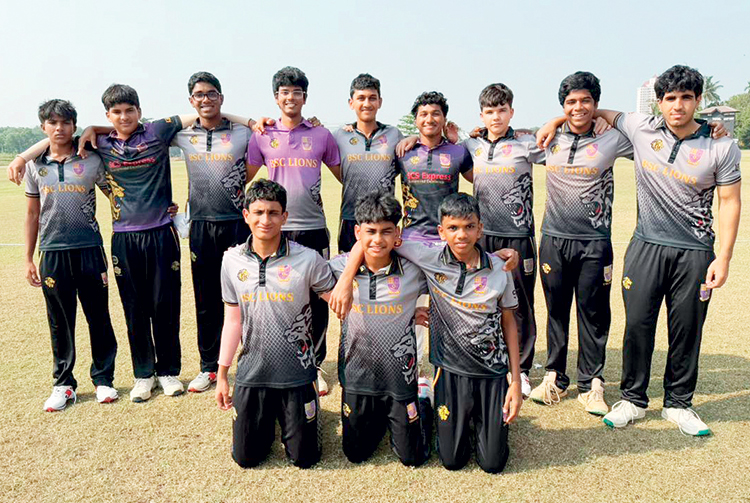
The British School in Colombo will look to retain the Hasan Sohail Memorial Trophy when they take on traditional rivals Colombo International School (CIS) in their annual limited overs cricket encounter on Sunday at the Sri Lanka Land Development Corporation Grounds in Nawala.
The British School in Colombo are the current holders of the Hasan Sohail Memorial Trophy after they edged out CIS by one run in a thrilling match played last year at the same venue.
On that occasion the British School in Colombo piled up 183 for three in 25 overs after they were invited to bat first and then restricted their opponents to 182 for four in 25 overs.
This rivalry between the British School in Colombo and CIS began in 2023 with a Twenty20 match, where CIS claimed victory at the same venue. However, the 2024 encounter was washed out due to bad weather.
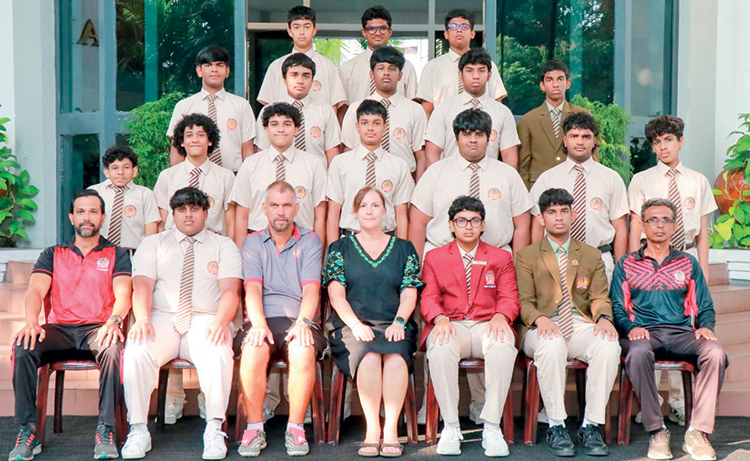
Colombo International School Cricket Squad
Lesith Semika will lead the CIS team while Thisath Ganegoda will captain the British School in Colombo.
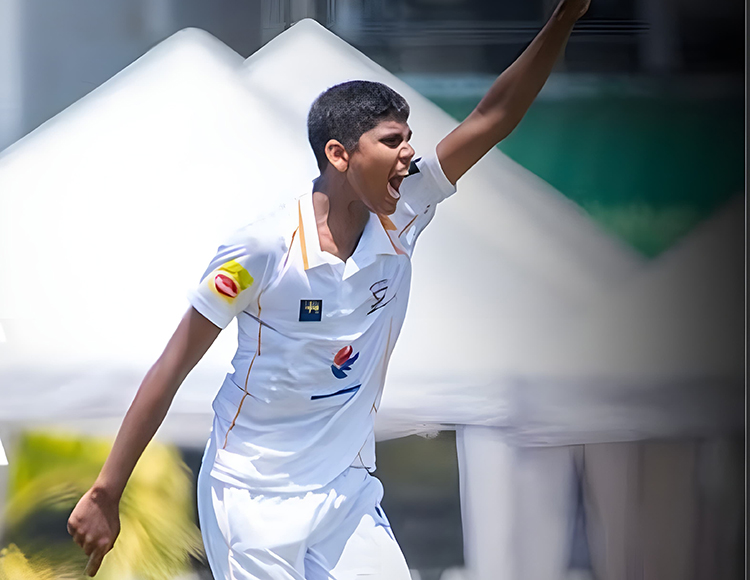
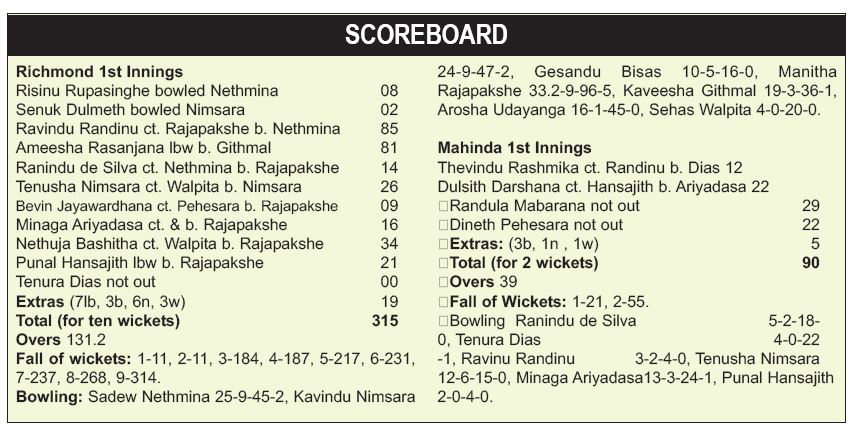
Mahinda College fought back strongly to reach 90 for two wickets at stumps in reply to Richmond College’s 315 on day two of the Lovers’ Quarrel Big Match at the Galle International Stadium on Friday.
In a similar pattern to their arch rivals’ start, Mahinda suffered an early setback, losing two quick wickets in the opening phase of their innings. However, the third-wicket pair of Randula Mabarana and Dineth Pehesara restored stability with a composed stand, ensuring the team closed the day without further damage.
Earlier in the day, spinner Manitha Rajapakshe delivered a standout performance, claiming a five-wicket haul to bring an end to Richmond’s marathon first innings, which extended from day one into the post-lunch session on the second day.
Richmond had recovered impressively from early trouble after slipping to 11 for two on the opening morning. A patient and resilient 173-run partnership for the third wicket between Ravinu Randinu and Ameesha Rasanjana laid the foundation for their competitive total. The duo batted through the bulk of day one and looked set for bigger scores before both were dismissed in the 80s by Sadew Nethmina and Kaveesha Githmal.
Further contributions from Nethusha Nimsara, Nethuja Basitha and Punal Hansajith helped Richmond consolidate, particularly as they faced a sustained and threatening spell from Rajapakshe, who bowled tirelessly to keep Mahinda in the contest.With Mahinda still trailing but having wickets in hand, the match remains finely poised heading into the third day.

Trump says US will ‘obliterate’ Iran’s power plants if Strait of Hormuz not open before 48-hour deadline

Showers may occur at several places in the Western, Sabaragamuwa and Southern provinces and in Nuwara-Eliya district after 1.00 pm.

PM Harini leads panel to protect public services

Sajith slams President over war conduct and economic missteps

Johnston Fernando, sons held in Lanka Sathosa lorry misuse case

Gura: The unsung hero

‘Dates have the highest sugar content to fight Coronavirus’

Sunday Island 27 December – Headlines

#SundayIsland 17th December – Headlines

Sunday Island – 28th March

Sunday Island Headlines – 21 March

Sunday Island – 21st February – Headlines
-

 Business7 days ago
Browns EV launches fast-charging BAW E7 Pro at Rs. 5.8 million
-

 News5 days ago
CIABOC questions Ex-President GR on house for CJ’s maid
-

 News6 days ago
Sri Lankan marine scientist Asha de Vos honoured at UNGA opening
-

 Features7 days ago
Achievements of the Hunduwa!
-

 News6 days ago
Australian HC debunks misleading travel risk claims for Sri Lanka
-

 News4 days ago
Bailey Bridge inaugurated at Chilaw
-

 Latest News6 days ago
Wednesdays declared a government holiday with effect from 18th March
-

 News4 days ago
Pay hike demand: CEB workers climb down from 40 % to 15–20%