
Sports
A future starved of Test cricket


by Rex Clementine
The next crop of Sri Lanka’s Test cricketers will be on show when the second Test against India gets underway at the SSC on today. All these rookies must be wondering what exactly is in store for them in the longest format of the game moving forward.
Every administrator, before coming to office, tells us how much he loves Test cricket, how it remains the ultimate form of the game and how nothing could ever replace it. Once comfortably installed in office, however, precious little is done to protect and nurture it.
All-rounder Sonal Dinusha has already showcased what he is capable of in Test cricket and earned the plaudits of the opposition. Pasindu Sooriyabandara, meanwhile, had the toughest possible induction to Test cricket.
For every cricketer, a Test debut is special. There is the cap presentation, the photographs and the family watching proudly from the sidelines. For Sooriyabandara, there was no such debut. He came into the Galle Test as a concussion substitute and therefore wasn’t handed a Test cap. His father, a senior police officer who was once in charge of the security detail of Cabinet Minister Dullas Alahapperuma, wasn’t there to see him walk out to bat. Neither was his brother, who also played cricket for Royal.
To make matters worse, Sooriyabandara was dismissed for a first ball duck. Hardly the memories you want to carry from your first taste of Test cricket.
But he will be handed his Test cap ahead of the second Test. He is certainly a player for the future with high hopes on him from those who have followed him closely. Unlike several Royalists who have represented the country in recent years, this kid has got a good head above his shoulder.
And he won’t be the only debutant. There will be at least one more.
Kamil Mishara hammered the highest individual score in T-20 cricket in Sri Lanka when he smashed an unbeaten 145 for NCC on Thursday, an innings containing 11 fours and 11 sixes. Two hours later, he was drafted into the Test squad and is tipped to open the batting.
There is also Sahan Arachchige, a prolific run-scorer in domestic cricket. At 30, he is no spring chicken, but he is a reliable player who has captained Sri Lanka ‘A’ with distinction. There may be no room for him in the playing XI at the SSC, but he could well be the reserve batter when the team travels to Pakistan for two Tests later this year.
Sri Lanka are unlikely to make changes to their bowling combination. However, the selectors need reminding that they are flirting with danger with their over reliance on Lahiru Kumara. For all the hype surrounding him in the lead up to the Galle Test, he looked overweight and was unable to generate the pace everyone expected.
Sunday’s game will be Sri Lanka’s last Test at home this year and God knows when we will play the long format again. Administrators keep offering excuses for not arranging sufficient Test cricket. Some of those explanations are so ridiculous that you begin to wonder about their honesty.
Judging people, of course, is not for us. We could be wrong. But what we can say without a shadow of doubt is that none of the current crop of young Sri Lankan players will go on to feature in 100 Tests or join Kumar Sangakkara and Mahela Jayawardene in the 10,000-run club. Not because they lack the talent. They simply will not be given enough Test matches. That is wrong, and something has to be done about it.
India, for all their indulgence in T-20 cricket, have not neglected Test cricket. On average, they play around ten Tests a year. We, in most years, do not even play half that number.
Unless we address the chronic shortage of Test matches, our cricket will continue to suffer.
This Indian side is probably the weakest to have toured our shores in years. Their batting line-up does not contain the superstars of previous generations. Several players are still finding their feet at Test level. The same is true of their bowling attack.
Yet a bowler playing only his second Test can claim a match bag of ten wickets, while a batter playing his third Test can make 167 and follow it up with 44. That tells you everything about the strength of India’s structure and the importance they attach to the long format.
As for us, we keep harping on past glories. Instead of looking forward, we keep reaching backwards, relying on proven failures to make comebacks at the age of 33.
If those proven failures are going to win you Test matches, that is a different argument altogether. But if you are going to lose anyway, you might as well lose while giving a youngster an opportunity to learn his trade.
The selectors’ decision to bring back Niroshan Dickwella is flawed. They have talked up his value to the side as though Test cricket was recalling Alan Knott or Ian Healy. Let us not forget why Dickwella went out of the side in the first place: his wicketkeeping had become sloppy.
The fact that he had done precious little in domestic cricket to reclaim his place does not augur well for the game. The selectors may point out that he made a crucial 80 in the first innings in Galle. Fair enough. Runs are runs, and those 80 were valuable. But the distractions he brings into the dressing room outweigh the positives.
To put it plainly, Dickwella is a bad influence on the younger players in the side and should be avoided like the plague.
Sri Lanka are entering a period when a new generation needs to be identified, backed and given enough cricket to grow. Dinusha, Sooriyabandara, Mishara and others deserve the opportunity to discover how good they can become.

by Rex Clementine
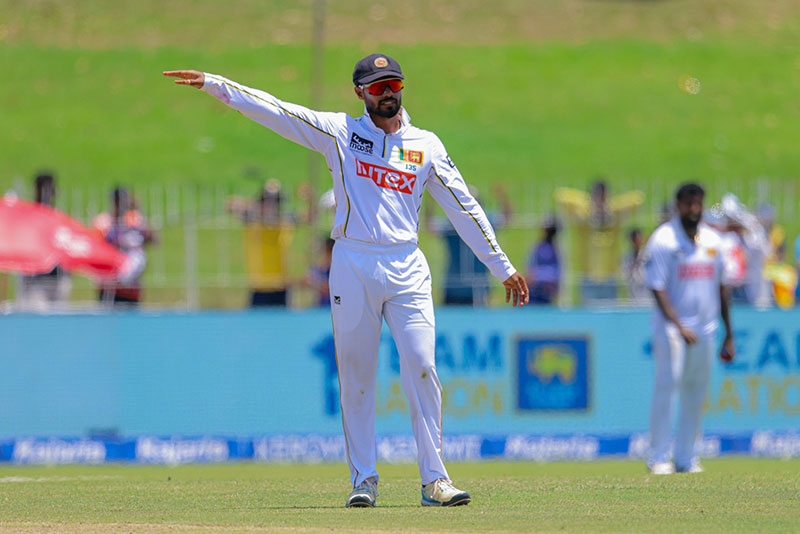
Sri Lanka’s Test captain Dhananjaya de Silva has done an Ian Botham. No, not by pulling off a miraculous victory against Australia at Headingley, but by resigning a minute before he was sacked.
The writing had been on the wall for DDS after he got his sums horribly wrong during the recent home Test series against India. His defensive approach from day one left Sri Lanka chasing the game rather than dictating terms and the hosts eventually surrendered the series.
There had also been growing criticism of DDS’s inability to lift the side when the chips were down. His laid back attitude, particularly the sight of him cracking jokes with team mates in the SSC dressing room balcony while Sri Lanka were following on, did not go down well with the cricket establishment.
Not that DDS was doing anything out of character. By nature, he is a relaxed, easy going individual who loves his video games and rarely seems to have a worry in the world. The mistake was made by those who handed such a character the Test captaincy and then expected him to turn into a fire breathing leader overnight.
DDS was so chilled out that even SLC’s photographers had reason to complain during the India Test series when the official team photograph was being taken.
Sri Lanka have been guilty of failing to groom leaders and in recent years the captaincy has too often fallen into someone’s lap by default rather than through careful planning. The result has been a revolving door of captains, with little thought given to succession.
DDS’s successor, Kusal Mendis, is no Mike Brearley or Ian Chappell when it comes to tactical nous, but to his credit, he has worked hard in recent years to shed his bad boy image and become a more responsible cricketer.
More than anything, Mendis has discovered consistency with the bat. Equally impressive in the eyes of the authorities has been his willingness to shoulder responsibility. He has never been one to duck a challenge, even when the workload has threatened to become overwhelming.
Currently, Mendis keeps wicket in both white ball formats while batting at the top of the order. With the additional burden of becoming Sri Lanka’s all format captain, he is set to be relieved of wicketkeeping duties in Test cricket.
The selectors are now on the lookout for a replacement ahead of the Pakistan assignment, although they are unlikely to turn to Niroshan Dickwella again. That particular chapter, it seems, has been closed.
Meanwhile, Chairman of Selectors Kapila Wijegunawardene has broken his silence over Wanindu Hasaranga’s omission, confirming that the star leg-spinner had indeed been dropped rather than sidelined through injury.
Wijegunawardene made little attempt to sugar coat the selectors’ disappointment with a player whose immense talent has not always translated into performances befitting his reputation.
“Hasaranga has not lived up to expectations, to be frank,” Wijegunawardene said.
“The player understands that too. We had expected a lot of him. His knowledge of the game is immense and he has much more to offer, and we are confident he will stage a comeback,” Wijegunawardene added.

by Reemus Fernando
St. Benedict’s College Kotahena completed their group stage matches with a crushing ten wickets win over St. Sebastian’s College Katuneriya while St. Joseph Vaz College Wennappuwa bounced back from their initial defeat with back to back victories to stay alive in the Under 19 Division I Tier ‘B’ tournament.
For Bens it was their fourth victory in the tournament on Wednesday. Their only blemish this season was against Dharmaraja. The Bens recorded victories against De Mazenod Kandana (by 140 runs), St. Aloysius’ Galle (by three wickets) and Taxila Horana (by 162 runs ) before cruising to a ten wicket win aganst St. Sebastian’s Katuneriya. Manikya Deshapriya with a four wicket haul (4 for 8 in six overs) and Vihanga Rathnayaka taking three wickets rattled their opponents for 64 runs in their final group ‘A’ match.
Group ‘C’ became wide open on Wednesday when St. Joseph Vaz beat Ananda College by 89 runs at Ananda Mawatha.
Batting first, St Joseph Vaz College posted 225 for eight wickets in their alloted 50 overs, with Damesh Mathisan leading the way with a valuable 124-ball knock of 88, his most notable batting performance this season. His patient innings included eight fours and a six. Amal Denuwan added 31 off 69 balls, while Savio Fernando contributed 24.
In reply, Ananda were bowled out for just 136 run with Danindu Sellaperuma’s 41 being the highest contribution.
Amal Denuwan took four wickets for 20 runs in an outstanding spell of 8.3 overs, including two maidens. Damesh Mathisan completed an impressive all-round display taking two wickets for 28 runs.
Thathnula Liyanage took one, while Oshen Binara claimed two for 19.
In their season opening encounter St. Joseph Vaz conceeded a 66 run defeat at the hands of Maliyadeva College Kurunegala. They were bowled out for 107 runs at Kadirana.
In their second encounter they bounced back as their bowlers dominated reducing Devapathiraja to 79 runs. Oshen Binara (4.5-1-14-4), Mayon Fernando (4-0-16-3) and Lowthuru Dilpahan (6-0-23-2) returned notable bowling figures. Isuru Induwara (31n.o.) and Savio Fernando (23n.o.) then guided them to victory putting up an unbroken third wicket stand of 48 runs.
Back to back victories now has helped the school keep alive their hopes of reaching the knockout stage. They will meet Lyceum International Wattala and Sri Dharmaloka College Kelaniya in their next two matches.
The victory has wide opened group ‘C’ with three teams registering two wins each. Ananda and Devapathiraja College Ratgama are the other teams to have recorded two wins.
ATF 16 & Under Tennis
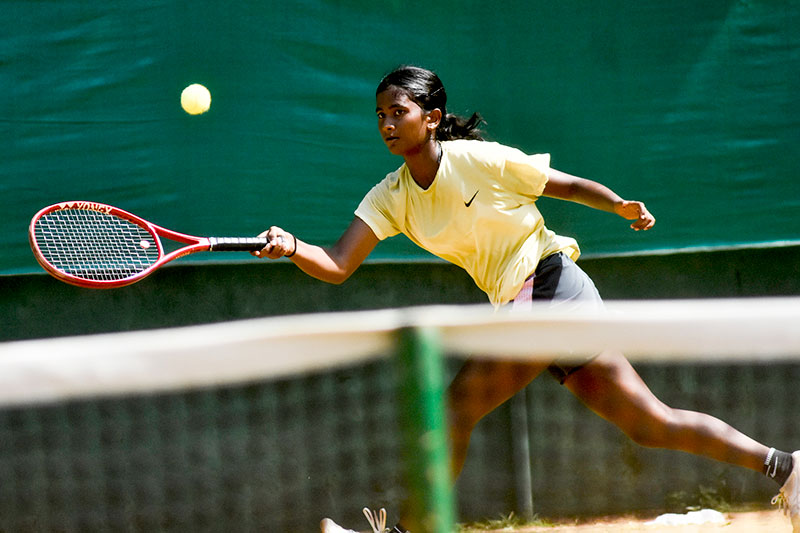
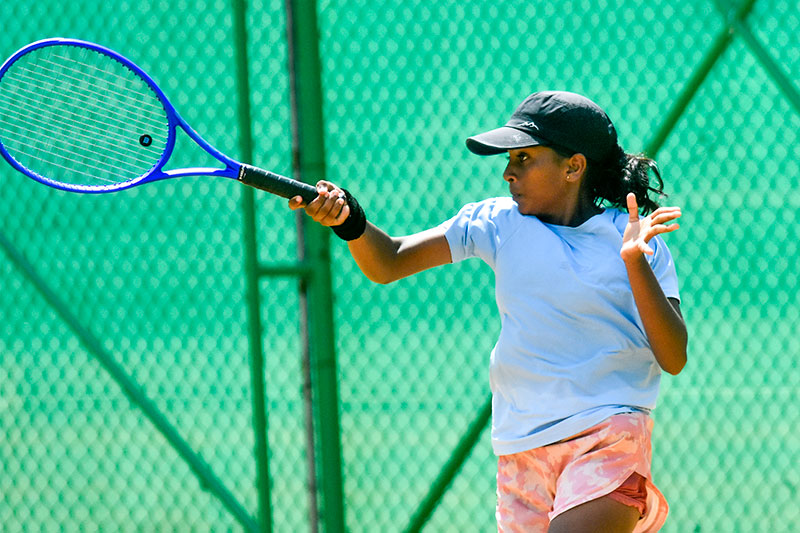
Kiyara Jayamanne is set to meet Risindi Hewawasam in the girls’ singles final after they won their semi finals of the ATF 16 & Under Colombo 2026 Week 1 tournament continued at the Sri Lanka Tennis Association courts.
Kiyara Jayamanne defeated fellow Sri Lankan Disini Samaraweera 6-3, 6-3 to book her place in the final. Risindi Hewawasam also secured a straight-set victory, overcoming Methuli Naotunna 6-2, 6-3.
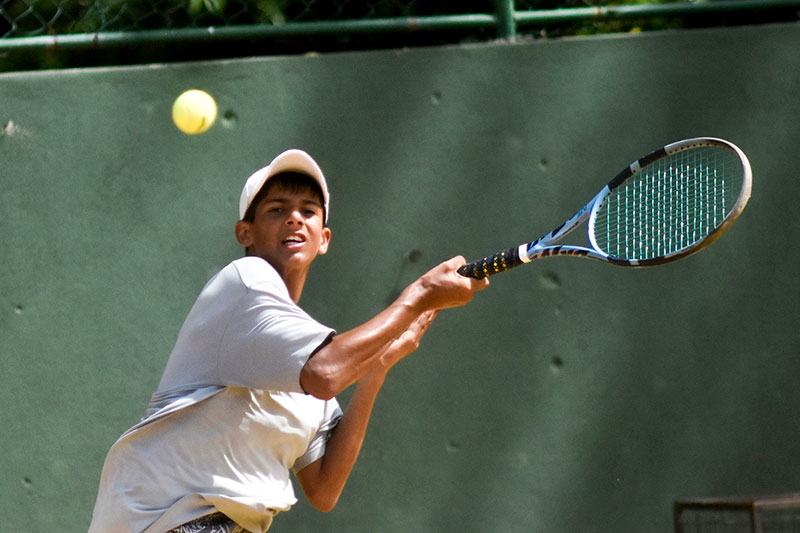
The boys’ semi-finals saw Anthony Castigador of the Philippines dominate Sri Lanka’s Damsath Peiris, winning 6-0, 6-0. India’s Gurshaan Chahal completed the finalists’ line-up with a 6-2, 6-1 victory over Sri Lankan Yonal Dankubura.
-
- Risindi Hewawasam
-
- Gurshaan Chahal
-
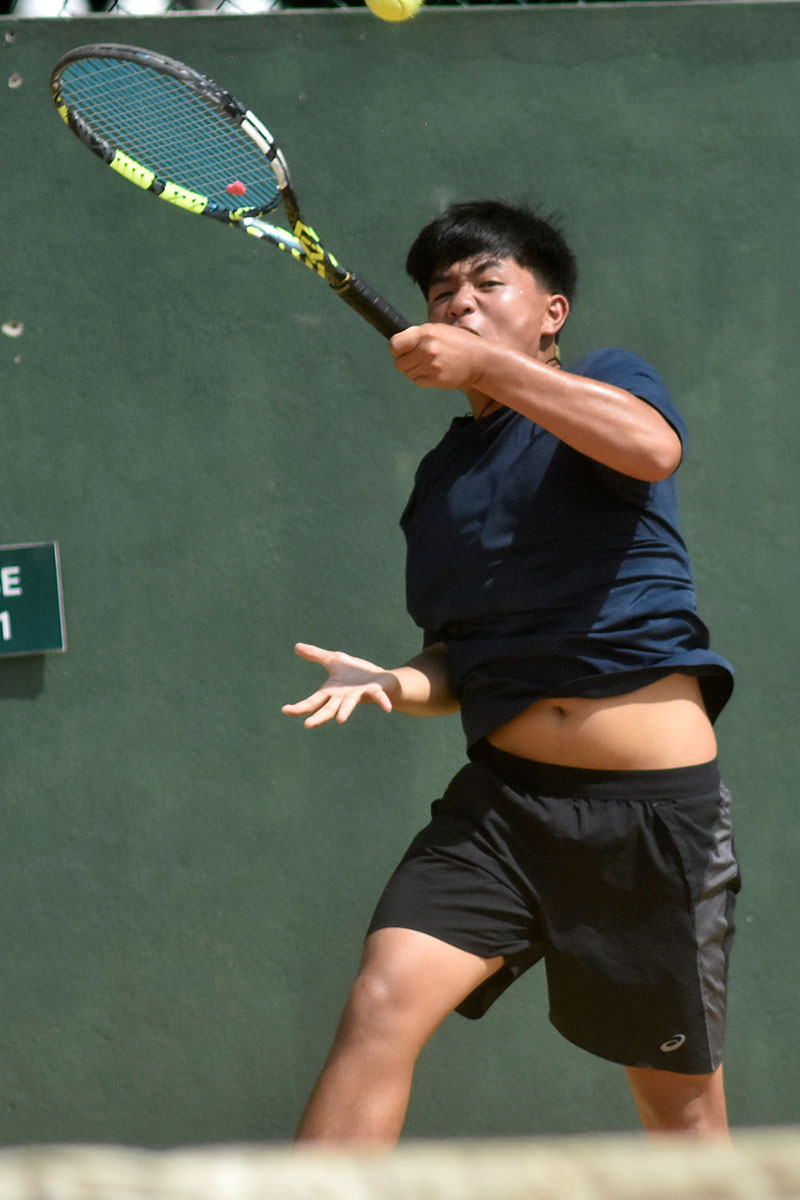
- Anthony Castigador (Pix by Kamal Wanniarachchi)

Showers or thundershowers will occur in most part of the island after 1.00 p.m.

Removing monk’s robes matter for Sangha to decide: Mahanayake Theras

NDB fraud Rs 60mn more than reported

President orders review of laws on treatment of imprisoned monks

BHC, Colombo: “LTTE remains a proscribed org. in the UK”

Sri Lanka runs out of essential anti-TB medicines, India comes to rescue

‘Dates have the highest sugar content to fight Coronavirus’

Sunday Island 27 December – Headlines

#SundayIsland 17th December – Headlines

Sunday Island – 28th March

Sunday Island Headlines – 21 March

Sunday Island – 21st February – Headlines
-

 Features5 days ago
The first woman in the foreign service or Ceylon Overseas Service it was then called
-

 Editorial6 days ago
Fuelling discontent and protest
-

 News4 days ago
Geneva takes up Sallay’s case and govt. ignores opportunity to answer accusations
-

 Foreign News6 days ago
Ten injured after car crashes into rugby supporters in Australia
-

 News5 days ago
Nearly 20 Iranian tankers stranded off Lanka amid US sanctions
-

 Latest News6 days ago
Tharindu Rathnayake, bowlers secure Asian Games Bronze for Sri Lanka
-

 Features4 days ago
Sri Lanka Cricket Bill: Governance reform is not yet a cricket strategy
-

 News5 days ago
Lanka enters new phase of prosecutions as hurdles clear