
News
A CRITICAL REVIEW OF SRI LANKA IN 2021

by Anila Dias Bandaranaike, Ph. D.
Public discourse everywhere confirms that Sri Lanka is in a parlous situation on several fronts. This paper appraises our current situation against a proposed national development framework.
National Resources
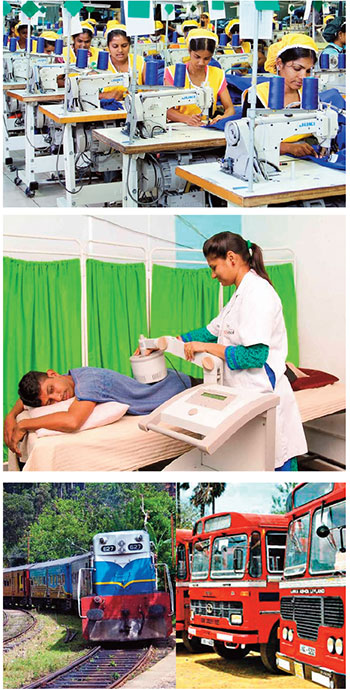
Sri Lanka’s two key resources are its people and environment. People have had access to traditional, healthy nutrition and free preventive and curative health services, as well as two ancient languages (Sinhala, Tamil), a global language (English) and free education up to tertiary level.
 Our unique environment provides the natural security of an island, a strategic geographic location and manageable size, with extraordinary biodiversity. It is mostly arable, mainly flat, with accessible mountains, plentiful water and easy road, air and sea access.
Since Independence, successive governments under-utilised these resources. First, they complacently followed the unsustainable colonial development path, without forward-looking reforms for us. More recently, they mimicked the development paths of western industrialised countries and city states, Dubai and Singapore, inappropriate for Sri Lanka. They prioritised infrastructure above people. While lip service was paid to their importance, teaching English, our language issues and labour market reforms were neglected. This trajectory failed to retain Sri Lanka’s human capital. Neglect of minority concerns, inadequate incomes and employment opportunities led to brains and skills drain, as many who benefitted from free health and education left Sri Lanka. We now face a critical human capital shortage.
Governments also failed to recognise our environment’s potential for sustainable food security and earnings from exports and tourism. Instead, we see degradation and contraction of rainforests (Sinharaja), detrimental landfills, garbage dumps and ad hoc construction in wetlands (Muthurajawela), invasive plant expansion in national parks and irrigation tanks (Minneriya, Uda Walawe), violation of building guidelines in historical sites and resort areas (Colombo, Sigiriya, Unawatuna), plastic and chemical pollution (island-wide) and urban air pollution (Colombo, Kandy). Wasteful, thoughtless construction (Mattala Airport, Hambantota International Conference Centre, Colombo evictions and destruction of historic buildings) focussed on means to well-being (GDP growth, FDI, export growth, physical infrastructure, etc.), not the goal.
Lack of a framework and priorities for our key resources has led to multiple crises Sri Lanka faces today.
* Fiscal, foreign exchange and debt crisis – Against wasteful expenditure, inconsistent tax and trade policies have drastically reduced revenue and foreign earnings, leading to ballooning debt. We face financial, monetary and fiscal instability.
* Law and order crisis – Rampant corruption, pardoning of convicted criminals, ad-hoc dismissal of cases, indiscriminate detentions and delays in legal proceedings have destroyed people’s faith in the police and judicial systems to deliver protection and justice.
* COVD-related health, welfare and economic crisis – Mishandling of the pandemic, food distribution, people’s movements, transport and economic activities have many people without health protection, food or incomes.
* Maritime environmental crisis – Sheer bungling of a ship with hazardous cargo in distress created an unprecedented maritime environmental disaster.
* Labour crisis – Skills and brain drain, exacerbated by state support for labour migration, has led to labour shortages in many economic sectors.
* Habitat loss crisis – Unregulated clearing of forest lands, beachfronts and ad hoc landfills for political gain, for unstructured agriculture, for private housing, tourism, agro-industrial and industrial projects, without consistent policies, guidelines and mechanisms to monitor and evaluate large scale infrastructure or agriculture projects, has degraded and reduced our biodiversity.
* Plastic and toxic chemical pollution crisis – Lack of clear policies for a phased reduction plan, monitoring mechanisms and punishments for the harmful use of plastic and agrochemicals and for proper sanitary landfill and solid waste disposal mechanisms, including for e-waste, has aggravated environmental pollution. Meanwhile, the overnight ban on chemical fertiliser, unless reversed soon, will precipitate another food and export crop reduction crisis.
 National Goals and Framework
Sri Lanka can overcome these crises. For this, governments need commitment to sustainable national goals and a framework prioritising people and environment.
Basic Premise:
Nations strive to improve the well-being of all citizens, which requires sustainable development and social justice.
Goal for People:
To improve their well -being, which encompasses 3 dimensions – material, intellectual and emotional -, with social justice. Material needs include physical health, food, clothing, shelter, utilities, transport and communication. Intellectual needs include education, skills development, employment opportunities and leisure activities. Emotional needs include mental health and a sense of personal security within the home and country to follow one’s religious beliefs, cultural traditions, sexual orientation, etc., without harm to others. Social justice ensures impartiality in access and opportunities for all citizens, regardless of any differentiating factor.
Goal for Environment:
To safeguard all biodiversity through sustainable development – lasting improvement in the well-being of current and future generations. Biodiversity includes rainforests, dry-zone forests, mountain plains, wetlands, beaches, dunes, reefs, lagoons, mangroves, rivers, waterfalls, reservoirs, tanks and air quality.
These goals are best understood as a government’s responsibility to provide to its citizens, through constant review and reforms, the following:
* Representation – Electoral systems for meaningful representation at national, regional and local levels, including relevant criteria for suitability of candidates. To meet people’s needs not representatives’ greed.
* Justice – Judicial reforms to ensure an independent, accountable judiciary, and law reforms for timely delivery of justice to people.
* Domestic Security – Police and legal reforms to ensure zero tolerance of discrimination on grounds of ethnic, religious, gender, sexual orientation, age, disability, social status, income, political affiliation or other differentiating factor.
* A Sustainable Natural Environment – Action plans and guidelines to reverse environmental destruction. Sustained review and reforms of existing laws and procedures which hamper safeguarding of Sri Lanka’s resources.
* An Ethical and Transparent Business Environment – Institutional and legal reforms to rationalise and simplify access, procedures, approvals and licences to facilitate doing ethical business.
* Access to State Services – National administrative system reform to create realistic geographical boundaries for greater efficiency of service delivery. Clear demarcation of what state services are to be delivered at national, provincial and local level. Rationalisation of multi-tiered services where people have to seek multiple levels of authorisation for simple acts.
* Education – Reforms in educational infrastructure, curricula and teacher training to meet current market needs for analytical, problem-solving and writing skills with English proficiency. Regulation of private institutions to supplement state institutions. Removal of inconsistencies in access, with capacity building for national level schools at Divisional Secretariat level.
* Health – Policy reforms and better budgets to improve preventive and curative health delivery systems.
* Nutrition – Policy consistency in land use, agriculture and trade, to ensure food security and price stability.
* Housing – Policy reforms for access to housing markets at all income levels.
* Financial System Stability and Responsible Fiscal Management – Reform of monetary and fiscal authorities to ensure monetary, financial and fiscal stability. Capacity building for Parliamentary oversight of fiscal and financial management.
* Gainful Employment – Labour market and related legal reforms to reverse people migration (200-300,000/year). Recognise and regulate new forms of atypical employment. Ensure liveable minimum wages and decent working conditions. Allow hiring flexibility, while protecting worker rights.
* Social Safety Net –Welfare and social security reforms to support those below the poverty line and ensure retirement benefits for all.
* Access to Information – Access to public data and methodology. Expanded budgets and capacity building to address supply-side constraints in national data agencies.
• National Security – Capacity building for safety against international threats – physical, social or economic. Defined role for Tri-Forces. Foreign policy consistency in geopolitical relationships with global and regional powers.
Current Situation
Sri Lanka has a bloated public service and excessive layers of political representation. The public sector employs about 1.2 million people (15% of total work force) in 1,200 major institutions covering over 30,000 smaller units.
Sri Lanka’s population of 22 million, has a parliament of 225 members with about 30 Cabinet Ministers and 40 State Ministers at national level. In contrast, India’s population of 1,326 million (6 times) has a Lok Sabha of 545, 15 Cabinet ministers and 28 state ministers. Malaysia’s population of 33 million (1.5 times) has 222 members in its House of Representatives, 32 ministers and 38 deputy ministers.
At Local Government level, Sri Lanka has 8,708 elected representatives in 341 local authorities (24 Municipal Councils (MCs), 41 Urban Councils (UCs) and 276 Pradeshiya Sabhas (PS)). If Provincial Councils were in place, there would be about 500 Provincial Counsellors and another level of ministers.
With no clear delegation of responsibilities among these layers and overlapping institutions, there is considerable confusion in policy-making and service delivery. For decades, instead of focussing on their substantive role of policy-making and implementation for longer term national objectives, Cabinet and other ministers have been micro-managing day-to-day activities, such as transfers, promotions, job and school placements, etc. Overlap of functions has killed accountability. Senior bureaucrats, fearful for their jobs in a politicised culture, have forgotten their advisory role. Most muddle around at the bidding of their political masters or hoodwink them, in order to remain in favour. Those with integrity have paid the price for their commitment and professionalism, by removal.
With such a serious breakdown of independence, professionalism, accountability, channel-of-command and decision-making processes in key systems of authority and electoral representation, successive governments have failed to deliver universal rights.
The cumulative outcome has Sri Lanka in an extremely unstable and precarious situation. There is neither time nor space for further bungling or foolish posturing that we see among those responsible for running the country today.
Way Forward
A well-planned path prioritising critical reforms which optimise our key resources, would retain our people at higher incomes and safeguard our environment. To carve such a path, the country urgently needs to rationalise the size and layers of government and have a merit-based selection of professionals to key positions to plan a way forward, implement related policies and much-needed reforms. My wish list:
* National Framework and Goals – A small competent team to prepare it, with goals based on Citizens’ Rights.
* Public Sector Contraction – Professionally review roles and responsibilities of existing institutions under each Right. Cull and combine to rationalise and remove duplication.
* Merit-based promotions and recruitments – Establish guidelines and efficient procedures to fill key positions with professionals of acumen and independence. Reconsider categories of Presidential Appointees.
* Accountability – Establish systems for channel-of-command and responsibility, with continuous monitoring and evaluation. Re-establish Monitoring Authorities – Constitutional Council, Independent Commissions.
* Language – Build official capacity to ensure tri-lingual language rights for all.
Electoral Representation
* Effectiveness – Rationalise existing electoral systems at national, provincial and local levels.
* Consistency – Assign all electoral delimitation to one independent delimitation authority.
* Eligibility – Introduce minimal eligibility criteria to raise quality of representatives.
Conclusion:
Sri Lanka has a wealth of competent professionals of integrity and acumen who can move this country on a path to sustainable development. For this, the Executive and Legislature (President, Cabinet and Parliament), have to admit their abject failure and ask for help. Till then, men and women of ability will remain in the wings until it is too late. Sadly, that day may not be far off.
The author is a former Assistant Governor and Director of Statistics of the Central Bank of Sri Lanka. She served on the Delimitation Commission of Sri Lanka from 2015 to 2020.

News
GMOA warns of trade union action unless govt. urgently resolves critical issues in health sector

Influx of substandard drugs is of particular concern
The Government Medical Officers’ Association (GMOA) has warned of renewed and intensified trade union action if the government fails to fulfil its promise to resolve the ongoing crisis in the health sector within the next few days.
GMOA Executive Committee member Dr. Prasad Colombage said his association was hopeful that commitments made by the government, including those formally stated by the Minister of Health in Parliament and recorded in the Hansard, would be implemented.
He called for urgent remedial action in view of the influx of substandard medicines into the country, patient deaths linked to such drugs, difficulties faced by doctors in prescribing medicines, and disruptions to patient care services caused by the continued migration of medical professionals. These factors, he warned, had placed patients’ lives at serious risk.
Dr. Colombage said discussions had already been held with all relevant authorities, including the President and the Minister of Health. He expressed hope that swift solutions would be forthcoming based on agreements reached at discussions. However, he cautioned that the GMOA would not hesitate to resort to strong trade union action if tangible progress was not seen in the coming days.
Meanwhile, the Federation of Medical and Civil Rights Professional Associations yesterday (01) handed over a special memorandum to President Anura Kumara Dissanayake, calling for immediate action to resolve the deepening crisis in the health sector.
Federation President, Consultant Dr. Chamal Sanjeewa, said Sri Lanka’s health system was currently facing a severe crisis and had sought an opportunity to hold discussions with the President on the matter.
The memorandum calls for the President’s direct and immediate intervention on several key issues, including the Indo–Sri Lanka health agreement, shortages of essential medicines including cancer drugs, continued allegations surrounding the administration of the Ministry of Health, reported irregularities at the National Hospital, Colombo, and the absence of an internationally accredited quality control laboratory for the National Medicines Regulatory Authority to test medicines. The Federation has also requested a meeting with the President to discuss these concerns in detail.
By Sujeewa Thathsara ✍️

Sri Lanka’s latest elephant census must result in immediate policy action, not remain a paper exercise, Centre for Environmental Justice (CEJ) Managing Director Dilena Pathragoda warned, as nearly 400 wild elephants have already died in 2025 alone amid escalating human–elephant conflict.
With the national elephant population estimated at around 5,879, Pathragoda said the figures would be meaningless unless they shape land-use planning, habitat protection and enforcement.
“As of mid-December, close to 397 elephants have died in 2025, mostly due to shootings, electrocution, train collisions and other human-related causes,” he told The Island. “When deaths continue at this scale, census numbers alone offer little reassurance.”
Official data show that 388 elephants died in 2024, while 2023 recorded a staggering 488 deaths, one of the highest annual tolls on record. Conservationists warn that the trend reflects systemic failure to secure habitats and elephant corridors, despite repeated warnings.
“An elephant census should not end with a headline figure,” Pathragoda said. “If these statistics do not influence development approvals, infrastructure planning and land-use decisions, they fail both elephants and rural communities.”
Elephant populations remain unevenly distributed, with higher densities in the Mahaweli, Eastern and North Western regions, while other areas face sharp declines driven by habitat fragmentation and unplanned development.
Pathragoda said recurring fatalities from gunshots, illegal electric fences, improvised explosive devices along with poisonings and rail collisions expose the limits of short-term mitigation measures, including ad hoc fencing projects.
“The crisis is not a lack of data, but a lack of political will,” he said, calling for binding conservation policy, transparent environmental assessments and accountability at the highest level.
He urged authorities to treat elephant conservation as a national governance issue, warning that failure to act would only see future censuses record further decline of these majestic animals.
“Elephants are part of Sri Lanka’s natural heritage and economy,” Pathragoda said. “Ignoring these warning signs will come at an irreversible cost.”
By Ifham Nizam ✍️

The Ministry of Education has yet to clarify whether school hours will be extended by 30 minutes from next Monday (05) under the proposed new education reforms, Ceylon Teachers’ Union (CTU) General Secretary Joseph Stalin has said.
Stalin told The Island that the Ministry should reconsider the planned reforms, warning that decisions taken without adequate study and consultation could have serious repercussions for nearly four million schoolchildren.
He said the Education Ministry had announced that education reforms would be implemented in Grades from 1 to Grade 6, but it had not said anything about the Grades above 6. This lack of clarity, he said, had created confusion among teachers, parents and students.
Stalin also noted that although learning modules had been issued, students are required to obtain photocopies based on the codes introduced in these modules. However, the Ministry had not revealed who would bear the additional financial burden arising from those costs, raising further concerns over the practical implementation of the reforms.
by Chaminda Silva ✍️

Showery condition is expected to enhance in the Eastern, Northern and Uva provinces during the coming days, due to the development of a low-level atmospheric disturbance to the East of Sri Lanka

GMOA warns of trade union action unless govt. urgently resolves critical issues in health sector

Elephant census urged as death toll nears 400

CTU raises questions about education reforms

Navy lauds foreign warships that came to assist in disaster relief ops here

It’s PC polls, stupid

‘Dates have the highest sugar content to fight Coronavirus’

Sunday Island 27 December – Headlines

#SundayIsland 17th December – Headlines

Sunday Island – 28th March

Sunday Island Headlines – 21 March

Sunday Island – 21st February – Headlines
-

 Sports4 days ago
Gurusinha’s Boxing Day hundred celebrated in Melbourne
-
 News2 days ago
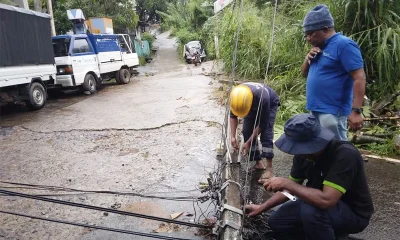
Leading the Nation’s Connectivity Recovery Amid Unprecedented Challenges
-

 Sports5 days ago
Time to close the Dickwella chapter
-

 Features3 days ago
It’s all over for Maxi Rozairo
-

 News5 days ago
Environmentalists warn Sri Lanka’s ecological safeguards are failing
-
 News3 days ago
Dr. Bellana: “I was removed as NHSL Deputy Director for exposing Rs. 900 mn fraud”
-
 Features5 days ago
Digambaram draws a broad brush canvas of SL’s existing political situation
-
 News2 days ago
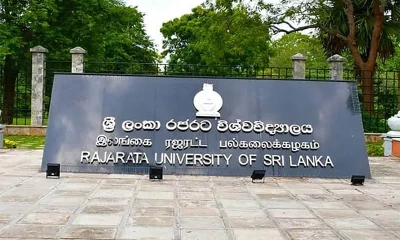
Dons on warpath over alleged undue interference in university governance