
Life style
Amphibians going extinct in SL at a record pace


by Ifham Nizam
Sri Lanka holds the record for nearly 14 per cent of the amphibian extinctions in the world. In other words, of the 130 amphibian extinctions known to have occurred across the globe, 18 extinctions (14 per cent) have occurred in Sri Lanka, says Dr. Anslem de Silva, widely regarded as the father of Herpetology in the country. Speaking to The Sunday Island, the authors of a news book on amphibians, said that this is one of the highest number of amphibian extinctions known from a single country. Some consider this unusual extinction rate to be largely the result of the loss of nearly 70 per cent of the island’s forest cover. Dr. Anslem de Silva, Co-Chairman, Amphibian Specialist Group, International Union for the Conservation of Nature/Species Survival Commission (IUCN/SSC), together with two academics, Dr. Kanishka Ukuwela, Senior Lecture at Rajarata University, Mihintale who is 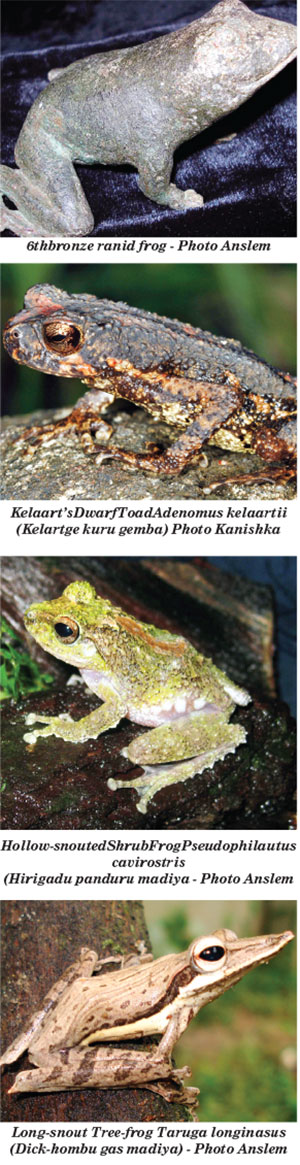 also associated with IUCN/SSC and Dr. Dillan Chaturanga, Lecture at Ruhuna University, Matara had authored this most comprehensive book on amphibians running to nearly 250 pages released last week. The prevalent levels of application of agrochemicals up to few months back, especially in rice fields, and vegetable and tea plantations, have increased over the past three decades. Similarly, the release of untreated industrial wastewater to natural water bodies has intensified. As a consequence, many streams and canals have become highly polluted, they say. The use of pesticides directly decreases the insect population, an important source of food for amphibians. Furthermore, these pollutants can easily make the water in paddy fields and the insects on which the amphibians feed toxic or increase the nitrogen content of the water. The highly permeable skins of amphibians would certainly cause them to be directly affected by these, they add. Amphibian mortality due to road traffic is a widespread problem globally that has been known to be responsible for population reductions and even local extinction in certaininstances. In Sri Lanka, amphibian mortalities due to road traffic are highly prevalent on roads that serve paddy fields, wetlands and forests. Further, they are especially intensified on rainy days when amphibian activity is high, the book explains. Recent studies indicate that amphibian road kills are exacerbated in certain national parks in the country due to increased visitation. According to recent estimates, several thousand amphibians are killed annually due to road traffic.
Professor W. A. Priyanka, PhD (USA), Professor in Zoology, Faculty of Science, University of Peradeniya says the need for a guide to the amphibian fauna of Sri Lanka is obvious, given the currently critical conditions endangering them. Amphibians are an attractive group of animals whose diversity has always sparked interest among the scientific community, creating a vast body of unanswered questions.However, the identification of amphibians has been a challenge due to the lack of a complete and informative guide. The comprehensive pictorial guide provided by the new book should thus be of great benefit to a better understanding of the unique and intriguing nature of these fascinating living beings.The authors have done an outstanding job in compiling this book. An introduction to the guide briefly describes the history, current status, threats and conservation information, along with interesting folklore associated with amphibians. With the clear and informative images, distribution maps and updated status of each species, this guide can easily be comprehended by experts and beginners in the field alike.”I firmly believe that this book will be very useful to undergraduate and postgraduate students in the fields of zoology, biology and environmental science, as well as researchers, wildlife managers and visitors,” Professor Priyanka added.The authors said that like their previous guide to the reptiles of Sri Lanka, A Naturalist’s Guide to the Reptiles of Sri Lanka (de Silva & Ukuwela, 2017, 2020), this book is intended for both naturalists and visitors to Sri Lanka, providing an introduction to the amphibians found here. It features all the extant species of amphibian in this country with colour photographs and quick and easy tips for identification. At the time of writing, 120 species have been recorded within the country and ongoing taxonomic work is certain to add more to this impressive list in the next few years.This guide provides a general introduction to the amphibians of Sri Lanka, a profile of the physiographic, climatic, and vegetation features of the island, key characteristics that can be used in the identification of amphibians and descriptions of each extant amphibian species.Additionally, it presents information on amphibian conservation here and a brief introduction to folklore and traditional treatment methods for combating poisoning due to amphibians in this country. The species descriptions are arranged under their higher taxonomic groups(orders and families), and further grouped in their respective genera.The descriptions are organized in alphabetical order by their scientific names. Every species covered is accompanied by one or more colour photograph of the animal. Each account includes the vernacular name in English, the current scientific name, the vernacular name in Sinhala, a brief history of the species, a description with identification features, and details of habitat, habits and distribution (both here and outside the country).Key external identification features of the species, such as body form, skin texture and coloration, are provided, to help in the quick identification of an animal in the field.It must be noted that according to Sri Lanka’s wildlife laws, amphibians cannot be captured or removed from their natural habitats without official permits, which must be obtained in advance from the Department of Wildlife Conservation.Sri Lanka is home to an exceptional diversity of amphibians. Currently, the island nation boasts of 112 species of amphibians of which 98 are restricted to the country. However, nearly 60 per cent of this magnificent diversity is threatened with extinction. To make matters worse, very little attention is paid by the conservation authorities or the public. The last treatise on the subject was published 15 years ago. However, many changes have taken place since then and hence an updated compilation was a major necessity. This book by the three authors intends to popularize the study of amphibians by the general public by filling this large void. Historical aspects
Sri Lanka is one of the few countries in the world where conservation and protection of its fauna and flora has been practiced since pre-Christian times. There is much archaeological, historical and literary evidence to show that from ancient times amphibians have attracted the attention of the people of this island.
This is evident by the discovery of an ancient bronze cast of a frog (see photo) discovered during excavations conducted by the Department of Archaeology and the Central Cultural Fund. Strati-graphic evidence from the excavation sites indicate that these objects belong to the sixth to eighth centuries AD (Anuradhapura and Jetavanārāma museum records). Beliefs that feature the ‘good’ qualities of frogs and association with nature. These beliefs have some positive effects on the conservation of amphibians, perhaps one reason that Sri Lanka harbours a diverse assemblage of frogs. Absence of frogs and toads in agricultural fields indicates impending crop failure, it is believed.
The authors have specially thanked Managing Director John Beaufoy of John Beaufoy Publishing Ltd, for publishing many books promoting Sri Lanka diversity.



The City of Colombo has welcomed a bold new entrant to its retail landscape. Ministry of Brands – a concept that feels less like a fashion statement. Set along the very buzzing stretch of Vajira Road, Ministry of Brands arrives with a promise that instantly captures the imagination: – global luxury redefined for the Sri Lankan shopper. From the structured elegance of Gucci to the timeless sophstication of Ralph Laurent and modern glamour of Michael Kors, the store looks a curated passport to the world’s most desired brands.
Backed by the legacy and strength of Akbar Brothers, this venture singals a confident step forward for Sri Lanka’s retail evolution.
Ministry of Brands (MoB), Sri Lanka’s first off-price retailer, officially opened its doors to the public, marking a new era in the country’s retail landscape.
The 10,000 sq. ft. flagship store, located at Vajira Road, R.A. De Mel Mawatha, Colombo 4, welcomed guests to an exclusive preview recently, offering a first look at its expansive collection of authentic global luxury and premium brands at discounts of up to 90 percent off original retail prices.
Backed by Akbar Brothers, Ministry of Brands introduces the globally established off-price retail model to Sri Lanka and the wider South Asian region. The concept enables customers to purchase genuine designer and brand-name products at significantly reduced prices, with new pieces landing and replenishing in store daily, offering a dynamic “treasure-hunt” shopping experience and a constantly changing selection.
Off-price retail remains one of the fastest-growing global retail segments, enabling fashion houses to manage excess inventory while responsibly expanding access to premium products.
-

- Director of Mob, Aamir Akbarally; Chairman of Akbar Brothers, Tyeab Akbarally and Chairman of Mob, Hussain Akbarally
-

- Where style meets statement
-

- Fashion experience
-

- New chapter in luxury retail
-

- Curated elegance
-

- Fashion finds its finest expression
Offering more than 2,000 international brands sourced from Europe and the United States, the store features a wide range of categories, including womenswear, menswear, childrenswear, footwear, handbags, accessories, performance wear and homeware. Renowned global labels available at M.O.B include Valentino, Salvatore Ferragamo, DKNY, Michael Kors, Ralph Lauren, Farm Rio, Staud, Alice + Olivia, Burberry, Rag & Bone, Lacoste, Puma, UGG, HOKA, Brooks and Air Jordan, among many others.
Commenting on the launch, Director Aamir Akbarally stated: “We are very excited to finally make authentic global luxury and premium brands more accessible and affordable to Sri Lankans. Ministry of Brands signals the beginning of a new era in Sri Lanka’s retail sector. The response so far has been fantastic, as a family-owned business, we shall always be committed to delivering genuine value, transparency and a world-class shopping experience built on longstanding values of integrity, quality and trust.”
Director Ramzey Hammoud added: “Off-price retail is globally recognised for its ability to combine value with sustainability. Our customers can now shop designer brands locally at the best possible prices, while enjoying a constantly evolving selection of products that makes every visit unique.”
Following its Colombo flagship launch, Ministry of Brands is set to open its second location at One Galle Face Mall in March 2026. Ministry of Brands is open from 10.00 am to 10.00 pm every day. For more information, visit www.ministryofbrands.com.
By Zanita Careem
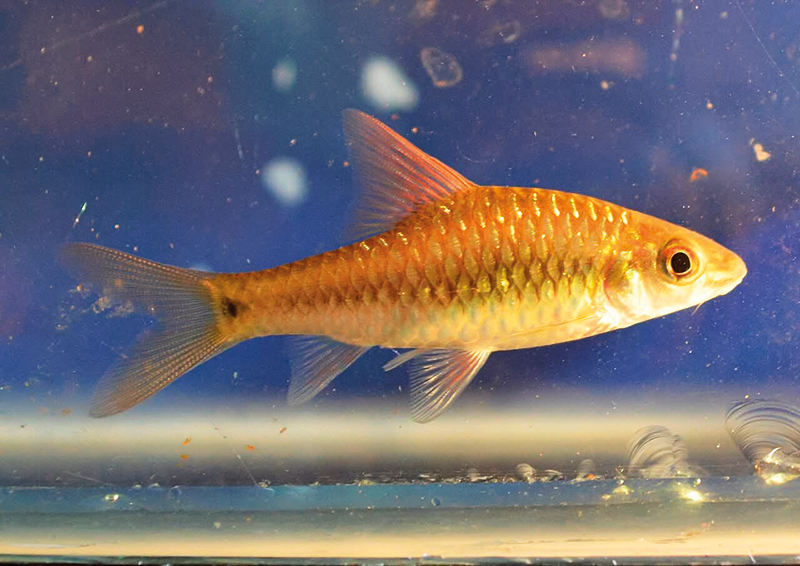
On a quiet morning, as Dr. Kelum Manamendra-Arachchi celebrates another year of life, it is not difficult to imagine him where he has always belonged—somewhere between forest and memory, between bone and history, between the living and the extinct.
For more than 25 years, he has shared his knowledge generously with the Sunday Island, often referring to it with unmistakable affection as his favourite newspaper. To generations of readers, he has been more than a scientist.
He has been an interpreter of the natural world, a man who helped Sri Lanka see itself more clearly.
His life’s work has unfolded not in pursuit of recognition, but in pursuit of truth.
Sri Lanka, an island small in size but vast in biological richness, holds within its forests and streams a remarkable concentration of life. Yet, for much of the 20th century, many of its smallest and most fragile creatures lived and vanished without scientific record.
The pioneering zoological work of P.E.P. Deraniyagala had once drawn the world’s attention to the island, but the decades that followed saw fewer explorers willing to continue that difficult journey of discovery.
It was into that silence that Kelum Manamendra-Arachchi quietly stepped.
His fascination with animals began in childhood, when he joined the Young Zoologists’ Association at the Dehiwala Zoo. It was there, among cages and curiosity, that he first learned the discipline of observation. He was not content simply to see. He wanted to understand.
-
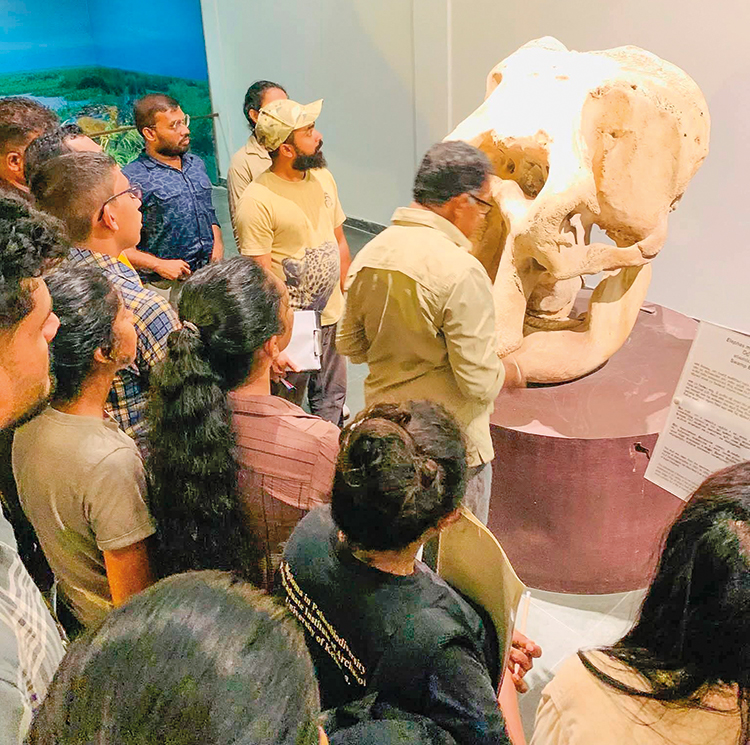
- Museum study led by Kelum
-
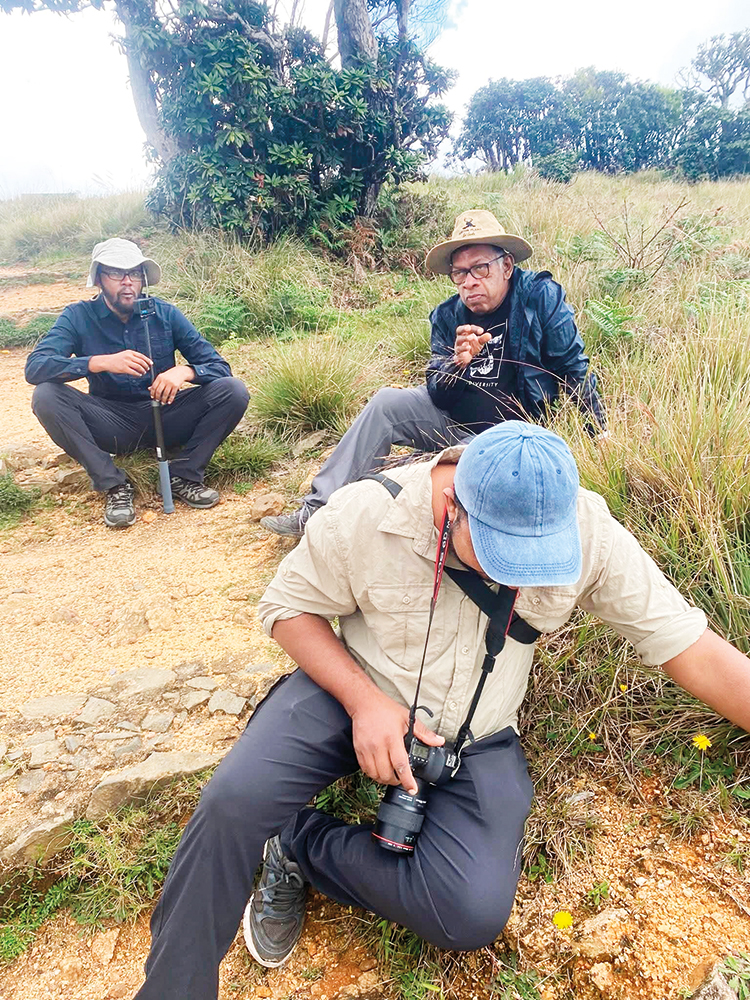
- Field inspection
That desire would shape his destiny.
While still young, he was invited to assist researchers in identifying animal bones recovered during archaeological excavations. It was a rare responsibility, and he approached it with uncommon seriousness. Where others saw fragments, he saw identity. Where others saw remains, he saw continuity.
Bones became his language.
In the early 1990s, his meeting with conservationist and taxonomist Rohan Pethiyagoda marked a turning point—not just in his life, but in Sri Lanka’s scientific history. Together, they helped build the Wildlife Heritage Trust, an institution dedicated to uncovering the island’s hidden biodiversity.
At the time, many of Sri Lanka’s amphibians, reptiles, and small mammals remained scientifically invisible. They existed in forests and streams, unnamed and unrecognised.
Dr. Manamendra-Arachchi set out to change that.
His search took him across continents to the great natural history museums of Britain, France, India, and Singapore. There, in quiet halls filled with preserved specimens, he compared bones and bodies, carefully tracing the identity of species across time and geography. It was meticulous, patient work—the work of someone who understood that discovery begins with attention.
In 1996, he co-authored a landmark study on Sri Lanka’s amphibians, reshaping scientific understanding of these delicate creatures. But it was in 2005 that his work would astonish the global scientific community.
In a single paper, he and his colleagues described 27 new species of shrub frogs—an extraordinary achievement that revealed Sri Lanka as one of the world’s most important centres of amphibian diversity. Scientists around the world turned their attention to the island, newly aware of the richness that had long remained hidden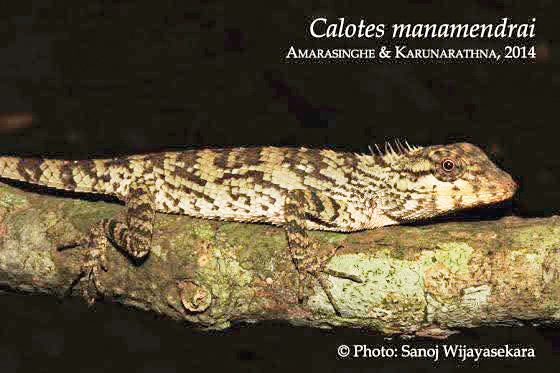 .
.
Through his work, Sri Lanka’s forests began to speak.
Yet Dr. Manamendra-Arachchi understood that science must not remain confined to laboratories or journals. It must belong to people. In 2007, he published a book on Sri Lanka’s amphibians in Sinhala, opening the doors of knowledge to young students across the country. For many, it became a first step into scientific discovery.
He did not merely document biodiversity. He inspired those who would protect it.
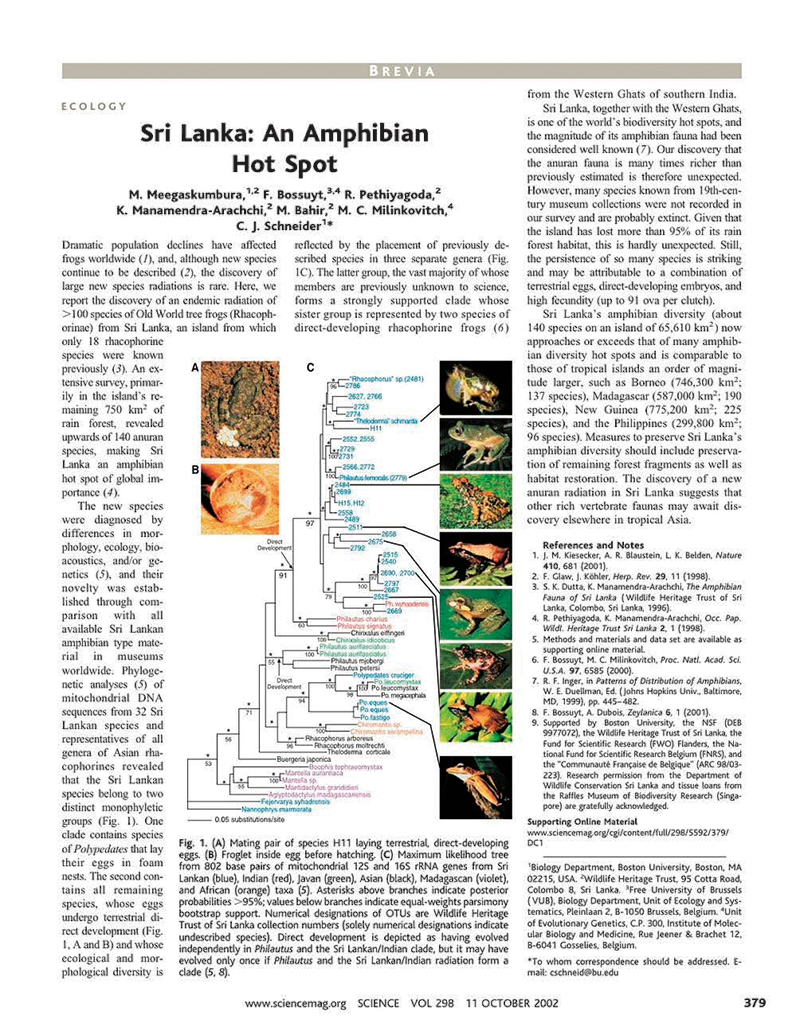
Sri Lanka amphibian hot spot -The Island exclusively reported
His work extended beyond living species into deep time itself. Through the study of fossil remains found in Sri Lanka’s ancient gem-bearing gravels, he reconstructed animals that had vanished thousands of years ago. With scientific precision and artistic insight, he brought extinct creatures back into human understanding.
He reminded us that Sri Lanka’s story is older than memory.
Those who know him personally speak of his remarkable ability to connect science with life. He can move effortlessly from discussing frog evolution to ancient civilisations, from fossil anatomy to art and philosophy. His lectures are filled not only with knowledge, but with wonder.
He is, above all, a teacher.
In recognition of his immense contributions, the University of Sri Jayewardenepura awarded him an honorary doctorate in 2022. Species have been named in his honour, ensuring his legacy will remain permanently embedded in the natural world he helped reveal.
Yet he remains unchanged—quiet, thoughtful, and deeply committed to discovery.
Even today, he continues his work, guiding students, advising researchers, and sharing his knowledge with the public.
His curiosity remains undiminished, his purpose undisturbed by time.
On his birthday (Feb 16) it is fitting that Sri Lanka pauses to reflect on his extraordinary journey.
For he did more than study animals.
He gave identity to the unnamed.
He gave meaning to the forgotten.
He gave Sri Lanka a deeper understanding of itself.
And in forests where bones still lie hidden beneath fallen leaves, waiting patiently for someone to listen, Dr. Kelum Manamendra-Arachchi continues to hear their stories.
By Ifham Nizam
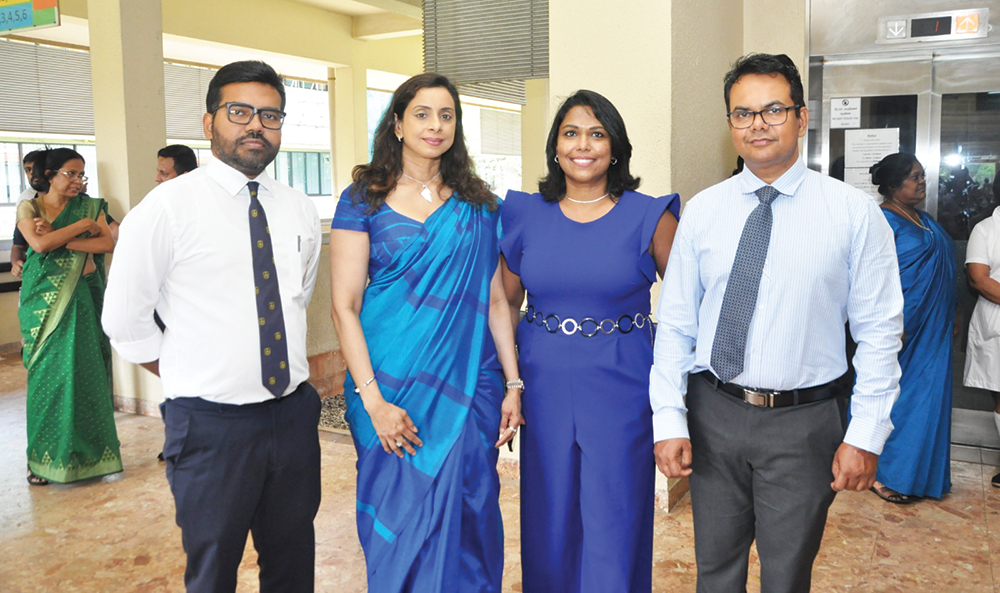
At the core of Jayewardene Hospital is the Organ Transplant Unit. For hundreds of patients suffering from end stage organ failure, the hospital has become a place of renewed possibility. Many arrive after years of dialysis, physical exhaustion and emotional strain. Through transplants they are given not extended life but return to normaly For the doctors each transplant is a responsibility. For the recipients it is a new beginning. And for donor families it is a way for love to endure beyond loss.
The Organ Donation Day at Sri Jayewardenepura General Hospital unfolded as a deeply moving tribute to life, loss and the extraordinary courages that connects the two. Bringing together donor families, medical professionals and survivors whose lives have been transformed, the event was not merely ceremonial but it was profoundly humane.
From the very beginning, there was a quiet stillness, it was the kind of stillness that carried a Semotion unspoken yet deeply felt.
Families walked in with holding memories and a strength that only those who have lived and lost can truly understand. Yet beneath the grief there was something else. There was purpose, because here loved ones were not only remembered, but celebrated for the lives they continue to hold.
At the heart of all, stood doctors and the transplanted teams, the quiet bridge between lost and life. For them organ donation is not simply clinical, it is deeply personal. They carry the weight and hope often with the same moment.
-
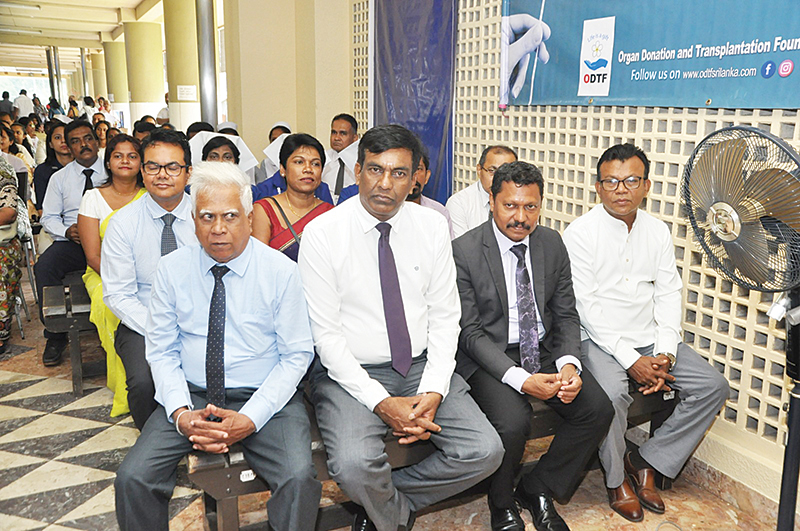
- A team bound by purpose-saving lives
One of the most poignant moments of the ceremony was the presentation of white roses to the families of the donors.
Simple but pure and deeply symbolic, each white rose represented remembrance, peace and the enduring hearts of life given selflessly. As each flower was handed over, there were tears but also quiet smiles.
It was a kind gesture that said what words often cannot, and never forgotten. The lighting of the traditional oil lamp further deepend the emotion of the day. Each flame symoblised a life carried forward ,a reminder that even in loss, there is light.
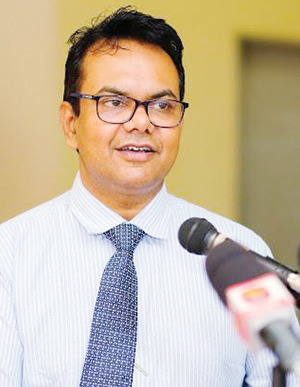
Dr Niroshan Seneviratne,visionary behind Jayewardene Hospital transplant surgery
This ceremony was organised by the Organ Donation and Transplantation Trust Fund based at Sri Jayewardenepura General Hospital.
This fund was co-founded by Dr. Niroshan Seneviratne, Consultant Urogolist and Transplant Surgeon Dr. Chamila Pilimatalawwe Consultant Anaesiologist and Dr. Chintana Galphitiyawa Consultant Nephrologist. The Chief Guest was Ven. Professor Medgampitiye Wijithadhamma, Guest of honour.was Peter D’Almeida The special guest was Dr. Hansaka Wijemanu ,Deputy Minister of Health. Other special included Dr. Dammika Alahpperuma, MP Dewanande sSuraweera ,Chairman of the hospital Dr Thamara Kalubowila, Director of the hospital Dr Dhammika Alahahaperuma, Sandya Tennekoon and Kareem Amath, Board of Trustee member, Dr Gamini Samarasekera, Auditor Dr Chanaka Abeyratne, consultant Nephrologist
As the proceedings began, the families stood motionless, united by circumstances but compassion and shared humanity. Throughtout the ceremony one message resonated deeply, Organ Donation is not about statistics or procedures it is about people. It is about finding meaning even in the most difficult goodbyes. Among the many voices, the transplant surgeon Dr. Niroshan Seneviratne, a name deeply respected in the country’s transplant landscape, spoke with quiet conviction .Dr. Seneviratne reflected on the journey of organ transplantation in Sri Lanka. Every donar is a hero he emphasised, his voice steady yet filled with emotion “Behind every transplant is a family that chose to give life in their darkest hour.”
Sri Lanka’s organ transplant programmes has steadily grown over the years, particularly in Kidney transplants, offering hope to thousands of chronic renal diseases. This day also honoured the tireless medical teams working behind the screen, surgeons, ICU staff volunteers. Their work often unseen, is nothing short of extraordinary. Organ Transplant Day is not just a date on the calender. It is a celebration of life, of giving, and of the extraordinary power of human kindness.
-
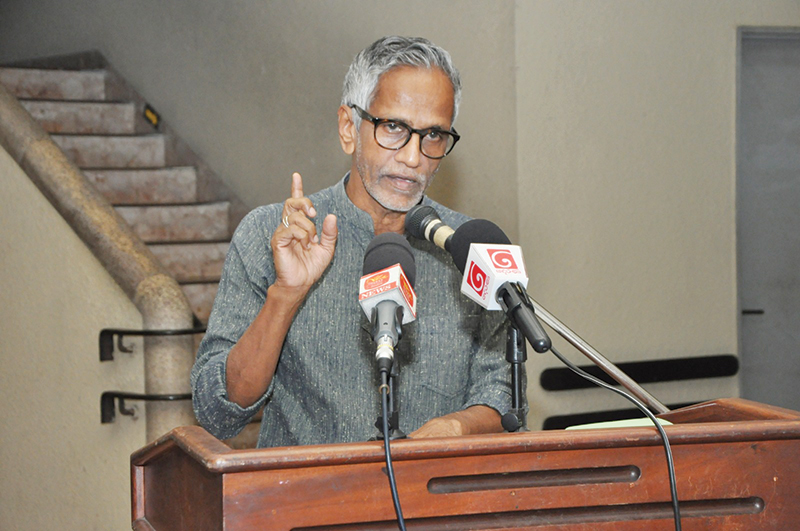
- Peter D’ Almeida- guest of honour
-
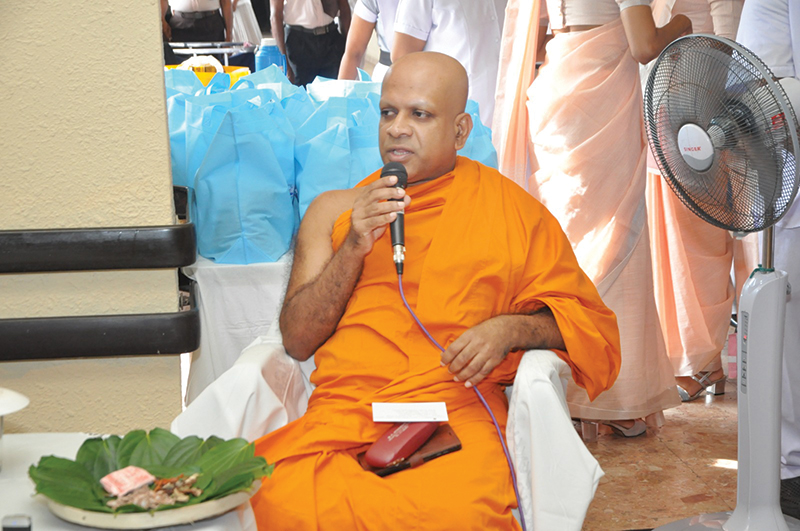
- Chief guest Ven Professor Medagampitiye Wijithadhamma
-
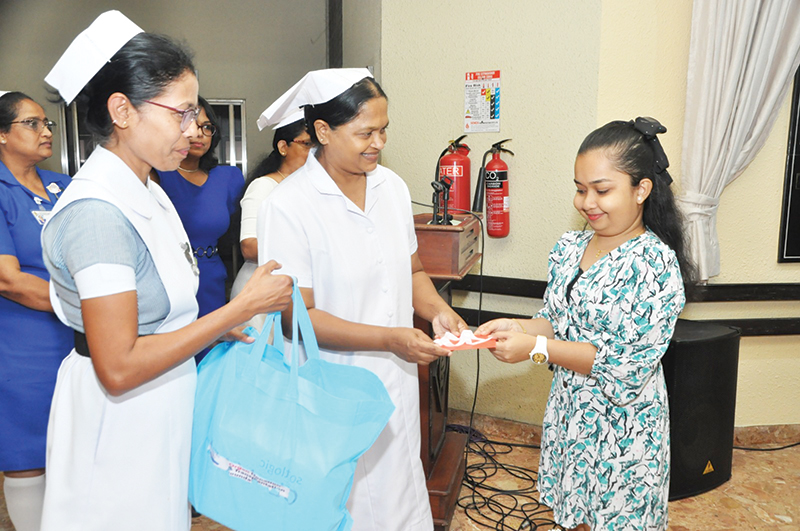
- Every gift tells a story of hope and graditude
-
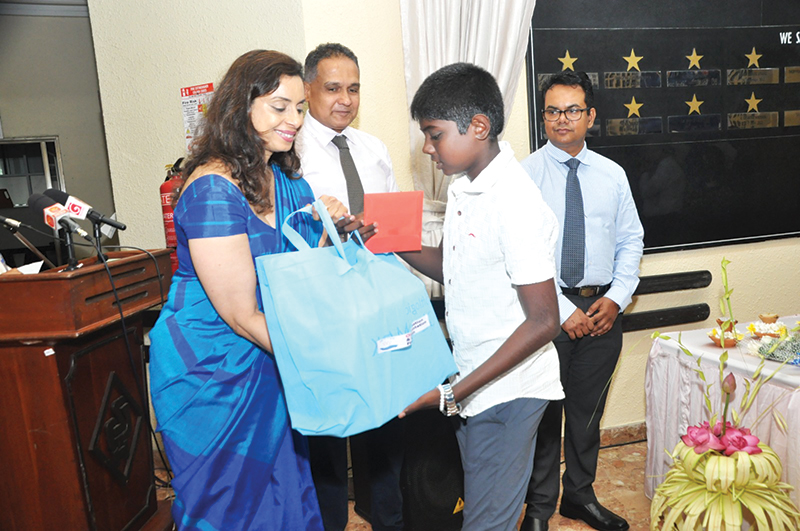
- Small tokens, immense gratitude honouring heroes behind every transplant
Pix by Thushara Attapathu
By Zanita Careem

South Africa go into semis unbeaten despite Raza’s heroics

One killed and 11 injured at Dubai and Abu Dhabi airports as Iran strikes region

Unchanged India opt to bowl; Hosein replaces King for West Indies

Healy plunders 158 off 98 balls in final ODI as Australia secure huge win

Zimbabwe elect to bat

Iran begins 40-day mourning after Khamenei killed in US-Israeli attack

‘Dates have the highest sugar content to fight Coronavirus’

Sunday Island 27 December – Headlines

#SundayIsland 17th December – Headlines

Sunday Island – 28th March

Sunday Island Headlines – 21 March

Sunday Island – 21st February – Headlines
-

 Features7 days ago
LOVEABLE BUT LETHAL: When four-legged stars remind us of a silent killer
-

 Business7 days ago
Bathiya & Santhush make a strategic bet on Colombo
-

 Business7 days ago
Seeing is believing – the silent scale behind SriLankan’s ground operation
-

 Features7 days ago
Protection of Occupants Bill: Good, Bad and Ugly
-

 News6 days ago
Prime Minister Attends the 40th Anniversary of the Sri Lanka Nippon Educational and Cultural Centre
-

 News7 days ago
Coal ash surge at N’cholai power plant raises fresh environmental concerns
-

 Business7 days ago
Huawei unveils Top 10 Smart PV & ESS Trends for 2026
-

 Opinion3 days ago
Jamming and re-setting the world: What is the role of Donald Trump?