
News
96 university teachers demand release of Hejaaz Hizbullah…

A group of 96 university teachers has called for the release of Hejaaz Hizbullah and Ahnaf Jazeem,. They have, in a statement titled, ‘A call to action against the detention of Hejaaz Hizbullah and Ahnaf Jazeem, anti-Muslim violence, and attacks on democracy’, asked for a ‘halt to undemocratic actions by government actors, a repeal of the PTA and other laws that are contrary to the principles of democracy, and ask that the public demand accountability”.
The full text of the statement: “Decades of majoritarian politics, and the more recent descent towards authoritarianism and militarisation, have eroded the foundations of our democracy. They have numbed us to the violence in our daily lives and desensitised us to how sections of our citizenry are targeted. Over a year has passed since Hejaaz Hizbullah and Ahnaf Jazeem were arrested, and they remain imprisoned to date.
“On April 14, 2020, human rights and constitutional lawyer Hizbullah was arrested by the Criminal Investigation Department (CID) and detained under Section 9 of the Prevention of Terrorism Act (PTA) for over 10 months. At the time of arrest, his alleged crimes were “aiding and abetting” one of the Easter Sunday bombers. It later transpired that he represented the family in two land cases. He is now being charged with speech related offences under Section 2(1)(h) of the Prevention of Terrorism Act (PTA) and Section 3(1) of the International Covenant on Civil and Political Rights (ICCPR) Act. These are based on statements made by minors to the CID, which the children maintain they were coerced and threatened to make.
“On May 16, 2020, the Police Counter Terrorism Investigation Division (CTID) arrested Jazeem, a poet and teacher from Mannar, on allegations that his book Navarasam contained “extremist ideas” and that he taught “extremism” to students. A review of the poems by an “expert panel” of psychiatrists, some with university affiliations, makes vague claims about the potential of the book to incite violence, hatred, and suicidal thoughts. Their report fails to provide the basis or justification for these judgments and even says that there were two discrepant sets of translations (Sinhala and English from the original Tamil)at their disposal, which fact should have called the entire operation into question. Contrary to the allegations of the CTID, recent translations reveal that the poems were deeply critical of violence.
“Hizbullah’s arrest and continued detention is an attack on the rights of lawyers and the rule of law. Jazeem’s arrest and continued detention without charge represents, in addition, an attack on the freedom of expression and pluralism, and a broader war on ideas. As can be seen from the progress of the two cases, the rights of Hizbullah and Jazeem have been clearly violated, and questionable tactics have been and continue to be used to manufacture the cases against them. In custody, their basic needs for health and safety have been neglected.
“The incarceration of Hizbullah and Jazeem occurs in the backdrop of highly organised anti-Muslim mobilisations designed to stigmatise and isolate Muslim communities. Violence and intimidation continue, bolstered by the government’s complicity in these acts in the name of “national security”. In March 2021, the Minister of Public Security announced plans to shut down 1,000 madrasa schools and ban the burqa. A month later, the Cabinet approved the ban on all forms of face veils in public spaces, and, in May, the Deputy Director of Customs announced that any Islamic religious texts brought to the country must be cleared by the Ministry of Defence. These actions further criminalise one for being Muslim and are an assault on our democratic freedoms.
“Anti-Muslim sentiments guide the state COVID-19 response as well. Last year, at the height of the pandemic, the Ministry of Health adopted a mandatory cremation policy for the COVID dead, despite WHO guidelines to the contrary. The policy was backed by “experts”, including those from universities, citing unsubstantiated public health concerns, with crass disregard for the strongly followed religious tradition among Muslims of burying their dead. Today, burials are permitted, but restricted to a Muslim-populated area – Ottamavadi, Batticaloa –signalling that only Muslims must contend with the albeit unlikely threat from their dead. The burial issue was only one of the more flagrant of attempts to weaponise the pandemic against Muslims. The state machinery, through statements and actions of doctors, PHIs, politicians, military personnel, and state-controlled media pushed a narrative of Muslims as super-spreaders.
“These trends are not new. They are a continuation of heightened violence against Muslims that spans a decade. Starting in 2012,organised attacks on mosques and demonstrations against Muslims, including an anti-Halal campaign, culminated in horrific acts of violence, including the Aluthgama and Digana riots. In parallel, highly politicised campaigns have targeted Muslim individuals; for instance, Dr.Shafi Shihabdeen was arrested on false allegations of forced sterilisation, and activist Ramzy Razeek was detained for condemning the anti-Muslim witch-hunt post Easter Sunday bombings. Unlike the zeal with which these cases are pursued, state institutions responsible for ensuring public safety have failed to prevent anti-Muslim violence, and no one has been held accountable so far.
“The targeting of Muslims occurs in a context of increasing authoritarianism and militarisation which have served to weaken democratic institutions. We have witnessed the remanding of former Director, CID, Shani Abeysekera, who had investigated high-ranking officials and politicians, author Shaktika Sathkumara, for purportedly anti-Buddhist writings, and many others. The PTA is wielded as a tool of politicisation and arbitrary power, alongside the Emergency Regulations and the ICCPR Act. They are deployed in majoritarian campaigns against minorities, to attack those opposed to the regime in power, and crush dissent, casting doubt on state institutions and the judicial system.
“Academics are mandated to exercise and safeguard free speech and expected to confront and question the excesses of those in power. As members of public higher educational institutions, we must support and amplify the voices of the marginalised. Having learned from the devastation caused by uneven justice, majoritarian politics, and racist rhetoric, and knowing the insecurity and fear that some of our citizens live with on a daily basis, we must resist these attacks. We believe that allowing these actions to continue with impunity implicates us all.
“We, the undersigned, as members of the academic community, demand the immediate release of both Hizbullah and Jazeem, and call attention to the fact that their arrests have taken place in a context of unrelenting anti-Muslim mobilisations that are tearing our social fabric apart. We are deeply worried about the continuing deterioration of the criminal justice system and the institutional decay it more broadly signals, as these developments are also symptomatic of a gradual hollowing out of the democratic bases of society. We, therefore, call for a halt to undemocratic actions by government actors, a repeal of the PTA and other laws that are contrary to the principles of democracy, and ask that the public demand accountability. Finally, we call on the greater academic community to broaden this struggle to ensure that we fulfil our mandate and exercise our academic freedom in the pursuit of democracy and justice for all.”



The newly appointed Cabinet Committee tasked with ensuring the uninterrupted functioning of Sri Lanka’s public service held its inaugural meeting on Thursday (19) at the Presidential Secretariat under the patronage of Prime Minister Dr Harini Amarasuriya.
The Committee convened to discuss strategies to maintain seamless government operations in the face of potential disruptions caused by the ongoing conflict situation in the Middle East, with particular focus on energy resource management.
According to officials, the discussions emphasised sustaining essential government services, ensuring continued service delivery to the public, and addressing the operational challenges faced by public sector employees during the current circumstances. The Committee also examined measures to mitigate any disruptions that could affect day-to-day administrative and service functions across ministries and departments.
Key attendees at the meeting included the Minister of Public Administration, Provincial Councils and Local Government A. H. M. M. H. Abayaratne; Secretary to the President Dr Nandika Sanath Kumanayake; Secretary to the
Prime Minister Pradeep Saputhanthri; Chief of Staff to the President Prabath Chandrakeerthi; and senior secretaries from key ministries including Health and Mass Media, Transport, Highways and Urban Development, Energy, and Digital Economy.
Representatives from state institutions such as the Ceylon Petroleum Corporation were also present, highlighting the government’s focus on energy security as a central priority. The Committee’s deliberations underscored a coordinated approach to balancing uninterrupted public service delivery with effective management of limited energy resources amid the ongoing geopolitical uncertainties.
Observers note that the formation of this Cabinet Committee reflects the government’s proactive stance in safeguarding national administrative functions and ensuring that critical public services remain resilient during times of external pressures.The Committee is expected to meet regularly to monitor developments, evaluate emerging risks, and implement practical measures to maintain operational continuity across the public sector.
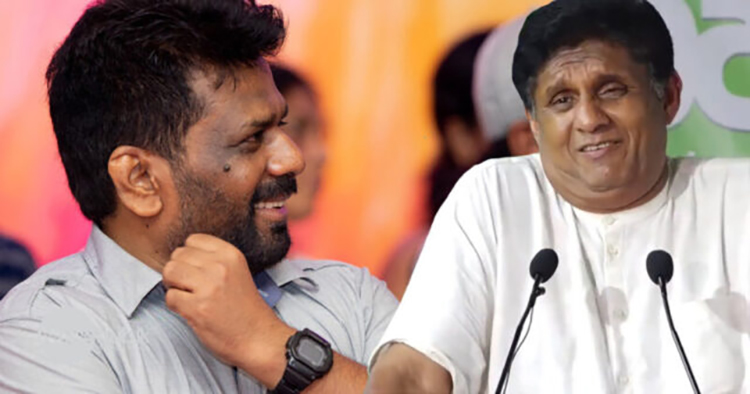
Opposition Leader Sajith Premadasa on Friday lashed out at President Anura Kumara Dissanayake in Parliament, accusing him of failing to uphold international law during wartime.
Premadasa said the President’s claim of neutrality ignored breaches of the UN Charter—including Articles 2.4 and 2.7—and other global conventions. “A neutral stance requires openly acknowledging violations,” he argued, criticizing the absence of ethical mechanisms to safeguard international law.
He also questioned the President’s handling of maritime issues, particularly whether Sri Lanka had been informed of the alleged attack on the Iranian vessel IRIS Dena, stressing that the Exclusive Economic Zone (EEZ) permits only peaceful activity.
On the economic front, Premadasa condemned the government for missing a chance to buy Russian oil during a 30-day U.S. sanctions suspension.
He said attempts to advise the Foreign Ministry, including a meeting with the Russian Ambassador, yielded no progress.
Premadasa further ridiculed the government’s earlier dismissal of the QR code fuel system, noting that officials are now adapting to it.
Turning to broader economic concerns, he called for immediate negotiations with the IMF to secure a new agreement, warning that the current primary balance of 2.3 is unsustainable. He stressed the urgent need for a poverty-reduction program, highlighting that one-third of Sri Lankans live in poverty.
He also demanded that surplus Treasury funds be used to support relief packages, arguing billions in reserves could aid households struggling with income shortfalls.Concluding his address, Premadasa criticized the government for failing to prepare for foreseeable crises, leaving the country vulnerable.

Former Minister Johnston Fernando, his two sons, and three others were remanded by the Wattala Magistrate’s Court yesterday (20) until April 2, the court confirmed.
The suspects, including Fernando’s elder son Johan, younger son Jerome, and a former transport manager of Lanka Sathosa, are under investigation by the Police Financial Crimes Investigation Division (FCID).
Authorities allege the Lanka Sathosa lorry was misused for operations linked to an ethanol company reportedly owned by Fernando, causing an estimated Rs. 2.5 million loss to the state.

Trump says US will ‘obliterate’ Iran’s power plants if Strait of Hormuz not open before 48-hour deadline

Showers may occur at several places in the Western, Sabaragamuwa and Southern provinces and in Nuwara-Eliya district after 1.00 pm.

PM Harini leads panel to protect public services

Sajith slams President over war conduct and economic missteps

Johnston Fernando, sons held in Lanka Sathosa lorry misuse case

Gura: The unsung hero

‘Dates have the highest sugar content to fight Coronavirus’

Sunday Island 27 December – Headlines

#SundayIsland 17th December – Headlines

Sunday Island – 28th March

Sunday Island Headlines – 21 March

Sunday Island – 21st February – Headlines
-

 Business7 days ago
Browns EV launches fast-charging BAW E7 Pro at Rs. 5.8 million
-

 News5 days ago
CIABOC questions Ex-President GR on house for CJ’s maid
-

 News6 days ago
Sri Lankan marine scientist Asha de Vos honoured at UNGA opening
-

 Features7 days ago
Achievements of the Hunduwa!
-

 News6 days ago
Australian HC debunks misleading travel risk claims for Sri Lanka
-

 News4 days ago
Bailey Bridge inaugurated at Chilaw
-

 Latest News6 days ago
Wednesdays declared a government holiday with effect from 18th March
-

 News4 days ago
Pay hike demand: CEB workers climb down from 40 % to 15–20%