
Features
24-year-old collective agreement had to be honoured and precedents followed: CBSL Governor

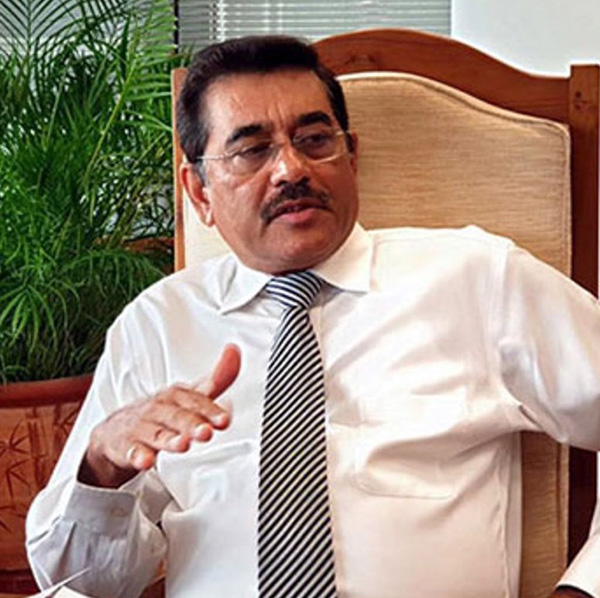
Pay hike controversy:
Public concerns won’t go unheeded
‘My pay hike is zero’
Governor’s salary lower than those of many others at CBSL
About 100 central bankers have left for overseas jobs since 2022
Newly-passed CBSL Act had nothing to do with triennial pay revision
by Saman Indrajith
The CBSL (Central Bank of Sri Lanka) pay hike controversy apparently refuses to go away. Hardly a day passes without it being taken up in Parliament or elsewhere. The person in the crosshairs of the critics of the CBSL in general and the pay revision in particular is CBSL Governor Dr. Nandalal Weerasinghe.
Has the CBSL departed from the established procedures, processes and practices in effecting the latest pay increases, which reportedly range from 29% to 70%? Do the Central Bankers deserve the salaries they are drawing? Is it fair for the CBSL minor staffers to be given higher salaries than some senior public officials? Has the CBSL Governor benefited from the controversial pay revision, and is he the highest paid Central Banker? How does he feel when some of his critics bay for his blood, in a manner of speaking?
Despite his hectic workload aggravated by numerous meetings on the IMF bailout programme and other economic recovery measures, Dr. Weerasinghe took time off his busy schedule, on Tuesday, to field the aforesaid questions and some more, in a brief interview with The Island.
Excerpts:
Q: How big is the pay hike you have got as the CBSL Governor from the recent salary revision?
A: My pay hike is zero. I have not received a pay hike from the recent salary revision, which only applies to CBSL employees up to the Deputy Governor level. My salary, as the Governor, is lower than those of many CBSL staff including some officials in lower grades. I have no complaints at all about my salary as I hold this position only due to my desire to help the economy recover from its worst crisis by using my experience and knowledge as a career central banker.
Q: But you are entitled to an attractive pension as CBSL Governor. aren’t you?
A. Although the previous CBSL administration made former Governors eligible for a pension irrespective of the length of their tenure, some of them have refused to claim their entitlement. I have also declared that I will not claim any pension benefits from CBSL for my tenure as Governor CBSL.
Q: However, you never had it so good, as your critics say. You now have an official house, official vehicles and other perks, don’t you?
A: I would not say I have never had it so good. Yes, I am entitled to an official residence, vehicle and some other perks like many other public servants. However, once such perks are added as non-cash benefits for taxation purposes, my take-home salary is significantly lower than my gross salary as caps imposed on non-cash benefits that are usually applied to the salaries of public servants are not applicable to the Governor’s salary.
Q: If you think your position as CBSL Governor is not financially rewarding, why did you return from retirement?
A: After my retirement, I moved to Australia with the intention of spending more time with my family as I could not spend quality time with them during the three decades of my career at CBSL. When I was asked whether I could come back and help the country at its darkest hour, I felt a moral obligation to accept the position, despite knowing that it would be detrimental to my family and financial position, when compared to my earning potential as an independent professional. I believe that any loyal countryman would have made the same decision at that time, given the severity of the situation.
Q: It is being argued in some quarters that the CBSL has been able to grant its employees pay hikes arbitrarily because of the newly-passed CBSL Act, which is believed to have given the CBSL unbridled independence. Isn’t it true?
A: The new CBSL Act has nothing to do with the recent salary revision. Since the establishment of CBSL under the provisions of previous law (Monetary Law Act of 1950) salary revisions have been done by the Board of CBSL. Since 1991, such revisions have been done once every three years. Collective agreements have been used to formalize such revisions since 2000, similar to many other public corporations and private sector entities.
Q: Who decided on the salary revision at issue?
A: In the process of collective agreements, salary revisions are decided based on several rounds of intense negotiations between all trade unions and management with the intention to reach a consensus among all parties. Some trade unions are directly affiliated to the existing major political parties while others are independent, representing only the interests of CBSL employees.
Q: If so, why are you drawing all the flak? And, why don’t you tell the public that you alone cannot be held responsible for that?
A: I believe this news has affected different groups of people in different ways. Some people feel very strongly about it. In such circumstances, it is only natural that I have drawn their ire as the head of the institution and perhaps the most public facing entity of CBSL. My goal is to understand the genuine concerns raised by the dissatisfied groups and to restore trust in the CBSL, and therefore I do not think it is prudent for me to distance myself from the issue and deflect.
Q: If you had not returned to accept the post of CBSL Governor after retirement, and had chosen to work for an international organization after the mandatory cooling-off period, would you have earned more than the salary of the CBSL Governor? It is being claimed via social media that you would have had to settle for an ordinary job in Australia if you had not been called from retirement to head the CBSL. What have you got to say to this?
A: I didn’t have any intention to engage in any full-time job after my retirement from CBSL. At the same time, I didn’t want to waste my knowledge and experience which I gained over three decades. I enjoyed my retirement life by conducting my own research and assisting some multilateral organizations and international firms whenever they sought my expertise on a part-time basis while enjoying time with my family and finding more time to travel. In fact, my retirement life was much more financially rewarding than my career at CBSL even as a Deputy Governor.
Q: Don’t you think the blame for the current economic crisis should be apportioned to the CBSL as well? Isn’t it true that the CBSL failed to warn the government against an impending foreign currency reserves crisis?
A: It is clearly evident in the recent Supreme Court case on the economic crisis that the CBSL officials had warned the then Governors, the Monetary Board and the Ministry of Finance about the impending economic crisis but such warnings were ignored. CBSL officials cannot make public statements or report to the Parliament on their own without permission from the Governor or the Board, under confidentiality clauses in CBSL laws. Such provisions are necessary in CBSL laws to prevent highly market sensitive and confidential information being leaked. Therefore, the CBSL professional staff cannot be blamed for the current economic crisis.
Q: Why do you think the CBSL Executive Grade officers deserve the salaries they draw? Do you think they could earn more if they join the private sector or international institutions? And, how many of them have left CBSL in recent years for better prospects?
A: Only a limited number of university graduates with First Class or Second Class Upper, who score highest at a competitive examination held independently, join the CBSL as Executive Grade officers. They are the top candidates who would easily obtain employment elsewhere if the CBSL salary is not competitive. Once they reach mid-level, they are specially trained for central banking and their special skills give them a wider market reach. Between 2022 and 2024, 100 staff members left CBSL and found employment abroad.
Q: CBSL minor employees draw higher salaries than many senior public officials? Don’t you think this is unfair?
A: I admit that there exists such an anomaly, which has been a legacy issue for two reasons. First, many minor employees were recruited to CBSL between 2008 and 2010 without a rigorous competitive process. Secondly, once they are recruited, they cannot be left out in salary determination in collective agreements as they are also part of staff and members of trade unions.
Q: What have you got to say to those who are out for your scalp?
A: I would like to reassure the public that the recent pay rise planned at CBSL has been conducted in accordance with all proper legal avenues and in the same manner as all other pay rises at the CBSL over its history.
I also want to reassure the people that their concerns will not go unheeded, and I appreciate the voices being raised as we are determined to take this opportunity to review the way we do things. We acknowledge that these are very tough economic times for everybody and there have been ethical issues raised about the timing of these measures, etc. We hope to give these ethical issues the due consideration they deserve.
I believe in the hard-working people of the CBSL and the hard-working people of our nation. I hope that a day will dawn when every worker gets a wage that he or she is satisfied with, including at the institution under my purview and elsewhere.
Q: Don’t you feel hurt when you come under fire?
A: I would say ‘hurt’ is the wrong word to use in this instance. I do sometimes feel disappointed when my energy as well as attention is forced away from the main task that I hoped to achieve when I returned to CBSL. My intention is to work for the betterment of Sri Lanka and support the CBSL staff on that journey. This is why I have been able to make difficult decisions. This is also why I am always open to receiving feedback from genuinely concerned parties. It is, however, an unnecessary diversion of energy and time when it comes from more political and disingenuous quarters.
(The interviewer is Deputy Editor of The Island.)









During a discussion at the Regional Center for Strategic Studies (RCSS) in Sri Lanka on 9 December, Dr. Neil DeVotta, Professor at Wake Forest University, North Carolina, USA commented on the “gravity of a geopolitical contest that has already reshaped global politics and will continue to mould the future. For Sri Lanka – positioned at the heart of the Indian Ocean, economically fragile, and diplomatically exposed- his analysis was neither distant nor abstract. It was a warning of the world taking shape around us” (Ceylon Today, December 14, 2025).
Sri Lanka is known for ignoring warnings as it did with the recent cyclone or security lapses in the past that resulted in terrorist attacks. Professor De Votta’s warning too would most likely be ignored considering the unshakable adherence to Non-Alignment held by past and present experts who have walked the halls of the Foreign Ministry, notwithstanding the global reshaping taking place around us almost daily. In contrast, Professor DeVotta “argued that nonalignment is largely a historical notion. Few countries today are truly non-aligned. Most States claiming neutrality are in practice economically or militarily dependent on one of the great powers. Sri Lanka provides a clear example while it pursues the rhetoric of non-alignment, its reliance on Chinese investments for infrastructure projects has effectively been aligned to Beijing. Non-alignment today is more about perceptions than reality. He stressed that smaller nations must carefully manage perceptions while negotiating real strategic dependencies to maintain flexibility in an increasingly polarised world.” (Ibid).
The latest twist to non-alignment is Balancing. Advocates of such policies are under the delusion that the parties who are being “Balanced” are not perceptive enough to realise that what is going on in reality is that they are being used. Furthermore, if as Professor DeVotta says, it is “more about perception than reality”, would not Balancing strain friendly relationships by its hypocrisy? Instead, the hope for a country like Sri Lanka whose significance of its Strategic Location outweighs its size and uniqueness, is to demonstrate by its acts and deeds that Sri Lanka is perceived globally as being Neutral without partiality to any major powers if it is to maintain its autonomy and ensure its security.
DECLARATION OF NEUTRALITY AS A POLICY
Neutrality as a Foreign Policy was first publicly announced by President Gotabaya Rajapaksa during his acceptance speech in the holy city of Anuradhapura and later during his inauguration of the 8th Parliament on January 3, 2020. Since then Sri Lanka’s Political Establishment has accepted Neutrality as its Foreign Policy judging from statements made by former President Ranil Wickremesinghe, Prime Minister Dinesh Gunawardena and Foreign Ministers up to the present when President Dissanayake declared during his maiden speech at the UN General Assembly and captured by the Head Line of Daily Mirror of October 1, 2025: “AKD’s neutral, not nonaligned, stance at UNGA”
The front page of the Daily FT (Oct.9, 2024) carries a report titled “Sri Lanka reaffirms neutral diplomacy” The report states: “The Cabinet Spokesman and Foreign Minister Vijitha Herath yesterday assured that Sri Lanka maintains balanced diplomatic relations with all countries, reaffirming its policy of friends of all and enemy of none”. Quoting the Foreign Minister, the report states: “There is no favouritism. We do not consider any country to be special. Whether it is big or small, Sri Lanka maintains diplomatic relations with all countries – China, India, the US, Russia, Cuba, or Vietnam. We have no bias in our approach, he said…”
NEUTRALITY in OPERATION
“Those who are unaware of the full scope and dynamics of the Foreign Policy of Neutrality perceive it as being too weak and lacking in substance to serve the interests of Sri Lanka. In contrast, those who are ardent advocates of Non-Alignment do not realize that its concepts are a collection of principles formulated and adopted only by a group of like-minded States to meet perceived challenges in the context of a bi-polar world. In the absence of such a world order the principles formulated have lost their relevance” (https://island.lk/relevance-of-a neutral-foreign-policy).
“On the other hand, ICRC Publication on Neutrality is recognized Internationally “The sources of the international law of neutrality are customary international law and, for certain questions, international treaties, in particular the Paris Declaration of 1856, the 1907 Hague Convention No. V respecting the Rights and Duties of Neutral Powers and Persons in Case of War on Land, the 1907 Hague Convention No. XIII concerning the Rights and Duties of Neutral Powers in Naval War, the four 1949 Geneva Conventions and Additional Protocol I of 1977 (June 2022)” (Ibid).
“A few Key issues addressed in this Publication are: “THE PRINCIPLE OF INVOILABILITY of a Neutral State and THE DUTIES OF NEUTRAL STATES.
“In the process of reaffirming the concept of Neutrality, Foreign Minister Vijitha Herath stated that the Policy of Neutrality would operate in practice in the following manner: “There is no favoritism. We do not consider any country to be special. Whether it is big or small, Sri Lanka maintains diplomatic relations with all countries – China, India, the US, Russia, Cuba or Vietnam. We have no bias in our approach” (The Daily FT, Oct, 9, 2024).
“Essential features of Neutrality, such as inviolability of territory and to be free of the hegemony of power blocks were conveyed by former Foreign Minister Ali Sabry at a forum in Singapore when he stated: “We have always been clear that we are not interested in being an ally of any of these camps. We will be an independent country and work with everyone, but there are conditions. Our land and sea will not be used to threaten anyone else’s security concerns. We will not allow military bases to be built here. We will not be a pawn in their game. We do not want geopolitical games playing out in our neighbourhood, and affecting us. We are very interested in de-escalating tensions. What we could do is have strategic autonomy, negotiate with everyone as sovereign equals, strategically use completion to our advantage” (the daily morning, July 17, 2024)
In addition to the concepts and expectations of a Neutral State cited above, “the Principle of Inviolability of territory and formal position taken by a State as an integral part of ‘Principles and Duties of a Neutral State’ which is not participating in an armed conflict or which does not want to become involved” enabled Sri Lanka not to get involved in the recent Military exchanges between India and Pakistan.
However, there is a strong possibility for the US–China Rivalry to manifest itself engulfing India as well regarding resources in Sri Lanka’s Exclusive Economic Zone. While China has already made attempts to conduct research activities in and around Sri Lanka, objections raised by India have caused Sri Lanka to adopt measures to curtail Chinese activities presumably for the present. The report that the US and India are interested in conducting hydrographic surveys is bound to revive Chinese interests. In the light of such developments it is best that Sri Lanka conveys well in advance that its Policy of Neutrality requires Sri Lanka to prevent Exploration or Exploitation within its Exclusive Economic Zone under the principle of the Inviolability of territory by any country.
Another sphere where Sri Lanka’s Policy of Neutrality would be compromised is associated with Infrastructure Development. Such developments are invariably associated with unsolicited offers such as the reported $3.5 Billion offer for a 200,000 Barrels a day Refinery at Hambantota. Such a Project would fortify its presence at Hambantota as part of its Belt and Road Initiative. Such offers if entertained would prompt other Global Powers to submit similar proposals for other locations. Permitting such developments on grounds of “Balancing” would encourage rivalry and seriously threaten Sri Lanka’s independence to exercise its autonomy over its national interests.
What Sri Lanka should explore instead, is to adopt a fresh approach to develop the Infrastructure it needs. This is to first identify the Infrastructure projects it needs, then formulate its broad scope and then call for Expressions of Interest globally and Finance it with Part of the Remittances that Sri Lanka receives annually from its own citizens. In fact, considering the unabated debt that Sri Lanka is in, it is time that Sri Lanka sets up a Development Fund specifically to implement Infrastructure Projects by syphoning part of the Foreign Remittances it receives annually from its citizens . Such an approach means that it would enable Sri Lanka to exercise its autonomy free of debt.
CONCLUSION
The adherents of Non-Alignment as Sri Lanka’s Foreign Policy would not have been pleased to hear Dr. DeVotta argue that “non-alignment is largely a historical notion” during his presentation at the Regional Center for Strategic Studies in Colombo. What is encouraging though is that, despite such “historical notions”, the political establishment, starting with President Gotabaya Rajapaksa and other Presidents, Prime Ministers and Ministers of Foreign Affairs extending up to President AKD at the UNGA and Foreign Affairs Minister, Vijitha Herath, have accepted and endorsed neutrality as its foreign policy. However, this lack of congruence between the experts, some of whom are associated with Government institutions, and the Political Establishment, is detrimental to Sri Lanka’s interests.
If as Professor DeVotta warns, the future Global Order would be fashioned by US – China Rivalry, Sri Lanka has to prepare itself if it is not to become a victim of this escalating Rivalry. Since this Rivalry would engulf India a well when it comes to Sri Lanka’s Exclusive Economic Zone (EEC), Sri Lanka should declare well in advance that no Exploration or Exploitation would be permitted within its EEC on the principle of inviolability of territory under provisions of Neutrality and the UN adoption of the Indian Ocean as a Zone of Peace.
As a measure of preparedness serious consideration should be given to the recommendation cited above which is to set up a development fund by allocating part of the annual dollar remittances to finance Sri Lanka’s development without depending on foreign direct investments, export-driven strategies or the need to be flexible to negotiate dependencies; A strategy that is in keeping with Sri Lanka’s civilisational values of self-reliance. Judging from the unprecedented devastation recently experienced by Sri Lanka due to lack of preparedness and unheeded warnings, the lesson for the political establishment is to rely on the wisdom and relevance of Self-Reliance to equip Sri Lanka to face the consequences of the US–China rivalry.
by Neville Ladduwahetty ✍️

A project sponsored by Perera and Sons (P&S) Company and built by Sri Lanka Navy
Petroleum Terminals Ltd
Former Managing Director Ceylon Petroleum Corporation
Former High Commissioner to Pakistan
When the 1132nd RO plant built by the Navy with funds generously provided by M/S Perera and Sons, Sri Lanka’s iconic, century-old bakery and food service chain, established in 1902, known for its network of outlets, numbering 235, in Sri Lanka. This company, established in 1902 by Philanthropist K. A. Charles Perera, well known for their efforts to help the needy and humble people. Helping people gain access to drinking water is a project launched with the help of this esteemed company.

The opening of an RO plant
The Chronic Kidney Disease (CKD) started spreading like a wildfire mainly in North Central, North Western and Eastern provinces. Medical experts are of the view that the main cause of the disease is the use of unsafe water for drinking and cooking. The map shows how the CKD is spreading in Sri Lanka.

School where 1132nd RO plants established by SLN
In 2015, when I was the Commander of the Navy, with our Research and Development Unit of SLN led by a brilliant Marine Engineer who with his expertise and innovative skills brought LTTE Sea Tigers Wing to their knees. The famous remote-controlled explosive-laden Arrow boats to fight LTTE SEA TIGER SUCIDE BOATS menace was his innovation!). Then Captain MCP Dissanayake (2015), came up with the idea of manufacturing low- cost Reverse Osmosis Water Purification Plants. The SLN Research and development team manufactured those plants at a cost of one-tenth of an imported plant.

The writer with his PSO’s daughter

Gaurawa Sasthrawedi Panditha Venerable Devahuwe Wimaladhamma TheroP/Saraswathi Devi Primary School, Ashokarama Maha Viharaya, Navanagara, Medirigiriya
The Navy established FIRST such plant at Kadawatha-Rambawa in Madawachiya Divisional Secretariat area, where the CKD patients were the highest. The Plant was opened on 09 December 2015, on the 65th Anniversary of SLN. It was an extremely proud achievement by SLN

Areas where the RO plants are located
First, the plants were sponsored by officers and sailors of the Sri Lanka Navy, from a Social Responsibility Fund established, with officers and sailors contributing Rs 30 each from their salaries every month. This money Rs 30 X 50,000 Naval personnel provided us sufficient funds to build one plant every month.
Observing great work done by SLN, then President Maithripala Sirisena established a Presidential Task Force on eradicating CKD and funding was no issue to the SLN. We developed a factory line at our R and D unit at Welisara and established RO plants at double-quick time. Various companies/ organisations and individuals also funded the project. Project has been on for the last ten years under six Navy Commanders after me, namely Admiral Travis Sinniah, Admiral Sirimevan Ranasinghe, Admiral Piyal de Silva, Admiral Nishantha Ulugetenna, Admiral Priyantha Perera and present Navy Commander Vice Admiral Kanchana Banagoda.
Each plant is capable of producing up to 10,000 litres of clean drinking water a day. This means a staggering 11.32 million litres of clean drinking water every day!
The map indicates the locations of these 1132 plants.
Well done, Navy!
On the occasion of its 75th Anniversary celebrations, which fell on 09 December 2025, the Navy received the biggest honour. Venerable Thero (Venerable Dewahuwe Wimalarathana Thero, Principal of Saraswathi Devi Primary Pirivena in Medirigiriya) who delivered the sermons during opening of 1132nd RO plant, said, “Ten years ago, out of 100 funerals I attended; more than 80 were of those who died of CKD! Today, thanks to the RO plants established by the Navy, including one at my temple also, hardly any death happens in our village due to CKD! Could there be a greater honour?

 The Universities Act is back in the news – this time with the present government’s attempt to reform it through a proposed amendment (November 2025) presented by the Minister of Education, Higher Education and Vocational Education, Harini Amarasuriya, who herself is a former academic and trade unionist. The first reading of the proposed amendment has already taken place with little debate and without much attention either from the public or the university community. By all counts, the parliament and powers across political divisions seem nonchalant about the relative silence in which this amendment is making its way through the process, indicative of how low higher education has fallen among its stakeholders.
The Universities Act No. 16 of 1978 under which Sri Lankan universities are managed has generated debate, though not always loud, ever since its empowerment. Increasing politicisation of decision making in and about universities due to the deterioration of the conduct of the University Grants Commission (UGC) has been a central concern of those within the university system and without. This politicisation has been particularly acute in recent decades either as a direct result of some of the provisions in the Universities Act or the problematic interpretation of these. There has never been any doubt that the Act needs serious reform – if not a complete overhaul – to make universities more open, reflective, and productive spaces while also becoming the conscience of the nation rather than timid wastelands typified by the state of some universities and some programs.
But given the Minister’s background in what is often called progressive politics in Sri Lanka, why are many colleagues in the university system, including her own former colleagues and friends, so agitated by the present proposed amendment? The anxiety expressed by academics stem from two sources. The first concern is the presentation of the proposed amendment to parliament with no prior consultative process with academics or representative bodies on its content, and the possible urgency with which it will get pushed through parliament (if a second reading takes place as per the regular procedure) in the midst of a national crisis. The second is the content itself.
Appointment of Deans
Let me take the second point first. When it comes to the selection of deans, the existing Act states that a dean will be selected from among a faculty’s own who are heads of department. The provision was crafted this way based on the logic that a serving head of department would have administrative experience and connections that would help run a faculty in an efficient manner. Irrespective of how this worked in practice, the idea behind has merit.
By contrast, the proposed amendment suggests that a dean will be elected by the faculty from among its senior professors, professors, associate professors and senior lecturers (Grade I). In other words, a person no longer needs to be a head of department to be considered for election as a dean. While in a sense, this marks a more democratised approach to the selection, it also allows people lacking in experience to be elected by manoeuvring the electoral process within faculties.
In the existing Act, this appointment is made by the vice chancellor once a dean is elected by a given faculty. In the proposed amendment, this responsibility will shift to the university’s governing council. In the existing Act, if a dean is indisposed for a number of reasons, the vice chancellor can appoint an existing head of department to act for the necessary period of time, following on the logic outlined earlier. The new amendment would empower the vice chancellor to appoint another senior professor, professor, associate professor or senior lecturer (Grade I) from the concerned faculty in an acting capacity. Again, this appears to be a positive development.
Appointing Heads of Department
Under the current Act heads of department have been appointed from among professors, associate professors, senior lecturers or lecturers appointed by the Council upon the recommendation of the vice chancellor. The proposed amendment states the head of department should be a senior professor appointed by the Council upon the recommendation of the vice chancellor, and in the absence of a senior professor, other members of the department are to be considered. In the proposed scheme, a head of department can be removed by the Council. According to the existing Act, an acting head of department appointment can be made by the vice chancellor, while the proposed amendment shifts this responsibility to the Council, based upon the recommendation of the vice chancellor.
The amendment further states that no person should be appointed as the head of the same department for more than one term unless all other eligible people have already completed their responsibilities as heads of department. This is actually a positive development given that some individuals have managed to hang on to the head of department post for years, thereby depriving opportunities to other competent colleagues to serve in the post.
Process of amending the Universities Act
The question is, if some of the contents of the proposed amendment are positive developments, as they appear to be, why are academics anxious about its passing in parliament? This brings me to my first point, that is the way in which this amendment is being rushed through by the government. This has been clearly articulated by the Arts Faculty Teachers Association of University of Colombo. In a letter to the Minister of Education dated 9 December 2025, the Association makes two points, which have merit. First, “the bill has been drafted and tabled in Parliament for first reading without a consultative process with academics in state universities, who are this bill’s main stakeholders. We note that while the academic community may agree with its contents, the process is flawed because it is undemocratic and not transparent. There has not been adequate time for deliberation and discussion of details that may make the amendment stronger, especially in the face of the disaster situation of the country.”
Second, “AFTA’s membership also questions the urgency with which the bill is tabled in Parliament, and the subsequent unethical conduct of the UGC in requesting the postponement of dean selections and heads of department appointments in state universities in expectation of the bill’s passing in Parliament.”
These are serious concerns. No one would question the fact that the Universities Act needs to be amended. However, this must necessarily be based on a comprehensive review process. The haste to change only sections pertaining to the selection of deans and heads of department is strange, to say the least, and that too in the midst of dealing with the worst natural calamity the country has faced in living memory. To compound matters, the process also has been fast-tracked thereby compromising on the time made available to academics to make their views be known.
Similarly, the issuing of a letter by the UGC freezing all appointments of deans and heads of department, even though elections and other formalities have been carried out, is a telling instance of the government’s problematic haste and patently undemocratic process. Notably, this action comes from a government whose members, including the Education Minister herself, have stood steadfastly for sensible university reforms, before coming to power. The present process is manoeuvred in such a manner, that the proposed amendment would soon become law in the way the government requires, including all future appointments being made under this new law. Hence, the attempt to halt appointments, which were already in the pipeline, in the interim period.
It is evident that rather than undertake serious university sector reforms, the government is aiming to control universities and thereby their further politicization amenable to the present dispensation. The ostensible democratis0…..ation of the qualified pool of applicants for deanships opens up the possibilities for people lacking experience, but are proximate to the present powers that be, to hold influential positions within the university. The transfer of appointing powers to the Councils indicates the same trend. After all, Councils are partly made up of outsiders to the university, and such individuals, without exception, are political appointees. The likelihood of them adhering to the interests of the government would be very similar to the manner in which some vice chancellors appointed by the President of the country feel obligated to act.
All things considered, particularly the rushed and non-transparent process adopted thus far by the government does not show sincerity towards genuine and much needed university sector reforms. By contrast, it shows a crude intent to control universities at any cost. It is extremely regrettable that the universities in general have not taken a more proactive and principled position towards the content and the process of the proposed amendment. As I have said many times before, whatever ills that have befallen universities so far is the disastrous fallout of compromises of those within made for personal gain and greed, or the abject silence and disinterest of those within. These culprits have abandoned broader institutional development. This appears to be yet another instance of that sad process.
In this context, I have admiration for my former colleagues in the Faculty of Arts at the University of Colombo for having the ethical courage to indicate clearly the fault lines of the proposed amendment and the problems of its process. What they have asked is a postponement of the process giving them time to engage. In this context, it is indeed disappointing to see the needlessly conciliatory tone of the letter to the Education Minister by the Federation of University Teachers Association dated December 5, 2025, which sends the wrong signal.
If this government still believes it is a people’s government, the least it can do is give these academics time to engage with the proposed amendment. After all, many within the academic community helped bring the government to power. If not and if this amendment is rushed through parliament in needless haste, it will create a precedent that signals the way in which the government intends to do business in the future, abusing its parliamentary majority and denting its credibility for good.

IMF Executive Board approves US$206 Million in Emergency Financial Support for Sri Lanka

Navy clears major bridge obstructions in Peradeniya and Lewella

Landslide early warnings issued to the districts of Badulla, Kandy, Kurunegala, Matale and Nuwara-Eliya extended till 8AM on Sunday (21)

Trump says US launched large-scale attacks on ISIL in Syria

Showers will occur in the Eastern, Western, Sabaragamuwa, Southern, Uva and Central provinces and in Polonnaruwa district

PM says govt. will introduce a new Constitution to abolish executive presidency

‘Dates have the highest sugar content to fight Coronavirus’

Sunday Island 27 December – Headlines

#SundayIsland 17th December – Headlines

Sunday Island – 28th March

Sunday Island Headlines – 21 March

Sunday Island – 21st February – Headlines
-

 Midweek Review4 days ago
How massive Akuregoda defence complex was built with proceeds from sale of Galle Face land to Shangri-La
-

 Features7 days ago
Why Sri Lanka Still Has No Doppler Radar – and Who Should Be Held Accountable
-

 News3 days ago
Pakistan hands over 200 tonnes of humanitarian aid to Lanka
-
 News3 days ago
Pope fires broadside: ‘The Holy See won’t be a silent bystander to the grave disparities, injustices, and fundamental human rights violations’
-
 Latest News6 days ago
Landslide early warnings in force in the Districts of Badulla, Kandy, Kegalle, Kurunegala, Matale, Nuwara Eliya and Ratnapura
-

 News4 days ago
Burnt elephant dies after delayed rescue; activists demand arrests
-
 Features7 days ago
Srima Dissanayake runs for president and I get sidelined in the UNP
-

 Editorial7 days ago
Disaster relief and shocking allegations