
Latest News
Zimbabwe express interest in hosting Women’s T20 World Cup 2024

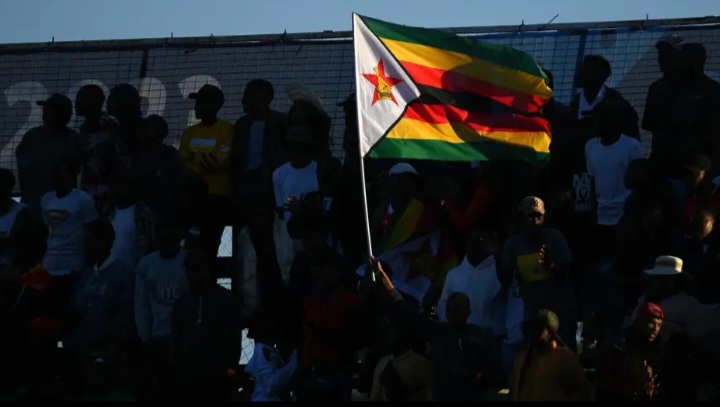
Zimbabwe have emerged as one of two options being considered to host the Women’s T20 World Cup this year. The tournament, which is due to start on October 3 and was scheduled for Bangladesh, is likely to be moved after anti government agitations prompted security concerns. The UAE is the other place being considered, after India ruled themselves out on Thursday. It is understood that a decision is expected to be made by the ICC board on Tuesday, August 20.
Zimbabwe’s interest, confirmed to ESPNcricinfo, comes on the back of intentions to promote themselves as a destination for big cricket after successfully hosting the last two ODI World Cup Qualifiers (in 2018 and 2023). The country last hosted a World Cup in 2003, along with South Africa and Kenya.
Since then, Zimbabwe spent several years isolated from major events, which included the Robert Mugabe regime cutting itself off from much of the world, hyperinflation, a self-imposed Test hiatus between 2005 and 2011, and the men’s team failing to qualify for two successive ODI World Cups and two of the last three T20 World Cups. The women’s team has never competed at a World Cup (neither have the UAE’s) and will not feature at this year’s event either, but Zimbabwe are eager to be neutral hosts of the tournament.
Zimbabwe will co-host the men’s Under-19 World Cup with Namibia in 2026 and the ODI World Cup with South Africa and Namibia in 2027. By then, the country will have two more international grounds with Zimbabwe Cricket and local government authorities working together to build multi-purpose facilities in Victoria Falls and Mutare.
For now, Zimbabwe can offer Harare Sports Club (which also has newly installed floodlights) and Queens Sports Club in Bulawayo as venues for the 2024 Women’s T20 World Cup. These grounds also hosted all the televised matches in the 2023 World Cup Qualifiers, with streaming games held at Takashinga Sports Club and Bulawayo Athletic Club.
The weather in Zimbabwe is expected to be a major selling point, with the country entering summer in October and minimal rain expected. India rejected the offer to host because the country will be experiencing the last of the monsoon. Sri Lanka is also understood to have fallen out of contention for weather-related reasons.
Crucially, Zimbabwe will be able to generate fairly good crowds, including school children at venues, where the maximum capacity is 10,000. A concern with the UAE as a venue is the lack of spectators in stadiums that can seat over 20,000 people. Zimbabwe are also hopeful that the relatively lower cost of hosting a tournament in their country compared to the UAE will give them an advantage when the final decision is made.
(Cricinfo)


Iran has named Mojtaba Khamenei as its new supreme leader, just over a week after the assassination of his father, Ayatollah Ali Khamenei , in joint United States-Israeli strikes that have.plunged the entire region into a sprawling war.
The 56-year-old, who will now be charged with leading the Islamic Republic through the biggest crisis in its 47-year history, was named by clerics as his father’s successor on Sunday.
Key leaders, Iran’s powerful Islamic Revolutionary Guard Corps (IRGC), and the armed forces were quick to pledge their backing to the new leader.
Ali Larijani, secretary of the Supreme National Security Council, who has been tasked with steering Iran’s security strategy since the US and Israel launched their all-out offensive, called for unity around the new supreme leader.
Parliament Speaker Mohammad Bagher Ghalibaf welcomed the choice, saying that following the new supreme leader was a “religious and national duty”.
Mojtaba Khamenei has never run for office or been subjected to a public vote, but has for decades been a highly influential figure in the inner circle of the supreme leader, cultivating deep ties to the IRGC.
In recent years, Khamenei has increasingly been touted as a top potential replacement for his father. His selection could be a sign that more hardline factions in Iran’s establishment retain power, and could indicate that the government has little desire to agree to a deal or negotiations in the short term as the war enters its second week.
Al Jazeera’s Ali Hashem described Khamenei as his “father’s gatekeeper”.
“He adopts the positions of his father with respect to the United States, with respect to Israel. So we are expecting a confrontational leader. We’re not expecting any moderation,” he said.
“However, if this war comes to an end and he is still alive, and he is able to continue running the country, there is going to be big potential… to find new routes for Iran,” Hashem said.
(Aljazeera)

Global oil prices have jumped above $100 (£75.11) a barrel for the first time since 2022 as the escalating US-Israeli war with Iran has fuelled fears of prolonged disruption to shipments through the Strait of Hormuz.
Iran on Sunday named Mojtaba Khamenei to succeed his father Ali Khamenei as Supreme Leader, signalling that a week into the conflict hardliners remain in charge of the country.
The US and Israel launched fresh waves of airstrikes across Iran over the weekend, hitting multiple targets including oil depots.
Major disruption to energy supplies from the region threatens to push up prices for consumers and businesses around the world.
Early on Monday in Asia, Brent crude was around 15.5% higher at $107.16, while Nymex light sweet was up by more than 17% at $106.77.
Stock markets in the Asia-Pacific region fell sharply in early trading on Monday, with Japan’s Nikkei 225 index down by more than 5% and the ASX 200 in Australia more than 3.5% lower.
Many in the markets predicted that oil would hit the $100 a barrel mark this week.
In the event it took about a minute to jump 10%, and then another 15 minutes to rise a further 10% in early Asian trading.
Last week the markets had been relatively relaxed about the seeming nightmare scenario for millions of barrels of crude and liquefied natural gas trapped in the Gulf, unable or unwilling to transit the Strait of Hormuz.
But the escalations over the weekend, alongside scenes of destruction of energy infrastructure both in Iran and across the Gulf, saw the markets take rapid fright.
The question now is where does this go? Some analysts argue that if the shutdown in the strait lasts until the end of March, we could see record oil prices above $150 a barrel.
The existing rise is likely to further increase petrol prices, and those of important derivative products such as jet fuel and vital precursors for fertilisers.
The physical supplies from the Gulf are mainly consumed in Asia.
Already however there are signs that Asian consumers are bidding up prices for US gas, with some tankers originally heading for Europe turning around in the mid-Atlantic.
US President Donald Trump responded to the jump in prices by saying that short term rises were a “small price to pay” for removing Iran’s nuclear threat.
His energy secretary told US broadcasters on Sunday that Israel, not the US, was targeting Iran’s energy infrastructure, amid some concern about rising domestic pump prices caused by the war.
(BBC)


Iran names Khamenei’s son as new supreme leader after father’s killing

Oil prices jump above $100 for first time in four years

Dry weather will prevail over the island

FSP warns of possible coal shortage

Repatriation of Iranian naval personnel Sri Lanka’s call: Washington

Indian Ocean must remain peace zone: Sajith

‘Dates have the highest sugar content to fight Coronavirus’

Sunday Island 27 December – Headlines

#SundayIsland 17th December – Headlines

Sunday Island – 28th March

Sunday Island Headlines – 21 March

Sunday Island – 21st February – Headlines
-
 News3 days ago
University of Wolverhampton confirms Ranil was officially invited
-

 News4 days ago
Legal experts decry move to demolish STC dining hall
-

 News3 days ago
Female lawyer given 12 years RI for preparing forged deeds for Borella land
-

 News2 days ago
Peradeniya Uni issues alert over leopards in its premises
-

 Business5 days ago
Cabinet nod for the removal of Cess tax imposed on imported good
-

 News3 days ago
Library crisis hits Pera university
-

 News2 days ago
Wife raises alarm over Sallay’s detention under PTA
-

 Business5 days ago
War in Middle East sends shockwaves through Sri Lanka’s export sector