
News
“Zahran Hashim and his group were not Muslims; they hijacked the name of Islam to commit these crimes’

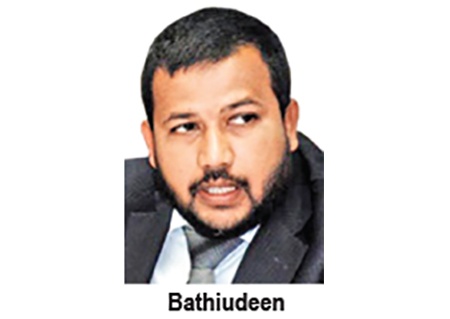
Rishad Bathiudeen tells Parliament
The Muslims never called for separatism. The Muslims have been on the side of the nation for over 1,000 years in Sri Lanka as documented in the book of Dr. Lorna Devaraja titled, ‘The Muslims of Sri Lanka – One Thousand Years of Ethnic Harmony’. Even when the Muslims were threatened with eviction or death from the North, they risked their lives and the lives of their loved ones to be on the side of the State, Rishad Bathiudeen, MP, said.
Speaking in English during the fifth day of the debate on the report of the Commission of Inquiry on the Easter Attacks in Parliament on April 7, he said: “Zahran Hashim and his group were not Muslims. They hijacked the name of Islam to commit these crimes. The report in Page 94 confirms that Zahran wanted to build tensions between the Sinhalese and Muslim Communities of Sri Lanka”.
The MP’s speech contained many points and references to matters in the report and events that transpired thereafter.
Some of the points raised by the MP were:
* The State is antagonizing the Muslim community in the manner that Zahran had wanted them to act. The State should not play to the tunes of Zahran. The State should not act in a way that would jeopardize national security. The State has already commenced the process of State sponsored oppression by prohibiting the import of Muslim books and are making plans to ban Niqabs/Burkas and Madrasas.
* The PCoI has exonerated Rishad Bathiudeen from all charges in connection with the Easter attacks. Only two charges remain to be investigated. First one is in relation to the phone call placed by Bathiudeen to then Army Commander General Mahesh Senanayake, concerning Ihsan Moinudeen. Secondly, the sale of scrap metal by the Industrial Development Board to Colossus (Pvt) Ltd. Rishad Bathiudeen visited the Bribery Commission on 8th of April, 2021 to request them to investigate the allegation in the report.
* The weight placed on the phone call made by Rishad Bathiudeen to General Mahesh Senanayake, was given far higher significance in the report in comparison to the actions of Dayasiri Jayasekara who released six persons from the Hettipola Police Station who were involved in torching and destroying Muslim owned shops and Muslim places of worship. The Commission Report had recommended investigation into the phone call but had not charged Dayasiri on any matter.
* The Government cannot have a law banning the Niqab and Burka without also banning medical masks, helmets, sunglasses, etc.
* Restriction of Islamic books being brought into the country is a violation of the Constitution.
* Bathiudeen quoted Page 331 of the Report:‘Reciprocal radicalization is the cycle of radicalization which promotes each other’s radicalized ideologies’. If the Government can keep politicians like Wimal Weerawansa in check, the de-radicalization program will be half completed. He also said that inciting racism will only provoke and radicalize more Muslims.
* Killing of Fouzul Ameer Mohamed Salley in Kottramulla before his children in the aftermath of the Easter Attacks, was Genocide under Article 2 of the Genocide Convention, and all persons who were inciting racism could be charged for incitement to genocide. Subsequent charges of oppression too can have a detrimental effect on Sri Lanka. Sri Lanka must be careful as Sri Lanka is now a party to the Rome Statute and can be held accountable by the International Criminal Court.
* It was Azath Salley who indicated during a press conference concerning the criminal activities of Zahran Hashim in 2017, but he is alleged to have connections to the Easter Attacks. This is not fair. The Government is politically victimizing Muslims who are speaking up against the oppressive tactics of the Government.
* The One Country One Law Policy does not mean that Muslim Personal Laws alone should be targeted. Most people believe that Customary Laws should be removed. However, that logic would require the Government to abolish Provincial legislation too, as Provincial legislation is also territorially implemented and not countrywide. Several laws will have to be struck down. However, the right way of interpreting the One Country One Law policy would be to maintain all laws that are consistent with the Constitution of Sri Lanka.


The Ministry of Industries and Entrepreneurship Development has recommended the establishment of Sri Lankan Standards, i.e. the import testing methodology for imported tires used for passenger cars and pneumatic tires for three-wheelers with the aim of ensuring a fair competitive environment for local
manufactures and ensuring consumer safety and security.
Taking into the said recommendations, “Import and Export (control regulations N0.08 of the 2026)” has been enacted to amend the existing regulations by means of the Extraordinary Gazette Notification No. 2508/27 dated 2026-10-01, prescribing Sri Lanka standard 1212 for the import of passenger types (HS Code 4011.10.90) and Sri Lanka standard 1347 for the import of
pneumatic tires for three – wheeled vehicles (HS Code 4011.90.10).
Accordingly, the Cabinet of Ministers has approved the resolution furnished by the President in his capacity as the Minister of Finance, Planning, and Economic Development to submit the aforementioned regulations to Parliament for approval.
Approval of the Cabinet of Ministers was granted at their meeting held on 02.06.2025 to introduce a new act to promote and providing legal provisions for facilitating the Public Private Joint Enterprises within Sri Lanka as well as the establishment of the National Agency for Public Private Partnership Joint Enterprises.
Accordingly, the Legal Draftsman has formulated the relevant draft bill and the Attorney General has given his clearance to the said draft bill.
The Cabinet of Ministers approved the resolution furnished by the President in his capacity as the Minister of Finance, Planning and Economic Development to publish the said
draft bill in the government gazette notification and thereby submit it to the Parliament for its concurrence.
Regulation, development and control of indigenous medical sector in Sri Lanka comprised of Ayurvedha, Sidhdha, Unani, Local Therapies are carried out under the provisions of Ayurvedha Act No. 31 of 1961.
Although amendments were made to the act from time to time as per the requirements, the necessity of further amending the Ayurvedha Act has been identified to enable efficiently maintaining all activities of local medical field productively, further formalizing the regulation of the sector, taking actions to providing licenses applicable to export of local medicines, and achieving the progress and sustainable development goals in the local medical sector.
Based on the said factors, the Cabinet of Ministers granted approval to the resolution furnished by the Minister of Health and Mass Media to direct the Legal Draftsman to formulate a draft bill to amend the Ayurvedha Act No. 31 of 1961.

Import and Export (Control) Regulations No. 08 of 2026
Draft Bill of the Public Private Partnership Enterprises Act to be gazzetted
Amendment of the Ayurvedha Act No. 31 of 1961

Cabinet nod to amend the Sri Lanka Development Administration Institute Act No. 9 of 1982
Establishment of the National Higher Performance Centre
State patronage for the cremation ceremony of the late deputy prelate (Anu Nayaka Thero) of the Sri Laka Ramangya Maha Nikaya, Gatambe Rajopawanramadhipatha, Siri Chandawimala Wanshalankara, Chandrakeerthi Sri Amarawansha, Sadhdharmawageeshwara, Shasanashobhanna Most Venerable Keppetiyagoda Siriwimalabhidhana Thero

‘Dates have the highest sugar content to fight Coronavirus’

Sunday Island 27 December – Headlines

#SundayIsland 17th December – Headlines

Sunday Island – 28th March

Sunday Island Headlines – 21 March

Sunday Island – 21st February – Headlines
-

 Features3 days ago
Kotahena:A Small Enclave, An Extraordinary Legacy
-

 News7 days ago
Sri Lanka, India caught in US-Iran ship crisis
-
 News4 days ago
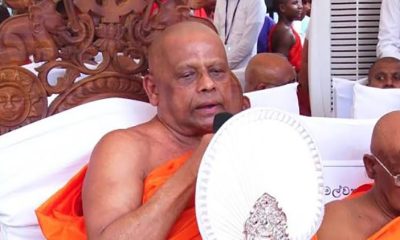
Asgiri Mahanayake calls for immediate release of Gnanasara Thera
-

 Latest News7 days ago
Missiles intercepted near Riyadh after Saudi coalition hits Yemen fuel depot
-
 Latest News7 days ago
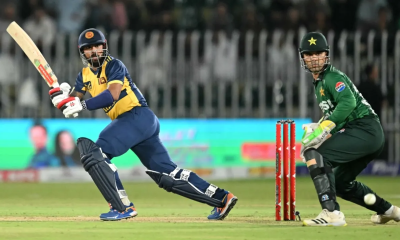
Kusal Mendis’ unbeaten 87 hands Sri Lanka consolation win
-

 News3 days ago
Record 1,600 students take Russian Classical Ballet examination in Sri Lanka
-
 News6 days ago
AC President recuses himself from hearing prison attire case pertaining to Gnanasara Thera
-
 News5 days ago
Naval officer testifies Yoshitha received Rs. 5.15 mn in salaries during SLN service