
Latest News
WWC 2025: With knockouts in sight, India aim to fine-tune against Bangladesh

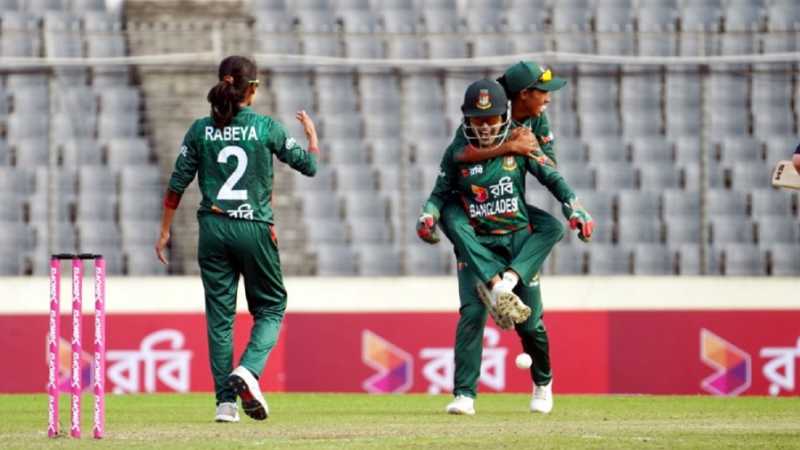
India will walk into this fixture with a sense of relief and renewed confidence. Having already secured a place in the semi-finals, the pressure has shifted from qualification to maintaining momentum. After three games where things seemed to go awry, they finally hit top gear against New Zealand, led by a commanding performance from their batters.
It’s not just that. The match will be played in Navi Mumbai – the venue for both India’s semi-final and the final – a ground India know well and one where they appear to have found their ideal template. After several games of tinkering with combinations, they seemed to get it right against New Zealand, reverting to five-bowler setup, leaving allrounder Amanjot Kaur out. The move to promote the returning Jemimah Rodrigues to No. 3 also paid off, and that could open the door for further experimentation against Bangladesh.
India’s bowlers backed the batters up with precision. The seamers struck early, and the rest of the attack ensured New Zealand never recovered, forcing errors and maintaining pressure throughout.
The middle order was not tested but with knockout games approaching, time in the middle for those players could be invaluable. India have batted first in five matches so far and chased only once – losing that game to England by four runs – so they may also be tempted to test themselves in a chase, should they win the toss, to round out their preparation.
For Bangladesh, this is a chance to upset one of the tournament favourites and prove they belong on this stage. They’ve run stronger sides close in at least three games and have relied on their disciplined bowling attack, their biggest strength all tournament. There have been flashes of resistance with the bat, and if they can sustain those longer, they have a chance of stretching India.
India will look once again to Renuka Singh for early breakthroughs. Against New Zealand, she delivered exactly that. Having missed the matches against Australia and South Africa, and gone wicketless in her two previous outings, Renuka rediscovered her rhythm in Navi Mumbai. Exploiting the early movement on offer, she teamed up with Kranti Gaud to keep New Zealand in check, not conceding a single boundary in the first six overs. Her efforts were rewarded with the wickets of Georgia Plimmer and Sophie Devine, both undone by sharp in-duckers. She finished with figures of 2 for 25 from her six overs – a spell that set the tone for India’s dominance.
Can Bangladesh’s legspinning duo of Rabeya Khan and Shorna Akter trouble India’s batters? The pair injected energy and control into their attack against Sri Lanka, bowling tirelessly in the Navi Mumbai heat. Their discipline through the middle overs stifled scoring opportunities and built pressure. Rabeya provided the key breakthrough, removing the dangerous Chamari Athapaththu and halting Sri Lanka’s momentum, while Shorna struck twice, dismissing Hasini Perera and Nilakshika Silva, to help restrict the opposition to just 202.
Richa Ghosh copped a blow to her left hand while keeping against New Zealand and was off the field during much of their chase, with Uma Chetry taking the gloves. On the eve of the Bangladesh game, bowling coach Aavishkar Salvi said Ghosh was “fine and the S&C team is taking care of it,” but India were “still discussing” her availability. India went back to their five-bowler strategy in the match against New Zealand, leaving allrounder Amanjot out, and they are likely to persist with that winning combination.
India (probable): Smriti Mandhana, Pratika Rawal, Harleen Deol, Harmanpreet Kaur (capt), Jemimah Rodrigues, Richa Ghosh (wk), Deepti Sharma, Sneh Rana, Renuka Singh, Kranti Gaud, Shree Charani.
Sharmin Akter walked off battling cramps during Bangladesh’s chase against Sri Lanka but came back to bat in the final over. There are no injury concerns in the side.
Bangladesh (probable): Fargana Hoque, Rubya Haider, Sharmin Akhter, Nigar Sultana (capt & wk), Sobhana Mostary, Ritu Moni, Shorna Akter, Nahida Akter, Rabeya Khan, Nishita Akter, Marufa Akter.
(Cricinfo)

Foreign News
Naqvi casts uncertainty on Pakistan’s participation in T20 World Cup after Bangladesh ouster
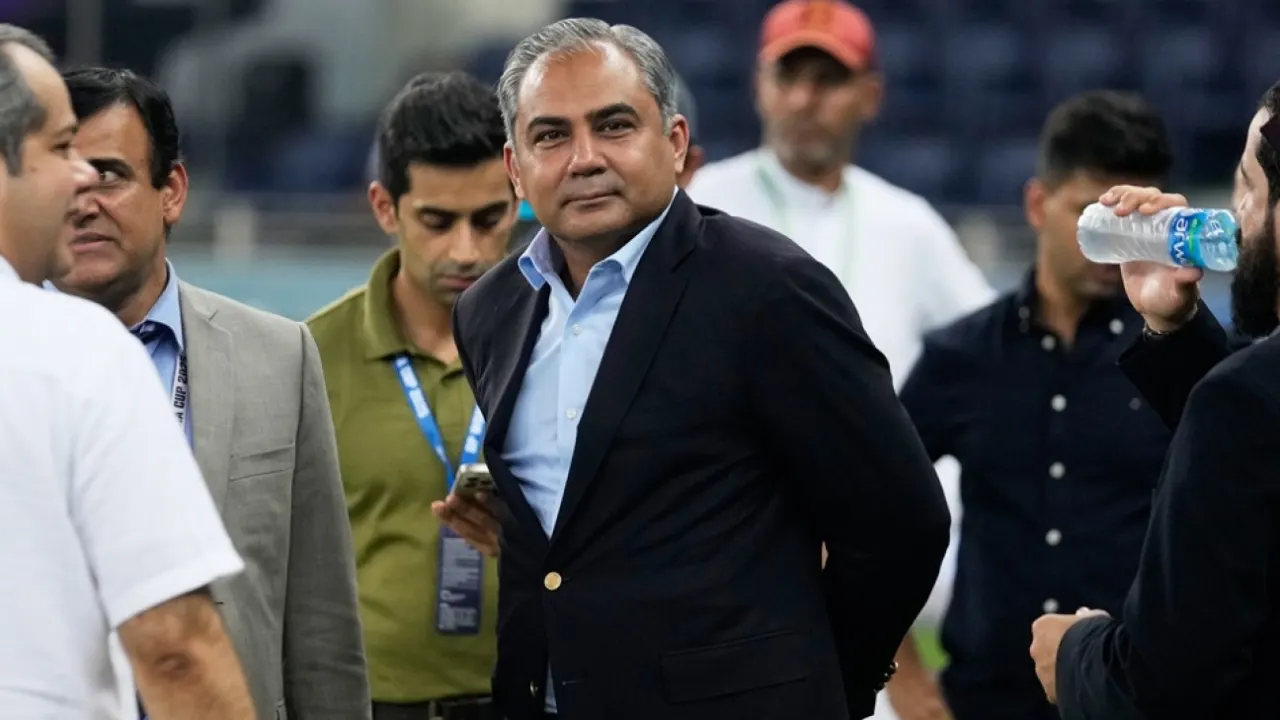
Pakistan’s participation at the upcoming Men’s T20 World Cup 2026 has been thrown into uncertainty after the PCB chairman Mohsin Naqvi said a final decision would be made after talking to Pakistan’s government. Speaking shortly after the ICC officially removed Bangladesh from the T20 World Cup owing to their refusal to play in India, Naqvi accused the ICC of “double standards” favouring India, and termed what happened to Bangladesh “an injustice”.
“Our stance on World Cup participation will be what the government of Pakistan instructs me,” he said. “The Prime Minister is not in Pakistan right now. When he returns, I’ll be able to give you our final decision. It’s the government’s decision. We obey them, not the ICC.”
Over the past week or so, Pakistan has firmly thrown its support behind Bangladesh in their dispute with the ICC demanding a venue outside of India to play their T20 World Cup matches. At an ICC meeting last week, the PCB was understood to be the only board to back the BCB in their stance. The tournament is jointly hosted by India and Sri Lanka, but Bangladesh’s games were all scheduled in India. Bangladesh, however, have said it is no longer safe for them to play in India after the BCCI, on January 3, instructed Kilkata Knight Riders to release Mustafizur Rahman rom their IPL 2026 squad.
Though no reason was stated for that directive, it came amid deteriorating relations between India and Bangladesh. On January 4, the BCB wrote to the ICC after consultation with the government that the Bangladesh team would not travel to India for its T20 World Cup matches due to security concerns, a stance it stuck to through several subsequent discussions with the ICC.
The ICC has repeatedly refused Bangladesh’s request, and earlier this week gave them an ultimatum demanding them to accept the schedule as it was, or face being removed from the tournament. On Saturday, with Bangladesh sticking to their position, the ICC formally announced Bangladesh would not be part of the T20 World Cup, and would be replaced instead by Scotland.
Naqvi was critical of the decision, calling it an injustice to Bangladesh. “I think Bangladesh has been hard done by,” he said. “You can’t have double standards. You can’t say for one country [India] they can do whatever they want and for the others to have to do the complete opposite. That’s why we’ve taken this stand, and made clear Bangladesh have had an injustice done to them. They should play in the World Cup, they are a major stakeholder in cricket.”
While there have been local, unverified reports that the PCB would refuse to participate in the World Cup in solidarity with Bangladesh should they be removed, the PCB has declined to confirm to ESPNcricinfo when approached. Naqvi’s comments to the media on Saturday was the first time anyone at the PCB has directly addressed the issue, where he repeatedly said the decision was no longer in the hands of the PCB.
“If the government of Pakistan says we mustn’t play, then maybe the ICC will bring in a 22nd team (after Scotland). It’s up to the government.”
No specific reason was given by Naqvi other than to support Bangladesh, as to why government permission would now be required for an event that starts in two weeks. Last year, both BCCI and PCB, with the approval of ICC, signed up to a hybrid model agreement by which both countries would play each other on neutral territory for all global events in the 2024-27 rights cycle.
Pakistan play all their games in Sri Lanka for this event (which already was a co-hosted event) and are scheduled to play the opening game of the tournament, against Netherlands on February 7. They are scheduled to play India on February 15 in Colombo in their group stage clash.
[Cricinfo]
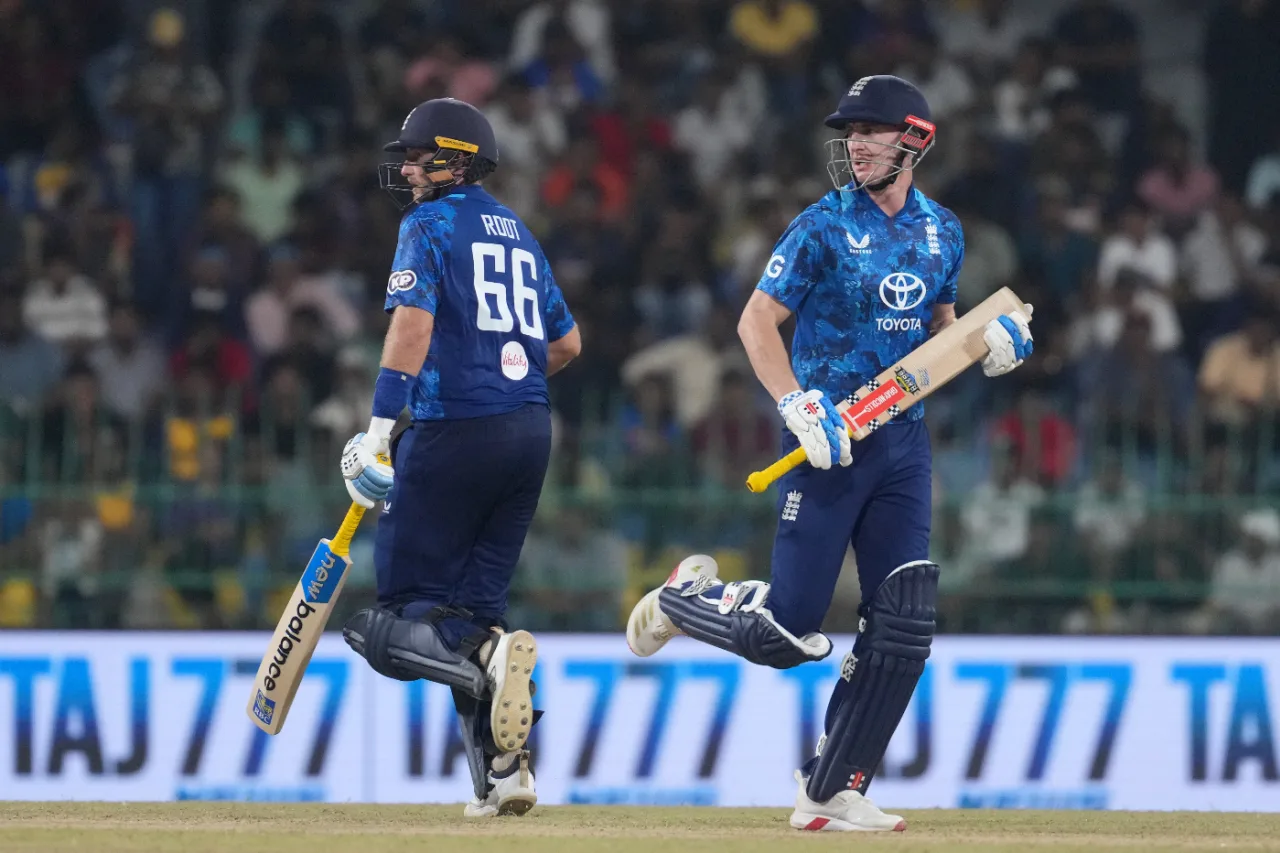
Joe Root struck his 45th ODI fifty and with it helped England snap an 11-match losing streak away from home, as they won the second ODI against Sri Lanka in Colombo by five wickets and with it levelled the three-match series at 1-1.
Root was unable to see the game to a close, falling to an Asitha Fernando yorker with just 42 to get off 57 deliveries, but by that point – with England batting all the way down – it would have required a collapse of epic proportions for Sri Lanka overturn the result.
Even so, faint embers of hope were lit when the set Harry Brook (42 off 75) was trapped lbw by the impressive Jefftrey Vandersay shortly after. However, a couple of meaty blows from Jos Buttler ensured there would be no fairytale resurgence afoot for the boisterous home support as England romped to victory with 22 balls to spare. Buttler remained unbeaten on 33 off 21.
But while Root’s 75 off 90 was instrumental in England’s win, that he was allowed to play such risk-free cricket – highlighted by a control percentage hovering around 90 – was down to the excellent team display with the ball and in the field.
No less than eight bowling options were used – six of them spin – as England gave Sri Lanka a taste of their own medicine, producing 40.3 overs of spin bowling and thereby breaking their previous record of 36. That came in Sharjah in 1984-85, when Norman Gifford captained England at the age of 44, and took four wickets. The team wore black armbands during the first ODI after his death last week.
The successes were spread out this time, with Adil Rashid, Jamie Overton and Root picking up two apiece, the latter with the final two balls of the innings. There were also wickets for Liam Dawson, Rehan Ahmed and the returning Will Jacks.
Several Sri Lankan batters got starts, but none was able to pass fifty. Charith Asalanka’s 45 off 64 and Dhananjaya de Silva’s 40 off 59 headlined, but England’s attack kept a firm lid on proceedings throughout.
With the target a good 50-runs shy of what they had fallen short of in the first game, from the outset England’s chase had less pressure surrounding it and it showed in their approach with the bat.
Rehan, who had been promoted to the top of the order with the injury-enforced absence of Zak Crawley, and Ben Duckett kept scoreboard ticking along early; the pair largely content with just surviving and picking up singles – this despite Rehan’s supposed remit to go after the attack – highlighting the difficulty of scoring on an extremely dry and sticky surface at the Premadasa.
Rehan eventually fell, castled by a surprise inswinger from Dhananjaya, but that would end up being the Sri Lanka’s sole respite for quite some time.
Duckett, having survived several nervy moments early in his innings, eventually settled into a nice rhythm alongside the unflappable Root, as the pair stitched together a stand of 68 off 67 – given the conditions this was positively rapid. And much of it owed to Root, who was proving incredibly adapt at turning over the strike with ease, as Duckett duly followed suit.
It was Vandersay that managed to break the stand with a sharp turning legbreak that cramped an attempted cut from Duckett to crash into the stumps, and shortly after Jacob Bethell slapped one low to Asalanka at short cover.
Sri Lanka might have sensed an opening, but the door was once more firmly shut and it was here England killed the chase. With Root ticking along nicely, and belying the turn and slow nature of the pitch, Brook played the ideal supporting hand as the pair put on the game’s best partnership – one which in the end secured the win.
Sri Lanka’s innings had earlier failed to really going as they eventually parked themselves at a middling total of 219, bowled out in 49.3 overs.
“Keeping the stumps in play,” was Brook’s refrain, speaking after losing the toss, and on an uber-dry surface with boundaries square and behind mostly protected, the onus was on the Lankan batters to use their feet in order to access extra cover and deep midwicket.
That sort of strokeplay however proved detrimental to the Lankan cause with four of their top five falling in their attempts to take on the boundaries in front of square. Kamil Mishara sought to bring some impetus to the innings after a miserly early burst from the England seamers, but his attempted lashing cover drive could not clear Duckett in the circle, who held on at the second attempt.
Pathum Nissanka, who had patiently waded through the opening powerplay when the scoring rate sat below four an over, then sought to capitalise on his added time in the middle, but only managed to loft an inside-out drive to long-off.
Later on in the innings, Dhananjaya whacked one low to Root at midwicket, before the set Asalanka found deep midwicket with a slog sweep.
And arguably Sri Lanka’s best batter at accessing those regions, Kusal Mendis, had earlier run himself out after grinding for 26, having cut one straight to point and absentmindedly set off for a single. The throw from the fit-again Jacks was pinpoint and found Mendis easily short as he sought in vain to fling himself back to safety.
While there were promising stands in-between, notably a 42-run effort between Nissanka and Mendis and 66 between Dhananjaya and Asalanka, none of the batters involved were able to push on and up the rate of scoring over any concerted period of time.
Pavan Rathnayake’s 29 off 34 also showed promise, but he fell foul looking to clear the straight boundary as he sliced one to long-off, and in the process an energetic Khettarama crowd was silenced.
Dunith Wellalage once more looked enterprising during a late cameo, but his 20 off 19 was far less damaging to England’s cause than had been the case in the first ODI. The frustrating nature of Sri Lanka’s innings was illustrated by the fact that five batters scored at least 25 and faced at least 30 deliveries, but the highest score remained Asalanka’s 45.
Brief scores:
England 223 for 5 in 46.2 overs (Joe Root 75, Ben Duckett 39, Harry Brook 42, Jos Buttler 33*; Dhananjaya de Silva 2-37, Jeffrey Vandersay 2-45) beat Sri Lanka 219 in 49.3 overs (Charith Asalanka 45, Dhananjaya De Silva 40, Pavan Ratnayake 29, Pathum Nissanka 26, Kusal Mendis 26, Dunith Wellalage 20; Joe Root 2-12, Jamie Overton 2-21, Adil Rashid 2-34) by five wickets
[Cricinfo]
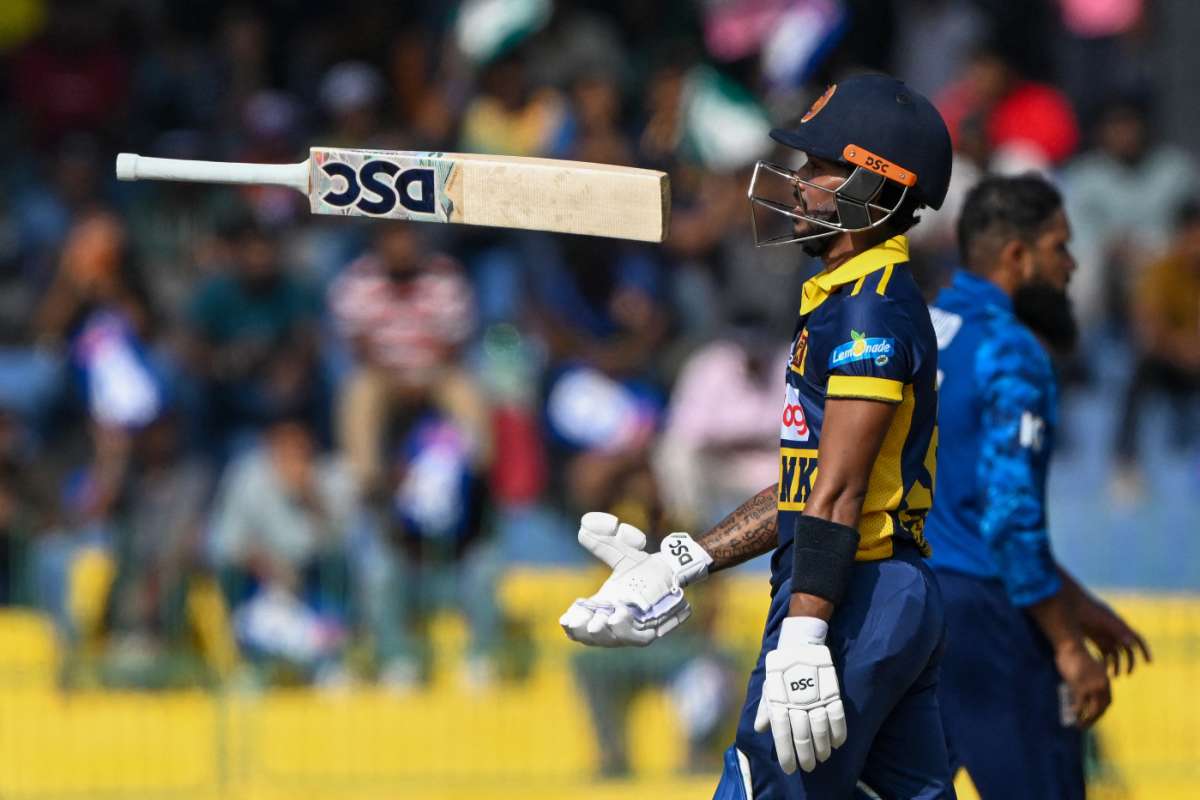
A Sri Lankan innings that never really got going eventually parked itself at middling total of 219, as they were bowled out in 49.3 overs in the second ODI in Colombo. It’s a total England will fancy themselves to chase down as they look to level this three-match series.
Sri Lanka’s innings was headlined by Charith Asalanka’s 45 off 64 and Dhananjaya de Silva’s 40 off 59, but at strike rates of 67.79 and 70.31 it tells you all you need to know about how well England kept a lid on the innings.
For the visitors the wickets were spread out, with Adil Rashid, Jamie Overton and Joe Root picking up two apiece, the latter with the final two balls of the innings. There were also wickets for Liam Dawson, Rehan Ahmed and the returning Will Jacks.
And much like in the first ODI, England’s varied attack – no less than eight options were used across the innings – sought to give little away. “Keeping the stumps in play,” was Harry Brook’s refrain, speaking after losing the toss, and on an uber-dry surface with boundaries square and behind mostly protected, the onus was on the Lankan batters to use their feet in order to access the boundaries at extra cover and deep midwicket.
That sort of strokeplay however proved detrimental to the Lankan cause with four of their top five falling in their attempts to access the boundaries in front of square. Kamil Mishara sought to bring some impetus to the innings after a miserly early burst from the England seamers, but his attempted lashing cover drive could not clear Ben Duckett in the circle, who held on at the second attempt.
Pathum Nissanka, who had patiently waded through the opening powerplay when the scoring rate sat below four an over, then sought to capitalise on his added time in the middle, but only managed to loft an inside-out drive to long-off.
Later on in the innings Dhananjaya whacked one low to Root at midwicket, before the set Asalanka found deep midwicket with a slog sweep.
And arguably Sri Lanka’s best batter at accessing those regions, Kusal Mendis, ran himself out for a ground-out 26, when he cut one straight to point and absentmindedly set off for the single. The throw from the fit-again Jacks was pinpoint and found Mendis easily short as he sought in vain to fling himself back to safety.
There were promising stands between, notably a 42-run effort between Nissanka and Mendis and 66 between Dhananjaya and Asalanka, but none of the batters involved were able to push on and up the rate of scoring over any concerted period of time.
Pavan Rathnayake’s 29 off 34 had also shown promise, but he fell foul looking to clear the straight boundary as he sliced one to long-off, and in the process silenced an energetic Khettarama crowd.
The frustrating nature of Sri Lanka’s innings was illustrated by the fact that five batters scored at least 25 and faced at least 30 deliveries, but the highest score remained Asalanka’s 45.
England, to their credit, stuck to and executed their plans well. The use of eight bowlers – six of them spinners – meant Sri Lanka’s batters were ever really able to get a measure of any one bowler. And while the lengths were consistent, the pace of the deliveries was varied. It meant that even when a set batter such as Nissanka sought to take on the attack, Rashid was able to successfully deceive him in the flight.
Dunith Wellalage once more looked enterprising during a late cameo, but despite finding two boundaries in his brief stay, his 20 off 19 was far less damaging to England’s cause than had been in the first ODI.
England bowled 40.3 overs of spin across their innings, breaking their previous record of 36. That came in Sharjah in 1984-85, when Norman Gifford captained England at the age of 44, and took four wickets. The team wore black armbands during the first ODI after his death last week.
Brief scores:
Sri Lanka 219 in 49.3 overs (Charith Asalanka 45, Dhananjaya De Silva 40; Joe Root 2-12, Jamie Overton 2-21, Adil Rashid 2-34) vs England
(Cricinfo)

Civil Security Department Members Contribute a Day’s Salary to ‘Rebuilding Sri Lanka’ Fund

Naqvi casts uncertainty on Pakistan’s participation in T20 World Cup after Bangladesh ouster

Root 75 sets up series-levelling win after spin-heavy England limit Sri Lanka

Sri Lanka succumb for 219 as spin-heavy England turn screw

T20 World Cup 2026: ICC replace Bangladesh with Scotland

Indonesia landslide kills 7, dozens more missing

‘Dates have the highest sugar content to fight Coronavirus’

Sunday Island 27 December – Headlines

#SundayIsland 17th December – Headlines

Sunday Island – 28th March

Sunday Island Headlines – 21 March

Sunday Island – 21st February – Headlines
-

 Editorial7 days ago
Illusory rule of law
-

 Features7 days ago
Daydreams on a winter’s day
-

 Features7 days ago
Surprise move of both the Minister and myself from Agriculture to Education
-

 Features6 days ago
Extended mind thesis:A Buddhist perspective
-
 Features7 days ago
The Story of Furniture in Sri Lanka
-

 Opinion5 days ago
American rulers’ hatred for Venezuela and its leaders
-
 Features7 days ago
Writing a Sunday Column for the Island in the Sun
-

 Business3 days ago
CORALL Conservation Trust Fund – a historic first for SL