
Latest News
WWC 2025: Rain, redemption and a race for the semis: Sri Lanka face South Africa in crucial Colombo clash

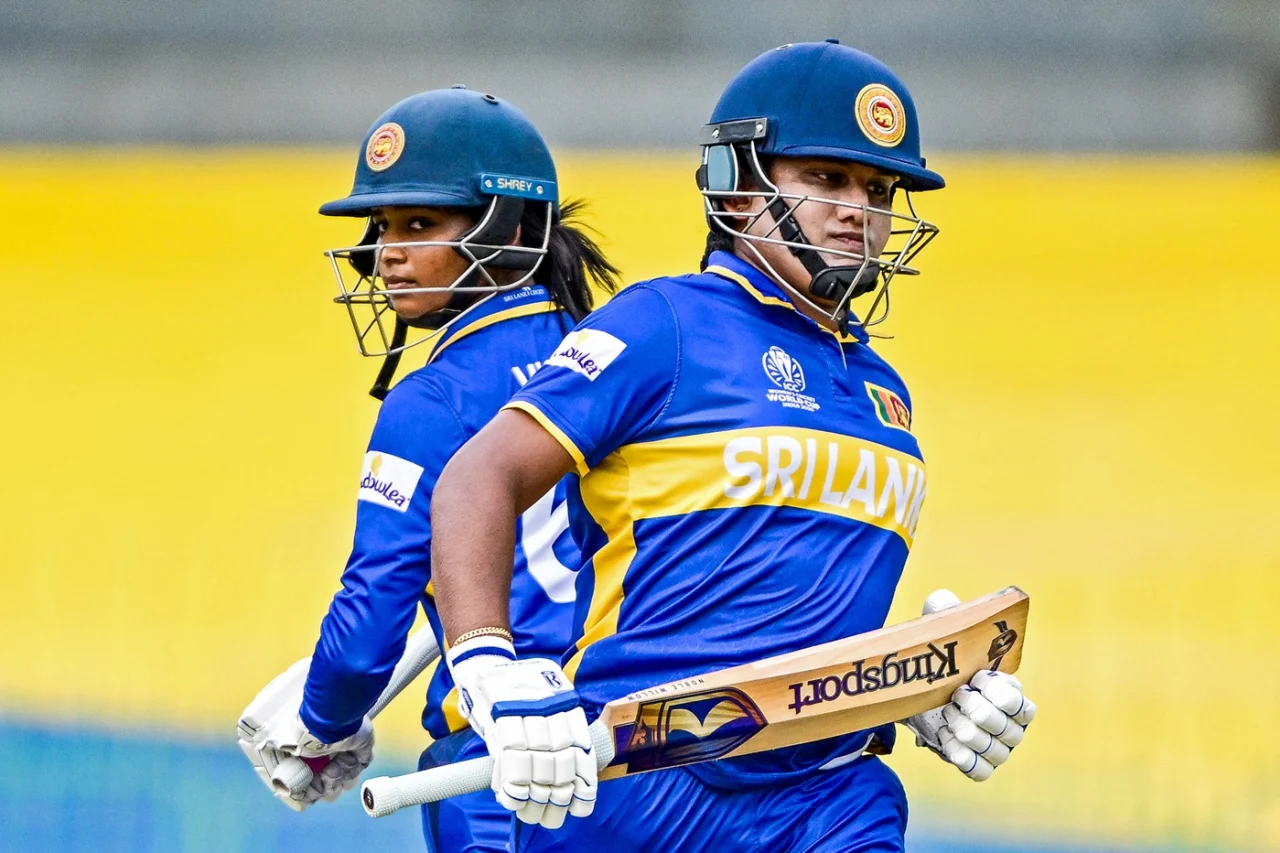
There is hardly a conversation around Colombo these days that doesn’t involve the weather, and in the context of this World Cup, the rains have certainly played no small part in shaping the trajectories of a few of the sides.
Pakistan notably suffered the most cruel fate, as a historic win over England was snatched away from them on Wednesday evening following a washout. Sri Lanka, however, have been on both sides of the coin. Against New Zealand, a spirited late charge led by Nilakshika de Silva left them buoyant at the break only for rain to spoil a potential victory charge, but against Australia those same rains ensured a point in what would have been Sri Lanka’s toughest match this tournament.
It’s meant that having faced arguably the four most challenging opponents at this tournament – India, Australia, England and New Zealand – in their first four matches, Sri Lanka have come away with two points despite having yet to register a win. It also means that with their remaining matches against sides they would have been more confident at taking on, Sri Lanka will know that a win on Friday will put them in with a very real chance of making an unlikely late semi-final dash.
South Africa have looked every bit the dark horses they have been touted as. Following a chastening opening game defeat to England, they’ve won three on the bounce, most notably taking down India. And a win in Colombo will take them to eight points on the table, and see them have one foot in the semi-finals with two further games to play.
But while the head-to-head record between South Africa and Sri Lanka in WODIs seems fairly one-sided – 16 wins and six defeats in favour of South Africa – their more recent record speaks towards a far more evenly matched contest with their past five matches since the start of 2024, seeing shared spoils at two wins apiece.
Two of those games came at the R. Premadasa earlier this year, with each side winning one, so while this will be South Africa’s first game in Colombo at this World Cup, separating these two units might very well come down to the toss of a coin – or indeed the weather gods.
In six WODIs batting first at the Khettarama, Sri Lanka has crossed the 200 mark just twice – once in 1999 and once on Tuesday against New Zealand. Tuesday was also the first time they posted a first-innings total above 250 at the venue, a feat that would not have been possible if not for Nilakshika Silva‘s blazing 55 off 28. Silva’s late career renaissance has seen her average 44.50 with a strike rate of 84.89 since the start of 2024, all while mostly batting at number six. Her 534 runs also makes her Sri Lanka’s third-most prolific batter behind Chamari Athapaththu and Harshitha Samarawickrama, during this period.
Laura Wolvaardt has grown into this tournament. After poor showings against England and New Zealand, she played a pivotal role in their defeat of India before again providing a stable start in a chase against Bangladesh. This might not be particularly pleasing news to those of Sri Lankan persuasion, as Wolvaardt has long been a problematic opponent. In 10 WODIs against Sri Lanka, Wolvaardt has 546 runs at a staggering average of 91 and strike rate of 80.88. What’s more she’s been dismissed just six times over that period – a feat made more impressive as she opens the batting.
Sri Lanka changed up their bowling lineup in the previous game, but were unable to test it. With their batting finally clicking, it’s likely they name an unchanged XI.
Sri Lanka (probable): Chamari Athapaththu (capt), Hasini Perera, Vishmi Gunaratne, Harshita Samarawickrama, Kavisha Dilhari, Nilakshika de Silva, Anushka Sanjeewani (wk), Piumi Wathsala, Sugandika Kumari, Malki Madara, Inoka Ranaweera
There is something to be said for not changing a winning combination. So there might be not much by way of experimentation this game.
South Africa (probable): Laura Wolvaardt (capt), Tazmin Brits, Anneke Bosch, Annerie Dercksen, Marizanne Kapp, Sinalo Jafta, Chloe Tryon, Nadine de Klerk, Masabata Klass, Nonkululeko Mlaba, Tumi Sekhukhune
[Cricinfo]

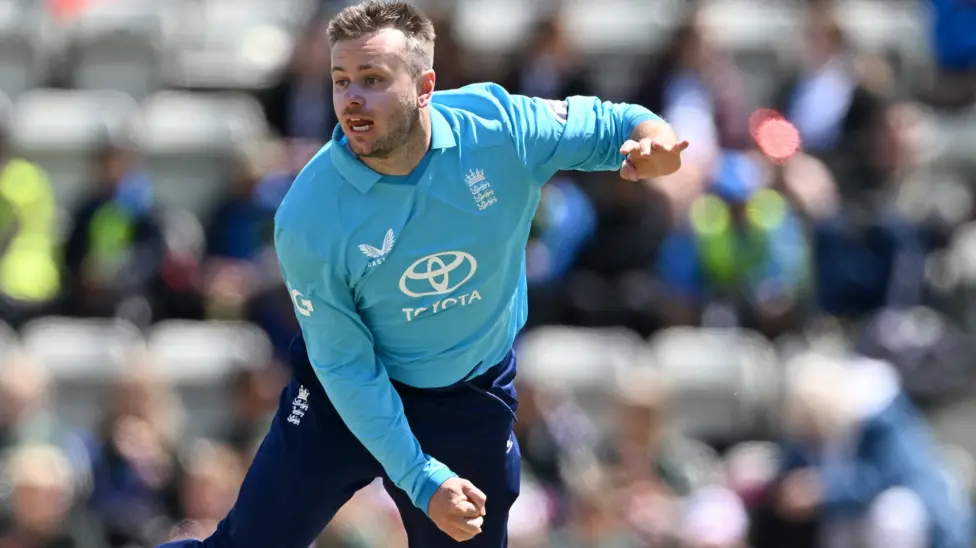
Leg-spinner Mason Crane could play for England for the first time in eight years after being recalled for the one-day international tri-series in Pakistan.
The 29-year-old won his only Test cap against Australia in Sydney in 2018 and is now given an opportunity in the series which also involves Sri Lanka next month.
Crane, who also played two T20 internationals in 2017, could also push his case in the fight to be England’s number one spinner in Test cricket.
Sam Curran and Adil Rashid both return after injuries, and uncapped pair James Coles and Henry Crocombe are included.
Jos Buttler is out with the hamstring injury he sustained last week, while Jacob Bethell is continuing his recovery from knee surgery.
Brydon Carse, who is under an investigation from the Cricket Regulator following an incident outside a nightclub in Derby in August, remains absent.
England are on a diet of white-ball cricket until three Tests in South Africa in December as they build up to the 50-over World Cup in southern Africa next year.
The tri-series in Pakistan involves the three teams taking part playing each other twice, with the top two advancing to the final. Following the trip to Pakistan, England play three one-day internationals and five T20s in Australia in November.
As England continue to shape their backroom staff following the arrival of Stephen Fleming as Test coach, Jeetan Patel, Mike Yardy, David Saker and Carl Hopkinson will assist white-ball head coach Brendon McCullum in Pakistan.
That means Marcus Trescothick, who took temporary charge of the Test team for the series against Pakistan in the home summer, misses the trip.
It is understood the make-up of the coaching staff is part of a plan to rotate the coaches – fielding coach Sarah Taylor and fast-bowling coach Tim Southee are also not going to Pakistan.
All of Trescothick, Taylor and Southee are likely to be part of England’s coaching team for other tours this winter.
England squad for tri-series in Pakistan:
Harry Brook (Yorkshire – captain), Gus Atkinson (Surrey), Sonny Baker (Hampshire), Tom Banton (Somerset), James Coles (Sussex), Jordan Cox (Essex), Mason Crane (Glamorgan), Henry Crocombe (Sussex), Sam Curran (Surrey), Liam Dawson (Hampshire), Ben Duckett (Nottinghamshire), Will Jacks (Surrey), Jamie Overton (Surrey), Adil Rashid (Yorkshire), Joe Root (Yorkshire), Josh Tongue (Nottinghamshire).
(BBC)
Latest News
I extend my heartfelt wishes to all the sons and daughters of our country for a Happy World Children’s Day – President

Children’s Day Message from President Anura Kumara Dissanayake:
“Children are the most valuable asset of a nation. Ensuring their physical and mental well-being and creating an environment conducive to their proper development is a primary responsibility of any government. Children’s imagination, aspirations and creativity will determine the shape and colour of the country tomorrow. The country we build for children must not merely be a country prepared to be handed over to them in the future; it must be a country that gives space to their dreams today, listens to their voices and provides opportunities for them to realise their potential.
For the best interests of children, we are taking the necessary steps to ensure equal access to education, guidance, social protection, opportunities for sport, leisure and recreation, proper nutrition and access to healthcare, while protecting children from all forms of violence and discrimination and safeguarding their rights.
Race, religion, economic status, geographical background or any other circumstance should not be a barrier to any child’s education or proper development. Every child should have equal and fair opportunities to realise their potential, pursue their dreams and create the future they wish for themselves. To this end, we have already begun the process of reforming the education system in Sri Lanka, transforming it towards a skills-based system suited to the new world, one that does not place a burden on parents or cause distress to children.
Our aim is to ensure that no child is left behind in the new Sri Lanka we are building, and to provide every child with opportunities for development in a safe environment. It should be emphasised that the fundamental objective of all the programmes being implemented, from expanding educational scholarships to securing the future of children growing up in child development centres and those in need of care, is to create a dignified and secure tomorrow for every child in the country.
It is the aspiration of every parent to give their children a better life than the one they themselves experienced. We are currently steering the country’s economy towards a correct and stable direction in order to provide children with a safe and happy childhood, free from the shadows of an unstable economy. At the same time, we have launched the national operation “A Nation United” (Ratama Ekata), bringing everyone together to free the younger generation from the menace of illicit drugs.
At a time when we are working towards the goal of building a safe and better country for children, I greatly appreciate the initiative of the Ministry of Women and Child Affairs in organising this year’s World Children’s Day celebrations under the theme “Strong Minds – Enriched Children”, declaring a National Children’s Day Week and conducting a range of meaningful programmes aimed at strengthening children’s rights, well-being, protection, education and freedom.
I extend my heartfelt wishes to all the sons and daughters of our country for a Happy World Children’s Day”.

England call up Crane and rest Archer for Pakistan series

ICC introduces pink-ball daytime Test trial, new time-wasting penalties

Discussion on Anuradhapura Sacred City Development Plan

India enter Asian Games final after Kishan and Bumrah ride roughshod over Sri Lanka

I extend my heartfelt wishes to all the sons and daughters of our country for a Happy World Children’s Day – President

Sri Lanka bowl first in semi final clash against India

‘Dates have the highest sugar content to fight Coronavirus’

Sunday Island 27 December – Headlines

#SundayIsland 17th December – Headlines

Sunday Island – 28th March

Sunday Island Headlines – 21 March

Sunday Island – 21st February – Headlines
-

 Editorial6 days ago
Birth of a bad law
-

 Features7 days ago
Beyond traditional jobs: Why Sri Lanka needs to facilitate the gig economy
-

 News4 days ago
Police remove Thileepan statue in Jaffna
-
 Latest News7 days ago
Kusal, Wellalage star as Sri Lanka defend 322 in Headingley thriller
-

 News6 days ago
TIN mandatory for key transactions from Nov. 1
-

 Features4 days ago
The 22nd Amendment, constitutional recovery and illiberal slippage
-

 Features4 days ago
Of foreigners as CEOs of Lankan ventures
-

 News4 days ago
Sajith rejects Jt. Opp. protest sabotage claim; SJB TU chief demands remedial action