
Latest News
WWC 2025: Knight scraps to help England overcome Bangladesh scare

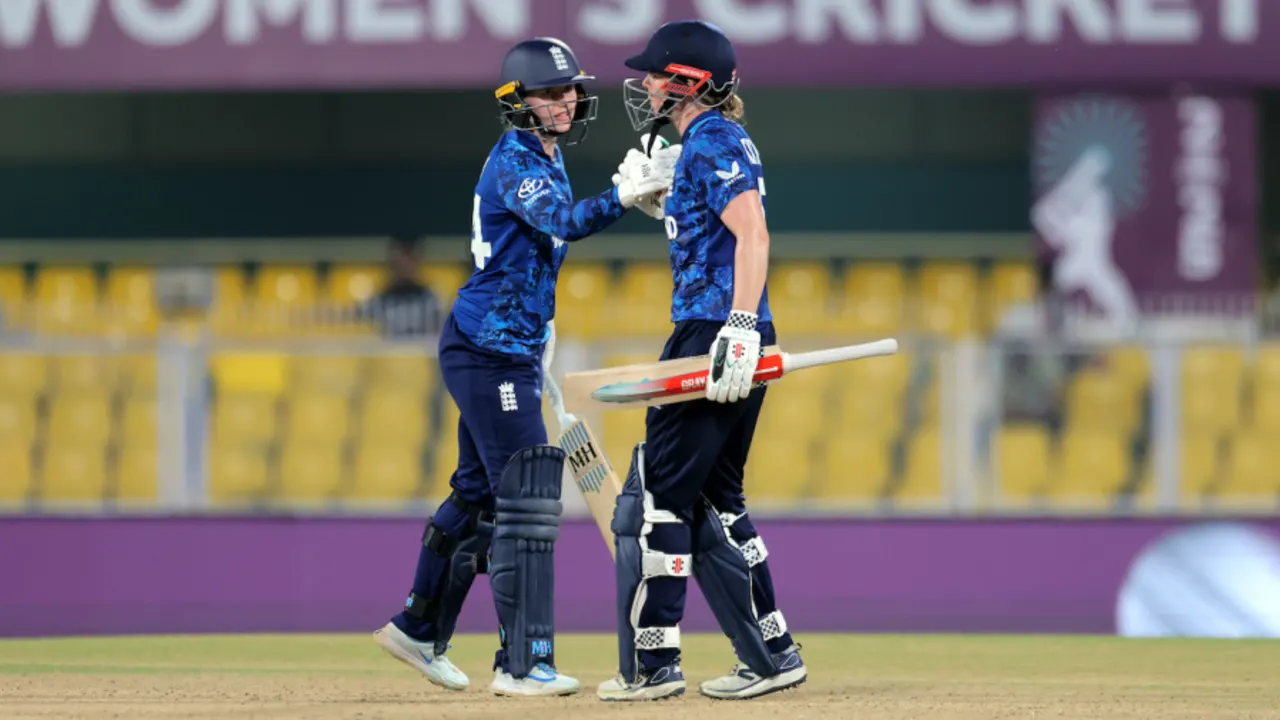
A gritty comeback by Heather Knight pulled England out of danger and into top spot on the World Cup table with a battling four-wicket win against Bangladesh that was in sharp contrast to their ten-wicket romp over South Africa to open the tournament.
Nigar Sultana, the Bangladesh captain, had implored her side to show what they’re capable of “so that teams like England and Australia show interest in playing against us”, and they did that in only the second ODI between the sides.
Two early wickets to Marufa Akter, followed by 3 for 2 in the space of 12 legitimate deliveries from Fahima Khatun had England 78 for 5 in pursuit of what had looked like a modest target after England’s spin department restricted Bangladesh to 178 all out with two balls remaining.
Shobana Mostray’s maiden international half-century and a quickfire 43 not out off just 27 balls by Rabeya Khan had allowed Bangladesh to post a competitive total despite only two other batters reaching double figures.
But Knight, playing her first international innings since tearing her hamstring from the bone during a T20I against West Indies in May, gritted her teeth, ground out the runs and rode her luck – overturning dismissals on 0, 8 and 13 – to lead England home. Her unbroken stand for the seventh wicket with Charlie Dean, worth 79 in 100 balls, sealed the result with 23 balls to spare.
Marufa broke the game open with a stunning five-over opening spell in which she had England two wickets down – it could have been three – with just 29 runs on the board inside the first seven overs.
In an eventful start to the run chase, England lost opener Amy Jones lbw to Marufa at the end of the first over and, two balls later, saw Marufa drop a sitter at cover off Tammy Beaumont, on 2 at the time, off the bowling of Nahida Akter.
There was more drama as Marufa sought to make amends with the first ball of her next over and thought she had Knight caught behind but Knight survived on review with TV umpire Gayathri Venugopalan initially saying there was inconclusive evidence that the bat made contact with the ball while another angle gave the hint of a gap.
Marufa ultimately covered for her fielding error when she pinned Beaumont on the front pad, although it took a Bangladesh review this time to secure the dismissal with the batter on 13. Four balls later, Knight denied Marufa again when she overturned an lbw decision as replays showed that the ball going would be going over.
With Knight looking far from fluent, Nat Sciver-Brunt, her successor as England captain, helped herself to three fours off Marufa’s next over.
Knight continued to lead a charmed life, scratching her way to 13 off 38 balls when she spooned Fahima to Shorna Akter at cover and walked off, only to be recalled as TV umpire said there was “inconclusive” evidence that the fielder had her fingers under the ball.
Marufa left the field with what appeared to be a calf problem and didn’t return, leaving Nigar without a seam option.
Bangladesh stuck to their task and were rewarded when Fahima removed Sciver-Brunt and Sophia Dunkley in the space of four deliveries, the former chipping to midwicket and the latter trapped lbw as Clarie Polosak’s on-field decision was upheld in the face of England’s review.
Emma Lamb managed just 1 off 12 deliveries before picking out Nahida Akter at mid-on, although Fahima and Bangladesh had to wait anxiously for confirmation of her third wicket as the TV umpire again checked the catch, which was eventually deemed clean.
Sanjiida Akter Meghala the left-arm spinner brought to combat an England batting line-up stacked with right-handers, struck just as Alice Capsey threatened to dig them out of trouble, rapping the back leg in line with the top of leg stump. Capsey was so half-hearted in her call for the now-overworked DRS that her signal was deemed too late and it was just as well for England with replays showing that the ball was on target.
Knight’s most productive shot in a laboured innings had been the sweep and she swept Shorna for four to move into the 30s before shimmying down the pitch and clubbing Meghla down the ground for four more.
From that point, Knight looked settled, reaching her 50 in 86 deliveries, having been 15 off 50. She and Dean settled into a rhythm, Dean striking the winning runs with four off Mostary to finish 27 not out.
Collectively, England’s spinners kept a lid on the Bangladesh line-up, despite the best efforts of Nigar, who was extremely vocal from the dugout long after she was caught by Dean off the bowling of Linsey Smith for a second-ball duck.
She had good reason to shout. By the 30-over mark, her side had faced 136 dot balls and they went 61 deliveries without a boundary before Mostary struck back-to-back fours off Sciver-Brunt in the 31st, punching through the covers and prodding through third.
Sophie Ecclestone finished with three wickets while fellow left-arm spinner Smith, who had been England’s chief destroyer against South Africa, finished with 2 for 33.
Offspinners Dean and Capsey bowled with good economy also to secure two wickets apiece, the latter accounting for Mostary for a 108-ball 60 in a double-wicket strike in the 47th over.
That was after Mostary had become only the third Bangladesh player to score a Women’s World Cup half-century.
It took an England review to remove Mostary after Capsey got one to spin back from just outside off and hit the pad high in line with middle stump as the batter sat back in her crease.
Rabeya hit the first six of the match, off Smith in the final over, clearing the towering Bell just inside the boundary at long-on and followed up immediately with four through fine leg. But, having taken a single, Sanjida then chipped the next ball straight to Sciver-Brunt as Bangladesh narrowly failed to bat out their 50 overs.
Brief scores:
England Women 182 for 6 in 46.1 overs (Heather Knight 79*, Nat Sciver Brunt 32, Alice Capsey 20, Charlie Dean 27*; Fahima Khatun 3-16, Marufa Akter 2-28) beat Bangladesh Women 178 in 49.4 overs (Shamin Akhter 30, Sobhana Mostary 60, Rabeya Khan 43*; Linsey Smith 2-33, Sophie Ecclestone 3-24, Charlie Dean 2-28, Alice Capsey 2-31) by four wickets
[Cricinfo]

At the end of a wretched week in Nisshin, Bangladesh and Sri Lanka have something real to play for: an Asian Games bronze.
Both teams have a point to prove. Bangladesh recovered well from a poor start in their semi-final against Pakistan, thanks to Towhid Hridoy’s efforts with the bat, but their bowlers couldn’t defend 111 in a 13-overs-a-side game, and Mustafizur Rahman was taken to the cleaners in one of his rare poor outings in T20Is.
But at least they ran Pakistan close. In the other semi-final, India ran riot over Sri Lanka, bowling them out for 45. Sri Lanka had a second-string side on the field, but they wouldn’t have bargained for the basic mistakes they made, like the three run-outs in their innings.
Bangladesh, who can call on most of their first-choice players, start the third-place match as clear favourites, but the testing conditions at Nisshin can even up contests that look one-sided on paper. And both teams will have the motivation of bringing joy to contingents that have endured mostly barren Asian Games campaigns.
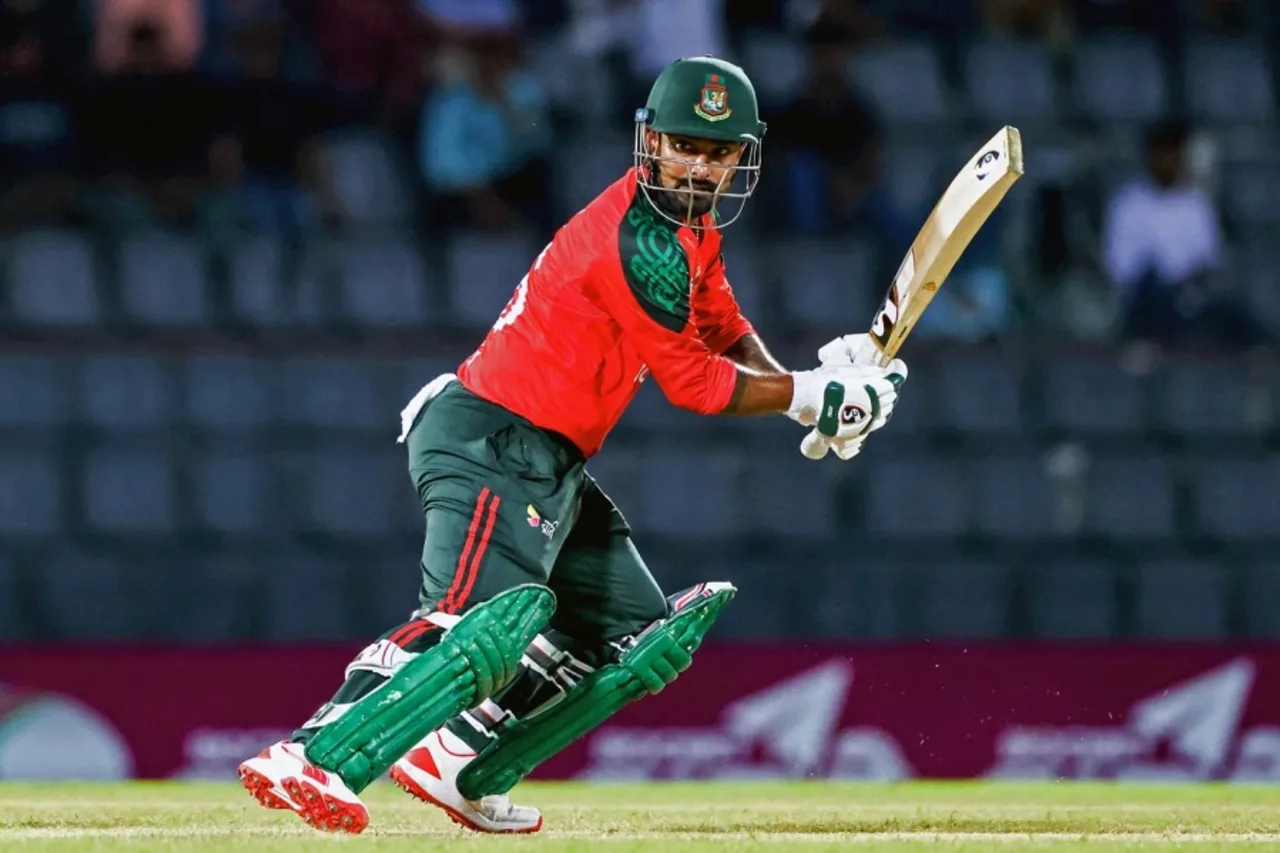
After a run-less Australia tour where Litton Das made three ducks in a row in the Test series, he was out for 2 against Pakistan. Litton faced just three balls, off which he attempted two reverse-sweeps, the second of them costing him his wicket. It was a perplexing innings on a pitch that offered a lot of turn and awkward bounce. Sometimes it’s hard to say if a batter is really out of form when he’s made a string of low scores, but Litton, who has led Bangladesh impressively in this format over the last couple of years, will want to break out of this run quickly.
Sahan Arachchige couldn’t quite muster up a captain’s performance against India, especially after his top three batters fell for ducks. He scored 9 before falling to a sweep shot against Axar Patel. He had earlier taken two wickets with his offbreaks. The 30-year-old allrounder now has the chance to put together a better show and inspire his team to the bronze.
Both teams could test their bench strength in the bronze-medal match.
Sri Lanka (probable): Sineth Jayawardena, Lasith Croospulle, Sohan de Livera (wk), Nuwanidu Fernando, Sahan Arachchige (capt), Ashen Bandara, Chamika Karunaratne, Wanuja Sahan, Tharindu Ratnayake, Vijayakanth Viyaskanth, Binura Fernando.
Bangladesh (probable): Tanzid Hasan, Saif Hassan, Litton Das (capt), Parvez Hossain Emon (wk), Towhid Hridoy (c), Mosaddek Hossain, Mahedi Hasan, Rishad Hossain, Aliss Al Islam/Nasum Ahmed, Shoriful Islam, Mustafizur Rahman/Hasan Mahmud.
[Ceicinfo]

The Wanderers Stadium in Johannesburg will host the 2027 ODI World Cup final, as it did in 2003, as well as the marquee match between India and Pakistan on October 10 at next year’s tournament. Wanderers, South Africa’s biggest ground with a capacity of over 30,000, has been preferred over Newlands in Cape Town, an iconic ground because of its mountain backdrop.
Newlands will instead host the opening match between India and defending champions Australia on October 7. So, a re-match of the 2023 final kicks off the group stage of the 14th edition of the tournament. Prior to that, the Namibia Cricket Ground in Windhoek will stage the Super Series, a three-team preliminary round which will decide which side makes it to the 12-team main event. Newlands gets a semi-final as well on November 17, with the other knockout game scheduled to take place in SuperSport Park in Tshwane (Centurion) on November 18. Zimbabwe, the co-hosts, are getting five games in the World Cup group stage and they play all of them at home.
The 12 teams – two of whom have yet to be decided – will be divided into two groups of six. Afghanistan, Australia, India, Pakistan, Zimbabwe and one of the qualifiers make up Group A. Bangladesh, England, South Africa, Sri Lanka, New Zealand and the other qualifier make up Group B. The two qualifiers will come from a 10 team tournament early next year, with the winner advancing to the group stage and the losing finalist and two losing semi-finalists to play the Super Series. A venue for the qualifiers has yet to be established but it is likely to be played either in South Africa or Namibia. The top eight teams besides the co-hosts in the ICC rankings on September 30 this year gained automatic qualification to the World Cup.
The World Cup will be staged between October 2 – to commemorate the birthday of Mahatma Gandhi, who spent two decades working as a lawyer in South Africa – and will conclude on November 21. The semi-finals and the final will have a reserve day.
South Africa, the co-host in group B, begin their campaign against New Zealand – a re-match of the 2026 T20 World Cup semi-final – at Newlands on October 9. Zimbabwe, the co-host in group A, will face Afghanistan in Bulawayo on October 11 to start their journey.
The top three teams of each group will move into the Super 7 phase, with the better fourth-place finisher across the two groups taking the seventh spot. Several teams already have their designations for the Super 7 phase and there is a chance of a second India vs Pakistan game in Cape Town on November 7.
- A1: India
- A2: Australia
- A3: Pakistan
- AB4: England
- B1: New Zealand
- B2: South Africa
- B3: Sri Lanka
If either Bangladesh or Afghanistan or any other team who are not seeded, get through their groups, they will assume seeding of the seeded team that gets knocked out.
In addition to hosting the preliminary round of the World Cup, Windhoek will host three group games, two of them involving 2019 champions England. The newly constructed Mosi-oa-Tunya Stadium in Victoria Falls, Zimbabwe got the final game of the group stages – India vs Zimbabwe on October 24 and three Super 7 matches. According to the ICC’s pre-seeding, these will be India vs Australia on October 28, Pakistan vs England on October 30 and Australia vs New Zealand on November 1.
There will be five matches played at Durban, including the final one of the Super 7 between A1 (India) and B3 (Sri Lanka) on November 14. In all there are 12 venues – Windhoek in Namibia, Victoria Falls, Harare and Bulawayo in Zimbabwe and Cape Town, Paarl, Johannesburg, Tshwane (Centurion), Bloemfontein, Durban, KuGompo City (East London) and Gqeberha (Port Elizabeth).
[Cricinfo]
[Prime Minister’s Media Division]

Bronze at stake as Bangladesh, Sri Lanka look to bring cheer to Asian Games contingents

Wanderers to host 2027 men’s ODI World Cup final as well as India vs Pakistan

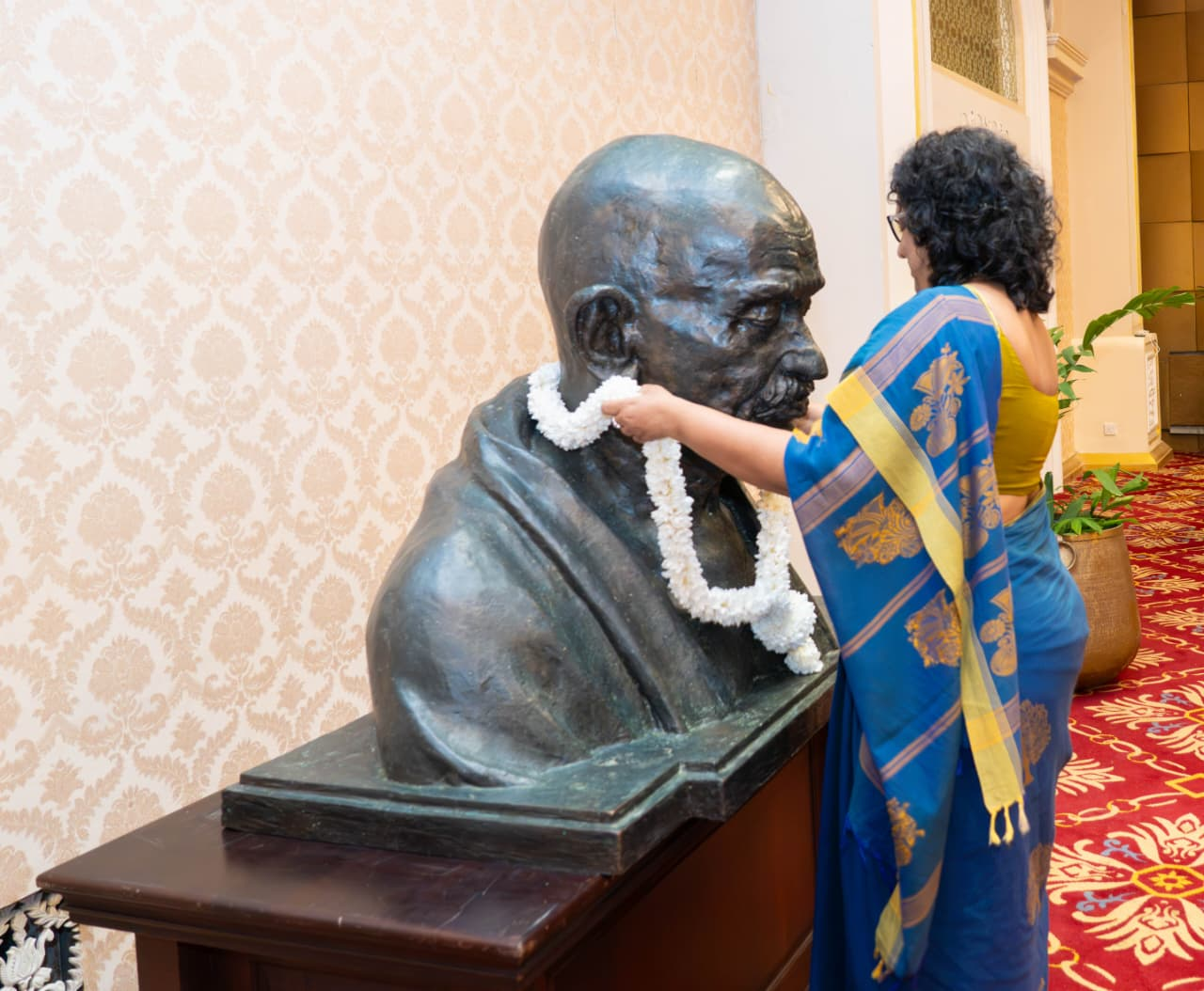
Prime Minister joins Gandhi Jayanti Commemoration

Showers or thundershowers will occur in most parts of the island after 1.00 p.m.

Unions resist tripartite EPF management plan

Two arrest warrants issued for Gnanasara thera

‘Dates have the highest sugar content to fight Coronavirus’

Sunday Island 27 December – Headlines

#SundayIsland 17th December – Headlines

Sunday Island – 28th March

Sunday Island Headlines – 21 March

Sunday Island – 21st February – Headlines
-

 Editorial6 days ago
Birth of a bad law
-

 News4 days ago
Police remove Thileepan statue in Jaffna
-

 News6 days ago
TIN mandatory for key transactions from Nov. 1
-

 Features4 days ago
The 22nd Amendment, constitutional recovery and illiberal slippage
-

 Features4 days ago
Of foreigners as CEOs of Lankan ventures
-

 News4 days ago
Sajith rejects Jt. Opp. protest sabotage claim; SJB TU chief demands remedial action
-

 Latest News2 days ago
Gold winner Tharanga gets brand-new Honda Vezel from SLAAJ
-

 Features3 days ago
Thailand’s biggest new global star …