
Features
Writing Postponed to Serve the Queen

CONFESSIONS OF A GLOBAL GYPSY
RESEARCH AT 16 FIVE-STAR HOTELS – PART ‘B’
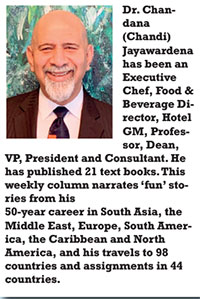
By Dr. Chandana (Chandi) Jayawardena DPhil
President – Chandi J. Associates Inc. Consulting, Canada
Founder & Administrator – Global Hospitality Forum
chandij@sympatico.ca
Continuing from last week’s column: ‘Research at 16 Five-star Hotels – Part ‘A”.
I postponed writing my M.Sc. dissertation on ‘Food and Beverage operations in the context of five-star London hotels’ several times, due to my ever-expanding field research. I was required to start writing the chapters without any further delays. I was reminded by the University of Surrey, in the United Kingdom that I must submit the final dissertation before the end of September, 1984, if I was to graduate in December that year.
I was focusing too much on gaining valuable experiences in London’s five-star hotels, which I believed would enhance my dissertation, eventually when I could commit myself to writing it. Another reason for my procrastination was my fear of writing something very long in my second language. Apart from a few assignment essays at the University of Colombo and the University of Surrey between 1982 and 1984, I had never written anything of significant length in English.
In my career in hospitality, I have been fortunate to be offered various, rare opportunities. Due to such an opportunity, I decided to postpone my research by one more week. One day, when I went to do a shift as a banquet waiter at the Dorchester, I was asked to attend a special meeting chaired by the Food and Beverage Manager, the Banqueting Manager and the Training Manager. A group of over 50 employees, including Banqueting Service Managers, Ballroom Head Waiters, Banquet Waiters, and part-time Banquet Waiters were at this meeting which seemed important.
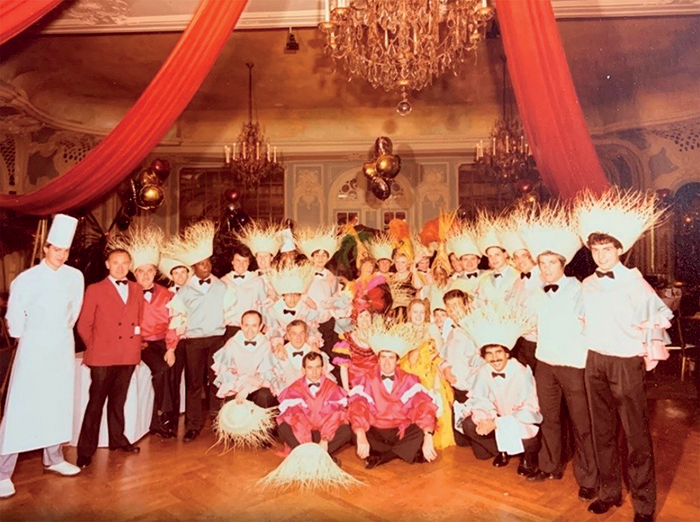
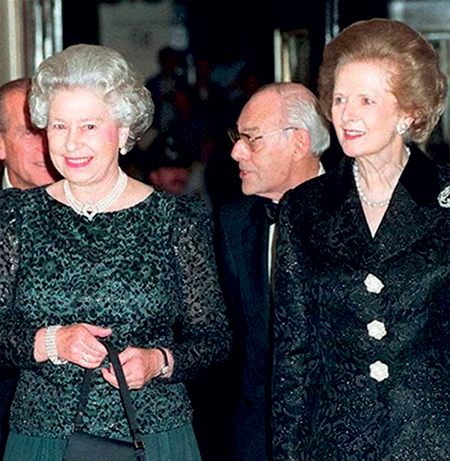
The Banqueting Manager announced that, “After a lengthy negotiation, our hotel sales team has secured a prestigious banquet booking. This would be our first-ever royal banquet. The Emir of Bahrain will host a banquet in honour of Her Majesty Queen Elizabeth II and His Royal Highness Prince Philip. It will be attended by 277 VIPs.” The Training Manager added, “We will carry out a week long, fully-paid banquet service refresher training program for all of you. There will be a practical test and a multiple-choice exam at the end. Based on the results of those, we will choose a brigade of 30 waiters to serve at the royal banquet. The best five Banquet Waiters will serve the head table, where the Queen, Prince Philip, the Emir, the British Prime Minister, the Lord Chancellor and the Speaker would be seated.”
The special training program was well-planned and comprehensive. I had an advantage due to the first-class, basic service training I had received a decade ago. This was from the food and beverage service experts from West Germany and Switzerland, when I was a student of the Ceylon Hotel School. I was also trained in banquet service at the inception of Hotel Ceylon InterContinental. Therefore, I did well at the practical test and the exam. I was chosen to serve the Queen, Prince Philip, the Emir, and Margaret Thatcher, in the heart of London at the best British hotel.
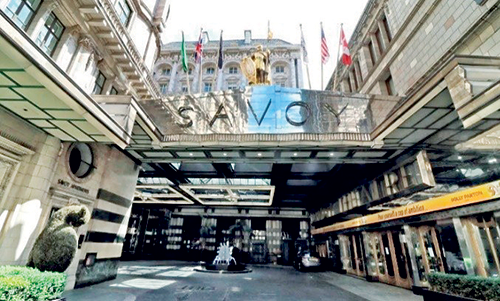
The Final Hotel – The Savoy
Having worked at seven of the 16 five-star hotels in London (The Dorchester, The Churchill, Grosvenor House, Hyde Park Hotel, Claridge’s, London Hilton and InterContinental London), I planned to research the other nine five-star London Hotels with short observation periods and at least one research interview per hotel. With diligent effort and follow up, I managed to do so in eight of the remaining five-star hotels in London – Connaught, The Ritz, Mayfair, Hyatt Carlton, Royal Garden, Inn on the Park (Four Seasons), Berkeley and Sheraton. I had one final bridge to cross in order to reach my ambitious target of doing field research in all 16 hotels. I was missing The Savoy.
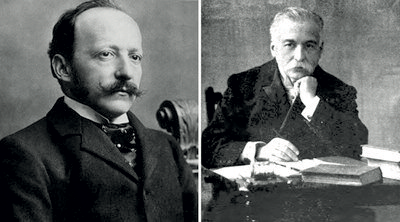
For my research, I had read many books written about luxury British hotels with historical importance. Most of these books were written about The Savoy, which was opened in 1889 under the leadership of a world-famous, hospitality expert duo – the Swiss Hotelier, César Ritz and the French Chef, Auguste Escoffier. I was simply fascinated with the stories in these books. I was eager to work in this great hotel, to experience its renowned luxury standards.
One day, I was excited to find a letter in my mailbox with the logo of The Savoy. It was from one of the most respected hoteliers in London. The General Manager/Managing Director of The Savoy, Willy Bauer sent me a lengthy letter, responding to my request to allow me to spend a few hours making observations at The Savoy and to interview the General Manager or a senior member of his management team. Although he took time to wish me luck with my research, he declined my request. He ended his letter by stating, “The management team of The Savoy are extremely busy ensuring that we provide the best service to our customers. Therefore, unfortunately, they have no time to waste on educating graduate students!”
I felt that his letter, although polite, had a subtle sarcasm. That rejection motivated me to somehow get into The Savoy and find a way to observe the operation and interview a relevant manager. I immediately took a 10-stop underground train ride to Charing Cross station and a five-minute brisk walk to The Savoy. Once there I requested to meet with the Banqueting Head Waiter. After inspecting my Banquet Waiter identification cards from four other London five-star hotels, and hearing how I was chosen to serve the Queen at the Dorchester, I was hired as a Part-Time Banquet Waiter of the Savoy, starting the very next day. When I demonstrated my ability to carry six plates of hors-d’œuvres, in two hands, the Head Waiter said, “The Savoy is not a circus! Never carry more than two plates at a time!”
I was very happy working at the Savoy. Unlike the newer five-star hotels, such as London Hilton and InterContinental London, the back of the house of The Savoy was not designed well for efficient operations. During one banquet service in the main ballroom, the waiters had to go up and down three different floors to pick up the appetizers, main courses and desserts. Nevertheless, I was pleased to climb those century old stairways used by Ritz and Escoffier.
I saw Willy Bauer a couple of times, but never had the opportunity of approaching him. Within a week of working at the Savoy, I had conducted an hour-long interview with a very helpful, Adrian Coy, the Banqueting Manager, who shared many useful documents including the full organization chart of the great hotel. “Mission completed! If there is a will, one will find a way!” I thought for myself.
Completing 120 Field Research Interviews
A few days later, I did my final interview, which turned out to be one of the best. This was with Michael Nightingale, a Management Consultant. We had two connections. He had done an M.Phil. degree at the University of Surrey, and previously ran the Hotel & Catering International Management Association (HCIMA) as the Director (CEO). He was a fellow of HCIMA and I had just been upgraded as a member (MHCIMA). As a result, Michael treated me like a colleague or a peer.
“After your breakfast service at The Savoy, let’s meet at the Charing Cross Hotel for a meal, and you can ask me your research questions over lunch” Michael said. I had an excellent interview. A few months after that, Michael migrated to Canada. He eventually became a Professor and the Chair of the School of Hospitality and Tourism Management at the University of Guelph. In the late 1980s, my wife studied hotel management under his leadership. Fifteen years after that, I became the President of HCIMA in the United Kingdom. Small world!
By early August, 1984, when my research supervisor heard that I had not yet commenced writing my M.Sc. dissertation, he was annoyed and concerned. Professor Richard Kotas said, “It will be impossible for you to write a master’s dissertation within the remaining six weeks! Chandi, I advise you to write an official letter to the university, requesting an extension of a semester to complete the dissertation requirement.” I replied, “No sir, I don’t have the money to pay for an extra semester. I have read all the relevant books and articles. I worked or observed in all 16 five-star London hotels. I have also done over 120 interviews, with half as structured formal interviews with senior hoteliers. I am now fully ready to write six chapters within six weeks.” We then agreed that I would meet him once a week, on six Mondays with a completed chapter.
Binge Writing for Six Weeks
I stopped working in hotels, socializing, watching TV, reading and all of my other activities, to focus on writing my dissertation. I got into a strict regime of 18-hours of writing a day, six days a week for six weeks. Every day, during this period of six weeks, I went to sleep just after 6:00 pm. I started the day at 12 midnight with a hot shower and a small breakfast with a lot of coffee. I continued writing for 18 hours with a short break to say goodbye to my wife who went to work in Knightsbridge around 7:00 am, and to have a quick light 15-minute lunch at 12 noon while watching the BBC TV news headlines.
I stopped writing when my wife came home around 6:00 pm. We had a quick dinner together. Then I handed over around 25 pages of handwritten (I could not type at that time) sections of my dissertation to my wife. She kindly typed all of my notes neatly and placed them on my desk in the attic of our small rented apartment,while I slept for a few hours. When I woke up at 12 midnight, before writing any new material, I would read the pages typed by my wife. We got into an excellent rhythm of teamwork.
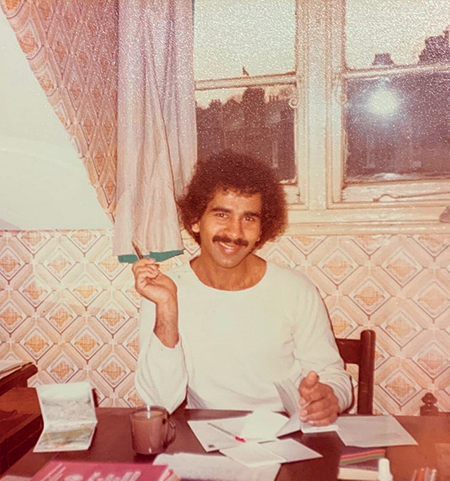
After a full-night of dissertation writing in our small apartment in London in 1984
Only on Mondays, I left the apartment to meet with Professor Richard Kotas at the university or his home in West London. Each of our weekly meetings commenced with a critique of my dissertation chapter submitted a week ago. He was amazed, surprised and a little annoyed by the length of my chapters. “You write a lot, Chandi! I have to budget extra time to read, review and edit your work!” he jokingly said. He corrected my English with a red pen and made some other edits or suggestions to improve the manuscript.
When I was shy about my poor English, he said, “Don’t worry, Chandi. English is my second language too. As you think in Sinhala, I think in my mother tongue – Polish.” Once we agreed on the corrections, I handed over the draft chapter with a lot of red pen marks, to a university secretary, who typed the final revisions. After that, I handed over the draft of the next chapter typed by my wife, to Professor Kotas.
The 353-paged Dissertation
I eventually completed my dissertation, within the six-week period, just before the deadline. The full length came to over 100,000 words. The 353-page dissertation referred to 133 previous publications and included 220 quotes in the literature review sections. My field research and my own experience in Food and Beverage operations, enriched the conclusion chapter. One of the Senior Lecturers of the university asked me, “How come your M.Sc. dissertation is longer than two average sized doctoral theses?” Professor Kotas was quick to respond on my behalf, and said the final word in my defence, “Chandi has done some excellent work including in-depth desk and field research. He should be congratulated.”
Within a month, it was confirmed that I had fulfilled all of the requirements and would graduate by the end of 1984. Unfortunately, only four in the first-ever batch of graduate students in the International Hotel Management program were successful in earning the M.Sc. degree. The other five were awarded post graduate diplomas instead, as the university was not fully satisfied with the quality of their work.
Six months after that, in 1985, I jointly presented with Professor Richard Kotas, my first-ever management seminar. This four-day seminar on ‘Food and Beverage Controls and Management’ was organized by our family business, Streamline Services, and was held at Mount Royal Beach Hotel in Sri Lanka. Partly based on my dissertation, we prepared a 143-page seminar book, which was distributed to all of the participants. I presented a session every day. Forty hotel industry leaders, including several general managers, attended this seminar. Most of them were much senior to me in terms of age and years of management experience.
When I was a little nervous if I would be accepted as their instructor for four-days, Professor Kotas decided to do a special introduction to the seminar participants just before my first presentation. He said, “During my 30-plus years spent in the hospitality industry as a manager, academic and a consultant, Chandi has been one of the most hard-working persons I have ever met. To me, he is the most knowledgeable person to present on Food and Beverage Management. Learn from him and enjoy his sessions! Chandi has a ton of useful stories from all five-star London hotels to share with you” That set the stage for me. The popularity of that seminar encouraged me to present a large number of hotel management seminars, around the world, over the next 37 years.
The cover of my first-ever management seminar book A British Textbook based on the Dissertation
Soon after the four-day seminar ended, Professor Kotas and I went through the seminar evaluation forms filled out by the participants, while having a drink on the famous Mount Lavinia beach. We were extremely pleased with the positive feedback. I was taken aback when he asked me, “Chandi, your dissertation has many aspects current and future managers of the hospitality industry would benefit from. Why don’t we convert it to a text book?”
By that time, he had authored over 10 best-selling textbooks and over 50 articles. My publication record then was zero. As I was very busy in my career in hotel management, I suggested that we place it on a back burner. Eventually, in 1994, Professor Kotas and I co-authored a book titled, ‘Profitable Food & Beverage
 Management’. By that time, the experience I had gained as the Food and Beverage Manager/Director of two large five-star hotels managed by Le Meridien and Oberoi hotel chains, in two capital cities, enhanced the contents of the book. Our joint book was published in the United Kingdom by Hodder & Stoughton, and became a popular text book in universities and colleges in the United Kingdom, Canada, Australia, Sri Lanka, Jamaica, Guyana etc.
Until his passing in 2020, Professor Kotas was my long-term mentor. He was like a father to me, and both his wife and Professor Kotas treated me like a son. My last meeting with them was in their London home a few months before my dear friend passed away.

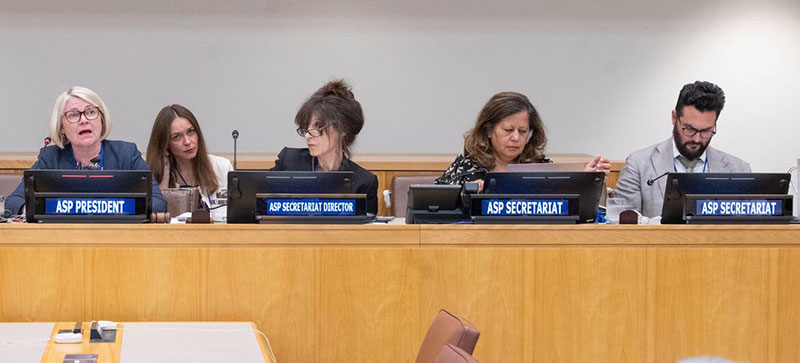
 US Secretary of State Marco Rubio’s warning to the International Criminal Court (ICC) was stark: ‘Either the ICC will end its threats, or we will end the ICC.’ It followed US central administration accusations that the court was unfairly targeting Americans on the basis of trumped-up war crimes charges.
However, a new plethora of sanctions has been clamped on the ICC by the US, which in turn has spurred accusations by sections of the world that the latter has unleashed an ‘assault’ on the international legal order.
What some of the sanctions would mean for the ICC was outlined by Rubio: ‘We will ban transactions with this rogue court, cutting off their resources and crippling their ability to operate against us.’
The ICC has shown consistency of purpose over the years. Despite some operational constraints it has indicted a large number of political strongmen from around the world, accused of war crimes and other governance excesses that come under its purview. Two such recent figures are: Russian President Vladimir Putin and Israeli Prime Minister Benjamin Netanyahu.
Rather than enjoy a mere nominal presence in the world community, the ICC has proved its effectiveness by detaining and bringing to justice scores of VIP politicians and others of their ilk who have been found guilty of human rights abuses and kindred excesses that come within the terms of reference of the ICC.
Accordingly, the international justice system would be stymied considerably as a result of the ICC being dis-empowered, particularly financially. Needless to say, potential and real perpetrators of the species of crime coming under the jurisdiction of the ICC would stand to gain most from such anarchic tendencies. That is, political repression globally would be enabled to enjoy a new lease of life.
A detailing of the types of crime coming under the purview of the ICC provides an idea of what it would cost the international community if the ICC’s operations are gravely hampered. They are mainly: genocide, war crimes, crimes against humanity and the crime of aggression.
That is, the part of the world to be worst affected would be the global South, since the latter is awash with the mentioned crimes. Needless to say, a chronically-disaffected South will sooner rather than later undermine the well being of the world dangerously. The world is already being put through these paces.
At the time of writing, ‘illegal migrants’ from the South, for example, are aggravating many a Western economy’s woes, besides creating for them acute law and order issues. The fact that these migrants’ presence goes on to become a virtual test of the migrant receiving states’ ability to forge domestic social inclusion in the face of jingoistic protests by mainly white supremacist groups is evidence of the latter. As is known, the US, to take just one example, has been up against this crisis for quite a while.
Accordingly, it will be in the best interests of the West if ‘illegal’ migrant arrivals on their shores are stemmed. If the socio-political and economic problems assailing the South are effectively managed through North-South collaborative, ‘trouble-shooting’ efforts the causes leading to ‘illegal’ migration and connected issues could be resolved at source as it were. For, it is the aggravation of the South’s material questions that lays the basis for the emergence of repressive and anti-democratic regimes in the hemisphere.
Until such time that the aforementioned issues in North-South relations are visited afresh and addressed urgently, a vibrantly functioning ICC would be needed. For, the latter would prove a deterrent to Southern political and military strongmen, highly prone to power abuse and like excesses, from coming into being in the wake of the South’s chronic material woes and the wars and conflicts that result from them.
It stands to reason then that the US would be acting in its own interests by enabling the ICC to perpetuate its mandate without hindrance. For a crop of issues that impinges negatively on internal law and order would be defused.
Meanwhile, there needs to be a meeting of minds among the rest of the West to put back in place a North-South dialogue process aimed at reducing some of the economic pressures that are weighing on the South.
Since economics usually drives politics it will be in the interests of the world community to scrutinizingly re-visit North-South issues of the past and put in place economic relief packages for Southern publics that would enable them to tide over their material hardships rather than permit the latter to aggravate into social disaffection and eventually armed militancy. It is the latter juncture that paves the way for the emergence of authoritarian rulers in the South who then go on to be a blight on their publics.
Accordingly, the Southern-based global development thinking of the past that envisaged a more equitable world economic order needs to be seen as an urgent need. That is, NAM’s international development paradigms need to be resuscitated to the extent possible.
It is unlikely that rightist governments of the West, such as the current Republican administration in the US, would find these projects feasible, but democratic states of Europe, led by perhaps the UK, are likely to think otherwise. For it would not be beneficial for the democratic world to be having on their hands repressive governments in the South who would be gravitating towards the major military and economic actors of the South, such as Iran and North Korea, who tend to be in constant power struggles with the West.
However, until such time that the mentioned, pro-people initiatives are given serious thought the ICC would need to be enabled by the international community to be in place comfortably and carry on with its mandate of bringing repressive rulers to book. Besides the ICC should pave the way for the peoples of the developing world to enjoy some substantial respite from the political repression and even terror which tend to be their lot.
Meanwhile, the wars of West Asia are relentlessly aggravating the economic hardships of people everywhere, driving the point home to enlightened sections that there is no alternative to peacemaking. A challenge is to convert the US under President Trump to this line of thinking.

 This week, I give you five simple, time-tested homemade remedies that help reduce the appearance of blemishes, control excess shine and leave your skin feeling softer and smoother.
The Honey and Lemon Brightening Dab:
For stubborn blemish marks, this is a classic. Mix one teaspoon of pure bee honey with three to four drops of fresh lemon juice. Apply gently, only on the affected spots, and leave for 10 minutes before rinsing with lukewarm water. While honey soothes and softens, lemon helps to brighten naturally. Use twice a week in the evening.
Besan and Rose Water Oil-Control Pack:
An ideal remedy to combat shine, especially on the T-zone. Take two teaspoons of besan (gram flour) and mix with sufficient rose water to form a smooth paste. Add a pinch of turmeric for its antiseptic goodness. Apply evenly, keep for 15 minutes and wash off. It absorbs excess oil without over-drying, leaving a beautiful matte finish.
Aloe Vera and Cucumber Ice Soother:
Blend fresh aloe vera gel with the juice of a grated cucumber and freeze the mixture in an ice tray. Each morning, wrap one cube in a soft muslin cloth and gently rub over a cleansed face for 30 seconds. It calms, tightens pores and imparts a baby-soft smoothness.
Oatmeal and Curd Gentle Polish:
Roughness and old blemish marks need gentle exfoliation. Combine one tablespoon of finely powdered oatmeal with one tablespoon of fresh curd (yoghurt). Massage very gently, in circular motions, for one minute, leave for five minutes and rinse. It removes dead cells and unveils softer, clearer skin.
Multani Mitti and Green Tea Magic Mask:
Brew some green tea and allow it to cool completely. Mix one and a half teaspoons of Multani Mitti (Fuller’s Earth) with the tea water to make a fine paste. Apply for 10 to 12 minutes – do not let it dry and crack completely – and wash off. It draws out impurities, fades blemishes and bestows a fresh, shine-free glow.
A Gentle Reminder:
As with any natural remedy, always do a patch test on your inner arm first. For those with oily or combination skin, avoid heavy coconut oil application and harsh scrubbing, as they tend to aggravate shine and blemishes.

 Dream of performing on a world stage? Well, here is your unique, golden opportunity!
The World Championships of Performing Arts (WCOPA) — the one and only official “Talent Olympics” — is the world’s premier global platform for aspiring singers, dancers, actors, models, instrumentalists, etc., to compete, shine and be discovered!
And, yes, this world stage is open to YOU, Sri Lankans living in Sri Lanka and overseas!
Held annually in glittering Las Vegas, WCOPA brings together over 70 countries, all competing for Gold, Silver and Bronze Medals, just like the traditional Olympics.

Lakisha Bernard: Will represent Team Sri Lanka at WCOPA 2027
Outstanding performers vie for the coveted titles of Junior and Senior Grand Champion Performer of the World, with winners and standout participants awarded over $500,000 in scholarships, cash awards and prizes to catapult their education and careers!
Sri Lanka is already making waves! At WCOPA 2026, Natharie Wickramasinghe, representing Team Sri Lanka, made the nation proud by winning a Bronze Medal in the Ethnic/Folklore Dance category!

Lakisha: Accomplished freelance Model and Fashion Design graduate
Recruitment for this prestigious competition is handled through a system of scouts and licensed National Directors — and this is where our very own Chris Rajendra, now based in Las Vegas, and National Director for Team Sri Lanka, comes into the scene.
If you are a singer, dancer, actor, model, instrumentalist — if you have talent burning inside you — contact Chris Rajendra today for registration and, who knows, you may find yourself in Las Vegas, and proudly draped in the Sri Lankan flag, at WCOPA 2027!
The contact address is: Chris Rajendra, wcopa.nationaldirector.sl@gmail.com
or chris.rajendra@gmail.com
Meanwhile, a star is born for 2027, in the form of Lakisha Bernard who is all set to represent Team Sri Lanka at WCOPA 2027.
Originally hailing from the sun-drenched coastal city of Colombo and now carving out her creative career in Canada, 22-year-old Lakisha is stepping into the international spotlight.
This accomplished freelance Model and Fashion Design graduate has officially been appointed as the Team Sri Lanka Promoter for Canada as she prepares to represent Team Sri Lanka at WCOPA in Las Vegas.
Lakisha brings a unique blend of high-fashion sensibility, captivating camera presence and expert garment design to the Team.
Having built her career, from local college shoots to high-glamour concepts, Lakisha’s inspiring journey embodies the true spirit of cultural bridge-building and creative resilience, bringing immense pride and recognition to Sri Lanka on the global stage.
WCOPA 2027 will be held at the legendary Westgate Hotel & Casino, Las Vegas, from 12th to 20th July – the very same iconic arena where the late, great Elvis Presley himself performed!
Your moment is now. Your stage is Las Vegas, so hurry and contact Chris Rajendra.

SriLankan Airlines wins prestigious SATA 2026 Visitors’ Choice Award for Leading International Airline

Look out for Mayon as field event athletes begin action at Diyagama

JXG enters LMD’s Most Respected Entities in Sri Lanka 2026 for the first time, securing a place among the first 50

Bourse bounces back on oil price reduction springboard

The Executive Centre expands Sri Lankan footprint with new premium, flexible workspace at World Trade Center

57th Annual Saints’ Quadrangular Tournament on Saturday and Sunday

‘Dates have the highest sugar content to fight Coronavirus’

Sunday Island 27 December – Headlines

#SundayIsland 17th December – Headlines

Sunday Island – 28th March

Sunday Island Headlines – 21 March

Sunday Island – 21st February – Headlines
-

 News7 days ago
NDB fraud Rs 60mn more than reported
-

 News7 days ago
Removing monk’s robes matter for Sangha to decide: Mahanayake Theras
-

 News5 days ago
Sri Lanka escalates anti-graft drive with Shiranthi’s jailing
-

 News6 days ago
NPP govt. reminded of its responsibilities as US warship leaves Colombo
-

 Latest News6 days ago
Farhan, Sadaqat help Pakistan ace 183 chase to go 1-0 up
-
 News7 days ago
BHC, Colombo: “LTTE remains a proscribed org. in the UK”
-

 Latest News4 days ago
Farhan and Sadaqat help Pakistan seal series in style
-

 News5 days ago
Iranian ships stranded, Lanka fears US sanctions