
Sports
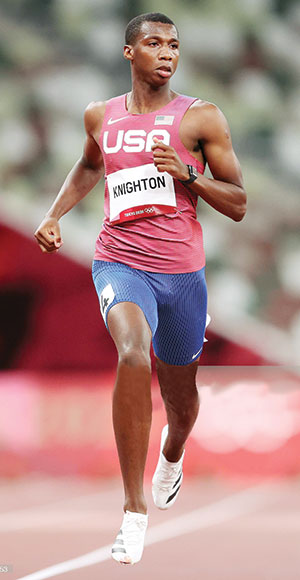
World U20 sprint records fall as Knighton runs 19.49 and Tebogo clocks 9.96


World U20 records were broken in men’s sprint events in two different continents just five hours apart on Saturday (30) as Botswana’s Letsile Tebogo ran 9.96 for 100m in Gaborone and Erriyon Knighton clocked 19.49 for 200m in Baton Rouge.World U20 champion Tebogo, competing on home soil at the Gaborone International Meet – a World Athletics Continental Tour Bronze meeting – became the first man from Botswana to break 10 seconds for 100m. The smooth-striding 18-year-old pulled away from an experienced international field to win comfortably in 9.96 (1.9m/s), taking 0.01 off Trayvon Bromell’s world U20 record set back in 2014.
South African duo Benjamin Richardson and Henrico Bruintjies were next to finish, clocking 10.08 and 10.16 respectively.Olympic 200m silver medallist Christine Mboma also impressed in the sprints in Gaborone. The Namibian teenager became the first U20 athlete to break 22 seconds for 200m and 11 seconds for 100m on the same day.After winning the 100m in a national senior record and African U20 record of 10.97 (1.6m/s), Mboma went on to win the 200m in a world-leading 21.87 (0.6m/s).
Just a matter of hours later over at the LSU Invitational in Baton Rouge, Knighton produced one of the fastest times in history for 200m.The 18-year-old US sprinter, who finished fourth at this distance at last year’s Olympic Games in Tokyo, effortlessly pulled away from the rest of the field on the bend and already had a clear lead as he entered the straight. Olympic finalist Joseph Fahnbulleh did his best to stay with Knighton in the second half, but the teenager was too far ahead and crossed the line in 19.49 (1.4m/s) with Fahnbulleh taking second place in 19.92.
Knighton wasn’t the only young sprinter to impress in Baton Rouge, though.One week after setting a Nigerian 200m record of 21.96, Louisiana State student Favour Ofili won the women’s 100m in a PB of 10.93 (2.0m/s). Not only does it make her the fastest African teenager in history, she also moved to fifth on the senior African all-time list.
Aleia Hobbs finished second to Ofili in 11.11, while world indoor silver medallist Mikiah Brisco won the other 100m heat in a wind-assisted 10.98 (2.4m/s).Ofili’s namesake Favour Ashe, who turned 20 two days ago, won the men’s 100m in a wind-assisted 9.79 (3.0m/s), winning comfortably from Da’Marcus Fleming (10.02).Elsewhere in Baton Rouge, world champion Grant Holloway won the 110m hurdles in 13.34, Jenna Prandini won the women’s 200m in 22.45, and Jonathan Jones took the men’s 400m in 44.79.


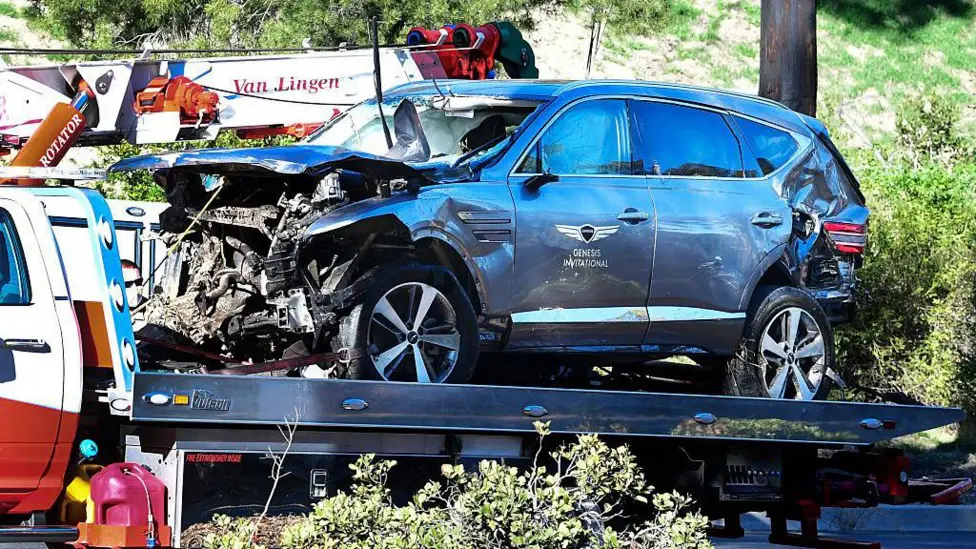
Tiger Woods has been charged with driving under the influence after rolling his car in a crash in Florida, police have confirmed.
The Martin County Sheriff’s Office said the 15-time major champion was also charged with property damage and refusal to submit to a lawful test.
Woods, 50, rolled his Land Rover after clipping a pressure cleaner truck while trying to overtake it at “a high rate of speed”, according to Sheriff John Budensiek.
The golfer, who had to crawl out of the passenger door of his vehicle, passed a breathalyser test after the crash but refused a urine test.
No-one sustained any injuries in the incident which took place on Beach Road in Jupiter Island just before 14:00 local time on Friday (about 19:00 GMT).
Sheriff Budensiek told a news conference: “The DUI investigators came to the scene and Mr Woods did exemplify signs of impairment.
“They did several tests on him. He did explain the injuries and surgeries that he’s had and we did take that into account, but they did some in-depth roadside tests.
“When it was determined, he was placed under arrest and taken to the Martin County jail.
“At the Martin County jail, and even on scene, we were really not suspicious of alcohol being involved in this case and that proved to be true.
“Mr Woods did a breathalyser test with triple zeros, but when it came time for us to ask for a urinary analysis test, he refused.”
Budensiek also said Woods had been “co-operative but was trying not to incriminate himself”.
“He has a right to refuse that test,” added the sheriff. “There is a statute which he will be charged with for refusing to take that test, but we will never get definitive results as to what he was impaired on at the time of the crash.”
US president Donald Trump was asked about the crash on Friday, saying: “I feel so badly. [Woods has] got some difficulty. There was an accident. That’s all I know.
“He’s a very close friend of mine, he’s an amazing person, an amazing man.”
Sheriff Budensiek said Woods would remain in jail for eight hours then be released on bond. The charges are misdemeanours, not felonies.
The BBC has contacted the golfer’s representatives for comment.
This is not the first time Woods has been involved in a car accident – he has played a limited schedule since the serious crash in 2021 that left him with extensive injuries and fortunate to be alive.
In 2017 police officers also found him slumped at the wheel of his parked Mercedes-Benz not far from his Florida home.
A toxicology report found Woods had several legal medications in his system and marijuana’s active ingredient, and he was sentenced to a year’s probation after pleading guilty to reckless driving.
In 2009 Woods hit a fire hydrant, a tree, and several hedges in a bizarre collision outside his home.
The incident sparked accusations of extramarital affairs which led to the end of his seven-year marriage and the loss of lucrative sponsorship deals.
[BBC]
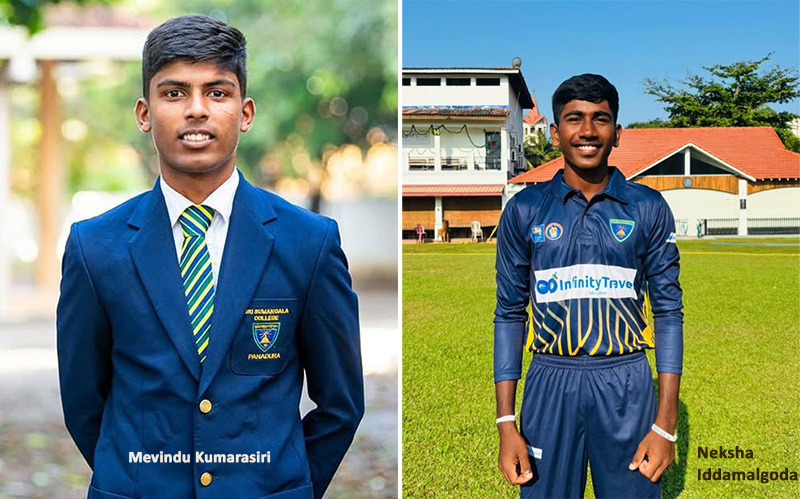
Sri Sumangala College, Panadura secured a convincing five-wicket victory over Sri Dharmaloka College, Kelaniya in their Under-19 Division I Tier ‘B’ cricket quarter-final at Kuruvita on Friday, sealing a place in the semi-finals with two sessions to spare.
All-rounder Mevindu Kumarasiri played a decisive role in the win, following up his outstanding bowling performance with a vital knock of 44 runs to guide his team to the target of 157.
Sri Sumangala’s run chase was anchored by Kumarasiri and Neksha Iddamalgoda, who shared a crucial 85-run partnership for the fourth wicket after the early setbacks. The stand effectively put the Panadura side on course for victory.
Kumarasiri’s brisk 44 came at just under a run-a-ball and included five boundaries, while Iddamalgoda top-scored with 49, striking seven fours in a fluent innings. Although both batsmen were dismissed before the target was reached, their partnership had already taken the sting out of the chase.
Bihanga Silva and Sadika Damyuru then completed the formalities, steering Sri Sumangala past the target to wrap up an impressive victory.
The win was particularly remarkable considering Sri Sumangala had been bowled out for 144 in their first innings. However, Kumarasiri turned the game dramatically in their favour with a superb six-wicket haul that dismantled Sri Dharmaloka for just 89 in the second innings.
His match-winning all-round performance proved to be the turning point as Sri
Sumangala capitalised on the opportunity to book their place in the tournament’s semi-finals.
Scores
Sri Dharmaloka 211 all out in 76.3 overs
(Kaveen Deneth 106, Senuka Pehesara 29, Koshitha Adithya 19; Mevindu Kumarasiri 5/82) and 89 all out in 35 overs (Tharusha Mihiranga 24; Mevindu Kumarasiri 6/41, Methum Fernando 4/42)
Sri Sumangala 144 all out in 48.4 overs
(Neksha Iddamalgoda 47, Bihanga Silva 36, Mavindu Kumarasiri 21; Tishan Nipun 4/43, Sathindu Prabhoda 3/44, Koshitha Adithya 2/27) and 160 for 5 in 34.3 overs (Vidura Basuru 33, Sandeep Wijerathna 19, Neksha Iddamalgoda 49, Mevindu Kumarasiri 44; Koshitha Adithya 4/64) (RF)
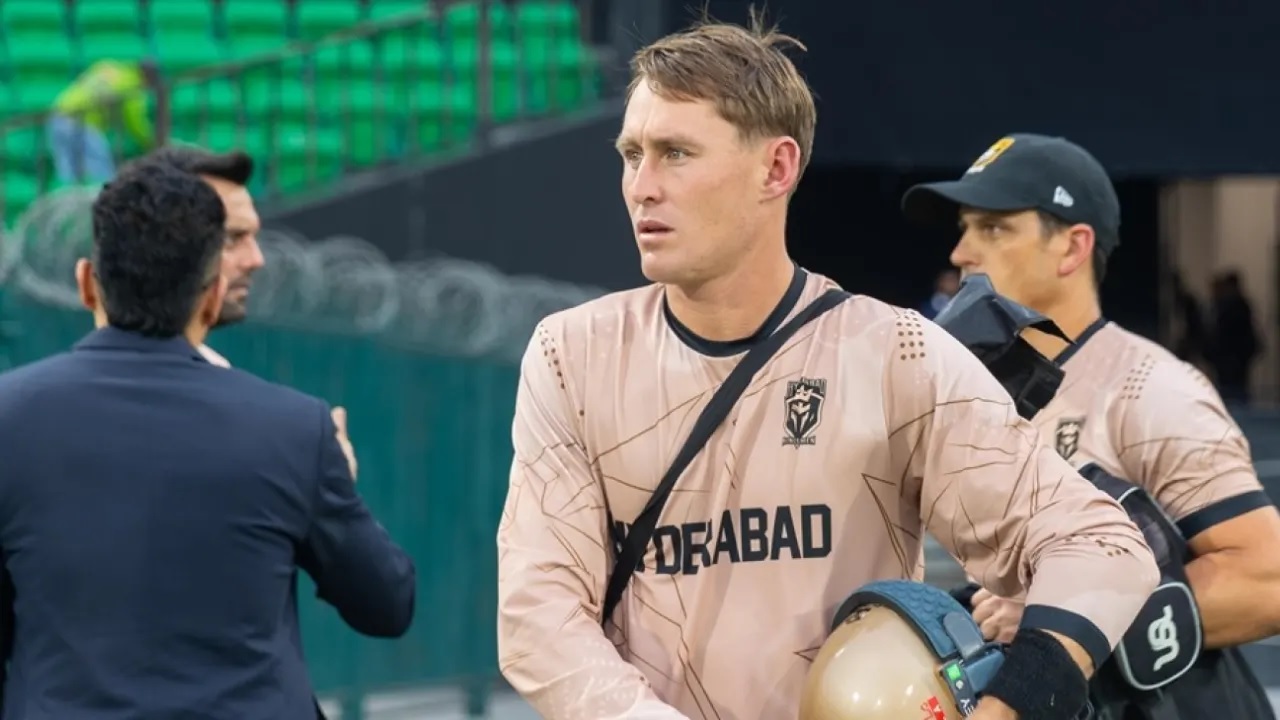
Shaheen Shah Afridi and Marnus Labuschagne, captains of Lahore Qalandars and Hyderabad Kingsmen, walked out with two team sheets each for the toss ahead of the opening matchof PSL 2026 and selected their final XIs based on which way the coin fell.
This was in accordance with a new regulation in the PSL playing conditions, which permits the captains to submit two team sheets to the match referee before the toss and finalise one of the submitted line-ups after the toss.
The clause 1.2.1 in the “Nomination and Replacement of Players” section reads: “Before the toss, each captain may submit two (2) different XI lineups in writing to the PSL Match Referee. Each lineup must include 11 players and a maximum of 4 substitute fielders (subject to Clause 1.2.5). After the toss, each captain must finalise one of the two submitted lineups by signing the selected team sheet. Once the final lineup has been nominated, no player listed in the selected playing eleven may be changed before the start of the match without the consent of the opposing captain.”
Tosses can play a significant role in this part of the world in night matches as a result of dew. The ball often gets wet and difficult to grip for the spinners, making them ineffective in the second innings. This change in the playing conditions is expected to provide a level playing field – a team batting first can add a fast bowler instead of a spinner while a team batting second can look to add depth to their batting.
There were no signs of dew in the first match of the season however because of the wind throughout the day and cloud cover.
[Cricinfo]

Courtesy call by the Heads of Mission- Designate on Prime Minister

Three dead after helicopter crash in Hawaii

Woods charged with driving under influence after crash

Showers may occur at a few places in the Rathnapura, Kaluthara, Galle, and Matara districts during the evening or night

SC finds Keheliya, others, guilty of violating FRs of public through corrupt drug procurement deal

Sajith nudges govt. to follow India’s example in giving relief to consumers by slashing taxes on fuel

‘Dates have the highest sugar content to fight Coronavirus’

Sunday Island 27 December – Headlines

#SundayIsland 17th December – Headlines

Sunday Island – 28th March

Sunday Island Headlines – 21 March

Sunday Island – 21st February – Headlines
-

 News3 days ago
Senior citizens above 70 years to receive March allowances on Thursday (26)
-

 Features5 days ago
Trincomalee oil tank farm: An engineering marvel
-

 News1 day ago
Energy Minister indicted on corruption charges ahead of no-faith motion against him
-

 News2 days ago
US dodges question on AKD’s claim SL denied permission for military aircraft to land
-

 Features5 days ago
The scientist who was finally heard
-

 Business2 days ago
Dialog Unveils Dialog Play Mini with Netflix and Apple TV
-

 Sports1 day ago
SLC to hold EGM in April
-

 Features6 hours ago
A World Order in Crisis: War, Power, and Resistance