
Business
World GIS Day 2020 – One Map Sri Lanka Competition Edition 4

Geographical Information Systems (GIS) Day provides an international forum for users of GIS technology to demonstrate real-world applications that are making a difference in our society. World GIS Day is all about Discovering the World Through GIS.
The first formal GIS Day took place in 1999. Esri’s (Acronym for Environmental Systems Research Institute – US) president and co-founder Jack Dangermond credits Ralph Nader with being the person who inspired the creation of GIS Day. He considered GIS Day a good initiative for people to learn about geography and the uses of GIS. He wanted GIS Day to be a grassroot effort, and open to everyone to participate.
World GIS day is celebrated around the world every year on the 3rd Wednesday of the month of November as a part of National Geographic’s and Geographical awareness week. This year it falls on the 18th of November 2020 – for which more information and material can be found at www.gisday.com.
GIS Solutions (Pvt) Ltd., (GISS) as the Sole Authorized Distributor for ESRI (Web link: www.gislk.com), in collaboration with the Survey Department of Sri Lanka, takes World GIS on to promote the use and value of maps and mapping technology for the general public of Sri Lanka, especially among school children.
In spite of the Pandemic, to create awareness about World GIS Day 2020, GIS Solutions is conducting a competition that involves mapping interesting and historically important places onto a digital map. This is the 4th year consecutively this will be conducted as an island-wide competition titled “One Map Sri Lanka” and targeting 3 groups this year; professional GIS users and GIS technologists, university students and school students.
The applicants are required to upload, digitally a picture of a place or location that they consider to have some historical, cultural, environmental significance or importance from their own surroundings, along with; an interesting 50-word description, corresponding exact longitude and latitude coordinates (Geo coordinates), with their personal details. Participation will be through on-line submission this year. For School children, this program will be conducted through the schools themselves.
Last year over 700+ entries were received of a very high standard from students from all across the country, with majority entries coming from outstation. The top 100 entries will be awarded with certificates and gifts. For the competition amongst adults and the Professional Users of ArcGIS Technology, GIS Solutions received very positive responses, as well, from which the best 3 entries will be awarded with cash prizes and certificates.



Construction giant Sanken Lanka behind the move
When Bathiya & Santhush took their seats alongside Rohit Sachdev, CEO and Founder of Soho Hospitality, at a recent press briefing in Colombo, it seemed at first like a courtesy appearance. Moments later, it became the headline: the duo were introduced as co-investors in Charcoal Tandoor Fire Grill’s Colombo debut.
That revelation that Bathiya and Santhush are not merely endorsing but co-owning the restaurant venture alongside Sanken Lanka, the company behind the Capitol TwinPeaks skyscraper is likely to resonate strongly with Sri Lankan audiences.
Charcoal Tandoor Fire Grill will open on the 50th floor of Capitol TwinPeaks at Union Place – home to Colombo’s tallest sky bridge, rising nearly 600 feet above the city. The Bangkok-born brand marks the first South Asian expansion of Soho Hospitality’s flagship Indian dining concept.
Founded in 2014 in Bangkok, Charcoal built its reputation by reinterpreting North Indian tandoor traditions and Mughlai richness through a contemporary, design-led lens. Live fire cooking, layered spice profiles and slow techniques define its culinary identity – dramatic yet calibrated.
For Bathiya, the investment is rooted in artistic kinship.
“Rohit is passionate about what he is doing,” he said. “His culinary art goes parallel to our showbiz in its finer details. We wanted Sri Lankans to devour that delicacy. We wanted to bring that brand excellence to our shores.”
Santhush drew an even broader connection between gastronomy and performance.
“For three decades we’ve worked to make Sri Lankan music a global product – to create that Sri Lankan musical vibe felt across the world,” he said. “Hospitality is part of the entertainment landscape. We take music and events to the outside world. Now we wanted to bring a global product and experience home.”
He likened Sachdev’s precision in the kitchen to orchestral mastery. “He works like a master of an orchestra – going into intricate details in his culinary art as we sift through every frequency of sound.”
Sachdev described Sri Lanka as a deliberate, data-driven choice for Charcoal’s first step beyond Thailand.
“Charcoal has always been built on heritage, movement and exchange – of flavours, ideas and experiences,” he said. “Sri Lanka felt like a natural step beyond Thailand. We see strong long-term fundamentals in Colombo, from tourism growth to an increasingly discerning dining audience.”
Colombo’s positioning at the crossroads of South Asia, the Middle East and Southeast Asia aligns neatly with Charcoal’s “Spice Route” narrative — a concept inspired by historic trade routes that blended flavours and commerce across regions.
Bathiya and Santhush built their careers by exporting Sri Lankan creativity to the world stage. Now, in a reversal of that flow, they are importing a globally recognised hospitality brand — embedding it within Colombo’s evolving skyline, backed by Sanken Lanka.
By Sanath Nanayakkare

The strongest financial performance in its history
Sampath Group has delivered the strongest financial performance in its history for the year ended December 31, 2025, recording a Profit Before Tax (PBT) of Rs 53.0 billion and a Profit After Tax (PAT) of Rs 32.6 billion. This marks year-on-year growth of 8% and 13% respectively, solidifying the Group’s position as one of Sri Lanka’s most resilient and forward-thinking financial institutions.
The Group also surpassed a significant milestone with its total asset base crossing the Rs 2 trillion mark—up 12% from 2024—reflecting strong credit expansion and prudent portfolio management.
The Sampath Bank, the Group’s flagship entity, continued to be the main engine of growth, posting its highest-ever profitability with a PBT of Rs 49.3 billion and PAT of Rs 30.2 billion—up 5% and 11% respectively. Adjusted for the one-off gains from the 2024 restructuring of Sri Lanka’s international sovereign bonds, both PBT and PAT grew an impressive 22%.
Driven by strong credit momentum, the Bank’s gross loan book expanded by Rs 259 billion (27%), reaching Rs 1.2 trillion by end-2025. Deposits rose 12% to Rs 1.65 trillion, underscoring the Bank’s trusted franchise and continued market confidence.
Shareholders benefited from a higher final dividend of Rs 10.30 per share, up Rs 0.95 from last year, with a payout ratio of 39.98%. The Bank’s Return on Equity (ROE) edged up to 17.93% (2024: 17.74%), while Return on Assets (ROA, before tax) stood at 2.60%.
Sampath Bank also reinforced its robust balance sheet, ending the year with Tier 1 and Total Capital Adequacy Ratios of 14.75% and 17.65% respectively—well above regulatory requirements. Liquidity remained strong with a Liquidity Coverage Ratio of 239.79% and Net Stable Funding Ratio of 173%.
Gross income grew 12% to Rs 218.8 billion, supported by the Bank’s diversified earnings base. Interest income dipped marginally by 1% to Rs 181.1 billion, reflecting lower market rates, but was offset by significant growth in non-fund-based income streams.
Net fee and commission income rose 21% to Rs 21.2 billion, buoyed by increased economic activity, higher card usage, and process efficiencies. Notably, the Bank recorded a Rs 6.5 billion trading gain, reversing a Rs 2.8 billion loss in 2024—largely due to exchange gains following a Rs 16.63 depreciation of the rupee against the dollar.
In a major turnaround, Sampath reported an impairment reversal of Rs 0.6 billion, supported by recovery efforts, lower Stage 2 and Stage 3 loan exposure, and improved customer repayment capacity. Stage 3 loans dropped to 9.6% from 13.7% in 2024, while Stage 2 fell to 7.6% from 15.7%.
Operating expenses increased 19% as the Bank accelerated investments in technology, staff expansion, and strategic initiatives aimed at long-term growth. Consequently, the cost-to-income ratio rose slightly to 42.7%.
Sampath Bank remained one of the largest contributors to government revenue, paying over Rs 39 billion in total taxes during 2025, compared with Rs 33.8 billion the previous year. Its effective tax rate was 52.3%.
The Sampath Group continues to broaden its financial presence, operating four subsidiaries—Siyapatha Finance PLC, Sampath Securities (Pvt) Ltd, Sampath Information Technology Solutions Ltd, and Sampath Centre Ltd. In January 2026, it established a new wealth management arm to meet emerging customer needs, pending regulatory approval.
Reaffirming its leadership in sustainability, Sampath Bank expanded its ESG-driven initiatives under its “Wewata Jeewayak” program, restoring its 28th village tank to support rural agriculture. The Bank also continued its coral and mangrove restoration, forest replantation, and turtle conservation projects.
In a pioneering move, the Bank implemented Sri Lanka’s SLFRS S1 and S2 standards under its Climate First Action Plan and introduced a Green Fixed Deposit framework with independent assurance for credibility and transparency.
Responding to the devastation of Cyclone Ditwah, Sampath Bank donated Rs 100 million to the “Rebuilding Sri Lanka” fund, alongside humanitarian aid to the Sri Lanka Red Cross and Air Force.
“Our record-breaking performance in 2025 reflects not just financial resilience, but a steadfast commitment to national progress and sustainable growth,” said Sanjaya Gunawardana, Managing Director and CEO of Sampath Bank PLC.

National Savings Bank (NSB) has been awarded the Gold Award in the State Bank Category at the TAGS Awards 2025, organized by the Institute of Chartered Accountants of Sri Lanka (CA Sri Lanka). Celebrated under the theme “Diamond Chapter – The Grand Honour of Excellence,” the awards recognize organizations that demonstrate exceptional commitment to transparency and governance through their annual reports.
The Gold Award, bagged by NSB, highlights the Bank’s continued dedication to maintaining high standards of disclosure and stakeholder engagement while strengthening governance and accountability across all operations. The rigorous evaluation process assesses not just financial performance, but also how effectively organizations communicate strategy, sustainability initiatives, and long-term value creation.
Chairman Dr. Harsha Cabral PC, accepting the award alongside the NSB team, stated that the recognition is a testament to the collective efforts of the Board, Management, and staff in upholding the highest standards of corporate governance and responsible banking. He noted that maintaining transparency remains fundamental to sustaining public trust, particularly as NSB advances its digital transformation journey while supporting national economic development.
The achievement reflects the Bank’s disciplined financial stewardship and its commitment to presenting a forward-looking account of its performance.

Prime Minister attends 169th birth anniversary celebration of Lord Robert Baden-Powell

Coal ash surge at N’cholai power plant raises fresh environmental concerns

Akuregoda double murder: Suspected gunman in custody a duly discharged ex-soldier

Those who hid under beds fearing Gotabaya, now talking big: Justice Minister

Demand for accommodating Thimphu principles in promised Constitution: ITAK says it was not party to that move

Tamil politicians tell the UK NPP govt. not fulfilling its promises

‘Dates have the highest sugar content to fight Coronavirus’

Sunday Island 27 December – Headlines

#SundayIsland 17th December – Headlines

Sunday Island – 28th March

Sunday Island Headlines – 21 March

Sunday Island – 21st February – Headlines
-
 Features1 day ago
Why does the state threaten Its people with yet another anti-terror law?
-

 Features1 day ago
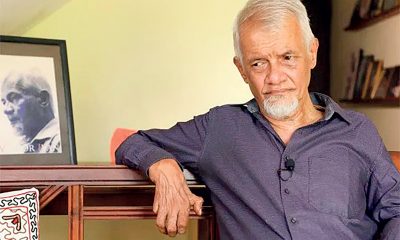
Victor Melder turns 90: Railwayman and bibliophile extraordinary
-
 Features1 day ago
Reconciliation, Mood of the Nation and the NPP Government
-
 Features1 day ago
Victor, the Friend of the Foreign Press
-

 Latest News3 days ago
New Zealand meet familiar opponents Pakistan at spin-friendly Premadasa
-

 Latest News3 days ago
Tariffs ruling is major blow to Trump’s second-term agenda
-

 Latest News3 days ago
ECB push back at Pakistan ‘shadow-ban’ reports ahead of Hundred auction
-
 Features1 day ago
Barking up the wrong tree