
Sports
World Cup spot and series at stake due to poor planning

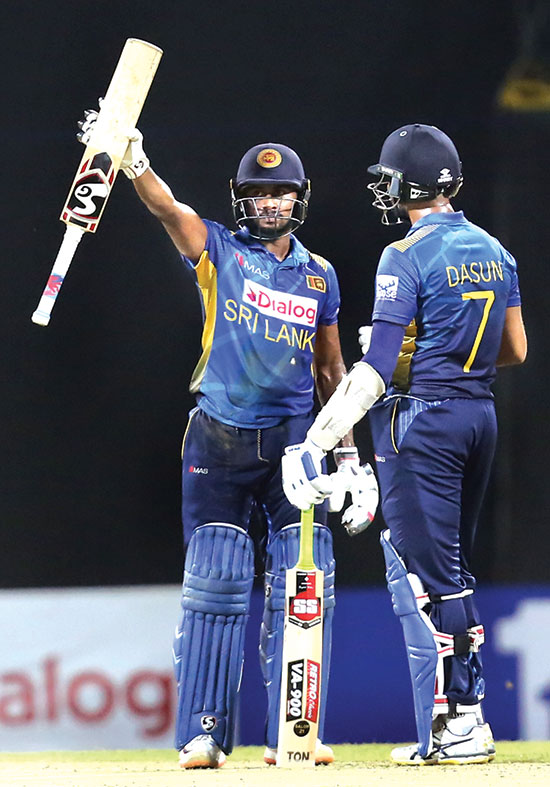
Rex Clementine at Pallekele
When politicians have a say in making key appointments, they nominate kith and kin, stooges and in some cases total misfits. That’s what has happened when you look at the Central Bank, Ministry of Agriculture and National Cricket Selection Panel. We warned in these spaces on Sunday that playing five specialist batsmen in the ongoing three match ODI series is too much of a risk. A day later that became four with Minod Bhanuka ruled out with injury. The selectors should have addressed the issue by adding more cover in the batting department. But they were arrogant and thought that they had all bases covered and were taught a bitter lesson on Tuesday as Zimbabwe squared the three match series.
Sri Lanka had a good opportunity to seal this series 3-0 and move up to number three in ICC World Super League, but poor planning and lack of knowledge have been stumbling blocks towards the team making progress. The selectors have been quick to point fingers at players for not living up to expectations but have they done their jobs well? They are yet to address a single media briefing although there have been several debatable decisions. You can only come to the conclusion that they are hiding behind the pandemic.
This series is part of the ICC World Super League and all focus must be on automatic qualification for the game’s showpiece event to be hosted by India next year – the 50 over World Cup. Only hosts India and seven other teams who are top in the rankings go through automatically while the other five of the 13 teams will be relegated to play a qualifying round. A bit more planning would have seen Sri Lanka collecting all 30 points available in the series.
Sri Lanka opted for four specialist batsmen and three all-rounders. Among them, apart from Pathum Nissanka the rest were not in the best of form while Kusal Mendis was returning after a suspension.
Successful Sri Lankan teams in 1990s had Roshan Mahanama at number seven. A decade later Russel Arnold occupied that slot. To expect Chamika Karunaratne to deliver at seven is wishful thinking.
Sri Lanka’s one-day team resembles the England’s ODI teams of 1990s and 2000s where they relied on too many half-baked all-rounders. England hardly made any progress in white ball cricket those days. That’s exactly what’s happening to Sri Lanka at the moment as they are pinning their hopes on Kamindu Mendis, Dasun Shanaka and Chamika Karunaratne. Of the three all-rounders, only one can play in the side and if the selectors are not willing to accept the reality, let them learn the lessons the hard way.
Having said that, it was a remarkable fight back by Dasun Shanaka and Kamindu Mendis after being set a stiff target of 303. Reduced to 63 for four, they did well to help Sri Lanka reach a score of 280. In the post match media briefing, Kamindu admitted that had he stayed on till the 40th over instead of getting out in the 35th, the result could have been different.
Or maybe if Sri Lanka had more batting depth, the result could have been different too.
Another pertinent point that needs to be asked is despite you having so many bowling resources, how come the opposition is posting totals in excess of 300. Obviously the team has missed Wanindu Hasaranga and Dushmantha Chameera making a comeback after COVID wasn’t the same bowler. The fielding standards were horrible. That has been that for the last so many years. Sadly, no one wants to address the issue. When Zimbabwe’s fielding is better than Sri Lanka’s, you can have a fair idea about our standards.





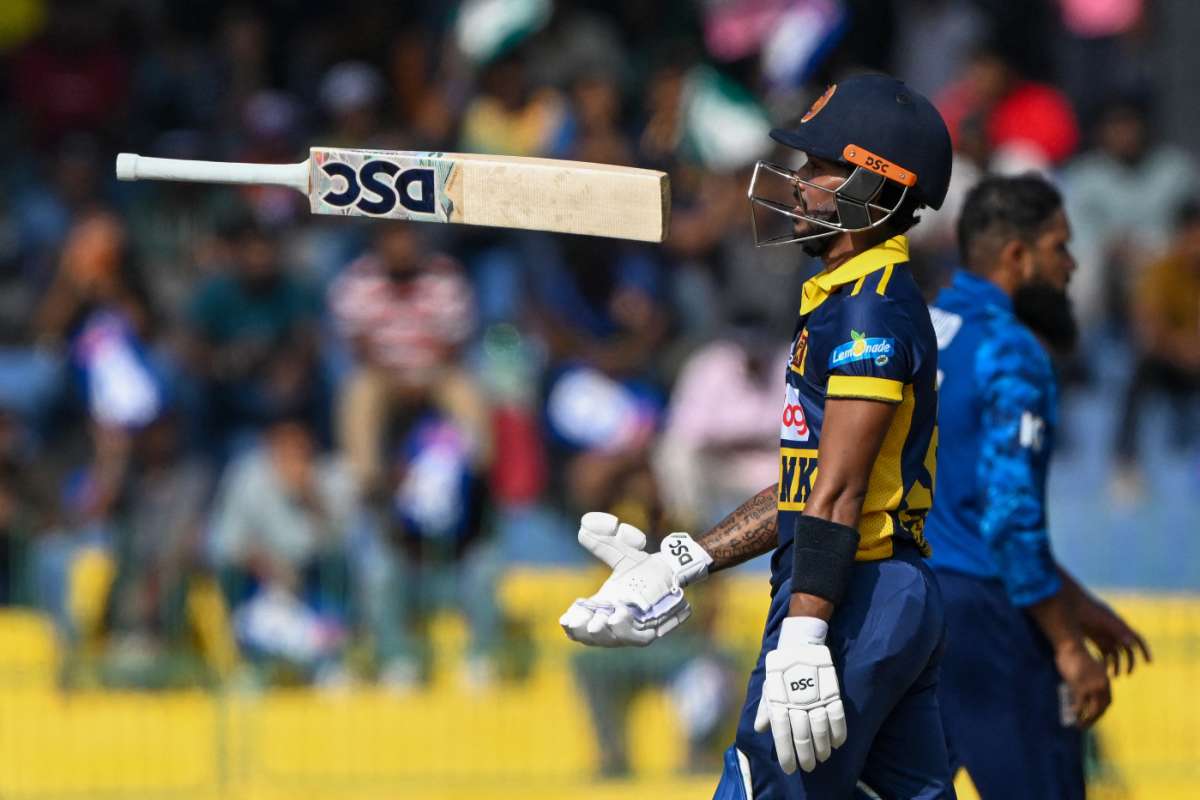
A Sri Lankan innings that never really got going eventually parked itself at middling total of 219, as they were bowled out in 49.3 overs in the second ODI in Colombo. It’s a total England will fancy themselves to chase down as they look to level this three-match series.
Sri Lanka’s innings was headlined by Charith Asalanka’s 45 off 64 and Dhananjaya de Silva’s 40 off 59, but at strike rates of 67.79 and 70.31 it tells you all you need to know about how well England kept a lid on the innings.
For the visitors the wickets were spread out, with Adil Rashid, Jamie Overton and Joe Root picking up two apiece, the latter with the final two balls of the innings. There were also wickets for Liam Dawson, Rehan Ahmed and the returning Will Jacks.
And much like in the first ODI, England’s varied attack – no less than eight options were used across the innings – sought to give little away. “Keeping the stumps in play,” was Harry Brook’s refrain, speaking after losing the toss, and on an uber-dry surface with boundaries square and behind mostly protected, the onus was on the Lankan batters to use their feet in order to access the boundaries at extra cover and deep midwicket.
That sort of strokeplay however proved detrimental to the Lankan cause with four of their top five falling in their attempts to access the boundaries in front of square. Kamil Mishara sought to bring some impetus to the innings after a miserly early burst from the England seamers, but his attempted lashing cover drive could not clear Ben Duckett in the circle, who held on at the second attempt.
Pathum Nissanka, who had patiently waded through the opening powerplay when the scoring rate sat below four an over, then sought to capitalise on his added time in the middle, but only managed to loft an inside-out drive to long-off.
Later on in the innings Dhananjaya whacked one low to Root at midwicket, before the set Asalanka found deep midwicket with a slog sweep.
And arguably Sri Lanka’s best batter at accessing those regions, Kusal Mendis, ran himself out for a ground-out 26, when he cut one straight to point and absentmindedly set off for the single. The throw from the fit-again Jacks was pinpoint and found Mendis easily short as he sought in vain to fling himself back to safety.
There were promising stands between, notably a 42-run effort between Nissanka and Mendis and 66 between Dhananjaya and Asalanka, but none of the batters involved were able to push on and up the rate of scoring over any concerted period of time.
Pavan Rathnayake’s 29 off 34 had also shown promise, but he fell foul looking to clear the straight boundary as he sliced one to long-off, and in the process silenced an energetic Khettarama crowd.
The frustrating nature of Sri Lanka’s innings was illustrated by the fact that five batters scored at least 25 and faced at least 30 deliveries, but the highest score remained Asalanka’s 45.
England, to their credit, stuck to and executed their plans well. The use of eight bowlers – six of them spinners – meant Sri Lanka’s batters were ever really able to get a measure of any one bowler. And while the lengths were consistent, the pace of the deliveries was varied. It meant that even when a set batter such as Nissanka sought to take on the attack, Rashid was able to successfully deceive him in the flight.
Dunith Wellalage once more looked enterprising during a late cameo, but despite finding two boundaries in his brief stay, his 20 off 19 was far less damaging to England’s cause than had been in the first ODI.
England bowled 40.3 overs of spin across their innings, breaking their previous record of 36. That came in Sharjah in 1984-85, when Norman Gifford captained England at the age of 44, and took four wickets. The team wore black armbands during the first ODI after his death last week.
Brief scores:
Sri Lanka 219 in 49.3 overs (Charith Asalanka 45, Dhananjaya De Silva 40; Joe Root 2-12, Jamie Overton 2-21, Adil Rashid 2-34) vs England
(Cricinfo)
(Cricbuzz)
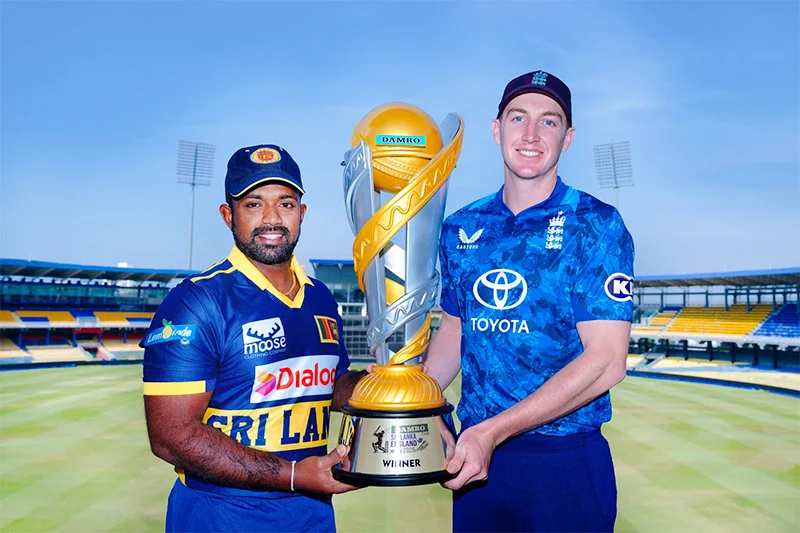
Sri Lanka elected to bat first in the second ODI against England at the R Premadasa International Stadium
Sri Lanka: Pathum Nissanka, Kamil Mishara, Kusal Mendis (wk), Dhananjaya de Silva, Charith Asalanka, Janith Liyanage, Pavan Rathnayake, Dunith Wellalage, Pramod Madushan, Jeffrey Vandersay, Asitha Fernando
England: Rehan Ahmed, Ben Duckett, Joe Root, 4Jacob Bethell, Harry Brook (capt), Jos Buttler (wk), Will Jacks, Sam Curran, Jamie Overton, Liam Dawson, Adil Rashid

Sri Lanka succumb for 219 as spin-heavy England turn screw

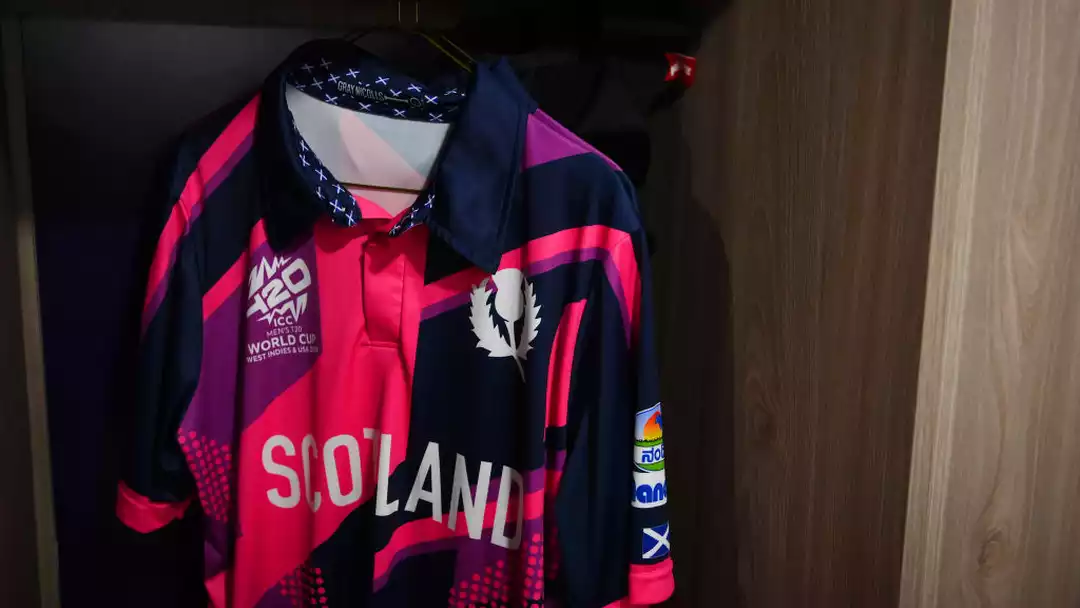
T20 World Cup 2026: ICC replace Bangladesh with Scotland

Indonesia landslide kills 7, dozens more missing

Ukraine condemns ‘brutal’ Russian strikes ahead of second day of peace talks

Sri Lanka bat first in second ODI

Colombo Stock Exchange (GL 12) donates LKR 25 million to the “Rebuilding Sri Lanka” Fund

‘Dates have the highest sugar content to fight Coronavirus’

Sunday Island 27 December – Headlines

#SundayIsland 17th December – Headlines

Sunday Island – 28th March

Sunday Island Headlines – 21 March

Sunday Island – 21st February – Headlines
-

 Editorial7 days ago
Illusory rule of law
-

 Features7 days ago
Daydreams on a winter’s day
-

 Features7 days ago
Surprise move of both the Minister and myself from Agriculture to Education
-

 Features6 days ago
Extended mind thesis:A Buddhist perspective
-
 Features7 days ago
The Story of Furniture in Sri Lanka
-

 Opinion5 days ago
American rulers’ hatred for Venezuela and its leaders
-
 Features7 days ago
Writing a Sunday Column for the Island in the Sun
-
 Business3 days ago
CORALL Conservation Trust Fund – a historic first for SL