
Business
Workshop on Procurement Planning by Open University’s Faculty of Management Studies

Prof. Nalin Abeysekara
Dean Faculty of Management Studies
R.H. Asari Tharuka Perera
Programme Coordinator
M.Sc. in Public Procurement and Supply Chain Management
The Open University of Sri Lanka (OUSL) is a pioneering national university in Sri Lanka designed to provide education through open and distance learning methods. The Faculty of Management Studies of the Open University Sri Lanka has over 40 years of experience in offering a variety of programs including master’s programs, degree programs, certificate courses, diplomas and postgraduate degree programs.
Recently, it launched a new postgraduate degree program, MSc in Public Procurement and Supply Chain Management. This program is for individuals seeking a postgraduate qualification in public procurement and supply chain management. A distinctive feature of this program is its status as the first postgraduate qualification offered in public procurement in Sri Lanka.
Beyond its typical academic role, this program contributes to creating a platform for discussing the importance of public procurement and supply chain management in both the public and private sectors in Sri Lanka. Efficient and transparent public procurement is crucial for the effective functioning of governments. It ensures that public funds are used responsibly, promotes fair competition among suppliers, and contributes to economic development. The unique selling proposition (USP) of this program is the combination of public procurement and supply chain management with practical discussions with industry experts.
More importantly in Sri Lanka at the moment there is a debate within society on public procurement aligned with, corruption, lack of competition, and complex regulations. In the context of public procurement, ensuring good governance is crucial to prevent corruption, promote fairness, and achieve value for money. Implementing transparent and accountable procurement practices contributes to overall good governance within a country or organization.
All stakeholders in the country must address these challenges to ensure the effectiveness of public procurement processes. To address this problem the Faculty of Management Studies plans to organize a series of workshops with procurement specialists in Sri Lanka. The first workshop was conducted with industry experts, professionals, and academics in procurement and supply chain under the theme of ‘Procurement Planning’ was held on January 25, 2024, at the Water’s Edge Battaramulla. The learning partners for the MSc in Public Procurement and Supply Chain Management also actively participated in the event.
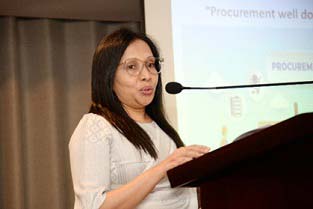
Mrs. P. Sujeewani Muthunayaka, Assistant General Manager (Procurement Planning and Monitoring) at the National Water Supply and Drainage Board, was invited as the chief guest for this event. During her speech, she discussed the simplification of procurement and supply chain processes, sharing her valuable experiences with the audience. She explained the procurement planning process of the Water Board and emphasized the importance of research and development, as well as effective collaboration between local and foreign contractors for the success of projects.
Mrs. Muthunayaka brought numerous examples to the table while illustrating the role of technology in the simplification process of procurement planning. Significantly, she shared the success story of the NRW (Non-Revenue Water) project, highlighting the reduction of unauthorized water connections and administrative losses. Furthermore, she elaborated on the adaptation of E-procurement and the simplification of the procurement planning process at the National Water Supply and Drainage Board in Sri Lanka.
During this event, OUSL, positioning itself as a responsible academic institution committed to societal improvement, proudly announced the initiation of the Procurement and Supply Chain Consultative Committee. This marks a crucial step in fostering collaboration between academia and industry to shape the future of learning partnerships and make a meaningful impact on the industry landscape.
Professor Nalin Abeysekera, Dean of the Faculty of Management at OUSL, declared that Mr. Ivan Tissera, a member of the National Procurement Commission, and Mr. I.G. Perera, a Supply Chain and Lean Management Specialist, would serve as co-chairs of The Procurement and Supply Chain Consultative Committee.
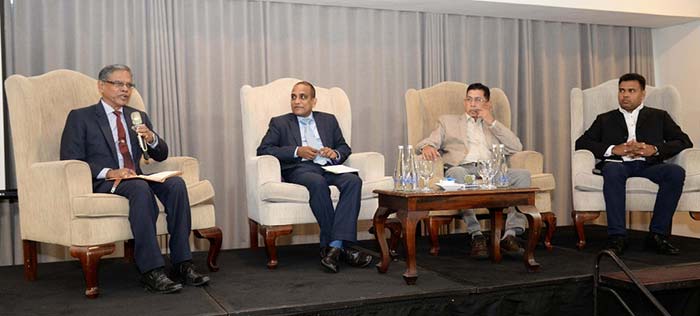
The “Procurement Planning” discussion forum was conducted with the participation of specialist panel members: Mr. Christy Perera, Advisor for National and International Procurement; Mr. Emmanuel Susitha, General Manager of Support Services at Star Garments Group; and Mr. Sameera Landekumbura, Senior Manager of Procurement at Siam City Cement Lanka Ltd. The forum was moderated by Mr. I.G. Perera, a Supply Chain and Lean Management Specialist.
In the discussion forum, participants primarily engaged in discussing timely topics related to procurement planning. The panel discussion provided insightful ideas into the procurement planning processes across various business activities. They emphasized the significance of market research in the procurement planning process and delved into the risks associated with the process, along with strategies for risk mitigation.
The conversation then shifted to current issues in the apparel industry, exploring procurement and supply chain strategies to address the challenges faced. Additionally, the panel paid particular attention to a crucial topic E-Procurement and highlighted the need for Sri Lanka to transition towards e-procurement in the future. The discussion forum subsequently focused on the sustainability of procurement planning. This discourse was enriched with expert insights, shedding light on how Sri Lanka, as a country, can develop a robust procurement system for good governance.
Furthermore, Dr. S. Sridharan, the Deputy Director General of Health Services Planning at the Ministry of Health, shared valuable practical experience in public procurement and planning. His insights not only clarified the complexities of the field but also provided a unique healthcare-oriented perspective. The exchange of ideas during the session undoubtedly broadened the audience’s knowledge, fostering a more comprehensive appreciation for effective procurement strategies in the public sector.
The workshop was honored by the presence of distinguished guests with the blessings of senior Professor P.M.C Thilakarathne, Vice Chancellor of The Open University of Sri Lanka., Professor Nalin Abeysekara, the Dean of the Faculty of Management Studies and Dr. S. Sapukotanage, Head of the Department of Marketing Management. More importantly, the entire M.Sc. program in Public Procurement and Supply Chain Management is conducted by specialists in procurement and supply chain management with international experience.

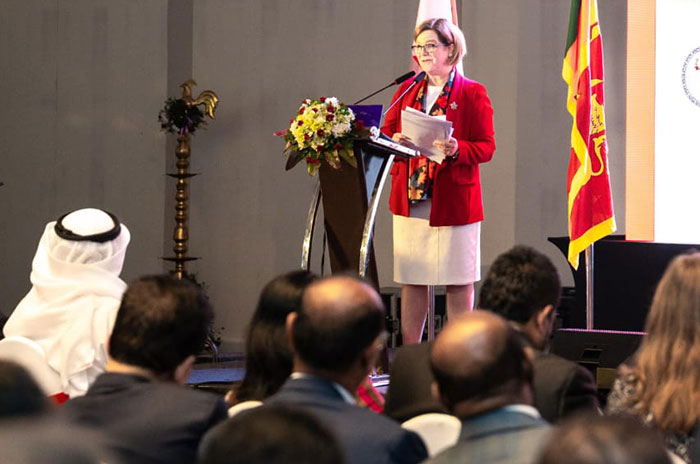
The vibrant celebration of Canada’s 159th National Day in Colombo brought together diplomats, government representatives, leading business executives and members of the Sri Lankan and Canadian communities, highlighting the growing strength of bilateral economic and commercial relations between Sri Lanka and Canada.
Hosted by the Canada Sri Lanka Business Convention (CanCham Sri Lanka), the event attracted one of the largest gatherings in its history, providing an important platform for business networking while celebrating the enduring friendship between the two countries.
Addressing the gathering, High Commissioner for Canada in Sri Lanka and the Maldives Isabelle Martin said Canada and Sri Lanka continue to enjoy a warm and expanding partnership built on shared values, people-to-people links, trade, investment and development cooperation.
“Canada Day is an opportunity not only to celebrate our country but also to celebrate the strong friendships and partnerships we have built with Sri Lanka.
The remarkable turnout this evening reflects the strength of those relationships and the growing collaboration between our two nations,” Martin said.
She noted that the close engagement between Canadian and Sri Lankan businesses continues to create new opportunities in trade, innovation, education, sustainable development and investment.
CanCham Sri Lanka officials said this year’s celebration was among the most successful Canada Day events ever organised by the Chamber, drawing an outstanding crowd and creating exceptional opportunities for business networking.
“What an incredible celebration of Canada Day. This was truly one of the most successful Canada Day celebrations in history, with an outstanding crowd and exceptional networking opportunities. It was wonderful to see so many distinguished guests, business leaders and community members come together,” the organisers said.
They thanked sponsors, partners, supporters and volunteers whose dedication ensured the success of the event.
The evening showcased Canada’s multicultural heritage while reaffirming the Chamber’s commitment to promoting stronger commercial links between Sri Lanka and Canada.
Guests representing a wide cross-section of industries exchanged ideas on expanding trade, investment and innovation partnerships.
Canada remains an important economic partner for Sri Lanka, with bilateral trade spanning apparel, agriculture, seafood, ICT services, education and professional services.
Canadian companies continue to explore opportunities in renewable energy, infrastructure, technology and sustainable development, while Sri Lankan exporters maintain a significant presence in the Canadian market.
Business leaders attending the celebration expressed confidence that closer collaboration between the two countries would further strengthen economic resilience and create new opportunities for investment, entrepreneurship and knowledge sharing.
The event concluded on a celebratory note, reaffirming the longstanding friendship between Canada and Sri Lanka and the shared commitment to fostering stronger business and people-to-people ties in the years ahead.
By Ifham Nizam
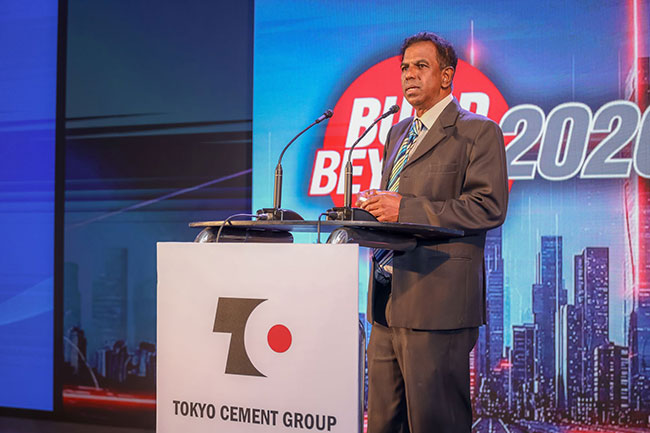
Tokyo Cement hosted ‘Build Beyond 2026 Summit’, a premier knowledge-sharing conference that brought together leading academics, civil and structural engineering experts and professionals of the Sri Lankan construction industry. The event featured keynote addresses by renowned construction technology specialists, Professor Shashank Bishnoi from the Indian Institute of Technology (IIT) Delhi-Abu Dhabi, and Senior Professor Priyan Mendis from the University of Melbourne.
The summit marked the second edition of the Build Beyond Engineering Technology Summit organized by the Tokyo Cement Group, designed to foster collaboration between academia and industry while highlighting global trends, innovations, and emerging technologies in cement and concrete. This year’s discussions focused on advancements in material science that are driving more sustainable and cost-efficient construction practices.
The event drew participation from state-sector authorities, research institutions, academia, engineering students, and public and private sector organizations, creating a dynamic platform for engagement across the construction industry. A key feature of the summit was a high-level panel discussion on “Building a Resilient and Sustainable Construction Future,” featuring several distinguished industry leaders.
The panel included Eng. Nissanka Wijerathne, the Secretary General/CEO of the Chamber of Construction Industry Sri Lanka (CCI), Founder and Deputy Chairman of Civil & Structural Engineering Consultants (Pvt.) Ltd.; Eng. Shiromal Fernando, the Chairman of CTBUH Sri Lanka and Vice President of the Green Building Council Sri Lanka, Adjunct Senior Lecturer at the General Sir John Kotelawala Defense University and visiting lecturer at the University of Moratuwa; Eng.

Strengthening its commitment to making vehicle ownership more accessible and affordable, Commercial Bank of Ceylon has entered into a strategic partnership with Carmart (Pvt) Ltd. to offer specially structured leasing facilities for Peugeot and Leapmotor vehicles.
Formalised through a Memorandum of Understanding (MoU), the collaboration brings together the Bank’s expertise in flexible financing and Carmart’s portfolio of internationally recognised vehicle brands, creating a value-rich proposition for customers seeking to purchase new vehicles.
Under this MoU, valid until 30th June 2027, Commercial Bank will offer attractive interest rates, concessions on documentation charges, and a complimentary credit card with the first year’s annual fee waived. These benefits are designed to reduce upfront costs and ease the financial commitment associated with vehicle ownership.
With leasing facilities available through Commercial Bank’s island-wide branch network, a cross section of customers will be able to part-finance their vehicle purchases while structuring repayments to align with their income patterns, enabling greater financial flexibility.
Further enhancing the value proposition, Carmart (Pvt) Ltd. will offer customers a range of added benefits, including a complimentary full tank of fuel, free vehicle registration, and other exclusive privileges, making the overall vehicle ownership experience more rewarding.
The Bank said the partnership reflects its continued focus on delivering practical and customer-centric leasing solutions in collaboration with reputed vendors. By combining competitive rates with cost-saving concessions, the Bank aims to make vehicle ownership more attainable for both existing and new customers.
This collaboration is particularly significant in the current market context, as it offers customers the opportunity to benefit from preferential leasing terms while managing repayments in a way that suits their financial circumstances.
As a pioneer in leasing solutions, Commercial Bank continues to innovate through strategic alliances that enhance value, broaden choice, and support customers in achieving their lifestyle aspirations.

Sai Sudharsan century, Padikkal 94* put India A in command

Iran begins public mourning for Ayatollah killed in February

Hope returns, Roach out for West Indies after injury-hit Sri Lanka bat

Juventus Training Camp from 6-10 July in Colombo

Wijesundara set for debut as injury-hit Sri Lanka struggle to make up XI

UNEP support pledged to strengthen Sri Lanka’s Environmental Priorities

‘Dates have the highest sugar content to fight Coronavirus’

Sunday Island 27 December – Headlines

#SundayIsland 17th December – Headlines

Sunday Island – 28th March

Sunday Island Headlines – 21 March

Sunday Island – 21st February – Headlines
-
 News5 days ago
LAWASIA warns against ad hoc initiative to increase judges’ retirement ages
-
 News6 days ago
Another 1,132 Sri Lankan Personnel to be deployed for United Nations Peacekeeping Missions
-
 News4 days ago
Chamuditha to seek removal of injunction on Youtube programme
-

 Features4 days ago
Climate action to bring South Asia together
-

 Business7 days ago
Month-end profit-takings drive stock trading; indices up
-
 Features6 days ago
People’s Bank expands digital banking network with 125th cheque deposit kiosk
-

 News4 days ago
CPRP alleges another death in custody, seeks protection for witness
-

 News7 days ago
FSP complains of irregularities in a Guinness World Record event held in Sri Lanka