
Business
Working past, present and future at the Geoffrey Bawa Trust

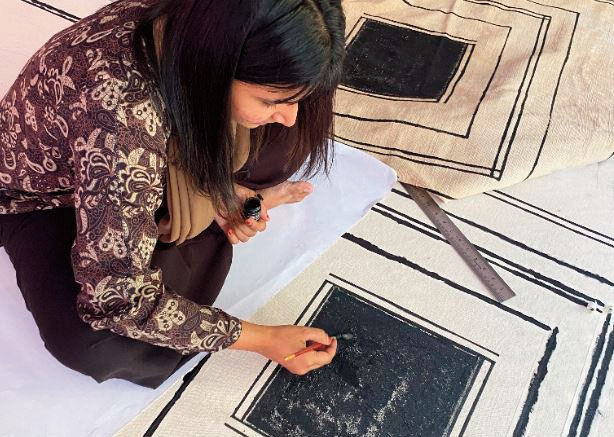
Visitors to Lunuganga ahead of the southwest monsoon may have noticed garden staff working in the water surrounding the estate’s sundial — not an unusual sight given the nature of conservation work, but representative of the breadth and rigour that defines the Trust’s approach. The task at hand was the restoration of the Butterfly Pond, one of many ongoing efforts to preserve the integrity of Geoffrey Bawa’s work for present and future generations.
Conservation of Geoffrey Bawa’s estate is among the primary mandates of the Geoffrey Bawa and Lunuganga Trusts, non-profit organisations established by the architect during his lifetime. Upon his passing, Bawa entrusted the entirety of his estate to the Trusts, which now hold stewardship of the Geoffrey Bawa Collection and Archives. Given that Bawa’s professional practice and private collection spanned architecture, art, furniture, and landscape design, the Trusts’ conservation programme is correspondingly broad in scope.
“We work across many mediums and even locations,” says Aneesha Mustachi, Senior Curator overseeing conservation within the Geoffrey Bawa Trust collection. “Within a week, we could go from working with drawings in our archive at the Geoffrey Bawa Space in Colombo, then over to Number 11, Geoffrey Bawa’s private residence, to restore a deteriorating frame on an artwork, and off to Lunuganga to figure out how best to electrify and re-install an old wall sconce that has sat in storage for a decade. It’s a fine balance making these spaces publicly accessible and usable while maintaining the integrity and safety of our collection. The work requires significant patience, effort and learning, but it’s also rewarding knowing that we’re maintaining Geoffrey Bawa’s legacy for present and future generations to experience and learn from.”
Landscape and Archive Conservation
In the Lunuganga garden, on the edge of the Field of Jars, stands the head of a Hindu Pan. Horned and commanding, the sculpture sits at the edge of a pond, its reflection caught among the surrounding vegetation. Years of monsoon flooding, however, have compromised the pond’s structure and left the piece vulnerable to ongoing water damage. With climate change driving higher water levels and increasingly unpredictable rainfall, the conservation challenge extends beyond restoration to future-proofing.
“Conservation work in the garden is not just about maintaining the exactness of Geoffrey Bawa’s designs, but also about adapting and considering the future,” says Soham Kacker, Curator for Living Collections.
During the restoration of Pan’s pond, the team incorporated a new overflow drain, a subtle intervention not present in Bawa’s original design, but one that ensures the long-term preservation of the work while remaining unobtrusive to the visitor experience.
In Colombo, conservation work moves indoors to the archive at the Bawa Space on Horton Place. Comprising 9,500 items — including original drawings, textiles, photographs, paintings, sketches, and documents from Geoffrey Bawa’s practice — the archive entered a new phase in 2024 with its transfer into purpose-built archival facilities. The rehousing process took over a year and required the development of systems tailored to local resources and conditions, while meeting rigorous international archival standards.
Conserving a Generation of Artists
The Trusts’ conservation mandate extends beyond Bawa’s own work to encompass the contributions of his contemporaries. At Lunuganga, the gatehouse loggia overlooking the ha-ha (a traditional sunken road) houses an iconic mural by artist Laki Senanayake. Painted in Senanayake’s characteristically bold style, the work depicts a dramatic scene drawn from Vedic legend, rendered through techniques derived from ancient wall painting traditions. Its motifs echo those found across Senanayake’s broader practice, including his 1961 work Portuguese Arriving in a Cloud and the sculptured handrail of the spiral staircase at Bawa’s Lighthouse Hotel, completed in 1995.
Senanayake began the mural in 1969 and worked on it for fourteen years, producing a detailed and richly layered composition dominated by blues, browns, and yellows. After decades of exposure, however, the work had deteriorated significantly, its illustrations and colour palette fading with time.
In 2025, the Trust engaged conservator Ajith Jayasundara and his team to undertake a full restoration. “The mural deteriorated mainly due to roof leaks and prolonged moisture penetration; it was heavily affected by algae, fungi, and lichen growth,” says Jayasundara. The project encompassed structural conservation of the verandah walls and roof, though the mural itself was not repainted or redrawn. “The most challenging aspect of the project was removing the microorganisms without damaging the original mural surface,” he notes. “But once the microorganisms were removed, the mural surface became much clearer and visually legible. Only areas that were completely damaged were minimally filled and carefully toned to maintain visual continuity.”
Building Institutional Capacity
The Trusts’ conservation programme also invests in developing the next generation of conservation professionals. Beyond preserving Geoffrey Bawa’s legacy, the organisation is committed to advancing expertise in museum and archival practice across Sri Lanka.
Staff typically enter the programme as interns, progressing to junior and senior roles as their knowledge and skills develop. “On-the-job training is a big part of working at the Geoffrey Bawa Trust,” says Nasla Yoosuf, who joined as an intern and now serves as Junior Conservation Assistant. “It’s a great transition from classroom work to hands-on experience working in the field. It’s also a nice reminder that those of us who study art and design have career paths open to them beyond the corporate work of media and advertising.”
At the Lunuganga sundial, the Butterfly Pond restoration has now been completed. Drawing on historical photographs to guide their approach, the team removed invasive plant species and replanted the area with native mangrove ferns. The outcome reflects what is consistent across the Trusts’ conservation work: the result not of any single individual, but of a collaborative effort across disciplines and roles.
Check the website for more information on working at the Geoffrey Bawa Trust. In addition to its work with the collection and archives, The Geoffrey Bawa Trust hosts regular public events, workshops and lectures on topics relating to art, architecture, and ecology. The Bawa Space is located at 42/1 Horton Place, Colombo 07 and is open Thursday–Sunday, 11.30 a.m. until 5.30 p.m during exhibitions. The next exhibition will open in June, 2026.


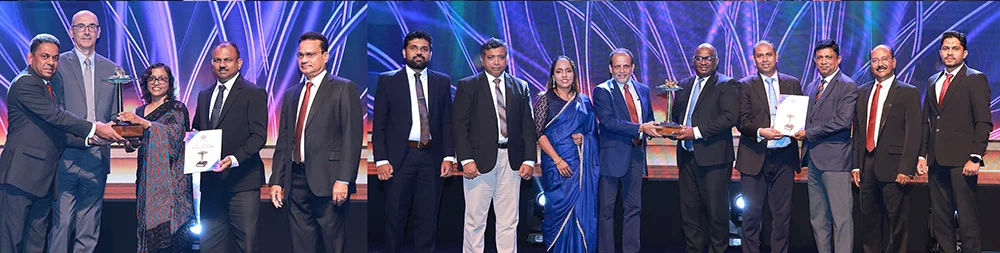
Corporate accolades underscore the alignment between its operational excellence and national development
In an era where national competitiveness is intrinsically tied to digital connectivity, strengthening the country’s digital backbone has become an urgent priority. Within this context, the evolving role of Sri Lanka’s leading telecommunications provider, SLT-MOBITEL, offers valuable insight into how technological infrastructure can underpin broader economic resilience.
Telecommunications and digital networks are foundational to economic transformation. By expanding high-speed broadband access, upgrading enterprise cloud capabilities, and bridging the urban-rural connectivity divide, SLT-MOBITEL helps reduce business transaction costs, streamline supply chains, and enable micro, small, and medium enterprises to reach global markets.
Recent corporate accolades further underscore this alignment between operational excellence and national development. SLT-MOBITEL’s triple triumph at the National Business Excellence Awards 2026 – winning in the Infrastructure and Utilities sector, Performance Management, and ICT Services categories – highlights its growing impact. Notably, the recognition of eChannelling’s contributions to digital healthcare reflects a broader strategic pivot toward integrated technology solutions.
“Institutional efficiency of this nature is critical for attracting foreign direct investment, as global partners increasingly assess a country’s digital maturity and systemic stability before committing capital,” noted industry observers.
Moreover, the company’s transition from a conventional telecom utility to a comprehensive digital solutions provider aligns seamlessly with Sri Lanka’s national digitalisation agenda. As the country pursues public sector modernisation, enhanced e-governance, and a competitive knowledge economy, the private sector must step up to deliver secure, scalable, and future-ready networks. Investments in data centres, cybersecurity frameworks, and advanced ICT infrastructure act as strategic buffers, ensuring that Sri Lanka’s economic apparatus remains agile and resilient amid future global uncertainties.
However, industry experts caution that while these achievements are commendable, SLT-MOBITEL still has a considerable distance to cover in fully enabling a truly digital economy.
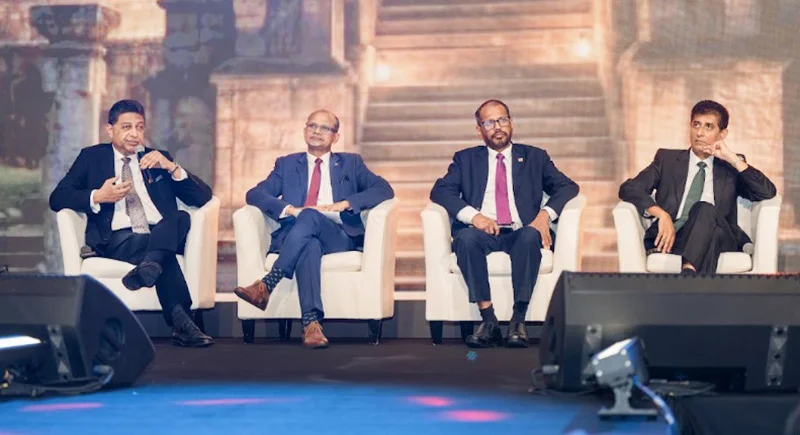
Port City Colombo (PCC) took a prominent role as Platinum Sponsor at the second edition of Sri Lanka Beyond Your Dreams, a high-level diplomatic and investment engagement hosted by the Consulate General of Sri Lanka in Dubai and the Northern Emirates. The event, held on 2nd September 2026 at the Hilton Dubai Al Habtoor City, brought together over 400 senior UAE-based business leaders, investors, diplomats, and institutional stakeholders, alongside Sri Lanka’s most senior government representatives.
The gathering was graced by Dr. Thani bin Ahmed Al Zeyoudi, UAE Minister of Foreign Trade, as Guest of Honour, and Vijitha Herath, Sri Lanka’s Minister of Foreign Affairs, Foreign Employment and Tourism. A high-level Sri Lankan delegation – including the Secretary to the Prime Minister, the Chairman of the Board of Investment, the Chairman of the Export Development Board, and the Director General of Commerce – underscored the government’s strong commitment to deepening economic diplomacy with the UAE.
In his keynote address, Minister Herath reaffirmed the centuries-old ties between Sri Lanka and the Arab region, emphasising the UAE’s vital role as a key economic partner. He stressed the urgency of finalising a Comprehensive Economic Partnership Agreement (CEPA) with the UAE, which would establish a robust framework to elevate trade, investment, and bilateral cooperation. Declaring Sri Lanka “open and ready for business,” he positioned Port City Colombo as the physical embodiment of this economic mission – a modern Special Economic Zone (SEZ) with a dedicated legal framework and competitive incentives, offering UAE investors a natural gateway to South Asia while maintaining strong Gulf connectivity.
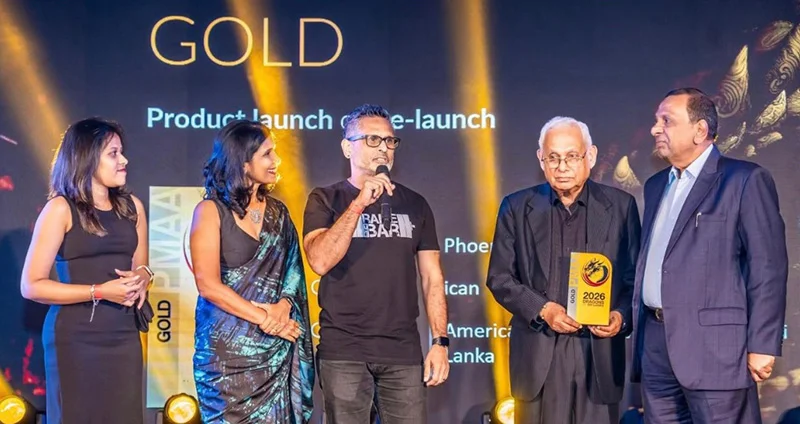
American Premium Water has secured four wins at Dragons of Sri Lanka Awards 2026, including three Gold Dragons and one Black Dragon, marking a significant milestone for the brand following its relaunch last year.
Part of the prestigious Dragons of Asia awards, Dragons of Sri Lanka brings the program’s regional platform to the local market, celebrating creative and effective marketing communications, with entries evaluated on strategic thinking, creativity, execution and impact. Established in 2000, Dragons of Asia is one of Asia’s premier results-driven marketing awards programs.
For American Premium Water, the achievements are particularly significant given that the company’s debut at the Dragons awards has resulted in four Dragons across four categories. In the distinction of Gold Dragons, American Premium Water was recognized across three categories including Product Launch or Re Launch, Cause, Environment or Sustainability and Creative Excellence while the Black Dragon was awarded in recognition of Small Budget.
Competing alongside leading brands and agencies in Sri Lanka, American Premium Water’s four wins demonstrate the strength and effectiveness of its recent work. Winning three Gold Dragons across three distinct categories highlights the breadth of the brand’s achievements, while the Black Dragon for Small Budget further emphasizes its ability to create meaningful impact through focused and efficient investment.

Trump says every adult American will get $5,000 if Republicans win midterms

Protesters mistake Pakistan’s U-19 team for asylum seekers in Portsmouth

Steps are being taken to provide accommodation facilities for 16,000 university students – Prime Minister

Showers will occur in the Western and Sabaragamuwa provinces and in Kandy, Nuwara-Eliya, Galle and Matara districts.


Sri Lanka reiterates its territory won’t be used against India

‘Dates have the highest sugar content to fight Coronavirus’

Sunday Island 27 December – Headlines

#SundayIsland 17th December – Headlines

Sunday Island – 28th March

Sunday Island Headlines – 21 March

Sunday Island – 21st February – Headlines
-

 News6 days ago
Namal remanded until Sept. 18 over Airbus deal investigation
-

 Latest News5 days ago
Tharanga creates history with Diamond League crown in Brussels
-

 News5 days ago
Dispute which triggered listed company director being detained at BIA resolved
-

 Features4 days ago
After the parade: What a traffic OIC’s walk-out tells us
-
 Opinion7 days ago
In Memory of Dr Upatissa Pethiyagoda
-

 Editorial6 days ago
Power vs Equality
-
Editorial4 days ago
Arrests as theatre
-

 Latest News6 days ago
SLPP MP Namal Rajapaksa arrested by CIABOC