
Business
Women workers speak out for fair pay, safety and dignity

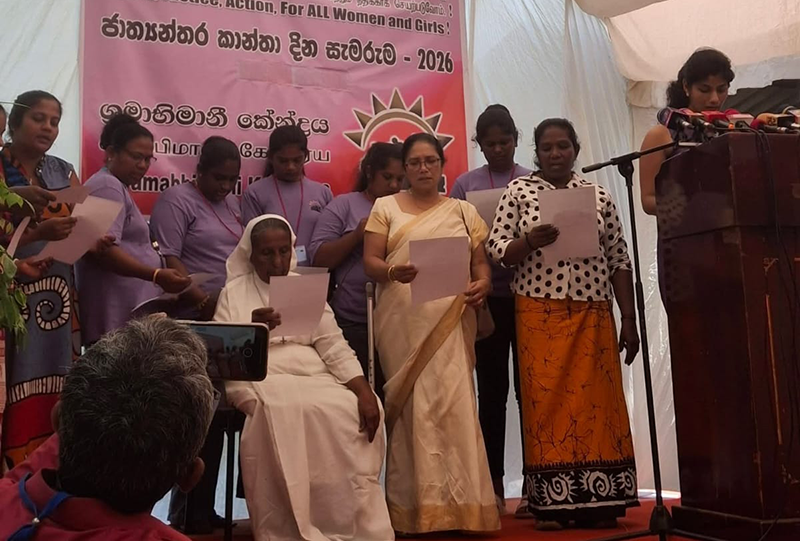
Women workers who gathered at the Shramabimani Centre in Seeduwa to mark World Women’s Day on March 29 demanded a living wage that matches the rising cost of living, decent working conditions, safety of workers, better healthcare facilities and limiting the extensive working hours, from the government and employers.
Free Trade Zone (FTZ) workers urged the lawmakers and their employers to understand the silent tears shed amid the sound of machines.
“We face frequent humiliation and insults within and outside work which a woman cannot bear but we go through them to feed our children, parents and other dependents in our homes, said Shriani Fernando, an employee of a garment factory at the Katunayake FTZ.
Many such sad stories were narrated on the appalling living and working conditions of female workers who have left behind their families, kith and kin to keep the wolf from the door.
“There is no privacy in a ten by ten room shared with other workers who have to walk back to their rooms late night through lonely streets, said Indrani Weerasinghe, a mother who has to feed five mouths with the little wage she earns as a factory employee.
Female workers who are compelled to leave the safety of their homes at a very tender age to support the family fall prey to men seeking opportunities to satisfy their carnal desires.
The predator could either be the employer, landlord, a friend, the partner or a sympathizer with ulterior motives.
“While walking back to our rooms men ask us whether they could give us a lift. When we refuse the offer they pass disgusting remarks, a young worker said.
Speech and hearing impaired workers said that they too are capable of doing any work as others.
They said we have eyes, a good brain, hands and feet to work. We need to be treated like all others instead of attracting verbal sympathies.
Many workers who are victims of sexual exploitation and harassment keep silent to safeguard their jobs.
“We know the outcome if we speak against the unfair treatment by our bosses. If we lose our jobs who will feed our children, said Susumali Dissanayake, a mother of four employed at a garment factory in Gampaha.
What is saddening and gruesome is the act of some workers compensating the low wage or income by offering themselves to fulfill the insatiable sexual appetite of certain men.
Women garment workers in FTZs face severe exploitation, including 16-hour workdays, unachievable production targets, sexual harassment, and hazardous conditions. Many endure poverty, wage theft, and lack of basic facilities, often resulting in Urinary Tract Infections (UTIs) due to poor sanitation and limited bathroom access
Landless female workers in the Gampaha District urged the present authorities to bring an end to their homeless state by fulfilling a fundamental right to live in a house of their own in a decent way.
“The manner in which we are treated sometimes by our landlords is similar to being a slave. Shifting houses each year or two is nothing short of being refugees who have no status and dignity, said A.Shridevi from Walana, Katunayaka.
“We have been living like gypsies moving from one house to another without a permanent address for a long time. What we ask from the government is to give us the title deeds to the houses we are in now so that we have some status and respect, said Shandani Fernando, a member of the Association of Homeless Families in Gampaha.
Unpleasant language
“When we fail to pay the rent by one day we hear so unpleasant language from the landlords and some of us have broken family relations due to misunderstanding while sharing the same house with the siblings, she said.
Rev.Sr Noel Christine Fernando, a prominent rights activist who leads the Sramabimani Kendraya (or Shramabimani Centre) in Seeduwa, a rights group focusing on worker solidarity, particularly within the free trade zones said the battle to secure the rights of workers will go on whichever government is in power.
“It was never a smooth sailing for the Sharmaabimani centre since its start in 1994. However, it waded through high tides, rough waters and stood through thick and thin to be what it is today branching out for every worker to take rest and shelter, Sister Fernando said.
She said it’s these worker’s toil and tears that bring the much needed foreign exchange to the country. We believe this government that came to power through the ballot of the landless people will heed their cry and provide them a permanent house.
Rev. Fr. Sarath Iddamalgoda, core founder and director of Shramaabimani Centre said under whatever condition ‘we musn’t forget the vision and the mission that we are called to ensure justice for the oppressed and the marginalized people’
He said the condition of the landless community in the Gampaha district and in the rest of the country is similar to the estate community who have been living for over 200 years without proper status which reveals the extent of social inequality and discrimination in a nation that is signatory to many UN conventions on right to life and decent living.
“A bottom-top discussion and collaboration with a people-friendly and people-centred administrative mechanism is critical to address the persisting issue of the ‘unknown poor’ in the country whose call for a permanent house has gone unheeded for many decades, he said.
According to the UN an increasing number of people are driven from their homes by crises such as conflict, political instability, climate change, and economic hardship. A record number of people are forcibly displaced and – in an increasingly urbanizing world – displacement is becoming an urban phenomenon.
Meanwhile poverty in Sri Lanka has been rising since the economic crisis in 2022 where many households in the ‘middle income’ bracket have been pushed down to the ‘poor’ segment.
According to the World Bank poverty continued to increase in 2021, and doubled between 2021 and 2022, from 13.1 to 25.0 percent ($3.65 per capita, 2017 PPP) adding 2.5 million people into poverty in 2022.
Eradicating extreme poverty for all people everywhere by 2030 is a pivotal goal of the 2030 Agenda for Sustainable Development.
By Lalin Fernandopulle

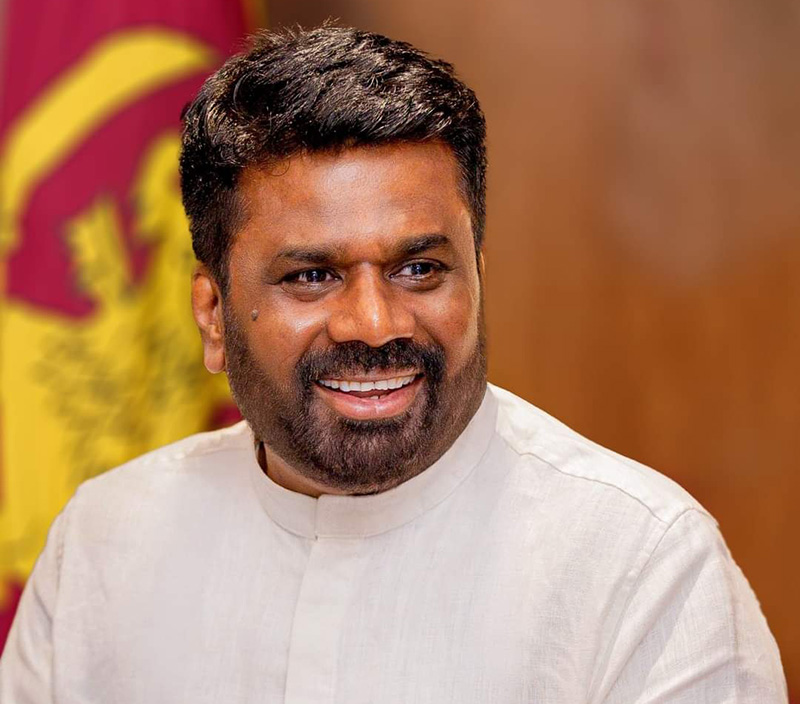
Sri Lanka’s national economic discourse takes center stage today as the country’s premier private-sector body, The Ceylon Chamber of Commerce, hosts the Sri Lanka Economic & Investment Summit 2026 at the Shangri-La Colombo.
Convening on October 12 and 13, the two-day summit brings together an influential gathering of senior policymakers, international financiers, multilateral development partners, and private-sector captains to chart the island’s next phase of macroeconomic growth.
Held under the theme “Positioning Sri Lanka in a Changing Global Economy: Resilience, Reform, and the Future of Economic Policy,” this year’s forum marks a critical inflection point in the nation’s post-crisis trajectory.
As Sri Lanka shifts its emphasis from immediate financial stabilization toward sustainable, long-term expansion, the summit aims to address the structural imperatives necessary to secure high-impact foreign direct investment (FDI), deepen regional trade integration, and unlock emerging sectors of economic activity.
The core agenda over the two days focuses on building resilience across volatile global market cycles while executing targeted policy reforms. Key working sessions will examine:
Regional Value Chains & Trade Integration: Leveraging Sri Lanka’s strategic Indian Ocean geography to capture higher-value export flows and commercial linkages.
Energy & Infrastructure Transformation: Accelerating renewable energy integration and modernizing national utility policy.
Digital Economy & Public Modernization: Deploying digital technologies across public administration and financial services to enhance operational efficiency and transparency.
Sectoral Priorities: Modernizing healthcare infrastructure and agricultural value-addition to build a robust domestic economic base.
A defining feature of this year’s summit is the strong convergence between state policy and global commercial expertise. Keynote addresses and panel discussions will feature prominent leaders, including Prime Minister Dr. Harini Amarasuriya and T. Krishnakumar, Chief Executive Officer of Reliance Consumer Products Ltd.
They will be joined by senior delegations and policy experts from major global institutions, including:
= The Asian Development Bank (ADB)
= The International Finance Corporation (IFC)
= Standard Chartered Bank
= Zydus Lifesciences
The active participation of the country’s highest executive and legislative leadership across both days underscores a clear policy commitment to private-sector-led growth. By establishing a direct, high-level platform for dialogue between investors and policymakers, the Ceylon Chamber’s summit seeks to refine regulatory frameworks, improve the ease of doing business, and establish a clear, predictable environment for capital formation in the years ahead.

Microsoft and several other technology firms have been barred by the White House from hiring skilled international workers on a permanent basis through a widely used visa programme.
US Vice-President JD Vance on Thursday accused Microsoft alongside other firms of committing fraud through the use of the H-1B visa programme and a related process for workers from abroad to become permanent US residents.
Vance claimed that Microsoft, one of the most valuable companies in the US, has been effectively replacing American workers with “foreign indentured servants.”
Microsoft said most of the H-1B visas filed over the last financial year were for existing workers, who are paid the same as local staff.
“No company in the US has abused this system more than Microsoft,” Vance said.
He also made similar accusations about Adobe, Cognizant, Infosys, Tata, Wipro, HCL and Capgemini.
The US government will not process any new or pending Permanent Labor Certification Program (PERM) applications from Microsoft or the seven other companies, Secretary of Labor Keith Sonderling said during the same conference.
Sonderling said companies like Microsoft, as well as US universities, have turned into “visa mills” that were “flooding” the US with foreign workers.
The BBC has contacted all of the companies for comment.
The total number of H-1B visas, a precursor to anyone seeking to go through the PERM process, is capped at 85,000 per year.
A spokeswoman for Microsoft noted to the BBC that “the vast majority of Microsoft employees in the United States are Americans.” The company employs more than 200,000 people worldwide.
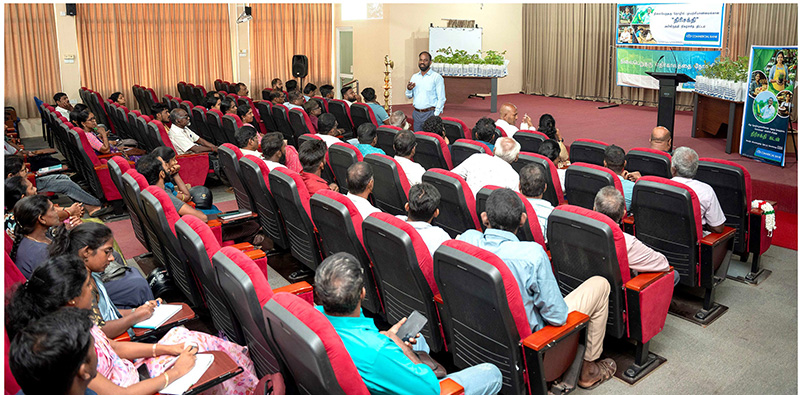
In response to emerging climate risks, the Commercial Bank of Ceylon has launched a proactive initiative through its Development Credit Department, to equip Sri Lanka’s agricultural sector against the potential impacts of the 2026 El Niño climate pattern.
Seeking to move the industry from reactive loss management to early climate preparedness, the Bank partnered with leading state universities to execute a two-part educational and technological intervention in September 2026.
The initiative comes at a critical juncture. Sri Lanka’s Department of Meteorology reported an 80% probability of El Niño conditions emerging between June and August 2026, with effects expected to persist through November and beyond. As highlighted by the Food and Agriculture Organization (FAO), El Niño acts as a risk multiplier for rural livelihoods, food production, and water supply.
To mitigate these threats, the Bank’s initiative creates a collaborative network uniting academic institutions, agricultural extension services, technology providers, farming communities, and the financial sector. The awareness programme on El-Niño and its impact on agriculture was supported by 12 Commercial Bank branches, and engaged with more than 1,100 farmers at 15 diverse locations, including Vattapalai, Muththajankaddu, Palampas, Oddusuddan, Siyambalanduwa, Lindula, Neluwa, Kalawana, Pannala, Madampe, Mannar, Vavuniya and Kumalamunai.

Navy Commander attends Trans-Regional Seapower Symposium in Italy

Heavy showers about (100-150) mm are likely at some places in the Central, Sabaragamuwa, Uva and Southern provinces

Elephant enrichment programme centred on the Thabbowa Reservoir proves successful
Showers above 75 mm are likely at some places in the Western, Sabaragamuwa, Central, Southern, Uva and North-Western provinces and in Anuradhapura and Mannar districts.

New prison regulations for monks serving jail terms soon: President’s Office

CP alleges NPP has taken the blame for illegal US sanctions on Iranian vessels

‘Dates have the highest sugar content to fight Coronavirus’

Sunday Island 27 December – Headlines

#SundayIsland 17th December – Headlines

Sunday Island – 28th March

Sunday Island Headlines – 21 March

Sunday Island – 21st February – Headlines
-

 Features5 days ago
The Sri Lankan who made Scottish history
-

 Features7 days ago
Preventing grievances from becoming communal
-

 Sports5 days ago
Nissanka absence opens door for Sri Lanka’s young guns
-

 News6 days ago
Gnansara Thera to be assigned to prison printing section: Officials
-

 News4 days ago
NDB fraud Rs 60mn more than reported
-

 News4 days ago
Removing monk’s robes matter for Sangha to decide: Mahanayake Theras
-

 Features5 days ago
Future of Sri Lanka’s state university system: Should it be shut down and reopened?
-

 News6 days ago
OIC of FCID summoned before Maligakanda Magistrate