
News
Women leaders present solutions to Lanka’s woes

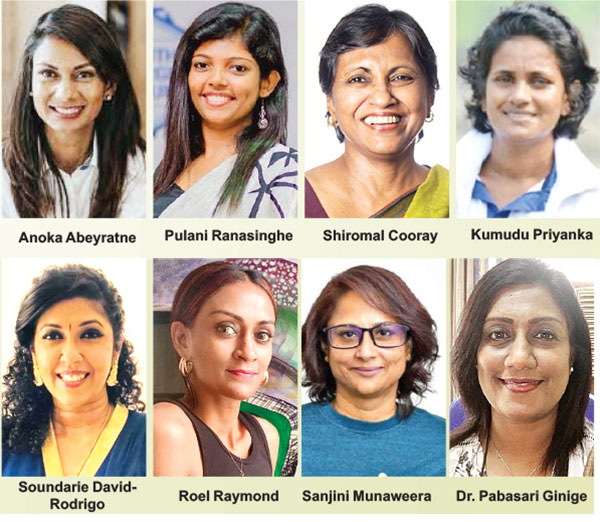
Eight highly accomplished women from diverse industries came together on one stage sharing their leadership perspective for Sri Lanka at the second second chapter of iLead – the International Women’s Day event jointly organized by NextGenSL and the Friedrich Naumann Foundation for Freedom in Sri Lanka.
They spoke under the theme “What will I do differently if I ever get the opportunity to lead the country” and shared their insights on what needs to be done to resuscitate Sri Lanka from the current state of peril.
The speakers included Dr. Pabasari Ginige, Consultant Psychiatrist and Senior Lecturer at the Faculty of Medicine, the University of Peradeniya, Sanjini Munaweera, Country Director – Sri Lanka ADA, Soundarie David Rodrigo, Music Director, Pianist and Lawyer, Roel Raymond, Editor-in-Chief, Roar Media, Kumudu Priyanka, Sri Lankan Paralympian, Shiromal Cooray, Chairperson Jetwing Travels, Anoka Abeyratne, Conservationist and Environmentalist and Pulani Ranasinghe, Technopreneur and Founder – Loons Lab.
Dr. Ginige, an adult psychiatrist with a special interest in child abuse, Intellectual Disability, Autism and LGBTIQ mental health issues, and women’s mental health made a moving speech on Sri Lanka’s current situation and her potential solutions.
“In my lifetime, I have witnessed Presidents stripping my country of its dignity and sovereignty. I have witnessed Presidents ripping off the trust of the majority voter whose political literacy is pitiful whether they are illiterates or scholars- viyathun. I have witnessed pathetic oppositions promising people an unrealistic utopia promoting a beggar culture with ‘sahana malu’ or free takaran. I have also witnessed oppositions, the self-professed political puritans who pleasure themselves in their comfort zones preaching to their own followers, Sermons on the Mount. Today I am standing in a country where the saubhgayaye dakma- vistas of prosperity and splendor- has become yet another joke like yahapalanaya!
Meritocracy will be a guiding principle of my government. I will champion the introduction of Minimum qualifications to enter politics. If I am president NO BODY with a record of child or women abuse or corruption will be given nominations. The people will have a choice of candidates with integrity and basic human decency.
If I am President, I will bring major educational reforms. Children will not be abused in the name of education. Major examinations will not be stressors leading to anxiety and depression in the country I lead. The regressive method of segregating schools according to sex, religion, and race will be prohibited. So students learn equality, kindness, and respect for differences. I will modernize school and university education to suit the job markets locally and globally. If I am President within 24 hours of being appointed I will outlaw all forms of ragging in the HEIs. I will invite the students to review their conduct and see whether that is any different from the state oppression they complain about.” she said.
Sanjini Munaweera, who has nearly three decades of experience across multiple industries, bringing great success to the FMCG, Telco, Technology, BFSI, Travel, as well as Retail and Manufacturing industries locally and globally, said as President of the country she would encourage more women to break the barriers and take a ‘leap of faith’ to challenge the existing stereotypes.
“Sometimes you just need to be courageous enough to take that leap of faith,” she said in her speech.
“If I am given the leadership of the country, I will create a culture of collective responsibility — something that is sadly lacking in Sri Lanka. There is no growth for a country without a culture of collective responsibility. This will drive a narrative of inclusivity and bring people together towards a common purpose,” Munaweera added.
“What is it that makes women — even high achievers like the ones on this panel right now — decline to get involved? It is the very thing that keeps some very capable men away from national politics. The knowledge that their expertise and achievements wouldn’t make an iota of a difference if they were to actually enter the fray,” Roel Raymond, Editor-in-Chief at Roar Media and a senior journalist with experience in both the private and state sectors and has worked with print, radio, television, and online formats, said.
“So what do you need to be successful in politics in Sri Lanka today?” she asked.
“You need to know how to bend the rules. You need to believe that there is no right and wrong. You need to be able to lie; to your constituents, to your family, to your friends, and most damningly and damagingly, to yourself. You need to believe your lies. You need to be able to justify unjust actions. You should relish backstabbing and betrayal. You should be able to get rich illegally and not feel bad about it. You shouldn’t care about the future of this country or about future generations.
You should be able to take what doesn’t belong to you and build a legacy for your family and feel good about it. You should be able to stand by and watch as injustices are perpetrated. You should be able to keep silent; see no evil, hear no evil but by all means, perpetrate evil. You should be able to abuse power – in fact, the less you know about the limits to power the better. You should be grossly unethical and unremorseful about it. You need to be thick-skinned and not have a conscience. And, if you are not any of these things, you need to be — at the very least — ineffectual.
I would abolish the Executive Presidency which gives the President – any President – more power than he or she needs, repeal the Prevention of Terrorism Act which is so ambiguous that it allows for the abuse of a law that should protect, and in fact, ensure that laws that are meant to protect, are not used to stifle dissent, remove the 20th Amendment to the Constitution which, among other things, enhances the powers of the Executive Presidency, reintroduce the 19th Amendment to the Constitution which introduces independent commissions.
“If there is the need for a brand new constitution, I will make sure fundamental rights, the balance of power and accountability are ensured. I will stand firm against discrimination on the basis of race, religion, sexual orientation, sexual preference, ethnicity and gender and ensure that the rights of girls and women are protected in Muslim Marriage and Divorce Act. I will strengthen rule of law to protect children, women, the vulnerable and minorities and ensure the protection of orphans, who, after the age of 18, cease becoming wards of the state, and are at the mercy of society,” she added.
Soundarie David-Rodrigo, the Founder and Music Director of Sri Lanka’s premiere female ensemble ‘Soul Sounds,’ the first choir in Sri Lanka to perform and win awards internationally, was also featured as one of the speakers at iLead Chapter 02. Over the last ten years, Soul Sounds has given highly acclaimed performances in many countries
“Despite the challenges we place, we must not forget that Sri Lanka is a beautiful country to live in and we have every potential to do well. But, in order to get there, we, as a country, must embrace our differences and act in harmony,” Soundarie said stressing that she, as the leader of the country, would bring about education reforms and safeguard freedom of expression.
“It is true that we educate our children on religion during school days. But, there is no room for inter-faith dialogue. We do not give them opportunities to discuss similarities between religions and learn from each other,” she said.
She added that her education reforms would focus more on arts, culture, sports and creating harmony. “Even during the time I spent at the Law Faculty as an English medium student, I did not have many opportunities to mingle with Sinhala medium students. The youth should be given opportunities to work in harmony.”
“I would not waste my time pointing fingers at various parties on what went wring although I believe that justice should prevail. The approach should be to analyze, learn from our mistakes and to rectify them,” she stated.
Sri Lankan Paralympian Kumudu Priyanka, in a brief yet moving speech, said she would use all her experience as a Paralympian and as a person with disabilities to ensure the well being of the people going through the same challenges in life. “I will encourage them to get involved in sports and use sports as an avenue to empower them.” Priyanka is the current world record holder in the women’s 200m T45 category. She made her maiden Paralympic appearance representing Sri Lanka at the 2020 Summer Paralympics.
Chairperson of Jetwing Travels Shiromal Cooray said Sri Lanka seemed to have torn between two worlds. “One world says there is nothing wrong in our country everything is going well and some mischief-makers are causing fears. The other world is grappling with a number of insurmountable problems such as fuel shortages, gas shortages and power-cuts. The industry I represent deals with severe problems on a daily basis and is suffering immensely due to the current situation in the country.
“As President, I would appoint a diverse group of economic experts to advise me on the current situations. I would not appoint my relative and friends to advise me but I rely on people who tell me the truth. I would communicate with the public and keep them informed on a regular basis. Look at what President Zelenskyy is doing in Ukraine amidst severe difficulties and when his own life is under threat!
“I would not treat my citizens as idiots. I personally hate when someone tries to take me for a ride. So, I would not do that to my citizens. I believe this is time our country, Sri Lanka, needs us the most. If you tell the truth to the country and start leading it with a vision and a purpose, people will do their part.
“I am a strong believer of a liberalized economy. I don’t believe in a system where one has to be ‘politically connected’ in order to get license to do certain businesses. Anyone who is willing to invest and take risks should be permitted to engage in business. Anyone with money and experience should be allowed to compete in the market on a level playing field. The state should not try to quell competition in the market and pave way for monopolies,” she said whilst adding that she would get women involved in the country’s decision-making process.
“Women do not have to wear men’s shoes. They have their own shoes,” Cooray added.
Anoka Abeyratne, an activist on sustainable development issues who served as the Asia-Pacific representative to UNHabitat YAB shared her leadership perspectives on sustainability and Sri Lanka’s future. She is the elected Environment Lead of the Royal Commonwealth Society. In 2019, Abeyrathne appeared in a list of ‘Iconic Sri Lankan Women Who Have Shaped History.’
“I remember a discussion we once had with a Sri Lankan lawmaker on the Animal Welfare Act. At one point, he said, “well, you know, animals can’t vote!” How can we progress in this regard when they have such a mindset,” she said.
“When you look at Sri Lanka, it’s all about understanding the root cause and bringing forward sustainable solutions,” she stated stressing the importance of ‘sustainability’ in every aspect of the country’s decision-making process.
“For instance, look at a lake. You find mangroves and wetlands around the lake. So many people as well as animals rely on this eco-system. The moment you destroy it, you end up disrupting a lot of communities,” she added stating that becoming ‘eco-friendly’ should not become a “privilege-issue”.
“A friend of mine recently went through a very tough time because her trust was broken. As a country, we are going through a similar situation. A culture of honour, ethics, and integrity should be introduced to the country and the President must embody that,” she added.
Pulani Ranasinghe, who leads a fast-growing innovation-friendly, software start-up company in Sri Lanka that delivers a wide range of services in the latest technologies to a diverse portfolio of local and global clients, said her reforms, as the President of Sri Lanka, would focus on education, innovation, entrepreneurship and digitalization.
“As the first thing on my list, I will work to formulate a national growth strategy for the next 20 years. We see amazing concepts in bits and pieces in election manifestos but they don’t progress. I will build consensus across the political spectrum to formulate this 20-year national growth strategy,” she said.
“Then I will make an action plan on the implementation of the growth strategy. I will introduce major reforms to promote education, IT, digitalization, and media.”
“The biggest issue I see with Sri Lankan education is that it does not promote entrepreneurship. It turns a blind eye to key aspects of entrepreneurship such as managing finances,” she added.
“Only 16000 out of 300,000 students who sit for the Advanced Level Examination become eligible for tertiary education. Isn’t this a great anomaly? I, as President, will open up more avenues for students in the tertiary education sector and the professional education sector,” she said.
Media Minister Dullas Alahapperuma, Opposition MPs Dr. Harsha de Silva, Mayantha Dissanayake, a number of diplomats, civil society figures and corporate leaders attended the event.

News
Move to extend judges’ retirement ages could damage Sri Lanka’s global image, warns Prof. Peiris

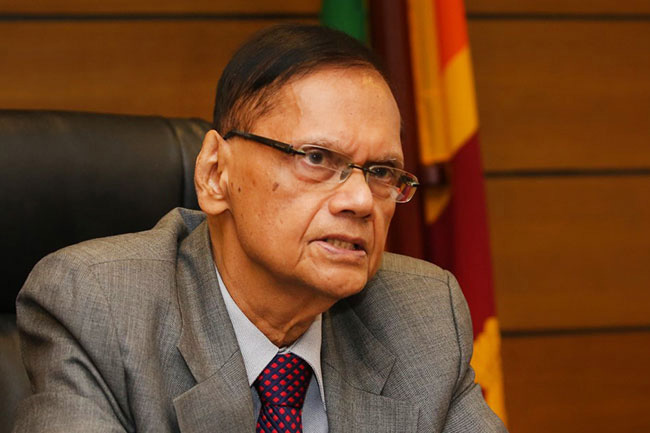
Former Foreign Minister Prof. G. L. Peiris yesterday warned that any move by the government to extend the retirement age of superior court judges could have serious repercussions for Sri Lanka’s international standing, particularly ahead of the next session of the UN Human Rights Council (UNHRC), in Geneva, in September.
Addressing a media briefing, organised by the People’s United Opposition, at its Flower Road, Colombo office, Prof. Peiris claimed that attempts to interfere with the judiciary, through extensions of judges’ terms, would undermine the credibility of Sri Lanka’s courts and weaken the country’s position before the international community.
Prof. Peiris said there was widespread opposition to the proposal to extend the superior court judges’ tenure by two years, with lawyers’ organisations, academics and civil society groups expressing concerns over the move.
“There is no clarity whatsoever from the government’s side,” Prof. Peiris said, claiming that unlike in other countries where such proposals were subjected to lengthy public consultations, there had been no transparency regarding the government’s intentions.
He argued that if such extensions were granted to judges, similar privileges would have to be considered for other sectors, including the public service, university academics and medical specialists.
Prof. Peiris said the issue had gained greater significance due to Sri Lanka’s engagement with the UNHRC, which he described as having established a special investigative mechanism relating to the country.
He alleged that the politicisation of the judiciary would provide further grounds for international criticism against Sri Lanka, which was already facing scrutiny over alleged human rights issues.
“The next session of the UN Human Rights Council will be held in Geneva, in September,” Prof. Peiris said. “This issue will not only affect our country internally, but will also cause serious damage to Sri Lanka internationally.”
He claimed that Sri Lanka had previously defended itself against international interventions by highlighting the independence and reputation of its judicial system.
Referring to the country’s legal history, Prof. Peiris said Sri Lanka had possessed a judiciary respected globally, citing former Supreme Court Judge Dr. Christopher Weeramantry’s tenure as Vice-President of the International Court of Justice in The Hague as an example of international recognition of Sri Lankan judicial expertise.
He said that during his tenure as Foreign Minister, he had maintained that Sri Lanka’s own courts were capable of addressing domestic issues and that foreign intervention was unnecessary.
Prof. Peiris also referred to discussions he had held with Russian Foreign Minister Sergei Lavrov and Chinese Foreign Minister Wang Yi, claiming that both had supported Sri Lanka’s position that external interference in domestic matters should not be permitted.
However, he alleged that the current situation was different, claiming that the judiciary was being politicised through selective extensions of service while vacancies remained in the Supreme Court and Court of Appeal.
He questioned why judicial vacancies had not been filled if the government’s stated objective was to reduce delays in the administration of justice.
“The responsibility of filling these vacancies lies with the executive,” he said, adding that the failure to do so could affect the international reputation of Sri Lanka’s judiciary.
Prof. Peiris also claimed that the Bar Association of Sri Lanka had repeatedly called for the vacancies to be filled, warning that the present developments could have an adverse impact on the country’s standing internationally.
He questioned whether it was justified to place Sri Lanka in a difficult international position to serve, what he described as, “a narrow and partisan political objective.”
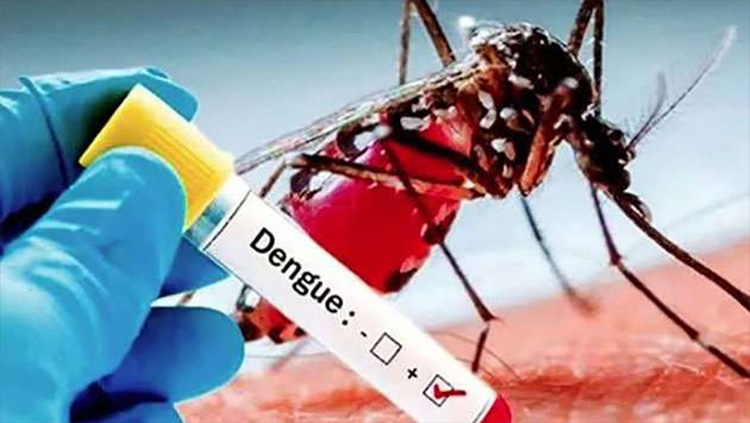
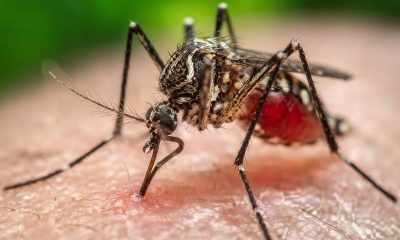
The total number of dengue cases reported in Sri Lanka so far this year has risen to 76,044, with health authorities warning the public to remain vigilant amid a continued surge in infections.
The National Dengue Control Unit (NDCU) said 2,652 dengue cases had been reported on Sunday (19) alone, while 162 Medical Officer of Health (MOH) divisions across the country continue to be classified as high-risk dengue zones.
The latest figures indicate a sharp rise in dengue infections during the past few months, with 8,590 cases recorded in May, followed by 21,537 cases in June. A further 20,666 cases have been reported during the first 19 days of July.
The dengue outbreak has claimed 53 lives so far this year, with the case fatality rate standing at 0.07%, according to the NDCU.
The Western Province remains the worst affected region, accounting for 40,009 cases, or 52.61% of the country’s total infections. The Southern Province has recorded 11,707 cases (15.40%), while the Central Province has reported 6,431 cases (8.46%).
At district level, Gampaha has recorded the highest number of dengue infections with 15,910 cases, followed closely by Colombo with 15,110 cases. Of the Colombo District cases, 3,073 were reported within the Colombo Municipal Council area.
Matara has recorded 5,330 cases, Kandy 5,111 cases and Kalutara 5,010 cases.
Health authorities have urged the public to take preventive measures by keeping their surroundings clean and eliminating mosquito breeding grounds, particularly amid prevailing rainy conditions.The public has also been advised to seek immediate medical attention if symptoms such as fever develop, as early medical intervention is essential in preventing severe complications from dengue.
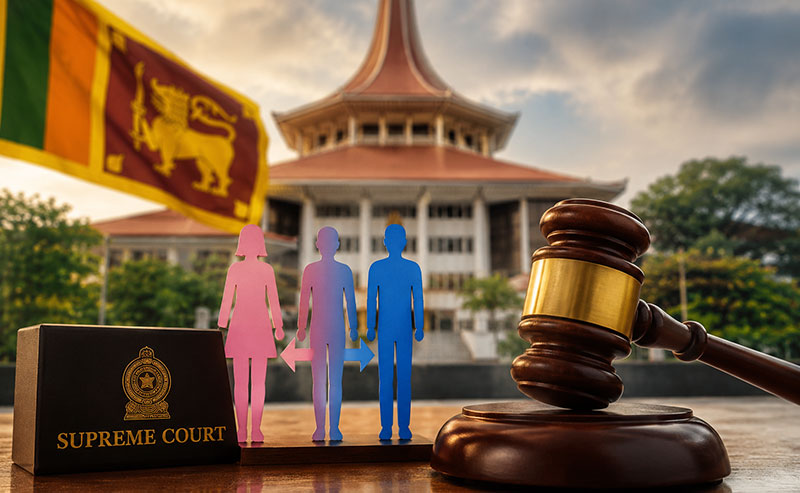
The Supreme Court yesterday dismissed, without taking up for consideration, a Fundamental Rights petition seeking to invalidate a circular that permits individuals in Sri Lanka to change their gender legally .
The petition had been filed by retired Sri Lanka Air Force (SLAF) Warrant Officer Shantha Jayathilake, who challenged the legality of procedures allowing individuals to alter their gender designation following medical and psychiatric assessments.
Former Presidents Maithripala Sirisena and Ranil Wickremesinghe, as well as incumbent President Anura Kumara Dissanayake, were among those named as respondents in the petition.
The petitioner alleged that successive governments, including the present administration, had facilitated gender changes through medical procedures in a manner contrary to Sri Lankan law.
Jayathilake contended that the law did not permit a person to change their sex from male to female or female to male through medical intervention in the absence of a biological basis. He further argued that individuals had been allowed to alter their gender identity on the recommendation of a psychiatrist, under guidelines issued in 2016 by the then Director General of Health Services.
The petitioner also claimed that authorities had been issuing revised birth certificates and National Identity Cards to persons who had undergone gender-transition procedures, maintaining that such actions were unlawful.
However, the Supreme Court declined to entertain the application and dismissed the petition without granting leave to proceed.

Trump slaps 50% tariffs on Canada and Carney vows to ‘intensify’ trade talks

Showers will occur in the Western, Sabaragamuwa and North-western provinces and in Kandy, Nuwara-Eliya, Galle and Matara districts

Move to extend judges’ retirement ages could damage Sri Lanka’s global image, warns Prof. Peiris

Dengue surge infects 76,000, claims about 53 lives

SC dismisses challenge to gender change procedures

BASL urges Justice Minister not to amend Constitution to increase retirement ages of superior court judges

‘Dates have the highest sugar content to fight Coronavirus’

Sunday Island 27 December – Headlines

#SundayIsland 17th December – Headlines

Sunday Island – 28th March

Sunday Island Headlines – 21 March

Sunday Island – 21st February – Headlines
-
 Business2 days ago
‘Giving up was never an option’: The fisherman who fought back after losing millions in SL
-
 Features2 days ago
Two memorable excerpts from a former SLAF commander’s memoir
-
 Latest News3 days ago
Davis cup Asia/Oceania Group IV 2026 to be held in Colombo from 20th to 25th July
-
 Features2 days ago
Erdoğan’s New Republic
-
 Life style2 days ago
Taste of the Swiss Alps comes to Colombo
-
 Features6 days ago
Dirty Money
-
 News3 days ago
Dengue outbreak gallops ahead: Infections surpasses 73,455, leaving 50 dead
-
 News3 days ago
Evidence recorded in money laundering case against Yoshitha Rajapaksa