
Sports
With Sridhar on board, Sri Lanka eye fielding gold

When Sanath Jayasuriya walked into his first media briefing as Head Coach, he didn’t waste time playing it safe. He went straight to the point — fielding was going to be a game-changer. And true to his word, what the team has pulled off over the last 12 months is nothing short of a stunning comeback.
Here was a side that had just been bundled out of the ICC Cricket World Cup with a wooden spoon finish — ninth place — and failed to qualify for the Champions Trophy. But under Jayasuriya’s stewardship, Sri Lanka has punched above its weight, defeating the top two ranked teams in the world — Australia and India. And in this remarkable turnaround, fielding has been the unsung hero, the silent game-winner.
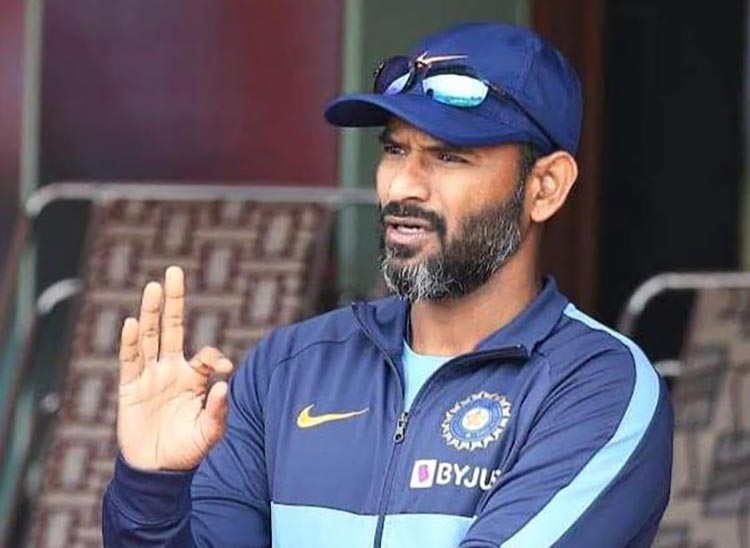
Doubling down on the importance of fielding, the team management roped in India’s former fielding guru R. Sridhar for a ten-day high-intensity camp. A coach who comes with a glowing reputation, Sridhar isn’t just focusing on the big boys — he’s spreading the gospel of fielding to the development squads and the under-19s too. It’s a move that signals intent — Sri Lanka wants to be sharp, not just with the bat and ball, but in the field as well.
These efforts to lift fielding standards deserve a standing ovation. One can only wonder how different things might’ve been if this sort of proactive thinking had been in place two years ago. The writing was on the wall even then — dropped catches, fumbled run-outs, and lazy throws were costing games. But instead of addressing the problem head-on, the management handed the reins to an overhyped foreign coach and, in cricketing terms, ended up hitting their own wickets.
Since Jayasuriya took over, he’s turned the tide. He brought in Upul Chandana — Sri Lanka’s very own livewire in the field — from within the SLC coaching system. Chandana, with his unconventional drills and energetic approach, has injected fresh blood and urgency into the unit. The players now seem to have caught the fielding bug.
That’s how it should be. While someone like Chandana remains as a permanent fixture, brief stints from specialists like Sridhar allow new ideas to bounce around the dressing room.
Earlier, even Jonty Rhodes, arguably the Michael Jordan of fielding, spent a few days in Colombo. He quickly identified the blind spots and sharpened Sri Lanka’s fielding toolkit.
That said, no matter how many big-ticket coaches you bring in, no fielding revolution can succeed unless the players themselves buy in. You can lead a horse to water, but you can’t make it dive full-length in the covers.
And for too long, that buy-in was missing. Thankfully, the tide seems to be turning — especially with the next-gen stars who appear hungrier, more agile, and aware that in modern cricket, fielding can win you matches.
Look no further than T.M. Dilshan. Initially groomed as a wicketkeeper, his path was blocked by a certain Kumar Sangakkara — who, let’s face it, wasn’t giving up the gloves anytime soon. So Dilshan pivoted. He transformed himself into a brilliant outfielder, arguably the best in the side. His work ethic was legendary.
After every net session, he’d drag Fielding Coach Trevor Penney to the boundary and aim for ten direct hits a day. In the early days, it took him hours to meet that mark. But with persistence and practice, he was hitting the target in just 15 minutes. That’s the stuff champions are made of — grit, grind, and getting your whites dirty.
What Sri Lanka needs now are more players with that Dilshan mindset — willing to do the hard yards, chase leather like it’s gold, and throw themselves around like they’re defending their mother’s dowry.
With Jayasuriya calling the shots, Chandana in the dugout, and experts like Sridhar chipping in, Sri Lanka’s fielding fortunes are finally turning a corner. It’s early days, but if this momentum continues, the Lions might just roar again — not just with the bat and ball, but in every blade of grass they defend.
by Rex Clementine




Sri Lanka Cricket (SLC) has appointed former Australian cricketer Jamie Siddons as the new head coach of the the women’s team. Siddons, a Level 3 qualified coach, will officially begin his one-year tenure on March 16, 2026.
Siddons takes over from outgoing coach Rumesh Ratnayake, who had quietly concluded his tenure at the end of 2025. And he will be building on some solid foundations.
Appointed in February 2023, Ratnayake oversaw the transformation of the women’s team from bottom-of-the-table scrappers to a regularly competitive force.
While they remain a notch below top tier sides such as Australia and India in terms of consistency, under his guidance, Sri Lanka secured their best-ever return – a historic Asia Cup title in 2024, defeating India in the final.
The inconsistency of the side however was on display throughout his term, as the team struggled at the 2024 T20 World Cup, exiting in the group stage without a win. And despite other highs, including series wins against South Africa and England, the side seemed to have plateaud following a middling home 50-over home World Cup in October.
Siddons however will be taking over a youthful side in the midst of a good run of form, with them this month completing ODI and T20I series wins against West Indies.
His immediate focus will be preparing the squad for the Women’s T20 World Cup set to be held in England this June. His first official assignment is a tour of Bangladesh in April-May.
He brings over two decades of high-level coaching experience to the role, most notably serving as the head coach of the Bangladesh men’s side from 2007-2011, where he lead them to their first overseas Test series win against West Indies.
“Siddons has also served as Head Coach of the South Australia Cricket Team (Redbacks) from 2015 to 2020 and Head Coach of the Wellington Firebirds, New Zealand, from 2011 to 2015,” added an SLC media release.
In his playing career Siddons was a prolific run-scorer in Australian domestic cricket, captaining both South Australia and Victoria, finishing his career with over 10,000 Sheffield Shield runs.
(Cricinfo)
Bombay cannot quite match Colombo when it comes to Test venues. Colombo boasts four Test grounds, while Bombay has three. India’s first ever Test match in 1933 was staged at the historic Bombay Gymkhana, but international cricket soon shifted down the road to the Cricket Club of India, a stone’s throw away, before finally settling along the sweeping Marine Drive at the Wankhede Stadium, which now hosts all men’s international fixtures. Gymkhana and the CCI, meanwhile, play host largely to women’s internationals and domestic cricket.
All three venues are top-notch facilities and there is plenty Sri Lankan clubs could learn from these Indian institutions. Our clubs carry rich traditions and colourful histories, but when it comes to member comfort and modern amenities, there is room to raise the bar.
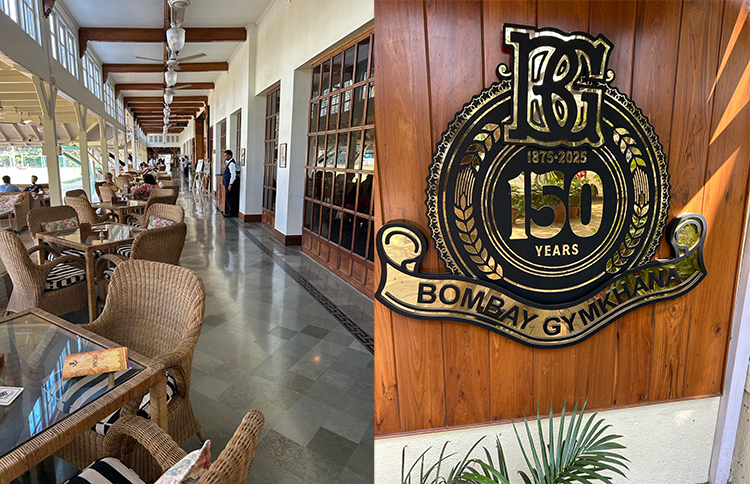
Bombay Gymkhana, established in 1875, celebrated its 150th anniversary last year and the ground is steeped in history. In its early days it was a club reserved strictly for Europeans, with locals permitted only as workers. That rule had to be bent for India’s inaugural Test in 1933 so that Indian cricketers could walk through its gates. The policy was finally scrapped in 1947 following India’s independence.
Today, membership at the Gymkhana does not come cheap. The entry fee is eye-watering, and corporate entities rather than individuals are the ones who can comfortably afford it.
The club offers a smorgasbord of sporting activities, cricket and rugby among them, although India has yet to make serious strides in the latter. Indoor pursuits such as badminton and table tennis are also available, while those who prefer a quieter afternoon can retreat to rooms dedicated to card games. The billiards and snooker room, immaculately maintained with more than a dozen tables, remains one of the club’s prized attractions. There was a time when Sri Lanka’s own M.J.M. Lafir held court here, the cynosure of all eyes with cue in hand.
For book lovers there is a splendid library and for those who fancy forty winks there is even a siesta room. Several bars and coffee shops dot the premises, while a mini-supermarket caters to members’ daily needs. A well-stocked wine store sells both local and foreign beer and spirits at reasonable prices.
The food, of course, is a feast for the senses, an impressive spread of vegetarian and non-vegetarian dishes that would make even the most seasoned diner loosen the belt a notch.
It is remarkable that such facilities exist right in the heart of the city. That people had the foresight a century and a half ago to set aside acres of prime land purely for recreation speaks volumes of the wisdom of those who were calling the shots.
Bombay as a city too has come on in leaps and bounds over the last two decades. New highways have sprung up, including one that cuts across the sea. An underground tunnel emerges just a stone’s throw away from Wankhede Stadium, easing what was once nightmarish traffic. The metro network now connects most key parts of the city and continues to expand.
For a metropolis that never stops moving, Bombay’s infrastructure push deserves a tip of the cap.
Rex Clementine in Bombay

Royal fought back on the back of a valuable five wicket haul by Himaru Deshan to earn first innings points against Richmond in the Under 19 Division I Tier ‘A’ match at Reid Avenue on Thursday.
In their second essay, the home team posted 209 for one wicket at close with Rehan Peiris producing an unbeaten century.
Rehan and Hirun Liyanarachchi added 163 runs for the first wicket.
Rehan’s unbeaten 102 runs came in 112 balls and it included ten fours and a six.
Hirun’s aggressive knock of 75 runs was scored in 76 balls. He scored 12 fours and a six.
Earler on Richmond struggled to post 204 in reply to Royal’s 254 runs. Open batsman Risinu Rupasinghe (62) was the top scorer, while Ameesha Rasanjana and Tenusha Nimsara made 20s.
For Royal, Mihiru Kodituwakku (2/22) and Dushen Udawela (3/36) were the other two bowlers to take wickets.

Tiny possum and glider thought extinct for 6,000 years found in remote West Papua

Maldives Coast Guard Ship Huravee departs island

Cost to US for war on Iran is $3.7bn in first 100 hours, says think tank

More than 120 killed in Israel’s Lebanon attacks as Beirut, south, east hit

Hungary confirms it is holding seven Ukrainian bank workers and $80m

US and Venezuela agree to resume diplomatic ties after Maduro capture

‘Dates have the highest sugar content to fight Coronavirus’

Sunday Island 27 December – Headlines

#SundayIsland 17th December – Headlines

Sunday Island – 28th March

Sunday Island Headlines – 21 March

Sunday Island – 21st February – Headlines
-

 Features5 days ago
Brilliant Navy officer no more
-

 Opinion5 days ago
Sri Lanka – world’s worst facilities for cricket fans
-

 Features5 days ago
A life in colour and song: Rajika Gamage’s new bird guide captures Sri Lanka’s avian soul
-

 Business2 days ago
Cabinet nod for the removal of Cess tax imposed on imported good
-

 Features6 days ago
Overseas visits to drum up foreign assistance for Sri Lanka
-
 Features6 days ago
Sri Lanka to Host First-Ever World Congress on Snakes in Landmark Scientific Milestone
-

 News2 days ago
Legal experts decry move to demolish STC dining hall
-

 Latest News2 days ago
Around 140 people missing after Iranian navy ship sinks off coast of Sri Lanka