
Latest News
Williamson drives New Zealand as Bashir four-for keeps England competitive


Kane Williamson blended grit and flourish to make 93 from 197 balls on his return to New Zealand’s ranks, but his rare failure to convert such a promising start proved to be a microcosm of his team’s day, as England overcame a misleadingly placid deck to pick off eight prime wickets in their series opener at Christchurch.
Thanks to Glenn Phillips, who batted through to the close on 41 not out, including an eighth-wicket stand of 46 from 56 balls with Matt Henry, New Zealand finished the day with their innings, and their hopes, very much intact. But on a surface that is renowned for getting better as the match wears on, England will believe – after their recent exploits on a flat deck in Multan – that they can cash in when their own turn comes.
It had looked, from the outset, to be a crucial toss to win, as Ben Stokes called correctly on a green-tinged surface that had been kept fresh by spells of rain in the build-up to the match. But after choosing to bowl first, the anticipated early movement failed to materialise for England’s quicks, and instead it was the spinner Shoaib Bashir, with 4 for 69 in 20 overs, who emerged as their principle source of wickets.
England were indebted, too, to another wholehearted showing from Brydon Carse, whose extraction of a fluent Tom Latham was the key moment of the morning session, as well as another no-nonsense display from their find of the year Gus Atkinson, who picked off the dangerous Devon Conway in his very first over, then returned in the evening to dislodge Williamson with some extra lift outside off, as he fell in the 90s for the first time in 14 innings spanning six years.
Most of all, though, England owed their promising position to New Zealand’s lack of killer instinct, with each of their eight wickets proving complicit, to a greater or lesser extent, in their own downfalls. England were far from passive observers, however, with Carse’s optimistic aggression, backed up by Stokes’ typically proactive fields, epitomising a display that successfully shook off much of the fatalism that set in during their last two Tests in Pakistan.
While Williamson was marshalling New Zealand’s day, however, there were plenty of reasons to question England’s decision to bowl first. Having missed their triumphant tour of India with a groin strain, he was his usual phlegmatic self from the moment he arrived at the end of the second over, following Atkinson’s sharp return catch to dislodge Conway for 2, and though he struggled to assert himself at times – particularly against the energetic Carse, who struck him in the grille on 28 in a torrid early spell, and again on the badge as he moved into the 90s – he found the will to endure, and the gumption to step up his tempo whenever the opportunity arose.
Williamson took 14 balls to register his first run, and 47 for his first boundary until Stokes – struggling, as with all the seamers, to land his front foot in the greasy morning conditions – banged in a half-tracker to be pulled with aplomb through midwicket. The captain’s mood was not improved in his final over of the session, when Rachin Ravindra, on 20, pressed forward to a good length outside off, and got away with a slender edge that was only revealed after the event on Ultra-Edge. Neither bowler nor keeper even appealed.
In the end, that let-off didn’t prove too costly. Bashir was thrown the ball for the 30th over, in the first half-hour after lunch, and duly struck in his second over, as Ravindra looked to give him the charge but could only toe-end a dipping full toss to midwicket. His agonised look to the heavens betrayed the extent to which he’d given his start away, and confirmed the sense that this was a very good track for batting.
Williamson wasn’t about to make the same mistake. He took on the threat of Carse with a calculated double-whammy – a short-arm pull for four then a languid drive down the ground off the anticipated fuller length – and having got his innings moving, he rushed through to his half-century with consecutive pulled fours off Bashir, who looked threatening whenever he hit his length outside off but was all too prone to drifting down the leg-side.
By tea he was within sight of his 33rd Test hundred, and New Zealand – at 193 for 3 – were one good partnership from taking firm control of the contest. Instead, the errors came in a cluster, with their next four wickets falling for just 59 runs.
Daryl Mitchell had been a solid foil in a fourth-wicket stand of 69, but was picked off for 19 just ten balls into the evening session, as Carse returned to the attack with a packed leg-side field and a diet of bumpers, and induced a spliced pull to Harry Brook at deep third.
Williamson’s extraction was the killer blow, however. Atkinson had struggled for rhythm ever since his first-over wicket, with seven no-balls in the course of his 17 overs. However, his ability to hassle well-set batters is becoming one of his most notable traits. The ball that did for Williamson was short and reasonably wide, and apparently ripe to be cut for four. But his skiddy trajectory found some priceless extra bounce, and Zak Crawley at backward point swallowed the offering with glee.
Tom Blundell, out of form but battling hard for his 17 runs, then produced a similar error of judgement to hand Bashir his second wicket, whereupon the debutant Nathan Smith turned a leg-sided offbreak to Joe Root at leg gully to depart for 3. Phillips then responded by dumping Bashir over the ropes for the day’s solitary six, but when Henry tried something similar with the new ball looming, he could only pick out Ben Duckett at long-on, to put a seal on a hard-fought day.
Brief scores:
New Zealand 319 for 8 in 83 overs (KaneWilliamson 93, Tom Latham 47, Glenn Phillips 41* , Rachin Ravindraa 34; Gus Atkinson 2-61, Brydon Carse 2-57, Shoaib Bashir 4-69) vs England
(Cricinfo)

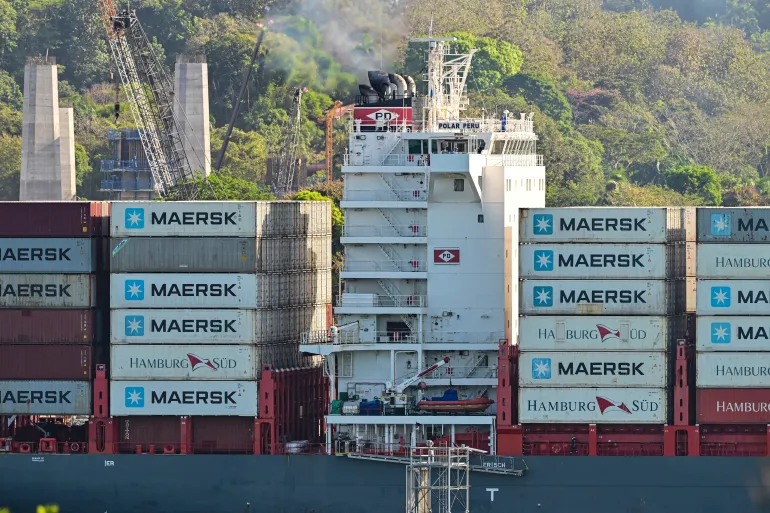
Danish firm Maersk will temporarily operate two ports on the Panama Canal after a court ruled that contracts given to a Hong Kong firm were unconstitutional.
The Panama Maritime Authority (AMP) announced the changes on Friday, a day after the Central American country’s Supreme Court invalidated port contracts held by Hong Kong-based firm CK Hutchison.
The court ruling followed repeated threats from the United States President Donald Trump that his country would seek to take over the waterway he claimed was effectively being controlled by China.
According to the court ruling that annulled the deal, CK Hutchison’s contract to operate the ports had “disproportionate bias” towards the Hong Kong-based company.
On Friday, the AMP said port operator APM Terminals, part of the Maersk Group, would take over as the “temporary administrator” of the Balboa and Cristobal ports on either end of the canal.
Maersk takes over from the Panama Ports Company (PPC) – a subsidiary of CK Hutchison Holdings – which has managed the ports since 1997 under a concession renewed in 2021 for 25 years.
The canal, an artificial waterway, handles about 40 percent of US container shipping traffic and 5 percent of world trade. It has been controlled by Panama since 1999, when the US, which funded the building of the canal between 1904 and 1914, ceded control.
Washington on Friday welcomed the decision, but China’s Foreign Ministry spokesman Guo Jiakun said Beijing “will take all measures necessary to firmly protect the legitimate and lawful rights and interests of Chinese companies”.
For its part, PPC said the ruling “lacks legal basis and endangers … the welfare and stability of thousands of Panamanian families” who depend on its operations.
Tens of thousands of workers dug the 82km- (51-mile-) passageway that became the Panama Canal, allowing ships to pass from the Pacific Ocean to the Atlantic without having to travel around the northernmost or southernmost ends of the Americas.
Panama has always denied Chinese control of the canal, which is used mainly by the US and China.
[Aljazeera]

It’s India vs Pakistan, for the first time in the 2026 Under 19 World Cup, being played in Zimbabwe and Namibia. The match on Sunday will start at 0730 GMT (1pm IST/12.30pm PST) in Bulawayo.
It’s the last game of the Super Sixes round and there’s a semi-final spot at stake. England have already made it to the final four from Group 2, so only one of India (six points) and Pakistan (four points) can qualify. For India, it’s straightforward – win and go through. It’s not so simple for Pakistan, whose net run rate of 1.484 is significantly lower than India’s 3.337. Pakistan will need to win by a big margin to equal India’s six points and overtake then on net run rate. For example, if Pakistan bat first and post 300, they need to win by 85 runs. If they bowl first and restrict India to around 200, they will need to chase it down in around 31.5 overs. If the target is, say, 251, Pakistan will need win in about 33.2 overs to make the semi-finals.
In the Under 19 Asia Cup final just over a month ago, Pakistan hammered India by 191 runs after scoring 347 in Dubai. India had beaten Pakistan by 90 runs in the group stage of that tournament.
Pitches in Bulawayo have not been that high-scoring, with 300 breached just once by a team batting first – India did it against Zimbabwe. Irrespective of the surface, keep your eyes on India’s explosive opener Vaibhav Sooriyavanshi. He already has an IPL hundred (for Rajasthan Royals) and has a penchant for rapid starts and big scores.
Pakistan fast bowler Ali Raza could be threatening at the start. He has 12 wickets in the tournament the joint second highest. Raza has already made his PSL debut (for Peshawar Zalmi) and also his senior debut in domestic cricket in all three formats. In the recent Asia Cup final against India, he landed big blows by removing both Sooryavanshi and India’s captain Ayush Mhatre in the first five overs.
[Cricinfo]

More than 200 people have been killed in a mine collapse in eastern Democratic Republic of Congo, rebel authorities have said.
The mine, in the town of Rubaya, gave way on Wednesday due to heavy rains, Lumumba Kambere Muyisa, spokesman for the North Kivu region’s rebel governor, told reporters. At the time, the death toll remained unclear.
Women and children were among those mining coltan – a mineral used to manufacture electronics such as smartphones and computers – at the time.
A former supervisor of the mine told the BBC the site was not properly maintained, making accidents more likely and hampering rescue efforts when they occur. He added that the fragile nature of the soil made the situation worse.
Women, children and artisanal miners – those not officially employed by a mining firm – are among those killed in the collapse. Around 20 survivors are said to be receiving treatment in hospital.
A source whose cousin died in the landslide expressed shock, saying it was “a big loss” for the family and community. “I didn’t believe he could pass away in such circumstances,” the source, who did not wish to be named, told the BBC, describing his cousin as a “courageous” and “ambitious” man whose main goal was to provide for his wife and two children.
“I didn’t believe he was dead because investigations were still ongoing. His body wasn’t found after the accident, so I did have hope that he could be found alive. Unfortunately, some hours later, his body was discovered.”
Governor Erasto Bahati Musanga, who was appointed by M23 rebels after seizing swathes of territory in North Kivu, visited survivors of the incident on Friday.
Rubaya is one of a number of towns across North Kivu under the control of the M23, who international observers say are backed by neighbouring Rwanda.
The mines in Rubaya hold about 15% of the world’s coltan supply and half of the DR Congo’s total deposits.
The metallic ore contains tantalum, which is used to produce high-performance capacitors in a range of electronic devices, making it in high demand worldwide.
When a BBC team visited the site in July 2025, they observed miners digging manually to source the precious mineral. Conditions at the site are very bad, with dangerous pits dotted around its vast expanse.
Since 2024, the M23 rebels have been in control of the mines. The UN has accused the group of imposing taxes on the mining sector for their own benefit.
The BBC has contacted the Congolese government in Kinshasa for comment.

Shipping giant Maersk to take over Panama Canal ports after court ruling

India face Pakistan for a place in the semi-finals of the Under-19 World Cup

More than 200 killed in mine collapse in DR Congo

US government partially shuts down despite last minute funding deal

Harmanpreet 82* in vain as Gujarat Giants break Mumbai Indians hoodoo and seal Eliminator spot

Myanmar election delivers walkover win for military-backed political party

‘Dates have the highest sugar content to fight Coronavirus’

Sunday Island 27 December – Headlines

#SundayIsland 17th December – Headlines

Sunday Island – 28th March

Sunday Island Headlines – 21 March

Sunday Island – 21st February – Headlines
-
 Business6 days ago
ComBank, UnionPay launch SplendorPlus Card for travelers to China
-

 Business7 days ago
ComBank advances ForwardTogether agenda with event on sustainable business transformation
-
 Business3 days ago
Climate risks, poverty, and recovery financing in focus at CEPA policy panel
-
 Opinion7 days ago
Conference “Microfinance and Credit Regulatory Authority Bill: Neither Here, Nor There”
-
 Opinion2 days ago
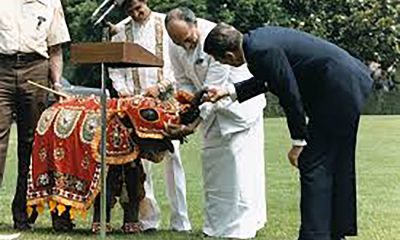
Sri Lanka, the Stars,and statesmen
-

 Business22 hours ago
Hayleys Mobility ushering in a new era of premium sustainable mobility
-

 Opinion6 days ago
Luck knocks at your door every day
-

 Business22 hours ago
Advice Lab unveils new 13,000+ sqft office, marking major expansion in financial services BPO to Australia